 Skip to content

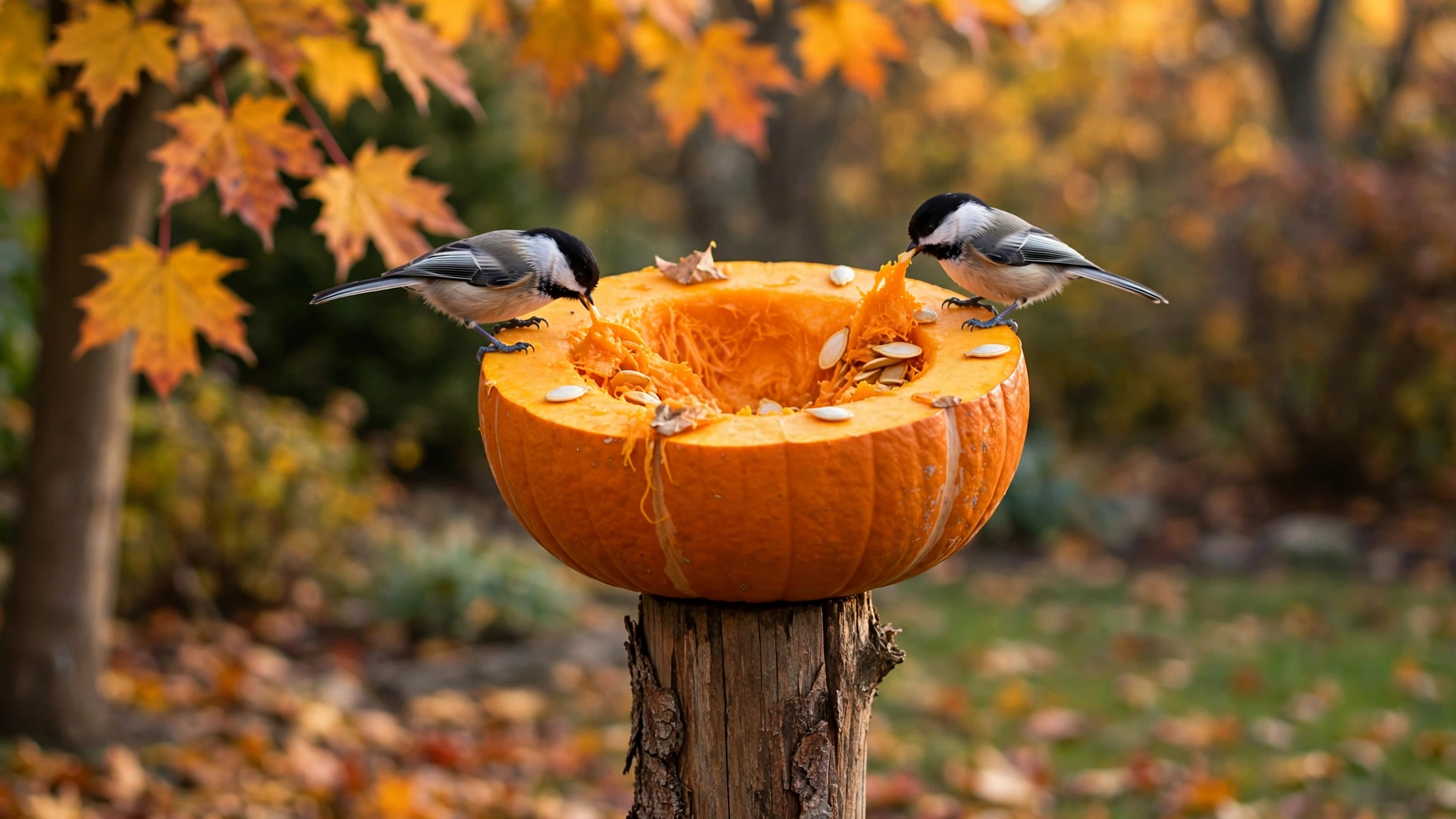
Every October, millions of pumpkins are carved into jack-o-lanterns and then thrown away, which raises a natural question for backyard bird lovers: can birds eat pumpkin? The short answer is yes. Plain raw pumpkin flesh and pumpkin seeds are safe, nutritious treats that many wild birds happily accept.
Pumpkins are rich in fiber, beta-carotene, and healthy fats stored in their seeds, which makes them a genuinely useful fall food just as natural supplies begin to thin out. Instead of tossing your pumpkin in the trash after Halloween, you can turn it into a feast for chickadees, jays, woodpeckers, and many other hungry visitors.
This guide explains exactly how to serve pumpkin to birds, which parts are safe, the six preparations you must avoid, and what pet parrot owners need to know. Follow these simple rules and your fall pumpkins can feed birds for weeks.
In short: can birds eat pumpkin? Yes, wild birds can safely eat plain raw pumpkin flesh and pumpkin seeds, which provide fiber and nutrients. Serve pumpkin halved as a natural feeder or roast seeds plain without salt, oil, or spices. Never offer painted, moldy, wax-coated, or sugared pumpkin to birds.
Is Pumpkin Safe for Wild Birds? What Experts Say
Pumpkin belongs to the cucurbit family (the group of vining plants that also includes squash, cucumbers, and melons), and none of its plain, unseasoned parts are toxic to birds. Wildlife and bird feeding guidance from organizations such as the National Audubon Society consistently advises that the safest treats for wild birds are plain, natural, and free of added salt, sugar, and chemicals. Plain pumpkin checks all three boxes.
The flesh is soft, moist, and easy for birds to peck apart, while the seeds are packed with protein and healthy fats that help birds build energy reserves for cold nights. Unlike many human foods, pumpkin contains no theobromine, no caffeine, and no compounds known to harm birds when served plain.
That safety comes with one big condition. Pumpkin is only safe when it is plain and fresh. Every October, wildlife groups hear the same question, can birds eat pumpkin after Halloween, and the answer stays yes as long as the pumpkin has no paint, chemicals, wax, or mold. Paint, preservatives, candle wax, added sugar, and mold can all turn a harmless pumpkin into a dangerous one.
Can Birds Eat Pumpkin? The Parts That Are Safe
When people ask “can birds eat pumpkin,” they usually mean the whole carved pumpkin sitting on the porch. Almost every part of a plain pumpkin is bird-safe, but some parts are more useful than others.
Flesh: The soft orange flesh is the main attraction. Birds peck it directly from a halved pumpkin, and it provides moisture, fiber, and carotenoids (natural plant pigments that give pumpkins their orange color and support healthy feathers and immune function).
Seeds: Raw pumpkin seeds are safe straight from the pumpkin, and they can also be lightly roasted with no oil, salt, or spices. The seeds are the most energy-dense part of the pumpkin, which makes them especially valuable in late fall.
Pulp and stringy innards: The stringy pulp you scoop out when carving is perfectly safe. Many birds pick through it for seeds, and smaller birds will eat the soft strands themselves.
Rind: The tough outer rind is not toxic, but most small birds ignore it because it is hard to peck. Larger birds like jays and woodpeckers may work on softer spots, and the rind makes a sturdy natural bowl that holds the good stuff.
Which Birds Are Most Likely to Eat Pumpkin?
Not every bird will try pumpkin on day one, but a wide range of common feeder birds take to it quickly once one brave visitor starts pecking. According to feeder-watching guidance from the Cornell Lab of Ornithology, birds learn new foods by watching each other, so a single curious chickadee can start a pumpkin rush at your feeder.
Chickadees and titmice: These bold little birds are often the first to investigate a pumpkin feeder. They hammer at the flesh and carry seeds away to cache for later.
Blue jays: Jays love pumpkin seeds and will wedge them into bark crevices to open them. A jay working a pumpkin is a common fall sight.
Woodpeckers: Downy and hairy woodpeckers chisel into soft pumpkin flesh with ease, especially on a halved pumpkin mounted at feeder height.
Cardinals, nuthatches, and finches: All of these feeder regulars will sample pumpkin flesh and seeds once they discover them.
Expect squirrels, chipmunks, and even deer to visit your pumpkin too. If you want to learn which other kitchen staples are safe, see our guide on whether birds can eat apples.

How to Serve Pumpkin to Birds: The Halved-Pumpkin Feeder
The simplest and most popular way to offer pumpkin is to turn it into a natural feeder. A halved pumpkin needs no construction, looks charming in a fall garden, and lets birds eat exactly the way they would from wild fruit.
Step-by-Step Pumpkin Feeder
Pick a plain pumpkin: Choose a pumpkin that has never been painted, sprayed with preservatives, or used with a real candle inside. A small sugar pumpkin or pie pumpkin works perfectly and is easy to handle.
Cut it in half: Slice the pumpkin into two equal halves and scoop out the seeds if you plan to roast them separately. Leave the rest of the pulp and flesh in place, since birds enjoy picking through it.
Score the flesh: Lightly score the inner flesh with a knife in a crosshatch pattern. This gives small birds an easy starting point and speeds up feeding.
Place it securely: Set the halves cut-side up on a platform feeder, a sturdy stump, or directly on the ground in a quiet spot. In wet weather, a covered spot keeps the flesh fresher longer.
Ground Feeding Option
If you do not want to build anything, simply place a whole or halved plain pumpkin on the ground near shrubs or cover. Ground-feeding birds like juncos, sparrows, and towhees will work on the lower flesh, while bolder birds feed from the top.

Can Birds Eat Pumpkin Seeds? Raw vs Roasted
Pumpkin seeds deserve their own section because they are the most nutritious part of the pumpkin and the part birds get most excited about. Seeds can be served raw straight from the pumpkin, and many birds prefer them that way.
Roasting is optional but useful. Lightly roasted seeds keep longer outdoors, resist mold better, and are easier for smaller birds to crack. To roast seeds for birds, rinse them clean, pat them completely dry, spread them in a single layer on a baking tray, and roast at 300 degrees Fahrenheit for 10 to 15 minutes until lightly golden. Add nothing: no salt, no oil, no butter, no spices.
Let roasted seeds cool fully, then offer them in a tray feeder or scatter them on a platform. For another easy homemade treat, read our guide on whether birds can eat popcorn.

Can Birds Eat Pumpkin Safely? 6 Things You Must Avoid
Plain pumpkin is safe, but Halloween pumpkins are often treated in ways that make them dangerous. Run through this checklist before offering any pumpkin to birds.
Painted or decorated pumpkins: Craft paint, spray paint, markers, glitter, and glue are all toxic hazards. Only offer pumpkins that have never been decorated.
Chemical preservatives: Never offer a pumpkin that was sprayed with bleach, commercial pumpkin preservatives, or pest repellents meant to extend its porch life.
Candle wax and soot: A jack-o-lantern that held a real candle is coated in wax drips and soot, both of which are unsafe. Only use pumpkins that never held a flame; battery candles leave no residue.
Sugary pie filling and spiced products: Canned pumpkin pie filling contains added sugar and spices like nutmeg that birds should not eat. Plain canned pumpkin with no additives is fine in small amounts, but fresh is better.
Salted or seasoned seeds: Salt is dangerous for birds even in small amounts, and flavored seasonings add nothing they need. Seeds for birds must be completely plain.
Moldy or rotted pumpkin: Discard any pumpkin that is soft, slimy, or visibly moldy. Mold produces mycotoxins (harmful toxins made by mold that can sicken or kill birds), so a rotted pumpkin belongs in the compost, not at the feeder. The RSPB advises keeping all bird feeding stations clean and removing spoiled food promptly.
If you remember nothing else from this list, remember this. The answer to can birds eat pumpkin is yes, but only when every item on this checklist passes.
Safe vs Unsafe Pumpkin Preparations: Quick Reference
Use this table as a quick check before you put any pumpkin out for birds.
| Preparation | Safe for Birds? | Notes |
|---|---|---|
| Raw plain pumpkin flesh | Yes | The best and simplest option; serve halved or in chunks |
| Raw pumpkin seeds | Yes | Safe straight from the pumpkin; high in protein and fat |
| Roasted seeds, no salt or oil | Yes | Roast at 300F for 10 to 15 minutes; cool fully before serving |
| Plain canned pumpkin (no additives) | Yes, in small amounts | Check the label; must list only pumpkin |
| Painted or glittered pumpkin | No | Paint, glitter, and glue are toxic to birds |
| Pumpkin treated with preservatives or bleach | No | Chemical residues can poison birds |
| Jack-o-lantern used with a real candle | No | Wax drips and soot contaminate the flesh |
| Pumpkin pie filling or spiced pumpkin products | No | Added sugar and spices like nutmeg are unsafe |
| Salted, buttered, or seasoned seeds | No | Salt is dangerous for birds even in small amounts |
| Moldy or rotted pumpkin | No | Mold produces mycotoxins; compost it instead |
Can Parrots Eat Pumpkin? Advice for Pet Bird Owners
Yes, pet parrots can eat pumpkin too, and many enjoy it. Offer small pieces of raw or lightly cooked plain pumpkin flesh, plus a few raw or plain roasted seeds as treats. Pumpkin makes a healthy seasonal addition to a varied diet of pellets, vegetables, and fruit.
The same safety rules apply indoors. Never give parrots pumpkin pie filling, spiced pumpkin products, salted seeds, or any pumpkin that was painted or treated with chemicals. When in doubt about your individual bird, check with an avian veterinarian before adding new foods.
When to Offer Pumpkin: A Fall Feeding Calendar
October and November are prime pumpkin months. Natural food is still available but starting to decline, and birds are building fat reserves for winter. A pumpkin feeder set out in mid-October can stay busy through Thanksgiving in many regions.
Watch your local weather. In warm climates a halved pumpkin may only last two to three days before softening, while in cool northern falls it can last a week or more. Replace or refresh the pumpkin as soon as the flesh turns slimy or smells sour.
As winter arrives, shift your feeding strategy toward high-energy foods that last in the cold. Our complete guide on what to feed birds in winter covers suet, black oil sunflower seeds, and the other staples that carry birds through freezing months.
How Long Does Pumpkin Last Outdoors?
A halved pumpkin typically stays fresh for three to five days outdoors, depending on temperature and rain. Cool, dry weather extends its life; warm, wet weather shortens it. Check the pumpkin daily and remove it at the first sign of mold, sliminess, or a sour smell.
You can stretch your pumpkin supply by freezing. Cut plain raw pumpkin into bird-sized chunks, freeze them in bags, and thaw only what you need. Clean the feeding area whenever you replace a pumpkin: scrape away old scraps and move the next pumpkin a few feet away.
Can Birds Eat Pumpkin? Frequently Asked Questions
Is raw pumpkin safe for birds, or does it need to be cooked?
Raw pumpkin is completely safe for birds and needs no cooking. The raw flesh is soft enough for most birds to peck, and raw seeds are a favorite.
Can birds eat pumpkin skin?
The tough outer rind is not toxic, but most small birds ignore it because it is difficult to peck. Larger birds like jays may work on softer spots. The rind is most useful as a natural bowl that holds the flesh and seeds birds actually want.
Can birds eat pumpkin guts and stringy pulp?
Yes. The stringy pulp and loose seeds you scoop out when carving are safe and popular. Many birds pick through the pulp specifically to find seeds.
Can birds eat a carved jack-o-lantern?
Only if the jack-o-lantern was never painted, never sprayed with preservatives, and never held a real candle. A plain carved pumpkin used with a battery candle is fine. If any paint, chemicals, wax, or soot touched it, compost it instead.
Can parrots eat pumpkin seeds?
Yes. Parrots can eat raw pumpkin seeds or seeds roasted plain with no salt, oil, or spices. Offer them as an occasional treat rather than a daily staple.
Do pumpkin seeds need to be shelled for birds?
No. Most birds handle whole pumpkin seeds easily. Jays, woodpeckers, and cardinals crack them open, and smaller birds peck at the kernels through cracks.
What should I do with a moldy pumpkin?
Throw it in the compost or trash, never at the feeder. Mold produces mycotoxins that can sicken or kill birds. Replace moldy pumpkins promptly and clean the feeding spot before putting out fresh food.
Fall is the perfect season to turn leftover pumpkins into bird food. So can birds eat pumpkin all season long? Absolutely, as long as each pumpkin you offer is plain and fresh. Offer them plain, keep them fresh, skip every decoration and seasoning, and your backyard birds will enjoy a safe, nutritious treat all season long.





