 Skip to content

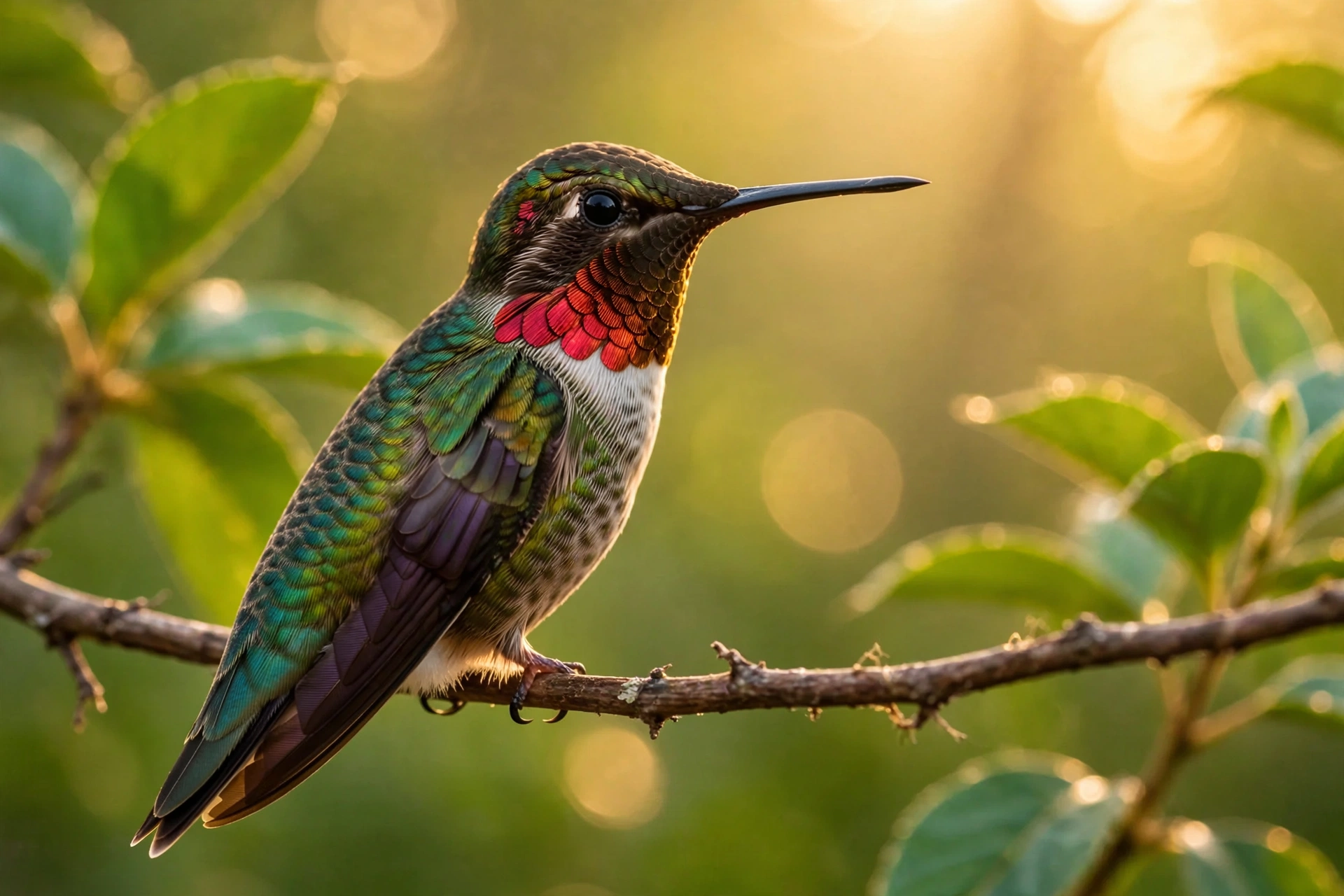
Watch a hummingbird guard a feeder and you would swear it runs on pure adrenaline. Its wings blur at up to 80 beats a second, its heart thunders at more than 1,000 beats a minute, and it burns energy faster than almost any other warm-blooded animal alive. Logic suggests such a frantic engine should burn out quickly. It does not. Most hummingbirds that survive their dangerous first year live for three to five years, and banded individuals have been recaptured at nine, ten, and even twelve years old. That makes these three-gramme birds some of the longest-lived animals for their size on the planet. This guide lays out the real numbers behind hummingbird lifespan, species by species, explains the life stages where most birds are lost, names the verified record holders, and shows how gardeners can give feeder birds their best chance at a long life.
The Short Answer
Once a hummingbird makes it past its first year, the typical wild lifespan is three to five years. That number surprises people, because tiny animals usually die young. Hummingbirds break that rule. Members of the hummingbird family live far longer for their body weight than mice, shrews, or other small mammals, whose fast-burning bodies rarely last more than a year or two.
The catch is the first year. Nestlings, fledglings, and first-time migrants face brutal odds. Cold snaps, predators, empty feeders, and the exhaustion of a maiden migration remove a huge share of each season’s young. Ornithologists estimate that the majority of fledglings never reach their second spring. The birds that return to your feeder year after year are the survivors of that ruthless first-year filter.
Hummingbird Lifespan by Species
Averages hide real differences between species. A non-migratory tropical bird faces different pressures from a long-distance migrant that crosses the Gulf of Mexico twice a year. The table below gives the typical lifespan for adults that survive their first year, alongside the longest confirmed age from bird-banding programmes.
| Species | Typical lifespan after the first year | Longest confirmed record |
|---|---|---|
| Broad-tailed hummingbird | 3 to 5 years | At least 12 years (banded female) |
| Ruby-throated hummingbird | 3 to 5 years | About 9 years |
| Anna’s hummingbird | 3 to 5 years | About 8 years |
| Rufous hummingbird | 3 to 5 years | About 9 years |
| Black-chinned hummingbird | 3 to 5 years | About 10 years |
| Bee hummingbird | 3 to 5 years | 7 to 10 years |
A quick note on how to read these records: banding data sets a minimum age, not an exact one. A bird banded as an adult and recaptured nine years later was already at least a year old at banding, so “about nine years” really means “at least nine”. Because banding covers only a fraction of wild birds, the true maximum ages are probably a little higher than the published figures. The pattern is consistent though: once past the first year, hummingbirds are built to last.
The Life Stages That Decide Lifespan
A hummingbird’s odds of reaching old age are decided long before its second birthday. Each stage of early life filters out the unlucky, the weak, and the unprepared, and only a fraction of each year’s young pass every test.
The Egg
A female hummingbird lays just one or two eggs per clutch, each about the size of a small pea. She incubates them alone for roughly two weeks, leaving the nest only for brief feeding trips. During this window the nest is defenceless against jays, squirrels, snakes, and storms, and a cold snap that keeps the mother away too long can chill the eggs beyond recovery.
The Nestling
Hatchlings are blind, featherless, and utterly dependent. The mother feeds them regurgitated insects and nectar every twenty minutes or so through the daylight hours. If she is killed by a predator or a window strike, the chicks starve within hours. Nestlings that survive grow explosively, sprouting pin feathers within days and fledging in about three weeks.
The Fledgling
New fledglings can fly, but only just. They perch near the nest and beg loudly, still relying on the mother for several more days while their flight muscles strengthen. This clumsy stage is prime time for cat predation. Young birds have also not yet learned which flowers hold nectar or how to dodge territorial adults, so many simply run out of energy before they master feeding.
The First Migration
For migratory species, the first autumn journey is the great test. A young ruby-throated hummingbird must fly hundreds of miles south with no experience of the route, and some populations make a non-stop crossing over open water. Headwinds, storms, and a shortage of stopover flowers kill many first-timers. Birds that complete the round trip have proven their navigation and foraging skills, and their odds improve sharply afterwards. Timing matters too, and you can read more about when hummingbirds migrate each season.
Adulthood
An adult that has survived one full year enters its prime. It knows the flower patches, the safe roosts, and the migration route. From here, lifespan depends mostly on avoiding accidents and bad luck: predators, windows, extreme weather, and food shortages. Healthy adults can then live several more years, returning to the same breeding territories and feeders each season.
The Record Holders
Bird-banding programmes have produced some remarkable ages. The standout is a female broad-tailed hummingbird banded in Colorado and recaptured at least twelve years after banding, making her the oldest wild hummingbird on record. She was still breeding when last seen: a twelve-year-old mother in a three-gramme body.
Close behind, a ruby-throated hummingbird reached about nine years, an extraordinary age for a bird that crosses the Gulf of Mexico twice a year. Bee hummingbirds, the smallest birds in the world, have been recorded living seven to ten years, proving again that small size does not doom a bird to a short life. Anna’s, rufous, and black-chinned hummingbirds have all produced banding records in the high single digits, with the black-chinned reaching about ten.

These records come from recaptured banded birds, reported in banding recovery data and summarised by birding publications such as Birds and Blooms. The data set is small, because only a fraction of wild hummingbirds ever wear a band, and recapturing the same tiny bird years later takes luck as well as science. Still, every long-lived recapture points the same way: the ceiling for hummingbird lifespan sits far higher than their size suggests.
Anna’s hummingbird deserves a special mention. Unlike the ruby-throated, it does not migrate at all along the Pacific coast, yet its banding record still sits around eight years. That tells us something important: the longevity of hummingbirds is not just about surviving migration. Their efficient torpor, high-quality diet, and sharp predator awareness give even stay-at-home species an impressive lifespan.
What Shortens a Hummingbird’s Life
Most hummingbirds do not die of old age. They die of specific, often preventable causes. Understanding them is the first step toward changing the odds in your own garden.
- Outdoor cats: Domestic cats kill enormous numbers of small birds each year, and fledgling hummingbirds perched low near nests are easy targets. A single free-roaming cat can wipe out a whole season’s young from one garden.
- Window strikes: Glass is invisible to birds. Hummingbirds chasing insects or fleeing territorial rivals hit windows at full speed, and many die from the impact or from injuries afterwards.
- Severe weather: Cold snaps and prolonged rain are deadly. Wet, cold hummingbirds cannot feed, and their tiny bodies lose heat fast. A single bad storm during migration can kill thousands of birds at once.
- Spoiled nectar: Sugar water ferments quickly in heat, growing mould and bacteria that cause fatal tongue and crop infections. A feeder left uncleaned for a week in summer becomes a poison station rather than a lifeline.
- Pesticides: Hummingbirds eat huge numbers of small insects, especially when feeding young. Garden pesticides poison this food supply directly and can kill birds outright. Fewer insects also means hungrier chicks.

Hummingbirds do have one remarkable defence against cold nights: torpor, the nightly hibernation-like state they enter to survive until morning. Body temperature and heart rate plummet, cutting energy use to a fraction of normal. A bird that looks lifeless on a branch at dawn may simply be in deep torpor, waiting for sunrise to warm up and feed. It is an elegant survival trick, but it cannot save a bird from an empty feeder, a cat, or a window.
How to Help Feeder Birds Live Longer
You cannot protect a hummingbird from every storm, but a well-kept garden measurably improves its odds. These steps are simple, cheap, and proven to work.
- Clean feeders every two to three days: Rinse with hot water and a bottle brush, and skip soap or rinse it away thoroughly. When temperatures climb above 30C, clean daily.
- Mix nectar correctly: Use one part plain white sugar to four parts water. Never use honey, brown sugar, artificial sweeteners, or red dye. Boiling the water first slows fermentation.
- Make glass visible: Apply decals, tape patterns, or UV stickers to windows near feeders. Alternatively, move feeders to within one metre of the glass so birds cannot build up fatal speed.
- Keep cats indoors: This is the single most effective step a bird lover can take. A catio or supervised outdoor time protects both the birds and the cat.
- Plant native flowers: Tubular native blooms supply nectar plus the small insects that young birds need to grow. Remember that a hummingbird’s diet is far more than sugar water; insects provide the protein that keeps them healthy.
- Leave night-time alone: A roosting bird may be in torpor rather than in trouble. Keep yards dark and quiet after dusk, and never disturb a puffed-up bird on a cold morning.

Hummingbird Lifespan FAQs
Do hummingbirds die after mating?
No. Hummingbirds do not die after mating or after laying eggs, and a healthy female can breed every year of her adult life. The twelve-year-old broad-tailed record holder was still nesting when last recaptured. Mating season is strenuous, especially for males that spend weeks in exhausting territorial battles and display dives, but it is not fatal.
What is the oldest hummingbird ever recorded?
The oldest verified wild hummingbird is a female broad-tailed hummingbird recaptured at least twelve years after she was banded. Among the familiar garden species of eastern North America, the ruby-throated record stands at about nine years. Because banding programmes track only a fraction of wild birds, the true maximum age could be slightly higher.
Do male or female hummingbirds live longer?
The evidence leans slightly toward females. Males burn enormous energy defending territories and performing display dives through the breeding season, and they take more risks in fights. Females invest heavily in nesting but face fewer violent confrontations. Banding records include more very old females than males, though the data set is small and the difference appears modest.
Can you tell how old a hummingbird is?
Only roughly, and only in young birds. Juveniles show duller plumage, spotted throats, and grooved bills that smooth out within a few months. Once a bird reaches adulthood, its appearance stops revealing its age: a three-year-old and an eight-year-old look identical. Only a leg band with a known banding date gives a certain age.
Do hummingbirds return to the same garden every year?
Yes, remarkably often. Banding studies have recaptured the same individuals at the same feeders year after year, which is exactly how the age records were set. Site fidelity is strong: a bird that survives migration tends to return to the territory where it previously succeeded. That loyal visitor at your feeder may well be a five-year-old veteran.
The Final Answer
So, how long do hummingbirds live? Most wild birds that survive their first year live three to five years, and the verified record holders reach nine, ten, and twelve. The first year is the great filter: eggs, nestlings, fledglings, and first-time migrants face odds that remove most of each season’s young. After that, these tiny birds prove surprisingly durable, built to survive cold nights in torpor, cross seas on migration, and return to the same gardens year after year. The biggest threats they face are not old age but cats, glass, storms, dirty feeders, and pesticides, and nearly all of those sit within a gardener’s power to reduce. Keep feeders clean, keep cats inside, make windows safe, and plant real flowers. Do that, and the hummingbird at your feeder this summer may still be visiting for years to come.





