

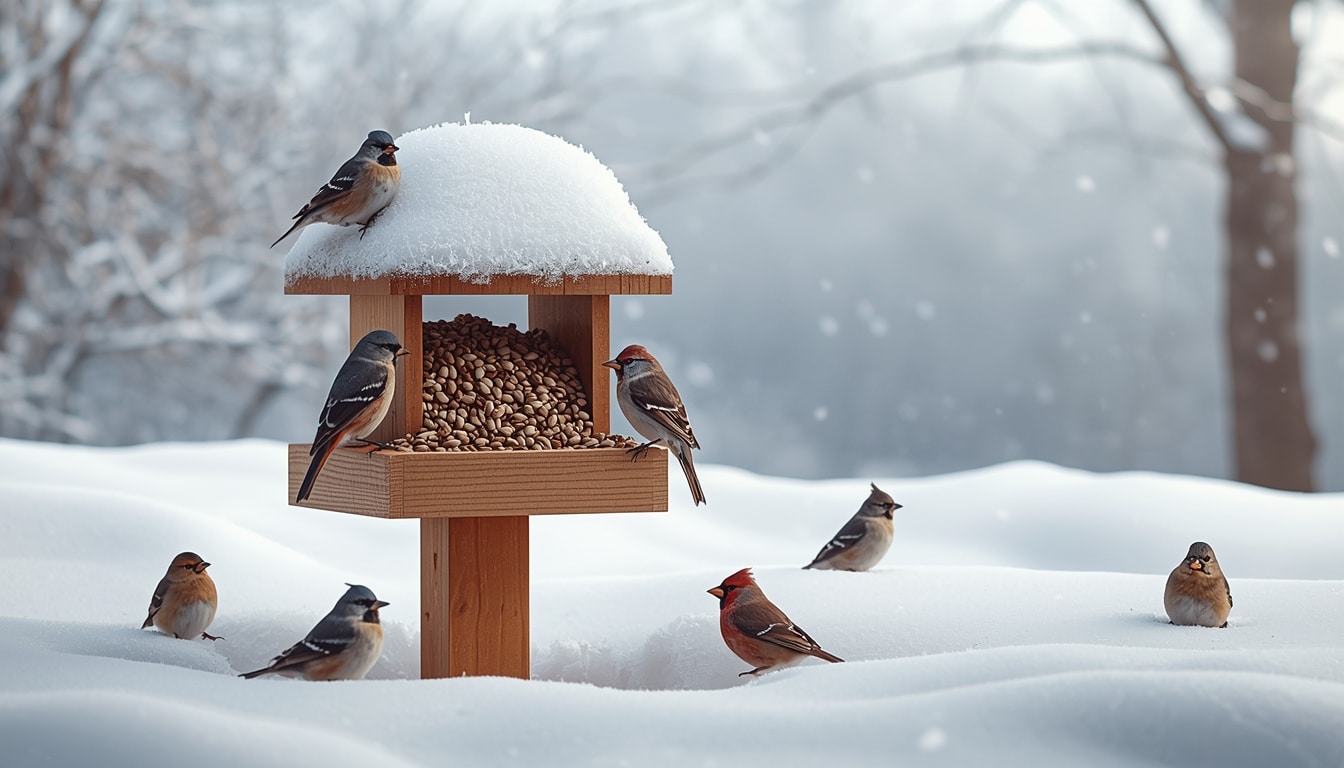
Winter is one of the most critical times of year for wild birds. As temperatures drop and natural food sources disappear beneath snow and ice.
Birds face enormous pressure to find enough calories to survive cold nights and freezing days. Knowing what to feed birds in winter can genuinely make the difference between life and death for the species that visit your yard.
This complete guide covers everything from the best high-energy foods. And feeder setups to freshwater maintenance and the common mistakes many well-meaning backyard birders make during the colder months.
Why Winter Bird Feeding Matters More Than You Think?

Winter bird feeding is more than a kind gesture it’s often the difference between life and death for many species. As temperatures drop, consistent food sources become essential for survival and energy balance.
- Essential Energy Boost: Birds burn massive calories to stay warm, making high-fat foods critical. These answers should tell you whether to feed birds and whether it is good to feed birds. Yes, especially in winter.
- Improved Survival Rates: Reliable feeding stations significantly increase survival during freezing nights.
- Less Energy Waste: Easy access to food reduces long, risky searches, conserving strength.
- Hydration Support: Fresh water prevents dehydration when natural sources freeze.
- Routine Dependence: Birds rely on feeders daily, so consistency matters. Sudden (Overlap in care habits) can be harmful.
- When to Stop Feeding Birds: Many ask when to stop feeding birds or should I stop feeding the birds—generally, reduce feeding in spring when natural food returns.
The Best Foods to Feed Birds in Winter
1. Black Oil Sunflower Seeds
Black oil sunflower seeds are the single best food you can offer at a winter bird feeder. Their thin shells make them accessible to birds of nearly every size, from tiny chickadees to large cardinals and jays.
More importantly, their exceptionally high fat and oil content provides the dense caloric energy birds need to maintain body warmth during freezing temperatures.
A winter bird feeder filled with black oil sunflower seeds can attract a diverse array of birds, including northern cardinals, black-capped chickadees, dark-eyed juncos, white-breasted nuthatches, house finches, purple finches, American goldfinches, tufted titmice, blue jays, evening grosbeaks, and various woodpecker species. No other single type of food draws such a wide range of impressive winter visitors.
2. Suet and Fat Cakes
Suet is rendered beef fat, and it is one of the most important winter bird foods you can offer. Its extreme caloric density makes it indispensable during cold weather when birds need maximum energy for thermoregulation.
Fat cakes, which are suet mixed with seeds, nuts, berries, or insects, are widely available at garden centers and wild bird specialty stores.
Suet is the top winter food for downy woodpeckers, hairy woodpeckers, red-bellied woodpeckers, pileated woodpeckers, white-breasted nuthatches, red-breasted nuthatches, Carolina wrens, and black-capped chickadees.
In cold weather, you do not need to worry about no-melt formulas since low temperatures naturally keep suet firm and fresh. Offer suet in a simple wire cage feeder mounted on a tree trunk or post for the best results.
3. Peanuts and Peanut Hearts
Peanuts are another exceptional winter bird food thanks to their combination of high protein and high fat content.
Shelled peanuts or peanut hearts, which are the inner kernels without shells, are the most practical option for most feeders because they can be offered in tube and platform feeders without the mess of shells.
Crushed or chopped peanuts are particularly helpful for smaller birds that might struggle with whole kernels.
Blue jays, Steller’s jays, scrub jays, red-bellied woodpeckers, tufted titmice, white-breasted nuthatches, Carolina wrens, and downy woodpeckers are among the most enthusiastic consumers of peanuts at winter feeders.
Always use raw, unsalted peanuts sold specifically as bird food. Salted or roasted peanuts designed for human snacking contain sodium levels that can cause serious kidney damage in birds.
4. Nyjer Seeds for Winter Finches
Nyjer seeds, also called niger or thistle, are tiny black seeds with an impressively high oil content. They are the preferred food of small finches and are especially effective at winter bird feeders, where they attract species that many backyard birders rarely see during warmer months.
American goldfinches, which molt into their drab olive winter plumage and are often unrecognized by beginners, remain highly active at winter Nyjer feeders. Pine siskins, common redpolls, and hoary redpolls.
And purple finches are classic winter visitors reliably drawn to Nyjer. Use a specialized finch tube feeder with small ports to offer this seed effectively and minimize waste.
5. White Proso Millet
White proso millet is a small, pale seed that is outstanding for attracting ground-feeding birds during winter. It can be scattered directly on clean snow or bare ground, or offered in a low platform feeder. Its small size and mild flavor make it accessible to a wide range of birds.
Dark-eyed juncos, white-throated sparrows, white-crowned sparrows, fox sparrows, song sparrows, American tree sparrows, mourning doves, and common ground doves all feed readily on white millet through winter. In regions where sparrow diversity is high during the cold months, millet is often the most productive food you can offer.
6. Dried Mealworms and Fruit
Dried mealworms provide high-protein nutrition that supplements the fat-heavy diet of most winter bird foods.
They are particularly effective for attracting eastern bluebirds, which struggle to find insects during winter and are not seed eaters. American robins, Carolina wrens, and yellow-rumped warblers will also take mealworms when they are available.
Halved apples, pears, and softened raisins attract frugivorous species like American robins, cedar waxwings, hermit thrushes, and northern mockingbirds.
These birds are often overlooked at winter feeders because they do not eat seeds, but a simple fruit offering on a platform feeder can bring remarkable winter visitors into view.
What to Feed Birds in Winter From the Kitchen?
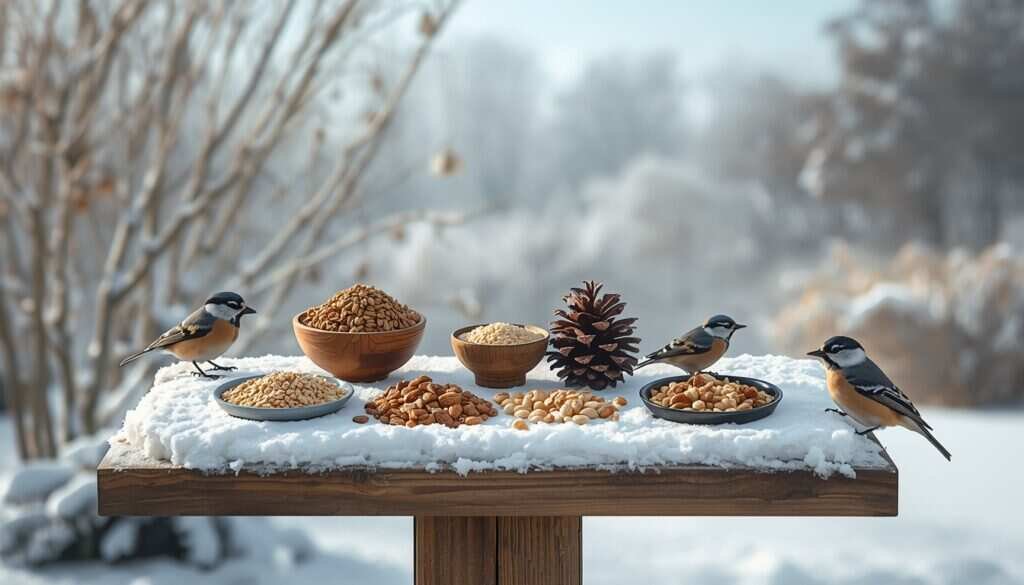
Many common kitchen foods are safe and genuinely beneficial for birds during winter, making it easy to supplement your feeder offerings without an extra shopping trip.
Unsalted, plain cooked oatmeal that has been allowed to cool completely is safe and energy-rich. Unsalted peanut butter spread on a pine cone or pressed into the crevices of tree bark is an excellent high-fat offering that woodpeckers and nuthatches love.
Plain, unsalted nuts, such as walnuts or pecans, broken into small pieces, are nutritious options for jays and titmice. Cooked plain rice, plain cooked pasta, and dry plain cereals with no added sugar or salt can be offered in small quantities.
Cooked or raw lentils are occasionally asked about by backyard birders. Birds can eat plain cooked lentils safely in small amounts.
Though they are not a high-priority food and are more likely to attract house sparrows than other species. Raw dry lentils are difficult for most birds to digest and are best avoided.
Setting Up the Best Winter Bird Feeder
The best winter bird feeders are designed to protect food from moisture and allow birds to feed comfortably even in harsh conditions.
A hopper feeder with a wide roof overhang keeps seed dry during snow and rain. Tube feeders with multiple ports allow several birds to feed simultaneously, reducing competition and stress during the short winter daylight hours.
For suet, a standard wire cage feeder is reliable and inexpensive. An upside-down suet feeder is worth considering if European starlings are a problem in your area, as woodpeckers and nuthatches feed comfortably in this position while starlings cannot.
Platform feeders placed close to the ground are ideal for ground-feeding species like juncos and sparrows. Scatter a generous amount of white millet on a platform or directly on clean snow beneath your main feeders to serve these birds efficiently.
Feeder Placement in Winter
Position winter bird feeders five to ten feet from dense shrubs, evergreen trees, or brush piles that provide quick shelter from predators and weather.
This distance gives birds enough reaction time to escape approaching hawks or cats while still feeling secure enough to feed confidently. Placing feeders too close to heavy cover allows ambush predators like sharp-shinned hawks to use the vegetation as concealment.
In regions with heavy snowfall, mount feeders high enough that they are not buried or blocked by snow accumulation.
Check feeders daily during snowstorms since food can disappear rapidly when birds have few other options and are feeding intensely to build energy reserves.
DIY Bird Feeder Ideas for Winter
A homemade bird feeder or DIY bird feeder is a simple and cost-effective way to expand your winter feeding station.
One of the easiest options is a pine cone feeder: roll a large pine cone in unsalted peanut butter, press sunflower seeds and millet into the peanut butter coating, and hang it from a tree branch with garden twine. Birds will be drawn to it within hours.
A simple platform feeder can be made from a single piece of untreated lumber with small wooden edges to prevent seed from blowing off.
Drill a few small drainage holes in the base to prevent water pooling and mount it on a post or hang it from a tree with wire. This DIY bird feeder works beautifully with a winter seed mix of sunflower seeds and white millet.
A suet cage DIY bird feeder can be made from hardware cloth bent into a rectangular cage shape and secured with wire. Fill it with homemade suet made from rendered lard mixed with peanut butter, cornmeal, and sunflower seeds poured into a mold and allowed to set in the refrigerator.
Providing Fresh Water in Winter
Water is often the most overlooked aspect of winter bird feeding, yet it may be the single most important resource you can provide.
Birds become dehydrated even in snowy conditions because frozen water is unavailable for drinking, and eating snow forces the body to expend precious energy warming it to liquid form.
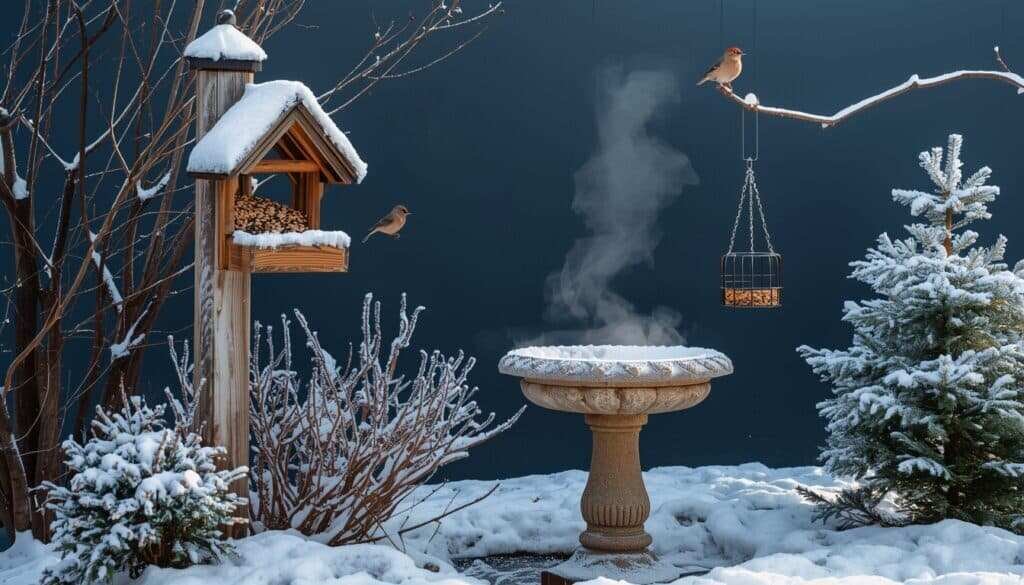
A heated birdbath with a built-in thermostat or an add-on submersible heater keeps water liquid even when temperatures drop well below freezing. This feature makes your yard extraordinarily attractive in winter and draws species that might otherwise pass through without stopping.
Change the water every two to three days even in cold weather to prevent algae and bacterial buildup. Keep the bath clean with a stiff brush, avoiding bleach solutions near a heating element. Position it in a sheltered but visible location where birds feel safe landing and bathing.
Consistency is the Most Important Winter Feeding Habit
Once birds discover your winter bird feeder and begin relying on it as a food source, consistency becomes critically important.
Birds develop mental maps of reliable food locations in their home territory, and they return to these spots repeatedly throughout the day, especially during snowstorms when other foraging options are eliminated.
Allowing feeders to run empty for even a day or two during harsh winter weather can be genuinely harmful to birds that have come to depend on your yard. Make a habit of checking feeder levels daily during cold snaps and keeping a supply of seed, suet, and peanuts in storage so you never run out unexpectedly.
Keep feeders clean throughout winter by removing spoiled seed promptly and performing a thorough cleaning at least once a month. A well-maintained feeding station is not only healthier for birds but also more attractive, drawing a greater diversity of species to your yard across the entire season.
Final Thoughts
Knowing what to feed birds in winter and doing it consistently is one of the most impactful things a backyard birder can do for local wildlife. By stocking your winter bird feeder with high-fat, high-calorie foods like black oil sunflower seeds, suet, and peanuts.
By providing fresh, unfrozen water and maintaining clean, reliable feeding stations throughout the cold months, you create a genuine sanctuary that helps birds survive and thrive until spring arrives.
Start with the basics, stay consistent, avoid harmful foods, and enjoy the remarkable winter bird activity that a well-managed feeding station brings to your yard all season long.



[…] What to Feed Birds in Winter: The Complete Guide […]
[…] What to Feed Birds in Winter: The Complete Guide […]
[…] What to Feed Birds in Winter: The Complete Guide […]
[…] half of all bird species are experiencing decreasing […]
[…] numbers are stark. Bird populations are declining at a pace that alarms scientists, conservationists, and ordinary backyard […]
[…] you’ve ever asked why birds scream at night and wondered whether it’s just your bird being dramatic, here’s the truth: it might be pure […]
[…] and clearly says “hello” for the very first time. It’s startling, delightful, and for many bird owners, utterly […]
[…] belong to the genus Agapornis, a name derived from the Greek words agape (love) and ornis (bird). This genus sits within the broader Psittacidae family, the true parrots, making lovebirds […]
[…] majority of biting incidents. Understanding them is the essential first step toward stopping your bird from biting for […]
[…] elements align, even a modest yard becomes irresistible, proving that attracting birds to your bird feeder really comes down to meeting their instincts, not just filling a tray with […]
[…] asking yourself why your cockatiel isn’t eating, first take a step back and see whether your bird is just eating a lot less or has all of a sudden stopped eating altogether. Sometimes a new […]
[…] shift your feeding strategy toward high-energy foods that last in the cold. Our complete guide on what to feed birds in winter covers suet, black oil sunflower seeds, and the other staples that carry birds through freezing […]
[…] air, while matted or dirty feathers lose their warmth. Pair open water with the right menu from our winter bird feeding guide, and your yard becomes a full-service winter refuge. Conservation groups like the National Audubon […]
[…] the folklore, there was the bird itself. Picture a village centuries ago, with no electric light and no explanation for the […]
[…] ten degrees, cutting the energy they burn while they sleep. Together these strategies let a 12-gram bird survive nights that would kill a human in […]
[…] about 51,000 eBirders submitting checklists, 7,935 species, and 2.4 million individual bird observations. The live dashboard, still being updated when checked on October 21, had climbed a […]
[…] wherever open hunting ground and prey remain. Migration is a strategy, not a rule, and each bird is weighing the same equation: is staying worth the […]
[…] crimson involves diet, hormones, honest advertising, and one of the strangest colour mutants in the bird […]
[…] you’re either just starting out as an owner or a seasoned bird enthusiast, getting to know the various types of lovebirds – from the cheerful little peach-faces […]
[…] a hand-raised bird from a specialized breeder can push well past it. And the price of lovebirds in 2026 reflects […]
[…] the bird world, lifespan stretches from about 2 years for some small songbirds to more than 80 years for the […]
[…] the disease is, so it makes sense to ask: can birds get rabies, and do you need a shot after a bird […]
[…] spaced caws to announce that this patch of ground is claimed. McGowan compares it directly to bird song: it tells neighbors and intruders alike that the bird is present and the territory is […]
[…] matter. A heavy cover with no airflow can trap heat, a loose or frayed one can catch toes, and a bird that panics under a full cover needs a different plan. This guide lays out what vets say about […]
[…] than 10,000 bird species share this basic tool, yet beak shapes vary enormously from one species to the next. Each […]
[…] trends are slowly redrawing this map. With winters warming, Christmas Bird Count data and eBird reports show bluebirds wintering farther north than they did a generation ago. […]
[…] magpies, and jays. Corvids carry some of the largest brains, relative to body size, in the bird world. Over the past three decades, scientists have tested them the way they once tested […]
[…] Geese are aggressive because they are highly protective parents with almost no physical weapons. Aggression peaks in the breeding and nesting season, roughly March through June, when male geese (ganders) defend mates, nests, eggs, and goslings against anything that approaches. Canada geese nest on the ground near ponds and paths, so people wander into their territory constantly. Outside breeding season, flocks are usually tolerant. Attacks on humans are rare and almost always defensive. A goose that is docile in October can charge head-down in March, because the context changed, not the bird. […]
[…] fly badly, wobble on branches, or sit dazed on the ground. Most recover on their own, but a drunk bird is a vulnerable bird, and a little help from you can keep it […]
[…] pet bird gets none of that. Food arrives in a bowl. Water arrives in a bottle. The same toys hang in the […]