 Skip to content

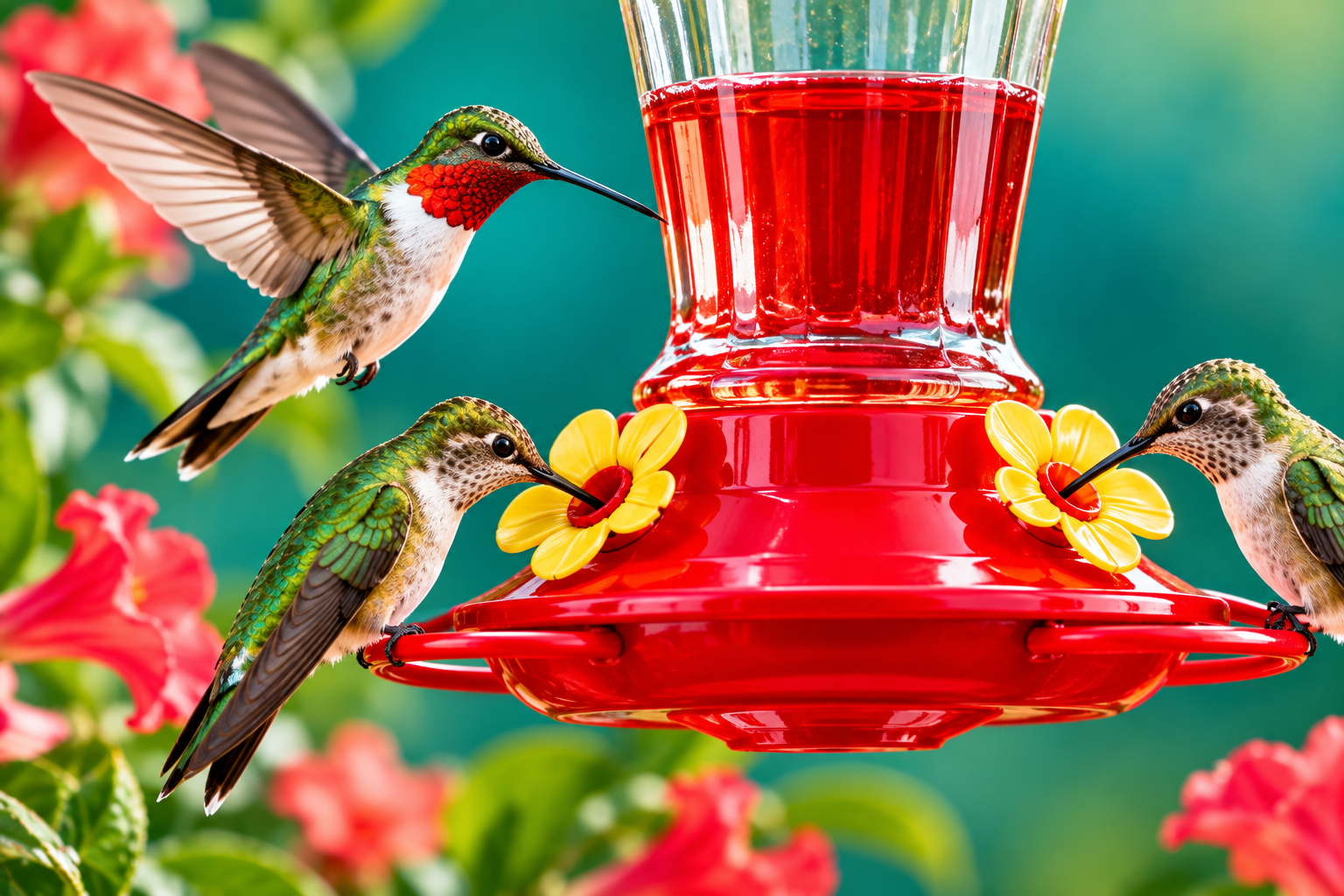
Most backyard feeders fail for the same boring reason: nobody cleans them. A hummingbird feeder is just a sealed reservoir of sugar water with feeding ports sized for a bird that weighs about as much as a nickel simple hardware, high stakes.
Sugar water in warm weather is a growth medium, and a neglected feeder can turn cloudy, ferment, or develop black mold that can get on a bird’s bill and tongue.
Get four things right and everything else sorts itself out: the feeder you buy, the nectar you mix, how often you scrub it, and where you hang it. Get any one of them wrong and you either see no birds at all or, worse, you host birds at a feeder that’s hurting them.
This guide walks through feeder types, the correct nectar recipe, a cleaning routine you’ll actually stick to, smart placement, and how to shut down ants, bees, and wasps.
What Is a Hummingbird Feeder?

A hummingbird feeder holds a sugar-water solution that mimics flower nectar and releases it through small ports the birds reach with their long bills and tongues.
Hummingbirds burn fuel at an extraordinary rate, hovering in place with wingbeats too fast for the eye to resolve, and they refuel constantly. Sugar water is pure, fast energy, which is exactly why a feeder works.
Most designs share the same parts: a reservoir, a base with feeding ports, usually red accents to catch a bird’s attention, a gasket or seal, and a hanger or mounting bracket. Some include a built-in moat to block ants and perches for resting birds.
The maintenance piece isn’t optional. Warmth, sun, and sugar combine to spoil nectar and breed mold, so a feeder is a recurring chore rather than a one-time purchase.
Feeders supplement, they don’t replace. Hummingbirds also need protein from insects and spiders, plus real blossoms. Pairing a hummingbird bird feeder with native nectar plants gives birds a natural food supply that keeps working when your feeder is empty or down for cleaning.
Types of Hummingbird Feeders
Saucer or Dish-Style Hummingbird Feeder
The flat, shallow design most experienced feeder-keepers eventually switch to. Nectar sits in a basin below the ports, so it can’t dribble out under pressure, and the whole thing comes apart into two or three pieces you can scrub in a minute. Less leaking means fewer ants and fewer bees. Many models have a built-in ant moat in the center post.
Bottle-Style Hummingbird Feeder
The classic inverted reservoir with a tube or jar on top and ports at the bottom. It holds more nectar and is easy to eyeball from across the yard. The tradeoff: heat expands air inside the bottle and pushes nectar out the ports, which drips, attracts insects, and leaves sticky residue. Narrow necks also make scrubbing awkward without a bottle brush.
Window Hummingbird Feeder
A small feeder that suction-cups directly to the glass. Capacity is tiny, so you refill often, but the viewing is unbeatable and the feeder sits close enough to the window that birds can’t build up dangerous collision speed. Good choice for apartments, balconies, and anyone without a tree to hang from.
What Color Should a Hummingbird Feeder Be?
Red. Hummingbirds are drawn to red and orange, and red on the feeder body does the advertising work that red dye in the nectar should never do. Clear or lightly tinted reservoirs let you see when the nectar is cloudy — a useful feature.
Should a Hummingbird Feeder Have Perches?
Perches help. Hummingbirds hover to feed, but they’ll gladly sit if given the chance, and a perched bird drinks longer and burns less energy. Perches also give you better photos. They don’t deter birds in any way, so pick a model that has them.
How to Choose the Right Hummingbird Feeder
Buy for maintenance, not for looks. The prettiest feeder in the store is often the one with a dozen crevices you can’t reach.
- Match capacity to your traffic. Nectar spoils on a clock, not on a schedule, so a giant reservoir in a yard with two regular visitors just means you’re dumping half-full feeders. Start small. If birds drain it daily, size up or add a second feeder.
- Demand easy cleaning. Pick up the feeder in the store and take it apart in your hands. If the base separates from the reservoir without tools and every surface is reachable with a brush or a finger wrapped in a cloth, it’s a keeper. Feeders with sealed decorative chambers or fused ports are a headache you’ll pay for weekly. Dishwasher-safe on the top rack is a bonus, not a substitute for scrubbing.
- Check for leaks. Look for a real gasket where the parts join and threads that seat cleanly. Saucer designs leak less by physics. A leaky bird feeder for hummingbirds wastes nectar, coats the base in sugar, and summons every ant within fifty feet.
- Look for ant protection. A built-in moat — a small cup you fill with plain water above the reservoir — is the single best feature on the box. If the feeder doesn’t have one, buy a separate hanging moat and factor that into the cost.
How to Make Hummingbird Feed
The hummingbird feeder nectar recipe is one part plain white granulated sugar to four parts water. That’s it. This ratio approximates the sugar concentration of natural flower nectar, and there’s no reason to deviate from it.
Mix it:
- Measure sugar and water — for example, one cup of sugar to four cups of water.
- Stir until the sugar fully dissolves and the liquid runs clear with no grit at the bottom.
- Cool the mixture to room temperature before it goes anywhere near a feeder.
- Fill the feeder and refrigerate the leftovers.
Should you boil the water? You don’t have to. Hot tap water dissolves sugar fine. Boiling does slow down spoilage slightly by killing microbes in the water, and it helps sugar dissolve in a big batch, but it doesn’t sterilize the feeder — the feeder is where contamination actually starts. If you boil, let it cool completely first. Hot nectar warps plastic and can injure a bird.
Skip the red dye. Red food coloring adds nothing nutritionally, its safety for hummingbirds is unestablished, and the red parts of the feeder already attract birds.
Never use: honey (ferments and grows dangerous fungus), brown sugar, raw sugar, or turbinado (the molasses content is bad for birds), artificial sweeteners (zero calories, so birds starve on a full stomach), fruit juice, or Jell-O.
How to Fill a Hummingbird Feeder Correctly
Fill only what the birds will drink before the nectar goes bad. In many yards that’s a quarter or a third of the reservoir, especially early in the season. Underfilling costs you nothing and saves you from pouring good sugar water down the drain every three days.
Refill on the same schedule you clean: roughly every two days in hot weather, every four or five days when it’s cool. If the nectar looks cloudy, stringy, or has black specks, it’s past due regardless of the calendar. Empty it, scrub it, and start fresh — never top off old nectar with new.
Store extra nectar in a sealed jar or bottle in the refrigerator, where it keeps for about two weeks. Let it warm to room temperature before refilling, or fill the feeder and give it a few minutes in the shade.
How to Clean a Hummingbird Feeder
The question of how often to clean a hummingbird feeder has one honest answer: every time you refill it. In temperatures above the 80s, that’s every other day. In mild weather, every four to five days. Hot, sunny spots ferment nectar fast, and fermented nectar smells sour and turns cloudy — pull it immediately.
You’ll need hot water, a bottle brush, a small port brush or pipe cleaners, and white vinegar. Distilled white vinegar cuts sugar film and kills mold without leaving residue.
- Take the feeder completely apart — reservoir, base, gaskets, perches, ant moat, everything that separates.
- Dump any remaining nectar and rinse every piece under hot running water.
- Scrub the reservoir with a bottle brush, working the sides and the bottom seam where film collects.
- Clean each feeding port with a port brush or pipe cleaner until the plastic squeaks. This is where mold hides.
- Soak moldy parts in a solution of one part white vinegar to four parts water for an hour, then scrub again. For stubborn black spots, add uncooked rice to the vinegar solution and shake the reservoir hard — the grains scour spots a brush can’t reach.
- Rinse everything thoroughly with clean water, several passes, until there’s no vinegar smell.
- Air-dry or towel-dry the parts, then reassemble and refill.
Dish soap is fine if you rinse obsessively — soap residue repels birds and may irritate them. Bleach works too at heavy dilution, but vinegar does the job with less risk, so there’s rarely a reason to reach for it.
Where to Place a Hummingbird Feeder
Good hummingbird feeder placement comes down to shade, shelter, and safety.
- Pick a shady spot. Morning sun with afternoon shade is the sweet spot. Direct sun heats the reservoir, ferments the nectar faster, and on bottle feeders pushes sticky drips out the ports. Can you hang a feeder in full sun? You can, but plan on changing nectar daily and expect more insects.
- Hang it near natural cover. Hummingbirds like a shrub, small tree, or trellis within ten to fifteen feet where they can perch, guard the feeder, and dive for safety. A feeder stranded in the middle of open lawn gets less traffic.
- Keep cats out of range. Don’t hang a feeder above dense ground cover or within pouncing distance of a fence, deck rail, or low branch an outdoor cat can stage from.
- Mind the glass. The best place to put a hummingbird feeder relative to a window is either within about three feet of it — too close for a bird to build up speed — or more than thirty feet away. The middle distance is where collisions happen.
How to Keep Ants Out of a Hummingbird Feeder
Ants find sugar water fast, and once a trail is established they’ll drown in the ports and foul the nectar.
- Hang an ant moat above the feeder. It’s a small cup on the hanging wire that you fill with plain water. Ants can’t cross it. Refill it — moats evaporate dry in summer heat and quietly stop working. Never fill a moat with oil; it gets on feathers and ruins a bird’s insulation.
- Stop the leaks. Ants follow drips. Tighten the reservoir, replace worn gaskets, and switch to a saucer-style feeder if a bottle model keeps dribbling.
- Wipe the outside. Sticky residue on the base and hanger is an open invitation. Clean the exterior every time you refill.
- Never spray insecticide on or near the feeder, the pole, or the hanging wire. It’s toxic to hummingbirds and it contaminates the nectar.
How to Keep Bees and Wasps Away From a Hummingbird Feeder
Bees and wasps want the same sugar the birds want, and a leaking or overfilled feeder gives them easy surface access.
Move the feeder a few yards. Insects orient to a fixed location and often lose the feeder entirely, while hummingbirds find it again within a day.
Switch to a saucer feeder with bee guards. The nectar sits well below the port, out of reach of short insect mouthparts but easy for a hummingbird’s long tongue.
Keep the exterior spotless and wipe up every drip. Skip nectar traps and sprays, which kill pollinators and solve nothing.
How to Attract Hummingbirds to a Feeder
Relationships between hummingbirds and feeders start with basics done right.
- Mix nectar at the standard ratio. Weak sugar water isn’t worth the flight; heavy syrup is hard on the birds.
- Hang it where it’s visible. Birds find feeders by sight, so give it an open sightline from above and don’t bury it inside a hedge. Red ribbon tied near the feeder helps during the first week.
- Plant flowers around it. Tubular red and orange blooms pull birds into the yard, and the feeder catches them once they arrive.
- Keep it clean and fresh. Hummingbirds remember bad nectar and stop visiting. Consistency builds a route.
- Add feeders if the yard is big. Males defend a single feeder aggressively. Hang two or three out of sight of each other and traffic multiplies.
Give it time — new feeders can sit untouched for a couple of weeks before the first bird commits.
Why Wrap a Hummingbird Feeder in Foil?
The foil trick shows up online as an ant deterrent and, in some versions, a way to reflect sunlight and keep nectar cool. Some people wrap the hanging wire, betting ants won’t cross the slick surface.
It’s not necessary, and it works poorly. Ants walk on foil, and wrapping the reservoir hides the nectar level so you can’t see when it’s spoiling. Loose foil edges can also be sharp.
Use a water-filled ant moat and shade instead. Both do the job the foil is supposed to do, and neither blocks your view of the nectar.
Common Hummingbird Feeder Problems and Solutions
| Problem | Likely cause | Fix |
|---|---|---|
| Cloudy or stringy nectar | Heat, sun, old nectar | Empty, scrub, move to shade, refill more often |
| Black specks in ports | Mold | Vinegar soak, port brush, rinse hard |
| Ants swarming | Leak or dry ant moat | Refill moat, seal or replace feeder |
| Bees and wasps | Nectar too close to port | Switch to saucer feeder with bee guards |
| Nectar dripping | Sun expansion, bad gasket | Move to shade, replace gasket |
| No visitors | New feeder, hidden spot, bad nectar | Wait, relocate, verify the recipe |
| One bird chasing others off | Territorial male | Add feeders out of sight of each other |
Hummingbird Feeder Maintenance Checklist
- Daily: Check the nectar level and the ant moat; wipe drips off the base.
- Every 1–3 days: Empty, wash, and refill with fresh nectar.
- Hot weather (above the 80s): Change nectar daily and scrub every other day.
- Weekly: Deep-clean with a vinegar soak and inspect gaskets for wear.
Hummingbird Feeder Safety Tips
Cool nectar completely before filling. Skip red dye, honey, brown sugar, and artificial sweeteners. Never use oil in an ant moat or insecticide near the feeder. Rinse away all soap and vinegar. Hang the feeder out of reach of cats, and either very close to glass or well away from it.
Frequently Asked Questions About Hummingbird Feeders
What’s the best feeder type? Saucer-style. It leaks less, resists insects, and comes apart for cleaning in seconds.
What’s the correct sugar-to-water ratio? One part white granulated sugar to four parts water, always.
How often should the feeder be cleaned? Every refill — every two days in hot weather, every four to five days when it’s cool.
Is cold nectar from the fridge okay? Let it come to room temperature first. Cold nectar is a shock to a tiny bird and it won’t hurt to wait.
Can brown sugar or food coloring be used? No to both. Brown sugar contains molasses that’s harmful to hummingbirds, and red dye offers no benefit — the red on the feeder already does the work.
Should feeders come down in fall? Leave them up a couple of weeks after the last bird leaves for late migrants.
Final Takeaway
Feeder success is four habits, repeated:
- Choose a saucer-style feeder that comes apart easily and has an ant moat.
- Mix one part white sugar to four parts water — nothing else.
- Clean and refill every two to five days depending on heat.
- Hang it in shade, near cover, safe from cats and windows.





