 Skip to content

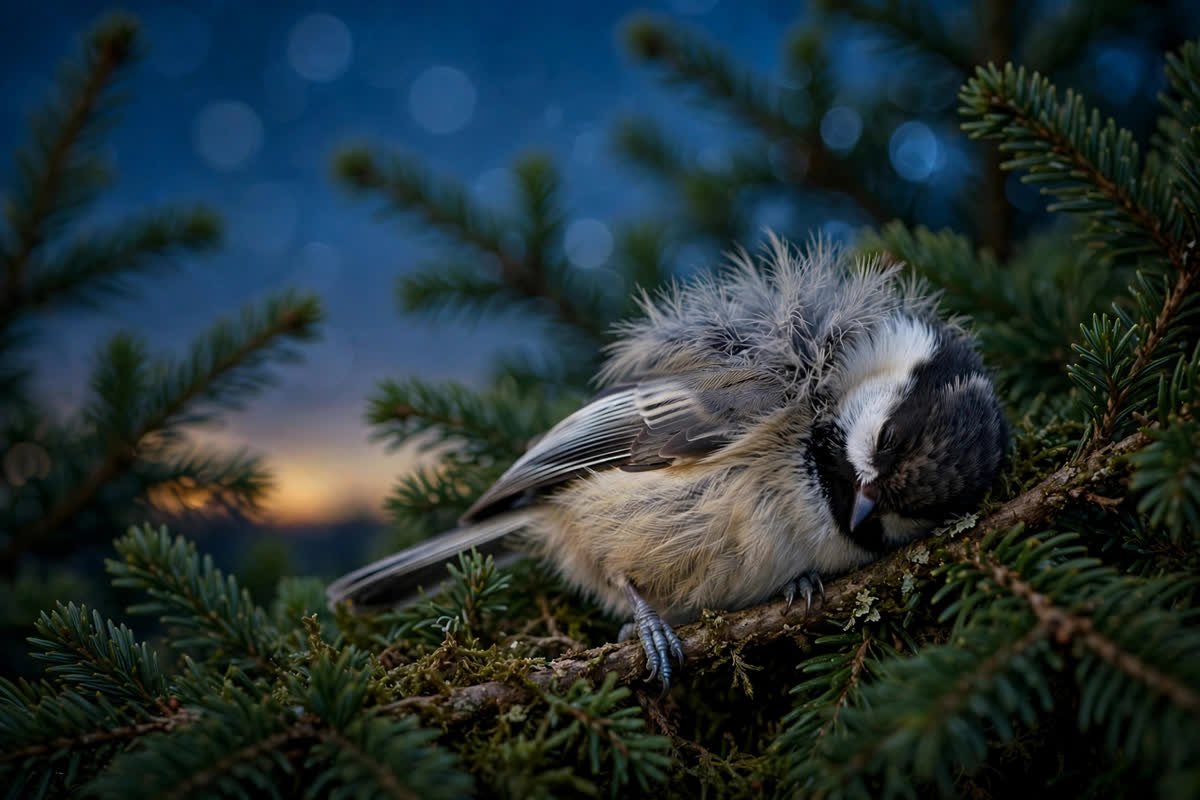
Watch a backyard feeder at sunset and you will see the dinner rush wind down. One by one, the chickadees, cardinals, and sparrows melt into the trees. By full dark the yard looks empty. So where do birds sleep at night?
The short answer is that they roost: they settle into sheltered spots chosen for safety, warmth, and a fast escape route. A chickadee may tuck itself into dense evergreen branches a few yards from your feeder. A duck sleeps floating on the pond with its head folded into its back feathers. An owl, meanwhile, runs the schedule in reverse and is just waking up.
This guide reveals the roosting secrets behind those disappearances. You will learn how birds rest with half their brain awake, how their feet lock onto branches with zero effort, where different groups spend the night, and what you can do in your own yard to give roosting birds a safer place to rest.
How Birds Fall Asleep Without Falling Off
Before looking at roosting spots, it helps to understand the machinery that makes avian sleep possible. Birds face a problem people never do: they must rest for hours while clinging to a branch, floating on water, or even flying, all in a world full of things that want to eat them. Evolution answered with three remarkable adaptations.
Half the Brain Sleeps While the Other Stands Guard
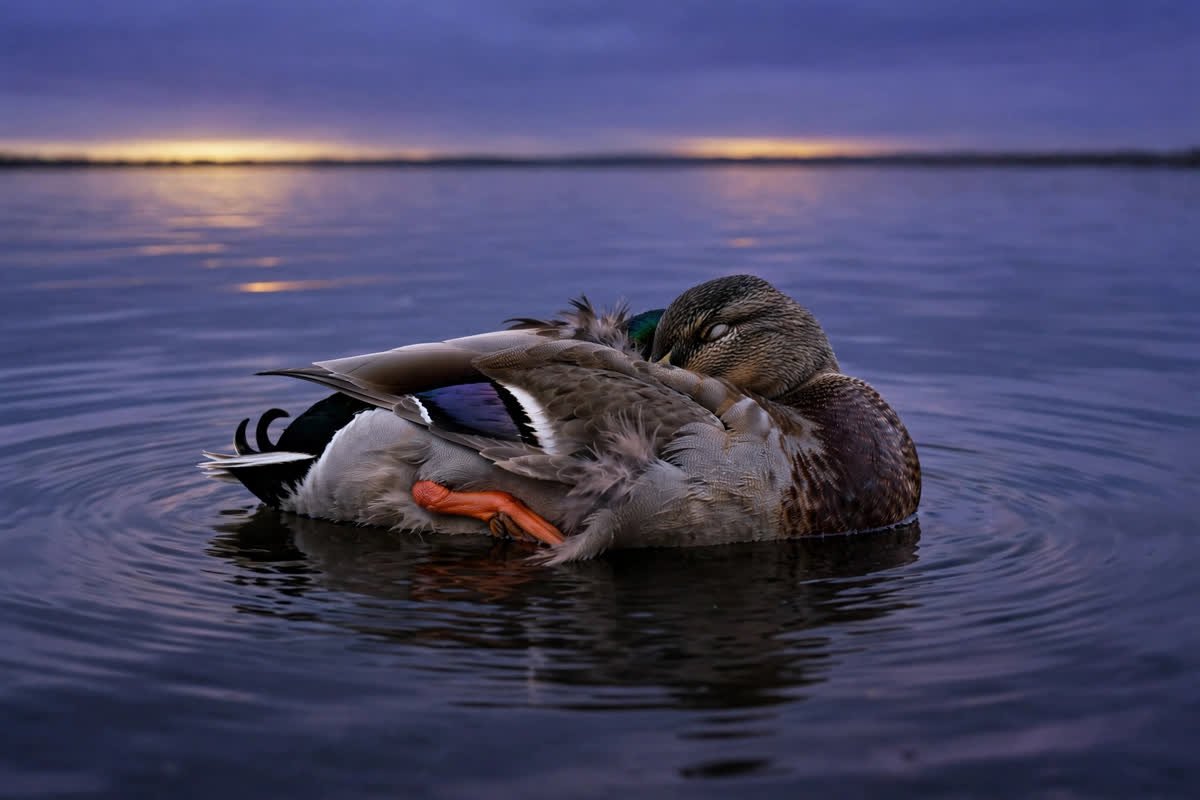
Many birds use unihemispheric slow-wave sleep, which means one hemisphere of the brain rests while the other stays alert. The eye wired to the awake half stays open, so the bird keeps a literal lookout while it dozes. Researchers watching mallards found that ducks on the edge of a sleeping flock kept the outward-facing eye open to catch movement, while birds in the middle slept more deeply. Move an edge duck inward and it relaxes within minutes, swapping to deeper rest.
This split-screen mode is a trade-off. One-eye-open sleep is shallower and less restorative than full sleep, but staying alive until dawn wins the bargain whenever predators prowl nearby. In a genuinely safe spot, birds can shut down both hemispheres at once and sleep the way people do.
A Built-In Lock Keeps Them on the Branch
The reason sleeping birds do not tumble off their perches is pure anatomy. Flexor tendons run down the back of a bird’s leg and along the underside of its toes. When the bird settles and its ankle bends under its own weight, those tendons pull tight and curl the toes closed around the branch. The grip needs no muscle effort at all, so it never loosens during sleep. When the bird straightens its legs at dawn, the tendons release and the toes open.
Flamingos take the idea further. Scientists studying flamingo legs discovered a passive stay apparatus of ligaments that locks the leg joints in place, letting the birds doze on one leg for hours with almost no muscular work. Tucking the other leg into warm feathers also cuts heat loss through bare skin, a trick herons and ducks use too.
Birds Nap in Bursts, Not One Long Stretch
Rather than a single unbroken block of sleep, many birds rest in short cycles through the dark hours, waking briefly and settling again. This broken pattern adds another layer of protection, because each waking moment is a chance to scan for danger. The short bouts still add up to a full night of rest.
Artificial light can scramble this rhythm. Bright, unshielded outdoor lighting acts like a false dawn, shifting birds’ internal clocks and fragmenting their sleep, which is one more reason to keep yard lighting warm, dim, and aimed downward.
Where Do Birds Sleep at Night? Roosting Spots by Bird Group
The roost a bird picks depends on its body, its predators, and the landscape around it. From treetops to open water to the insides of chimneys, here is where the main groups spend the night.
Songbirds: Hidden in Dense Foliage
Chickadees, finches, cardinals, and robins mostly roost in trees and shrubs with thick cover. Dense evergreen branches are prime real estate because they block wind, shed rain and snow, and hide the bird from owls and other night hunters. The birds fluff their feathers to trap warm air, tuck the bill into back feathers to warm each breath, and settle high enough that ground predators cannot reach them.
Cavity Roosters: Woodpeckers, Nuthatches, and Wrens
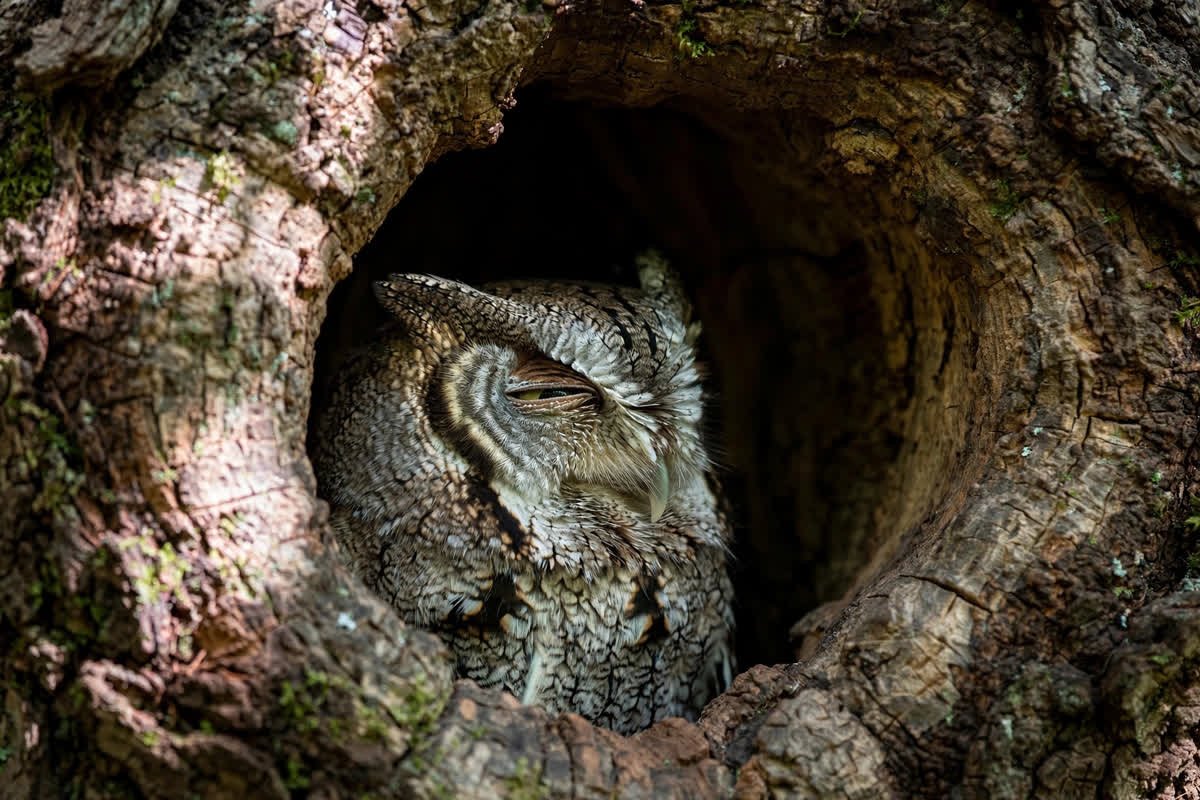
Some birds sleep indoors. Woodpeckers roost in the cavities they excavate, and chickadees, nuthatches, and bluebirds squeeze into old woodpecker holes, natural hollows, or nest boxes. An enclosed space traps body heat and shuts out both weather and predators. A few small birds take togetherness further: wrens have been found piling into a single cavity on bitter nights, sharing warmth body to body.
Waterfowl: Asleep on the Water
Ducks, geese, and swans often sleep floating. Water puts distance between them and foxes, raccoons, and other land predators, and any ripple or splash gives early warning. Cornell’s life-history account of the snow goose notes that during migration and winter these birds roost mainly at night and afloat. They sleep sitting, standing on one leg, or paddling slowly, heads tucked back into fluffed feathers, sometimes with half the brain awake and watching.
Swifts and Swallows: Clinging to Vertical Walls
Chimney swifts spend the night clinging to the inside of chimneys and other vertical shafts, pressed flat against the surface with stiff tail feathers braced for support. Barn swallows pack into reed beds by the hundreds. Before migration, Vaux’s swifts gather by the thousands in a single chimney, with as many as 35,000 recorded at one site, and they let their body temperature drop into torpor on cold nights to save energy.
Owls: Roosting on the Day Shift
Owls flip the whole schedule. They hunt at night and roost by day, tucked motionless against tree trunks or inside dense foliage where their camouflage makes them nearly invisible. Long-eared owls even roost communally in winter, gathering in pine stands near open hunting ground. Because they sleep while most birds are active, they pick spots that hide them from mobbing songbirds as well as from larger predators. For more on these night hunters, see our complete guide to owl species, habitat, diet, and behavior.
The True Aerialists: Sleeping on the Wing
Some birds barely land at all. Tracking studies have recorded common swifts staying airborne for months at a time, feeding on the wing, and researchers believe they catch rest mid-flight too. The clearest proof of in-flight sleep comes from great frigatebirds: EEG recordings published in Nature Communications showed them napping while soaring over the open ocean, usually with one brain hemisphere at a time, totaling only about 42 minutes of sleep per day during long flights. They doze mostly while circling in rising air, keeping the eye linked to the awake hemisphere pointed in the direction of travel.
Closer to home, most migratory songbirds travel through the night during the spring and fall migration seasons, navigating by the stars and Earth’s magnetic field. That is one reason your feeders can empty out each evening in season: some of those birds are not just roosting, they are leaving town.
Communal Roosts: Safety in Numbers
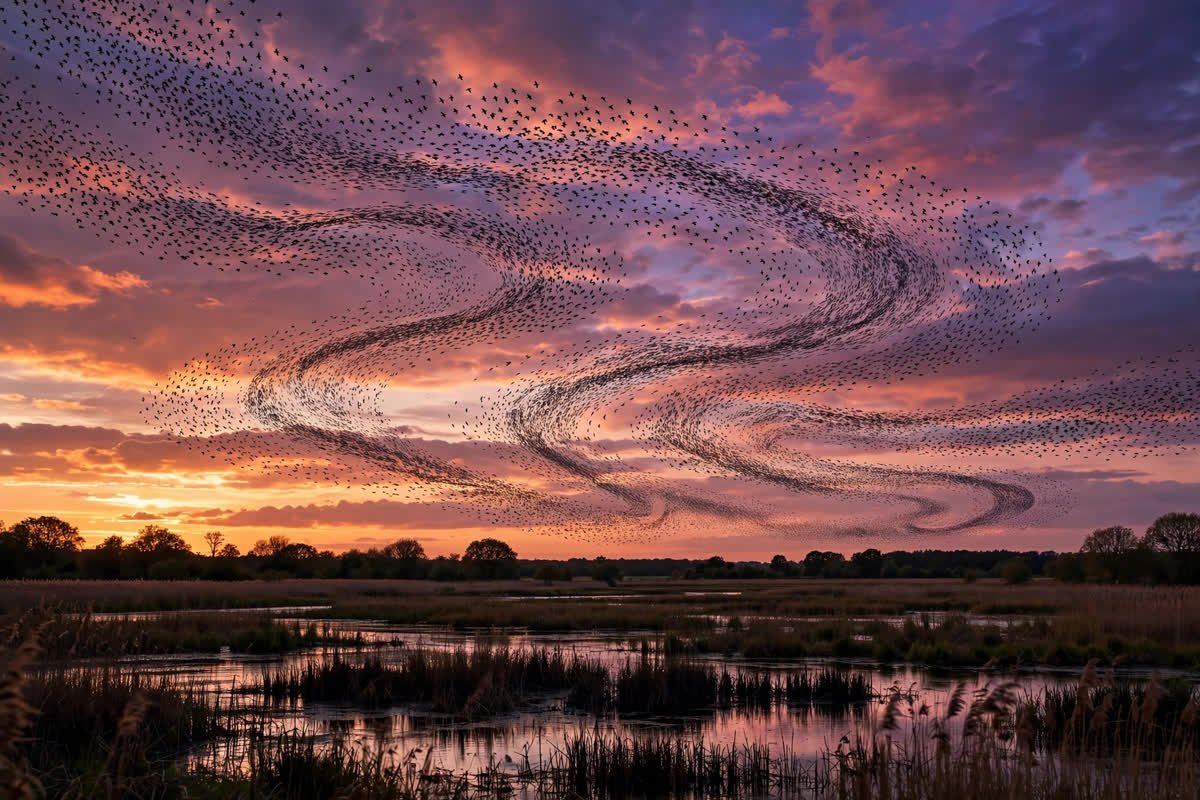
For many species, the safest bedroom is a crowd. European starlings gather at dusk in murmurations, those rippling clouds of thousands of birds that wheel and fold across the sunset sky before dropping into reed beds or beneath bridges to roost. Researchers who analyzed around 3,000 murmurations found birds of prey attending nearly a third of them, and the flocks grew larger when hawks were near. That pattern is strong evidence that the swirling display confuses predators and makes it hard to single out one bird.
Crows take the same idea to extremes. Winter crow roosts can hold tens of thousands of birds, with famous sites in the northeastern United States hosting huge gatherings through the cold months. Blackbird roosts in the southern states can number in the millions. The advantages stack up:
- More eyes: thousands of birds scanning together spot an approaching owl far sooner than one bird alone.
- Predator dilution: an attacker can only grab one bird, so each individual’s odds improve as the flock grows.
- Shared warmth: packed bodies lose less heat, a real lifesaver on freezing winter nights.
How Birds Survive Freezing Nights
A small bird is a furnace wrapped in feathers, and a winter night is the ultimate test of that furnace. Birds run several defenses at once.
- Torpor: hummingbirds and some swifts let their body temperature plunge overnight, slowing metabolism to a fraction of its daytime rate, then rewarm at dawn. It is the avian version of turning the thermostat down.
- Feather fluffing: puffed feathers trap a thick layer of still air against the skin, among the best insulation in nature. That is why a roosting chickadee looks twice its daytime size.
- Bill tucking and one-legged stance: tucking the bill into warm back feathers heats each breath and shields bare skin, while standing on one leg halves heat loss from unfeathered feet.
One persistent myth deserves clearing up: nests are nurseries, not bedrooms. Most adult birds use a nest only while raising chicks and abandon it once breeding ends. Outside the breeding season they roost on branches, in cavities, or on the water. Fuel matters too: birds that find plenty of high-energy winter foods like suet head into the night with fuller tanks to burn.
What Roosting Means for Your Backyard
Knowing where birds sleep turns a yard from a daytime diner into a full-service hotel. A few simple moves make a real difference:
- Evergreen cover: plant or preserve dense evergreens and thick shrubs. They are the most-used roost sites in suburbs because they block wind and hide birds from owls.
- Brush piles: a loose pile of branches gives ground-roosting sparrows and wrens a hidden, wind-sheltered nook.
- Roost boxes: unlike nest boxes, roost boxes have the entrance hole near the bottom and perches inside, designed for winter shelter rather than breeding. Clean them each fall.
- Dim the lights: switch off unneeded outdoor lights, or use warm, shielded, motion-sensor fixtures, so nearby roosting birds keep a natural dark cycle.
- Keep cats indoors at night: even a well-fed cat hunts, and roosting birds cannot flee well in the dark.
For the full picture of shelter, water, and food together, start with our guide to creating a bird-friendly garden.
Frequently Asked Questions
Do birds sleep in their nests at night?
Usually no. Nests are built for eggs and chicks, and most adults abandon them once breeding ends. Cavity nesters such as bluebirds and wrens may keep using holes and boxes as roosts year-round, but a robin does not sleep in last spring’s nest.
Do birds sleep standing up?
Most do. The tendon-locking mechanism in their feet clamps their toes around a branch automatically, so perching upright takes no effort and no attention. Flamingos, herons, and many ducks sleep on one leg to cut heat loss through bare skin.
Can birds really sleep while flying?
Great frigatebirds do, catching brief naps while soaring over the open ocean, mostly with one half of the brain at a time. Common swifts spend months aloft and are believed to rest on the wing, though the evidence there is indirect. Most birds still need a proper roost.
Do birds sleep with one eye open?
When they use unihemispheric sleep, yes. The eye wired to the awake half of the brain stays open and watching. Mallards on the edge of a flock keep the outward eye open; move them into the middle and they relax into deeper sleep.
Where do birds go at night in winter?
They roost closer together and lower down, choosing spots that block wind: evergreen thickets, cavities, reed beds, and sheltered urban structures. Many gather in large communal roosts for shared warmth. On the coldest nights, hummingbirds and swifts drop into torpor to stretch their energy reserves.
Do birds sleep in the same place every night?
Many do. Birds often show strong loyalty to a favorite roost, returning to the same branch, cavity, or reed bed night after night. That is why a brush pile or roost box you put up this fall can serve the same birds all winter.
Why do I hear birds chirping at night?
Most daytime birds are silent after dark, so nighttime song usually means something specific: a disturbed roost, a nocturnal migrant calling in flight, or a nightjar or owl on its normal schedule. Our guide explains why some birds call through the night, with nine common reasons.
Conclusion
Every evening, millions of birds solve the same problem: how to rest for hours while staying warm, hidden, and ready to flee. Their answers range from the chickadee fluffed into an evergreen bough to the frigatebird napping mid-soar over the Pacific, each one shaped by predators, weather, and body size. The next time your yard falls silent at dusk, you will know it is not empty. It is full of birds answering the question of where do birds sleep at night in their own way, tucked into foliage, cavities, reed beds, and open water all around you.
Leave them dense cover, dark skies, and a brush pile or roost box, and your backyard becomes part of the answer. Then listen at dawn. The chorus that greets the sun is the sound of a roost waking up, rested and ready for another day.





