 Skip to content

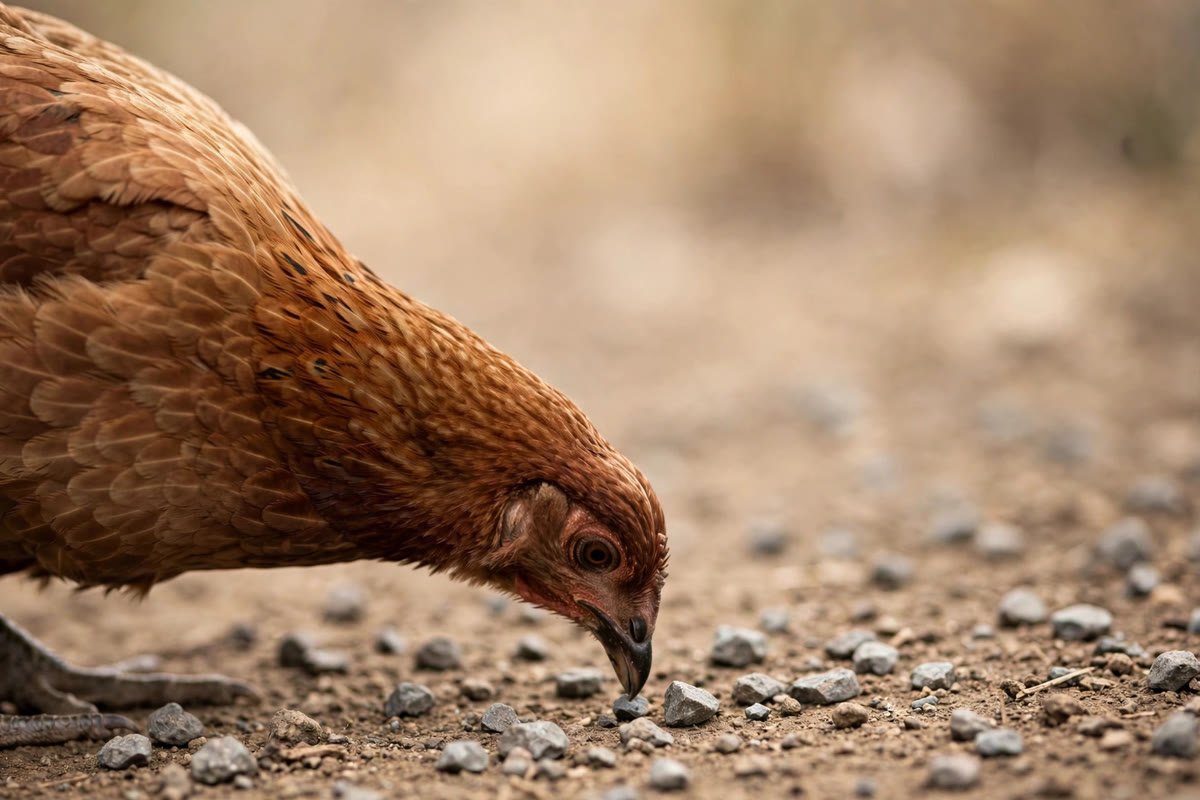
Watch a chicken scratching in a barnyard and you will notice something odd mixed in with the pecking at grain: the bird deliberately picks up tiny stones and swallows them. It is not a mistake. Those stones are tools.
Why do birds need grit? Because birds have no teeth. They cannot chew, so they outsource the grinding to a muscular stomach called the gizzard, and the gizzard needs something hard to grind against.
Swallowed grit, small stones and coarse sand, sits in the gizzard and acts like a set of millstones, pulverizing seeds and grain into a digestible paste. Without it, hard foods pass through partly undigested and the bird gets less nutrition from every bite.
In this guide, you will learn exactly how the gizzard uses grit, the difference between the two types of grit and why it matters, which birds need grit and which should never get it, how to offer it safely to backyard chickens and pet birds, and the mistakes that cause the most trouble.

Why Do Birds Need Grit? The Short Answer
Birds need grit because they swallow their food whole and have no teeth to break it down. The grinding happens in the gizzard, a thick-walled muscular pouch in the digestive tract. Grit lodges in the gizzard and gives those muscles something abrasive to work against, crushing seeds, grains, and fibrous plant material into fine particles that digestive enzymes can actually reach.
Think of it as a mortar and pestle built into the bird. The gizzard provides the muscle, the grit provides the grinding surface. Together they reduce hard foods to a pulp fine enough for the intestines to absorb. Soft foods like insects, fruit, and commercial pellets need far less grinding, which is why not every bird needs grit.
The system is ancient and remarkably effective. Fossil evidence shows that some dinosaurs used swallowed stones, called gastroliths, the same way. Ostriches and emus still swallow stones more than an inch across. Your backyard chicken uses the same principle at a smaller scale, and the physics have not changed in millions of years.
No Teeth, No Problem: How the Gizzard Works
To understand grit, you need to understand the organ it serves. The avian digestive tract handles food in stages, and the gizzard is the mechanical center of the whole operation.
The Two-Chamber Stomach
Birds have two stomach chambers working in sequence. Food first passes through the proventriculus, the glandular stomach, where acids and enzymes begin chemical digestion. This chamber dissolves soft tissue but cannot break down hard seed coats or fibrous husks on its own.
From there, food moves into the ventriculus, better known as the gizzard. The gizzard is lined with a tough, ridged protective layer and wrapped in two sets of powerful muscles. The University of Kentucky’s poultry extension describes it plainly: the gizzard’s muscles act as the bird’s teeth. Everything the proventriculus softened gets ground, mixed, and mashed here before moving on to the intestines.
The Gizzard as Millstones
The grinding power is extraordinary. Research on turkeys has measured gizzard pressures strong enough to crack acorns, and the organ works continuously whenever the bird is digesting. The stones inside do not just sit there; they tumble and shift with every contraction, scouring food particles from all sides.
Grit wears down with use. Stones that start sharp and angular become smooth and rounded over weeks of grinding, and once polished they lose their cutting edge. The bird then passes or regurgitates the worn stones and swallows fresh ones. This is why grit is not a one-time purchase but an ongoing need for birds that depend on it.
The acidic environment of the proventriculus helps the process along. Acids soften both the food and, gradually, the stones themselves. Eventually each stone is ground small enough to pass through the rest of the digestive tract and out with the droppings, and the cycle of replacement begins again.
What Grit Actually Is: Two Very Different Types
The word “grit” covers two products that do completely different jobs. Confusing them is one of the most common mistakes bird keepers make, so the distinction matters.
Insoluble Grit: The Grinding Stones
Insoluble grit is the true digestive aid: small, hard, angular stones, usually crushed granite or flint, that do not dissolve in the digestive tract. These are the millstones. They lodge in the gizzard and stay there for weeks, grinding food until they wear smooth enough to pass.
Size must match the bird. Chickens and turkeys handle pea-sized chips; pigeons and doves need smaller pieces; finches and canaries need fine, sand-like grit. Stones that are too large can cause dangerous blockages, while dust-fine grit passes straight through without ever lodging in the gizzard to do its work.
Soluble Grit: The Calcium Source
Soluble grit is a different product with a different job. Made from crushed oyster shell, limestone, or mussel shell, it dissolves in the digestive acids and releases calcium. Its purpose is nutrition, not grinding: laying hens need the calcium to form strong eggshells, and growing birds need it for bones.
Soluble grit does not stay in the gizzard long enough to grind anything. Treating oyster shell as a substitute for insoluble grit leaves the bird with calcium but no grinding power. The two products complement each other; neither replaces the other.

Which Birds Need Grit and Which Do Not
Whether a bird needs grit depends on what it eats and how it eats it. The rule is simple: birds that swallow hard foods whole need grinding help, and birds that eat soft foods or process seeds before swallowing do not.
| Bird type | Needs insoluble grit? | Why |
|---|---|---|
| Chickens, turkeys, ducks, geese | Yes | Swallow whole grains and forage; classic grit users |
| Pigeons and doves | Yes | Swallow seeds whole with the husk on |
| Finches and canaries | Yes, fine grade | Seed eaters; need small-particle grit |
| Quail and pheasants | Yes | Game birds eating whole seeds and grain |
| Ostriches and emus | Yes, large stones | Coarse vegetation demands serious grinding power |
| Parrots, budgies, cockatiels | No | Shell seeds with the beak before swallowing; grit can cause deadly impaction |
| Insect-eating songbirds | Rarely | Soft prey needs little mechanical grinding |
| Birds on pellets only | No | Commercial pellets are pre-ground and digestible |
The parrot warning deserves emphasis because it runs counter to old pet-store advice. Parrots and other hookbills husk their seeds with the beak, so only the soft kernel reaches the gizzard, and their intestinal openings are small. Loose grit accumulates instead of passing, and the result can be a fatal blockage. If you keep companion birds, offer a cuttlebone or mineral block for calcium instead, and check a reliable budgie diet guide rather than old grit folklore.
Wild seed-eating birds generally find their own grit. Watch a sidewalk or gravel driveway and you will see sparrows and pigeons picking at tiny stones between seeds. Problems arise mainly in captivity, where birds cannot forage for stones, or on manicured lawns and concrete where natural grit is scarce.
How to Offer Grit Safely
Offering grit is simple, but the details matter. Follow these steps for backyard poultry and cage birds that genuinely need it.
- Choose the right type: insoluble granite or flint grit for grinding; add soluble oyster shell separately for laying hens. Never substitute one for the other.
- Match the size to the bird: fine grit for finches and canaries, medium for pigeons and bantams, coarse or pea-sized for full-size chickens, turkeys, and waterfowl.
- Offer it free-choice in a separate dish: birds self-regulate remarkably well and take only what they need. Do not mix grit into feed, where they cannot choose.
- Keep the dish clean and dry: refresh soiled grit and position the dish where droppings from perches above cannot foul it.
- Keep fresh water available: digestion of any kind demands water, and grit users are no exception.
- Watch laying hens separately: provide soluble calcium grit free-choice alongside insoluble grit, since layers have high calcium demands for eggshells.
For birds that forage outdoors on natural ground, commercial grit may be unnecessary; they will pick up pebbles themselves. The birds that need your help are the penned, caged, or concrete-run birds with no access to natural stones. When in doubt about a mixed backyard flock in cold months, our guide to what to feed birds in winter covers the full feeding picture, and suet remains one of the best high-energy supplements.
Grit Mistakes That Cause Real Harm
- Giving insoluble grit to parrots and budgies: the most dangerous mistake. Hookbills do not need it and can develop fatal impactions. Use cuttlebone for calcium instead.
- Using oyster shell as grinding grit: soluble grit dissolves instead of grinding. Layers need it for calcium, but it cannot replace insoluble stones.
- Wrong size grit: oversized stones can lodge and block the digestive tract; dust-fine grit passes through without helping.
- Grit from contaminated ground: stones collected near roads or old buildings can carry lead, pesticides, or sharp debris. Use clean commercial grit or stones from uncontaminated soil.
- Assuming pellets-only birds need grit: commercial feeds are already ground. Adding grit to a pellet diet solves nothing and can irritate the digestive tract.
- Letting the dish run empty for grit-dependent birds: a chicken eating whole grains with an empty grit dish will digest poorly, and chronic deficiency can lead to blockages and weight loss.

Frequently Asked Questions
Do wild birds need us to provide grit?
Usually not. Wild seed-eating birds pick up small stones naturally while foraging on gravel paths, driveways, and bare earth. You might notice pigeons or sparrows pecking at the ground between seeds; they are likely collecting grit. Supplemental grit matters most for captive birds, penned poultry, and birds kept on concrete or manicured lawns where natural stones are scarce.
How long does grit stay in the gizzard?
Weeks to months, depending on the stone and the bird. Hard granite grit lasts longer than softer stones. As the gizzard grinds, each stone gradually wears smooth and then small enough to pass through the intestines and out with the droppings. The bird replaces worn stones by swallowing new ones, which is why grit-dependent birds need a continuous supply.
Can birds get too much grit?
With free-choice offering, healthy birds self-regulate and rarely overeat grit. Problems come from the wrong kind or size rather than the amount: oversized stones can cause impaction, and grit contaminated with lead or chemicals is dangerous at any dose. Stick to clean, correctly sized commercial grit offered in a separate dish.
Is sand the same as grit?
Not quite. Coarse sand can function as fine grit for very small birds like finches, but ordinary play sand is too uniform and rounded to lodge and grind effectively in larger birds. True insoluble grit is angular crushed stone, usually granite, sized to stay in the gizzard. Sand also compacts when wet, which can cause its own digestive problems.
Do baby chicks need grit?
Chicks eating only commercial starter feed do not need grit, since the feed is already finely ground. Once chicks start getting whole grains, greens, or insects as treats, usually after a few weeks, offer chick-sized fine grit free-choice. Never give adult-sized grit to chicks; the size difference matters for safety.
Why do some birds eat charcoal with their grit?
Some commercial grit mixes include charcoal, and wild birds have been observed eating charred wood after fires. Charcoal is thought to absorb certain toxins in the digestive tract, though the evidence in birds is mostly observational rather than experimental. It is a supplement to grit, not a replacement: charcoal does not grind food.
Conclusion
Why do birds need grit? Because evolution gave them a brilliant workaround for having no teeth: a muscular gizzard armed with swallowed stones. The stones do the chewing, the muscles supply the power, and together they turn hard seeds and grain into nutrition the bird can actually absorb.
The practical takeaways are straightforward. Know which of your birds are grit users and which are not, never give insoluble grit to parrots and other hookbills, keep the two types of grit straight, match the size to the bird, and offer it free-choice in a clean, separate dish. Get those basics right and the ancient millstone system takes care of itself.
Next time you see a chicken pause its scratching to pick up a pebble, you will know what you are watching: not a bird making a mistake, but a bird maintaining its tools. In a creature without teeth, a pocketful of stones is the next best thing.





