 Skip to content

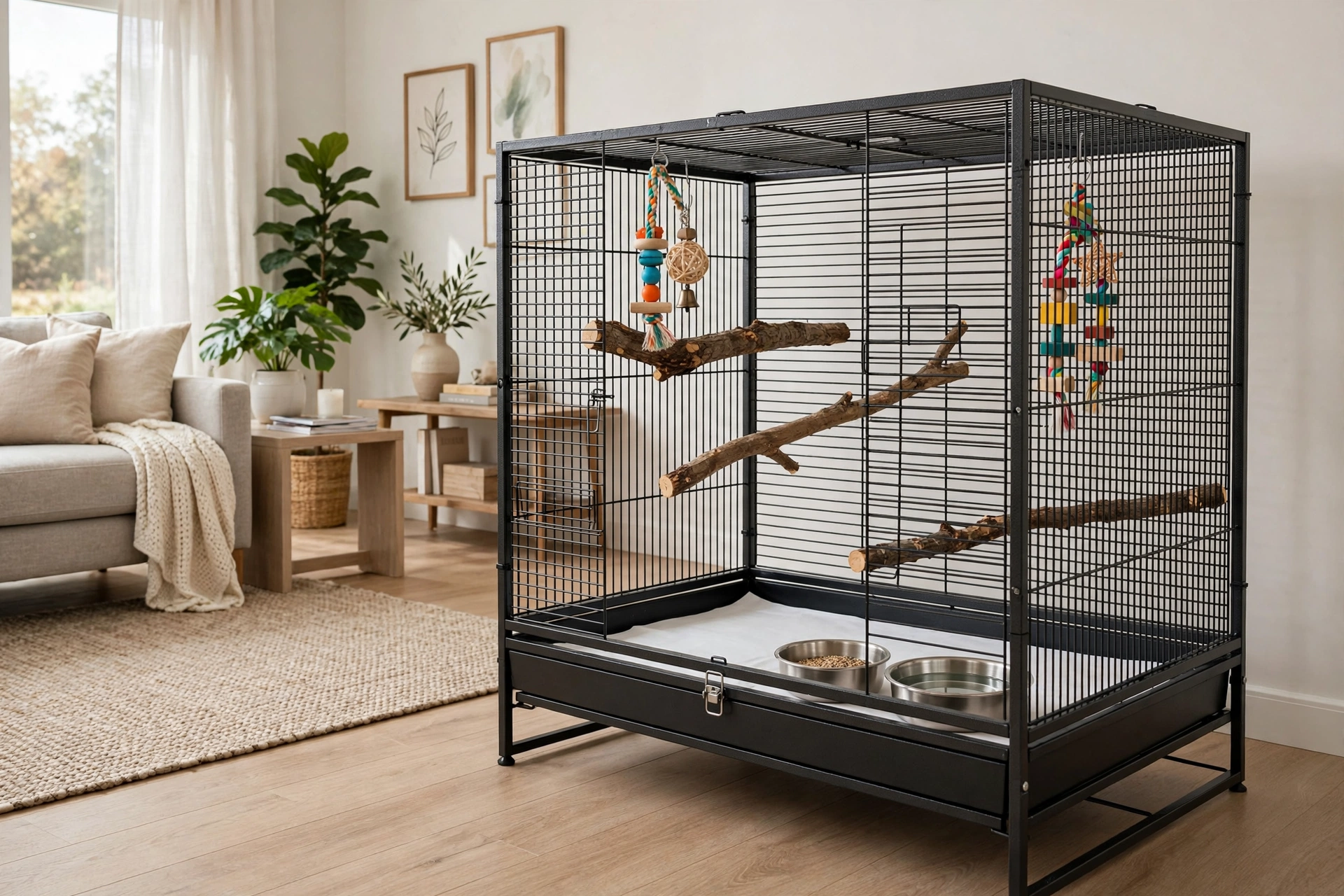
Bringing home your first pet bird is exciting, and the cage you prepare becomes the center of its world. A well set up cage keeps your bird safe, comfortable, and healthy. A poor setup, on the other hand, can quietly cause stress, injury, or illness that only shows up weeks later.
Many beginners focus on cage color or cute toys, but the fundamentals matter far more. The right size, safe bar spacing, a good location in your home, and a few essential accessories make all the difference. This guide walks you through each step in order, so your bird’s home is complete and safe before it ever arrives.
You will also learn which common products to avoid, how to introduce your bird to its new home, and what the first week should look like. By the end, you will know exactly how to set up a bird cage with confidence.
Choosing the Right Cage
The cage is the single most important purchase you will make for your bird. Get this right and everything else becomes easier. Get it wrong and you will be working around the problem for years.
Cage Size: Bigger Is Always Better
When it comes to cage size, the rule is simple. Buy the largest cage your space and budget allow. No cage is too big for a pet bird, as long as the bar spacing suits the species.
A cramped cage restricts movement and leads to stress, boredom, and even feather plucking. Your bird should be able to fully stretch its wings in every direction and hop or fly short distances between perches. For active species like budgies and cockatiels, horizontal space matters more than height, because they fly side to side rather than up and down.
The table below shows typical minimums recommended across avian care sources. Treat these as starting points, not goals.
| Species | Minimum cage size (W x D x H) | Maximum bar spacing |
|---|---|---|
| Budgie (parakeet) | 20 x 20 x 24 inches | 1/2 inch |
| Lovebird | 24 x 18 x 24 inches | 1/2 inch |
| Cockatiel | 24 x 24 x 30 inches | 1/2 to 5/8 inch |
| Small conure | 24 x 24 x 30 inches | 5/8 to 3/4 inch |
| African grey | 36 x 24 x 48 inches | 3/4 to 1 inch |
Minimums vary slightly between sources. When in doubt, choose the larger cage and confirm sizing with an avian veterinarian. If you plan to keep two birds, increase the cage size by at least 50 percent so both have room to move, climb, and explore without crowding each other.
Bar Spacing: A Safety Issue, Not a Style Choice
Bar spacing is one of the most overlooked safety details in a bird cage setup. If the gaps are too wide, your bird can push its head through and get stuck, which can cause panic, injury, or worse. Bars that are far too narrow for a large bird can catch toes or beaks.

The general rule is straightforward. Small birds like budgies and lovebirds need bars spaced 1/2 inch apart or less. Medium birds like cockatiels do well with 1/2 to 5/8 inch. Larger parrots need wider spacing, roughly 3/4 to 1 inch. A handy test for a budgie cage: a US quarter should not fit through the bars. For more detail, see Lafeber’s guidance on budgie cage wire spacing.
Shape and Materials
Choose a square or rectangular cage. Round cages may look charming, but they give birds no corner to retreat to, which increases anxiety. Birds feel more secure with at least one solid side, which is also why placing the cage against a wall helps.
Look for cages made of stainless steel or powder-coated steel with a chip-resistant finish. Birds chew on bars, so whatever coats the metal will eventually be ingested. Avoid cages made with untreated galvanized wire, which can contain zinc, and avoid any cage with lead-based paint or soldered joints that a bird could chew. Chewy’s cockatiel cage setup guide covers safe sizing and materials in more depth.
Horizontal bars on at least two sides are a plus. They give climbing species better grip and encourage natural movement around the cage.
Where to Place the Cage
Location matters as much as the cage itself. The best spot is a room where the family spends time, such as the living room. Birds are social animals, and isolation in a spare bedroom leads to loneliness and behavioral problems. Your bird wants to be part of the household, watching daily life unfold.
Place the cage against a wall, ideally in a corner. Having solid surfaces on one or two sides gives your bird a sense of security and a place to retreat when startled. Set the cage at eye level or slightly higher, on a sturdy stand or table. A cage sitting on the floor makes birds feel exposed and vulnerable to perceived predators.
Keep the cage well away from the kitchen. Overheated non-stick cookware, self-cleaning ovens, and even overheated cooking oil release fumes that can kill a bird within minutes. Aerosol sprays, scented candles, air fresheners, and cigarette smoke are also dangerous to avian lungs. The kitchen is simply not a safe room for birds.
Avoid drafty spots near frequently opened doors, air conditioning vents, or windows that stay open. Sudden temperature changes stress birds, even though they handle gradual changes reasonably well. Direct, all-day sunlight can also overheat a cage, so choose a spot with bright indirect light instead. For the nighttime side of placement, see our article on whether you should cover your bird’s cage at night.
Essential Accessories for Your Bird Cage
A cage is only half the setup. The accessories inside determine whether your bird thrives or merely survives. Start with the essentials below and add enrichment over time rather than cramming everything in on day one.

Perches: Variety Is Essential
Birds spend most of their lives on their feet, so perches deserve real attention. The biggest mistake beginners make is relying only on the smooth wooden dowels that come with the cage. A single dowel diameter forces the feet into one position all day, which can lead to pressure sores and joint problems over time.
Offer at least three perches of different diameters and materials. Natural wood branches with bark are the best all-round choice. They provide varied texture, good grip, and safe chewing enrichment. Rope perches add a soft, flexible option, but inspect them regularly and trim any frayed fibers that could tangle toes.
Size each perch so your bird’s toes wrap about three-quarters of the way around, not fully. Place perches at different heights to encourage movement, but never position a perch directly above food or water dishes, where droppings will foul them.
Food and Water Dishes
Provide at least three dishes: one for the staple diet, one for fresh vegetables, and one for water. Stainless steel or ceramic dishes are the best choice. They are easy to clean, hard to chew apart, and do not harbor bacteria the way scratched plastic does.
Position dishes where droppings are unlikely to fall in, away from the busiest perches. Change the water daily and wash dishes with hot water before refilling. A shallow dish of clean water for bathing once or twice a week is a welcome extra for many species.
Cuttlebone and Mineral Block
A cuttlebone clipped to the cage bars gives your bird a natural source of calcium and a safe chewing outlet that helps keep the beak trimmed. A mineral block serves a similar purpose. Both are inexpensive and last for weeks. Replace them when they become small enough to be a choking risk or start crumbling apart.
Toys and Enrichment
Birds are intelligent and easily bored. A bored bird may scream, pluck feathers, or become aggressive. Start with two or three simple toys: something to chew, something that makes noise, and something to puzzle over, such as a foraging toy with hidden treats.
Do not overcrowd the cage. Hang toys near the walls so the center stays open for movement. Rotate toys every two to three weeks to keep things interesting. Inspect toys regularly and remove any with frayed rope, loose small parts, or flaking paint.
What to Avoid in a Bird Cage Setup
Pet stores sell many products that are unnecessary or actively harmful. Knowing what to skip is as important as knowing what to buy.
- Round cages: No corners means no safe retreat. They increase stress and are never the right choice.
- Sandpaper perch covers: Marketed as nail trimmers, they abrade footpads and can cause painful sores. Natural wood wears nails down safely instead.
- Sand or grit on the cage floor: Ingested grit can impact the digestive system. Plain paper is safer and cheaper.
- Mirrors for single birds: A lone bird may bond with its reflection instead of you, which can delay taming and cause frustration.
- Dowel-only perches: Uniform dowels hold feet in one position and cause problems over time. Mix diameters and materials.
- Toxic metals and finishes: Avoid zinc, lead, and cheap flaking paint. If a cage has a metallic smell or peeling coating, do not use it.
- Fabric happy huts: These can trigger nesting hormones and aggression in many species, and frayed fabric can tangle toes or be swallowed.
Lining and Cleaning the Cage
Line the cage tray with plain paper and change it daily. Newspaper works if the cage has a grate keeping the bird off the paper. Plain brown kraft paper and unprinted newsprint are also excellent. Avoid sand sheets, wood shavings, and corn cob bedding, which birds can ingest or which can harbor mold.
Do a quick daily tidy: replace the liner, change the water, remove uneaten fresh food, and wipe obvious droppings from perches. Once a week, do a deeper clean. Wash dishes, perches, and toys with hot water and a bird-safe cleaner, rinse thoroughly, and let everything dry before reassembling. For a full explanation of safe liner choices, see Lafeber’s advice on cage liners.
Pay attention to droppings as you clean. Changes in color, consistency, or volume are often the earliest sign of illness. If you notice anything unusual, read our guide to the signs your pet bird is sick and contact an avian veterinarian.
Introducing Your Bird to Its New Cage

Set up the complete cage before your bird comes home. Have food and water in place, perches arranged, and the room calm and quiet. Transport your bird in a small travel carrier, never loose in the car.
When you arrive, place the carrier next to the cage, open both doors, and let the bird come out on its own terms. Do not grab it or chase it into the cage. Some birds hop straight in out of curiosity. Others need an hour or more. Both reactions are normal.
Feed the same food the breeder or store was feeding for the first week or two. A new home is stressful enough without a sudden diet change. Any switch to a new diet should happen gradually, only after the bird has settled in.
The First Week: Helping Your Bird Settle In
Expect your bird to be quiet and cautious for the first few days. It may sit fluffed on one perch, eat little, and startle at ordinary household sounds. This is normal adjustment, not necessarily illness. Give the bird space and keep the household calm and predictable.
Sit near the cage and talk softly so the bird learns your voice. Offer a treat through the bars, but never force interaction. Let the bird observe you before you ask anything of it. Short, calm visits build trust faster than long, intense ones.
Keep a consistent daily routine from day one. Birds find comfort in predictability: the same wake time, the same feeding time, the same bedtime. Once your bird is eating well and moving around confidently, you can begin gentle bonding work. Our beginner’s budgie taming guide walks through the next steps.
Monitor closely during this period. A bird that does not eat or drink for a full day, sits on the cage floor, or shows discharge from the eyes or nostrils needs veterinary attention promptly.
Bird Cage Setup Checklist
Run through this checklist before your bird comes home, so nothing is missing on day one.
- Cage: Right size for the species, safe bar spacing, square or rectangular shape, non-toxic materials.
- Placement: Against a wall in a lived-in room, at eye level or higher, away from the kitchen, drafts, and direct sun.
- Perches: At least three, with varied diameters and materials, none positioned above food or water.
- Dishes: Three stainless steel or ceramic dishes for staple food, fresh food, and water.
- Calcium: Cuttlebone or mineral block attached to the bars.
- Toys: Two or three simple toys hung near the walls, with the center left open.
- Liner: Plain paper cut to fit the tray, plus a week’s supply ready to go.
- Food: The same food the bird is currently eating, plus fresh vegetables.
- Cleaning supplies: Bird-safe cleaner, spare paper, and a small brush.
- Travel carrier: Ready for the trip home.
Frequently Asked Questions
How big should a bird cage be?
As large as you can manage. Typical minimums are around 20 x 20 x 24 inches for a budgie and 24 x 24 x 30 inches for a cockatiel, with larger minimums for bigger parrots. Bigger is always better, provided the bar spacing suits the bird.
Are round cages bad for birds?
Yes. Round cages give birds no corner to retreat to, which increases stress and anxiety. Avian veterinarians and welfare organizations consistently recommend square or rectangular cages instead.
What should I put on the bottom of the cage?
Plain paper: newspaper (with a grate between bird and paper), brown kraft paper, or unprinted newsprint. Change it daily. Avoid sand, grit, wood shavings, and corn cob bedding, which can be ingested or harbor mold.
How often should I clean the cage?
Replace the paper liner and water daily, remove uneaten fresh food, and do a full wash of dishes, perches, and toys weekly with a bird-safe cleaner.
Should I cover the cage at night?
Many owners do, and it can help signal bedtime and block drafts. The right answer depends on your bird and your home. Read our full guide on whether to cover your bird’s cage at night for the details.
When can I let my new bird out of the cage?
Wait until the bird is eating well, moving confidently, and comfortable with your presence, usually after the first week or two. Bird-proof the room first: close windows and doors, cover mirrors, turn off ceiling fans, and keep other pets out.
Conclusion
Setting up a bird cage well is mostly about getting the basics right. Choose the biggest safe cage you can, with bar spacing suited to your species and non-toxic materials. Place it where the family gathers, against a wall and away from kitchen fumes and drafts. Furnish it with varied perches, clean dishes, a cuttlebone, and a few simple toys, and skip the gimmicks like round cages and sandpaper covers.
Introduce your bird gently and keep the first week calm and predictable. Clean a little every day and do a deeper clean weekly. These simple habits prevent most of the common problems new owners face, from foot sores to respiratory danger to stress-related behavior.
Do these things and your bird starts life in your home feeling safe. That sense of security is the foundation for everything that follows: trust, taming, and many years of companionship.





