Skip to content

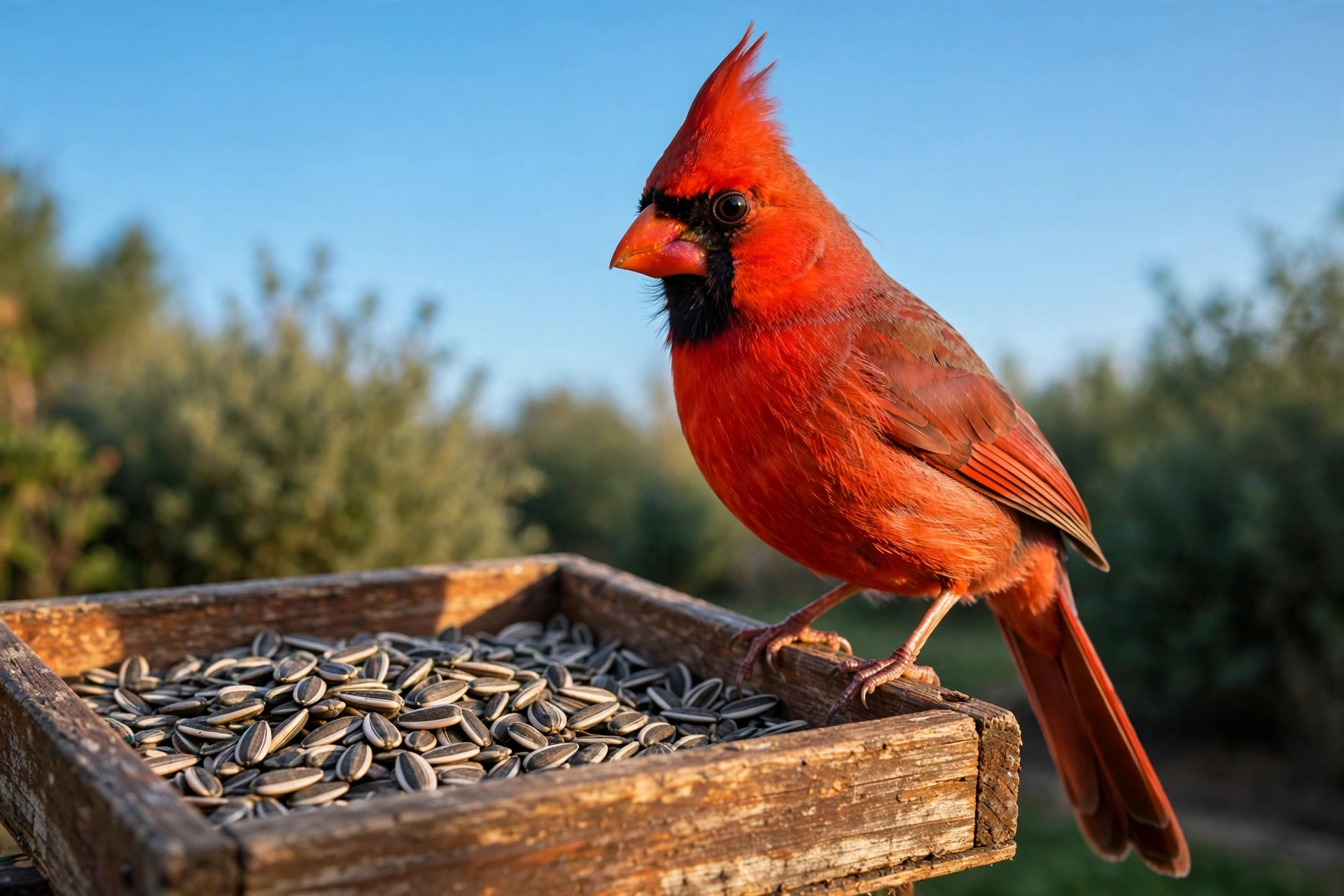
If you want cardinals visiting your yard every day, the best bird feeder for cardinals is a platform or hopper feeder with a wide, stable tray. Cardinals are ground-foraging songbirds that prefer to perch on a flat surface while they crack open seeds. Project FeederWatch, the Cornell Lab of Ornithology’s long-running citizen science project, lists the Northern Cardinal’s preferred feeders as platform and hopper types, with sunflower and safflower among its favorite foods.
This guide walks you through exactly what makes a feeder cardinal-friendly. You will learn which feeder types rank best for cardinals, which seeds to fill them with, where to place the feeder in your yard, and which feeder styles to avoid. By the end, you will be able to choose (or build) the right feeder with confidence, and keep those bright red visitors coming back in every season.
Why Cardinals Are Picky About Feeders
Northern Cardinals spend most of their natural feeding time on the ground, hopping through leaf litter and low shrubs in search of fallen seeds and berries. Their foraging style is to land, pick up a seed, and crack it open with their thick, powerful beak. They are not built for clinging to narrow perches or dangling from mesh, which is why a feeder designed for finches can leave a cardinal out in the cold.
Size also matters. A Northern Cardinal measures about 8 to 9 inches from beak to tail, making it one of the larger songbirds at a typical backyard feeder. A small tube feeder with short metal perches forces a cardinal to balance awkwardly or skip the feeder entirely. Cardinals simply feed more comfortably when they can stand on a broad, flat surface.
Ground-Foraging Instincts
Cardinals evolved as ground feeders, and that instinct carries over to the feeder. They like to land on a surface, scan for the seed they want, pick it up, and eat at their own pace. Open tray feeders match this behavior perfectly. Feeders that require acrobatic clinging or upside-down reaching go against everything their bodies were built to do.
Timing: Cardinals Feed at Dawn and Dusk
Cardinals are most active at the feeder in the dim light of early morning and late evening. This is worth knowing because a feeder that is hard to use becomes even less appealing in low light. A roomy platform feeder lets a cardinal land, eat quickly, and retreat to cover before full darkness. If your feeder visits seem to happen only at twilight, that is normal cardinal behavior, not a sign of a problem.
What Makes a Feeder Cardinal-Friendly
Not every feeder labeled “cardinal feeder” actually suits a cardinal. Before you buy or build one, check these six features. Each one addresses a real cardinal behavior, and feeders that check all six boxes attract the most consistent visits.
- Stable, flat feeding surface: A wide tray or platform lets a cardinal stand with both feet planted while it cracks seeds. Wobbly hanging feeders put them off, so sturdiness is more important than style.
- Wide perch or landing edge: If the feeder uses perches instead of a full tray, the perches should be broad enough for a large songbird to grip comfortably. Thin dowels sized for chickadees and finches are too small.
- Good seed capacity: Cardinals feed in pairs and small groups, and they are regular daily visitors. A feeder that holds several days of seed means fewer refills and a more reliable food source, which is exactly what keeps cardinals coming back.
- Weather protection: A roof or covered hopper keeps seeds dry. Wet seed grows mold quickly, and moldy seed can make birds sick. Platforms with drainage holes and hoppers with covered reservoirs both handle rain far better than open bowls.
- Squirrel resistance: Squirrels raid the same feeders cardinals love. Pole baffles, weight-sensitive perches, or feeding safflower seed (which squirrels reportedly avoid) all help keep the food for the birds.
- Easy to clean: Platform feeders accumulate droppings faster than tube feeders. Choose a design you can scrub with soap and water regularly, since clean feeders reduce the spread of disease at your feeding station.

Feeder Types Compared for Cardinals
Here is how the main feeder styles stack up for cardinals. The rankings reflect cardinal feeding behavior documented by Project FeederWatch and Penn State Extension, which both list platform feeders, hopper feeders, and tube feeders with trays among the styles cardinals actually use.
| Feeder Type | Pros for Cardinals | Cons for Cardinals | Cardinal Fit |
|---|---|---|---|
| Platform / tray feeder | Matches ground-foraging style; room for pairs and groups; works with any seed | Seeds exposed to rain and squirrels; needs frequent cleaning | Excellent |
| Hopper feeder | Holds lots of seed; roof protects food from weather; wide tray suits cardinals | Less squirrel-proof; only as good as its tray size | Excellent |
| Tube feeder with tray | Catching tray gives cardinals a flat surface; tube holds seed for smaller birds too | Only works if the tray is wide and stable; small trays do not help | Good, with caveats |
| Ground feeding | Completely natural for cardinals; zero equipment needed | Food spoils fast; vulnerable to cats, dampness, and waste | Good as a supplement |
1. Platform Feeders: The Top Pick
A platform feeder is essentially a flat, open tray where you scatter seed. For a cardinal, this is the closest thing to its natural ground feeding. Cardinals can land, hop around, choose their seeds, and eat without balancing on anything. Project FeederWatch lists the platform feeder as one of the cardinal’s two preferred feeder types.
Look for a platform with a rim to hold seed in, drainage holes in the base, and a size that fits several birds at once. Pole-mounted platforms stay more stable than hanging ones, and stability matters to cardinals. The main tradeoff is weather: an uncovered platform leaves seed exposed to rain, so put out only about a day’s worth of seed at a time and clean the tray regularly.
If you enjoy building things, you can build a simple platform feeder yourself with basic woodworking tools. A DIY platform is one of the easiest feeders to make, and it doubles as a fun weekend project.
2. Hopper Feeders: The Runner-Up
A hopper feeder, sometimes called a house feeder, stores seed in a covered bin that trickles down onto a feeding tray as birds eat. It is the other feeder type Project FeederWatch lists as a cardinal favorite. The built-in roof keeps seed dry, the capacity is generous, and the tray gives cardinals the flat surface they want.
The key detail is tray size. Choose a hopper with a wide, deep tray so a cardinal can stand on it comfortably. Large tray hoppers mounted on poles with squirrel baffles make some of the most productive cardinal feeders in any backyard. Just remember that hopper feeders are not naturally squirrel-proof, so plan your defenses accordingly.
3. Tube Feeders With Trays: A Compromise
Standard tube feeders are designed for smaller birds that can grip tiny perches. Cardinals are, in the words of one longtime feeding guide, “not entirely comfortable feeding from a tube feeder.” A standard tube alone will see little cardinal traffic.
Add a wide seed tray to the bottom of a tube feeder, though, and the picture changes. Penn State Extension lists “tube feeder with tray” among the feeders cardinals use. The tray catches scattered seed and gives cardinals a flat spot to stand. If you already own a tube feeder and want to make it cardinal-friendly, a clip-on tray is a cheap upgrade. But if you are buying new and cardinals are your priority, skip the tube and go straight for a platform or hopper.
4. Ground Feeding: Natural, but Use It Wisely
Cardinals will happily pick up seeds scattered directly on the ground. This is the most natural option of all, and a handful of sunflower seeds tossed near shrubs can draw cardinals fast. Ground feeding works best as a supplement to a raised feeder, not as the main program.
The downsides are real. Seed on bare ground gets wet, grows mold, mixes with droppings, and attracts rodents. It also leaves cardinals exposed to cats. If you feed on the ground, scatter only what will be eaten that day, rotate the spot to keep it clean, and keep it near cover so birds can escape quickly.
Best Foods for Cardinals at the Feeder
The feeder is only half the equation. Cardinals have clear food preferences, and filling the right feeder with the wrong seed will not get results. Project FeederWatch ranks the Northern Cardinal’s top foods as striped sunflower, black-oil sunflower, and safflower. For more ideas on the full setup, see our guide on how to attract cardinals to your yard.
- Black-oil sunflower seeds: The single best seed for cardinals. Penn State Extension calls black-oil sunflower the best all-round seed because it has a thin shell that is easy to crack and a high oil content that delivers serious energy. If you buy only one seed, make it this one.
- Striped sunflower seeds: Larger seeds with thicker shells, but cardinals handle them easily thanks to their strong beaks. Penn State notes that striped sunflower is very popular with cardinals. They work well in hoppers and platforms.
- Safflower seeds: A cardinal favorite with a useful bonus. Squirrels and many blackbirds reportedly avoid safflower, so it can reduce feeder raiding. Cardinals eat it readily, making it a smart choice when squirrels are a problem.
- Cracked corn: Cardinals will eat cracked corn, especially scattered on the ground or on a platform. It is cheap and effective, though it can also attract less desirable visitors like starlings.
- Shelled peanuts: Rich in fat and protein, peanut pieces are a nutritious supplement that cardinals accept. Offer them as pieces rather than whole peanuts in the shell.
- Suet: A high-energy winter treat. Cardinals are not classic suet birds, but they will sample suet offered on a platform tray during cold months.
One more tip: read the label on cheap mixed seed. Inexpensive mixes are often bulked up with milo, wheat, and other filler grains that cardinals largely ignore. Birds pick through the mix, eat the sunflower, and leave the rest to rot. A bag of straight black-oil sunflower outperforms a cheap mix every time.

Placement Tips: Where to Put a Cardinal Feeder
Even the perfect feeder fails in the wrong spot. Cardinals are cautious birds that like a quick escape route. Placement decisions often matter as much as the feeder itself.
Keep Cover Within 10 Feet
Penn State Extension recommends placing feeders within 10 feet of protective cover such as trees and shrubs. Cardinals will not linger at an exposed feeder far from shelter. Dense shrubs, evergreens, and brush piles give them a place to retreat when a hawk passes or when they simply want to crack seeds in peace.
Match the Feeder Height to Cardinal Habits
Platform and hopper feeders on poles at about 4 to 6 feet off the ground work well. That height keeps seed above ground dampness and most prowling cats while staying low enough to feel natural to a ground-feeding bird. Make sure you can still reach the feeder easily for refilling and cleaning.
Add Water Nearby
Food draws cardinals, but water keeps them around. A birdbath near the feeding station gives cardinals a place to drink and bathe. In winter, when natural water freezes, a heated birdbath becomes one of the strongest attractants in your yard.
Be Patient With New Feeders
Cardinals may ignore a brand-new feeder for a week or two while they check it out from nearby cover. Keep the feeder stocked during this period. Once one cardinal trusts it, others usually follow. Remember that cardinals feed most actively at dawn and dusk, so check your feeder at those times before concluding it is not working.
What to Avoid
Knowing what does not work saves you money and frustration. These are the most common mistakes people make when trying to attract cardinals.
- Flimsy hanging tube feeders: Lightweight tubes that swing in the wind are the opposite of what a cardinal wants. Even sturdy tubes without trays see little cardinal use because the perches are too small.
- Perch-less mesh socks: Nyjer socks and fine-mesh feeders are designed for clinging finches. A cardinal cannot use them at all. They are fine as secondary feeders for other species, but they will not help with cardinals.
- Tiny hopper trays: A hopper feeder with a narrow tray defeats the purpose. If a cardinal cannot stand fully on the tray, it will not stay. Always check tray dimensions before buying.
- Cheap seed mixes full of fillers: Milo, wheat, and oats bulk up inexpensive mixes, but cardinals ignore them. The uneaten filler piles up, gets moldy, and can spread disease. Spend the money on straight sunflower or safflower instead.
- Dirty feeders: Platform feeders collect droppings and wet seed hulls fast. Scrub them with soap and water regularly, following Penn State Extension’s advice to feed only what birds eat in a day on open trays. A filthy feeder can do more harm than good.

Frequently Asked Questions
Do cardinals use tube feeders?
Rarely, and only under the right conditions. Cardinals are large birds that dislike gripping small perches, so a standard tube feeder sees little cardinal traffic. A tube feeder fitted with a wide, stable seed tray at the bottom can work, and Penn State Extension includes tube feeders with trays among the styles cardinals use. For reliable results, though, a platform or hopper feeder is the better choice.
What seed do cardinals like best?
Black-oil sunflower seeds are the top pick. They have thin shells, high oil content, and broad appeal, and the Cornell Lab notes that cardinals particularly seem to use sunflower seeds. Safflower seeds are a close second, with the added advantage that squirrels reportedly avoid them. Striped sunflower, cracked corn, and peanut pieces round out the list of proven favorites.
Why won’t cardinals come to my feeder?
The most common reasons are the wrong feeder style, the wrong seed, or poor placement. Check that your feeder offers a flat, stable surface, that you are serving sunflower or safflower rather than a filler-heavy mix, and that the feeder sits within about 10 feet of shrubs or trees. Also give it time: cardinals can take a week or two to trust a new feeder, and they visit most at dawn and dusk, so you may be missing their visits.
Do safflower seeds really keep squirrels away?
Many backyard birders report that squirrels avoid safflower while cardinals eat it eagerly, and feeding guides widely repeat this advice. It is not a guarantee, since a truly hungry squirrel may still sample it, but safflower is one of the simplest squirrel-deterrent strategies available. Combine it with a pole baffle for best results.
Can cardinals and other birds share one feeder?
Yes. Platform and hopper feeders attract a wide mix of species, and cardinals share peacefully with chickadees, titmice, finches, and doves. Cardinals are somewhat territorial during breeding season, so you may see a male chase others away in spring. Adding a second feeder reduces crowding and gives subordinate birds, including females, which you can learn to recognize in our guide to telling male and female cardinals apart, a backup dining spot.
How often should I clean a cardinal feeder?
Platform and tray feeders should be cleaned often, ideally weekly, because droppings and seed hulls build up on the flat surface. Scrub with soap and water, rinse well, and let the feeder dry fully before refilling. Hopper and tube feeders need less frequent attention but should still be emptied and scrubbed if you see mold or caked residue inside.
Conclusion
The best bird feeder for cardinals is the one that matches how cardinals actually eat: a stable platform or hopper feeder with a wide tray, filled with black-oil sunflower or safflower seeds, placed within quick reach of shrubs or trees. Project FeederWatch data backs this up, listing platform and hopper feeders as the cardinal’s preferred styles and sunflower and safflower among its favorite foods.
You do not need an expensive feeder to succeed. A simple wooden platform on a pole, kept clean and stocked with quality seed, will outperform a fancy tube feeder every time for this species. Add a water source nearby, be patient while cardinals discover the new setup, and watch at dawn and dusk for the best viewing.
Start with the feeder, get the seed right, and place it near cover. Do those three things and your yard can become a regular stop on the local cardinals’ daily route, in winter and all year long.