 Skip to content

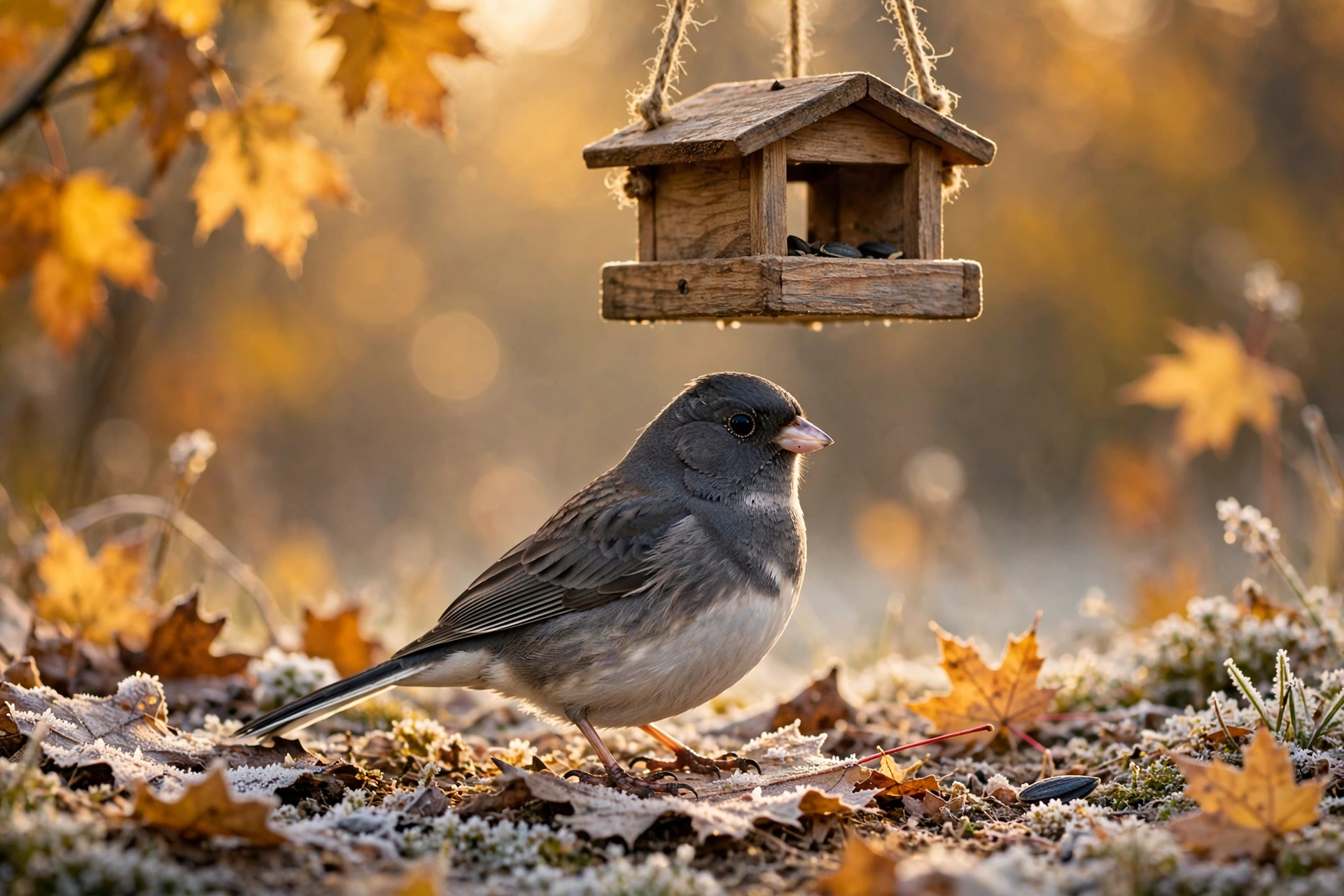
There is a moment every autumn when the garden changes without any real announcement. The maples still hold their colour, the feeder still hangs exactly where it always did, and yet one cold morning it is suddenly busy with small, slate-grey birds that were nowhere to be seen the day before. They hop rather than perch, scratch at the ground like tiny chickens, and flash bright white tail feathers every time they lift off. Those birds are dark-eyed juncos, and their arrival is one of the most reliable signs that winter is on its way. Across North America, birders call them snowbirds, a nickname earned over generations because juncos appear just as the first frosts touch the north. So when do juncos arrive in your region, and how can you keep them around all winter? This guide covers arrival timing by region, identification tips, the five subspecies groups, feeding habits, and a simple plan for attracting these winter favourites to your own garden.
What Is a Dark-Eyed Junco, and Why Is It Called the Snowbird?
The dark-eyed junco (Junco hyemalis) is a small New World sparrow, sparrow-sized at roughly six inches, with slate-grey upperparts, a clean white belly, and a pale pink bill. It breeds in coniferous and mixed woodland across Canada, Alaska, and the northern United States, then shifts south for the cold months. Winter flocks haunt woodland edges, brushy thickets, and suburban gardens, feeding on the ground with constant ticking calls.
The nickname snowbird goes back generations. The scientific name says it plainly: Junco hyemalis means “of the winter.” In much of the East, the first junco at the feeder arrives within days of the first frost, so families came to treat the little grey bird as winter’s own messenger. It is a name the bird has never stopped earning.
Juncos are also one of the most abundant birds on the continent. Audubon places the population at around 220 million birds, the IUCN lists the species as Least Concern, and National Geographic describes its population trend as stable. When you see a flock swirling under your feeder in December, you are watching one of North America’s great wildlife spectacles in miniature.
When Do Juncos Arrive in Fall?
The short answer is that the first juncos usually appear in late September, with arrivals peaking in late October, according to National Geographic’s dark-eyed junco account. But the exact week depends on where you live, because migration rolls southward in a wave that follows the cold air.
- Northern tier: Upper Midwest, Great Lakes, and New England often see their first juncos in mid to late September, as soon as the first strong cool fronts push south.
- Central states: Arrivals build through late September and October, with numbers climbing after the first frosts.
- Mid-Atlantic and coastal New England: October is the main arrival month.
- The South: Juncos reach the southern states in October and November, sometimes several weeks after the north, and may not appear until consistent cold weather sets in.
- The West: Timing varies with elevation and form. In Montana, the Oregon form migrates roughly from early September to early November, while the slate-coloured form moves through in October and November.
Not every junco migrates long distances. Some populations in the southwestern mountains and along the southern Pacific coast are permanent residents, and birds in the Sierra Nevada simply move to lower elevations, dropping as much as 5,000 to 7,000 feet, when winter arrives. Broadly, though, most of the juncos that winter in backyards are genuine travellers riding the leading edge of the fall migration season.
The practical takeaway is simple: if you live in the northern or central United States, early October is exactly when juncos are arriving right now. Put your ground feeding station in place this week and you will catch the peak of the wave.
How to Identify a Dark-Eyed Junco
Juncos are easy to recognise once you know the four field marks. Look for slate-grey above with a clean white belly, a pale pink conical bill, and white outer tail feathers that flash conspicuously every time the bird flies. The bird is sparrow-sized with a long, notched tail, and its hood is usually smooth grey with little pattern. Juveniles are streaky brown at first, but adults are crisp and two-toned.
Males and females look similar, but males are darker with sharper contrast, while females and first-winter birds are browner and softer in tone. Audubon notes that males tend to winter slightly farther north than females, which means the juncos visiting your northern feeder early in the season are more likely to be males, while birds arriving later in southern gardens skew female.
Birds Juncos Get Confused With
The most common lookalikes are other small winter sparrows. Chipping sparrows are smaller with a rusty cap and a dark line through the eye. American tree sparrows have a rusty cap too, plus a two-toned bill and a dark spot on a cleaner breast. Neither shows the junco’s pink bill paired with flashing white outer tail feathers. Once you have seen that white tail flash a few times, you will never confuse them again.

The Five Subspecies Groups of the Dark-Eyed Junco
The dark-eyed junco is one of the most variable birds in North America. Twelve subspecies fall into five major groups, and the group you see depends on where you live. National Geographic summarises the groups clearly, and the table below gives a quick comparison.
| Group | Appearance | Where It Breeds | Where It Winters |
|---|---|---|---|
| Slate-coloured | Solid slate-grey hood and upperparts with a sharply contrasting white belly; females and young birds browner | East of the Rockies and across the far north | Mainly in the East; uncommon in the West |
| Oregon | Male has a black or slaty hood, chestnut back, and rusty sides; female paler with a grey hood | West Coast states north to southern Alaska, east to central Nevada and western Montana | Throughout the West and Great Plains; casual in the East |
| Pink-sided | Pale blue-grey hood, broad pinkish-cinnamon sides, brown back | Northern Rockies, centred on the Yellowstone region | Southern Rockies, Southwest, and western Great Plains |
| White-winged | Larger and paler than slate-coloured, with two thin white wing bars and extra white in the tail | Black Hills region of South Dakota only | Along the eastern edge of the Rockies |
| Grey-headed | Pale grey head with dark lores, a well-defined reddish patch on the back, and grey flanks | Central Rockies and the mountains of the Great Basin | The Southwest and southern Rockies states |
Identification to group needs care, because intergrades between forms are frequent. A “pink-sided” bird with an unusually dark hood may show Oregon influence, for example. There is also a distinctive resident form, sometimes called the red-backed junco, that lives year-round in the mountains of northern Arizona and New Mexico and seldom moves far from its nesting areas. If you live in the East, though, the answer is simple: your winter birds are almost certainly the slate-coloured form.
Why Do Juncos Migrate?
Juncos migrate because of food, with daylight and temperature acting as the calendar. As days shorten and temperatures fall, the weed and grass seeds that sustain them get buried under snow and ice in the north. Moving south restores access to an open seed supply, and the birds ride the retreating cold in loose flocks rather than all at once.
The timing is tuned to conditions, not to a fixed date. An early cold snap with snow cover can push birds south sooner, while a mild autumn may delay arrivals by a week or more. Over long periods, researchers have noticed shifts in migration timing linked to changing climate patterns, though the exact pattern for juncos varies by region and population, so treat any single year’s timing as weather-driven rather than proof of a trend.
What Juncos Eat in Fall and Winter
Juncos eat mostly seeds and insects, with the balance shifting by season. Close to half of an adult’s summer diet consists of insects, including caterpillars, beetles, grasshoppers, true bugs, and spiders, and the young are fed mostly insects. In winter the menu flips to seeds of weeds and grasses, with some berries, according to the Audubon field guide entry for the dark-eyed junco. That seasonal shift is why juncos arrive when seed heads are ripe and gardens go quiet.
They are ground feeders by nature. Juncos forage by hopping and running, and they scratch through leaf litter and even snow with their feet. They will visit feeders, but they strongly prefer to work the ground underneath the tray, picking up spilled seed. High-energy seeds matter enormously in cold weather, which is why learning how birds stay warm in winter starts with understanding what fuels them.
The Best Seeds for Juncos
- White millet: The top choice. Small, easy to handle, and the seed juncos pick first when it is offered.
- Cracked corn: An affordable favourite that juncos take readily from the ground, though it goes stale faster than millet, so offer small amounts often.
- Sunflower hearts: Hulled sunflower seeds deliver rich energy with no shells to crack, perfect for a small bill in freezing weather.
- Fine mixed seed: Ground-feeding mixes built on millet, milo, and fine sunflower chips work well; avoid mixes heavy on large striped sunflower, which juncos find harder to manage.
Seeds Juncos Usually Skip
Juncos rarely bother with whole peanuts in the shell, large striped sunflower seeds, or safflower, which many juncos simply ignore. That is not snobbery. A small conical bill is built for small seeds, so the smartest move is to buy the foods they are designed to eat rather than hoping they adapt to yours.
How to Attract Juncos to Your Yard
Juncos are not shy birds, but they are ground birds with firm preferences. Follow these steps in the order that matters most to them.
- Feed on the ground: Scatter seed directly on bare earth, a patio, or a low platform tray. Hanging tube feeders alone will not hold a junco for long.
- Offer small seeds: White millet first, then cracked corn and sunflower hearts. A handful scattered fresh each morning beats a neglected pile.
- Keep cover close: Dense shrubs, evergreens, or a brush pile within a few metres of the feeding area give juncos a fast escape route from hawks, and birds that feel safe stay longer.
- Leave the leaf litter: Juncos scratch through fallen leaves the way chickens do. A tidy, raked lawn offers them nothing, while a quiet corner of leaves is a buffet.
- Keep water open: A shallow dish of water draws winter birds as surely as seed. In freezing spells, a heated birdbath keeps water available when everything else is ice.
Consistency matters more than quantity. Juncos learn where reliable food is, and a flock that finds your garden in October will check it daily through the whole winter. Let the seed run out for a week and they will simply move on to the next garden that does not forget them.
Setting Up a Ground Feeding Station
The most effective junco setup is almost embarrassingly simple: a low wooden tray or even a cleared patch of patio, refreshed with seed each day. Place it within sight of your window so you can enjoy the show, and within a short flight of dense cover. Many birders simply scatter seed on the ground beneath their hanging feeders, letting the juncos clean up what the other birds drop.
Hygiene matters at ground level, where droppings and damp seed mix easily. Rake up old hulls every few days, scrub the tray with a mild bleach solution occasionally, and rotate feeding spots through the winter. A clean feeding station protects the flock from the diseases that can build up where birds crowd together.

Flock Behaviour and the Pecking Order
Winter juncos live in flocks that can run from a handful of birds to dozens. Members stay in contact with constant ticking and twittering calls, and when disturbed the whole flock bursts upward into nearby shrubs, perches in the open, and scolds the intruder. Juncos often mix with chipping sparrows, pine siskins, and house finches, so a busy winter garden is usually a multi-species affair. Cardinals are frequent company at the same ground trays, which is why choosing the best bird feeder for cardinals often improves the setup for juncos too.
Inside the flock there is a pecking order. Observers have documented dominance hierarchies in wild winter birds through projects like Project FeederWatch, and juncos are a classic example. Older males tend to dominate females and younger birds, winning the best feeding spots through quick chases and raised-feather displays rather than real fighting. The squabbles look dramatic but rarely cause injury; the loser simply moves a metre away and keeps feeding.

Watch a flock long enough and you will see the hierarchy in action. One bird feeds in the centre of the scattered seed while others wait at the edges, then a brief flutter of wings reshuffles the order. It is efficient, it is orderly, and it is the social engine that lets dozens of birds share a small patch of ground all winter.
When Do Juncos Leave in Spring?
Just as their arrival announces winter, their departure announces spring. Juncos withdraw from their wintering areas during April, typically in early to mid-April, according to National Geographic. The northward movement is quick, and within a week or two a garden that held forty juncos can hold none.
They head back to coniferous and mixed woodland across the north, where they will nest on or near the ground through the summer. Many birders mark the season by the last junco rather than the first robin. When the little grey birds vanish north, winter has genuinely ended, and the garden belongs to the breeding birds again.
Frequently Asked Questions
Are juncos and snowbirds the same bird?
Yes. Snowbird is the traditional folk name for the dark-eyed junco, especially in the eastern United States, where the bird’s arrival lines up with the first frosts. The name is so established that many older field notes and garden journals refer to “snowbirds” without ever using the word junco.
Do juncos eat from feeders, or only from the ground?
They will land on a feeder tray, but they are ground feeders at heart and spend most of their time hopping beneath the feeder, collecting spilled seed. To keep them happy, scatter white millet, cracked corn, and sunflower hearts directly on the ground or on a low tray rather than relying on a hanging tube alone.
Why do juncos flash white tail feathers?
The white outer tail feathers flash every time a junco takes flight. The leading explanation is that the flash serves as a visual signal that helps flock members stay together when they burst up from the ground. It also makes juncos one of the easiest winter birds to identify in flight.
How many juncos will visit one garden?
Anything from a lone pair to a flock of thirty or more. Numbers depend on food, cover, and how harsh the winter is, because deep snow pushes more birds toward reliable feeding stations. Gardens with daily ground feeding and nearby shrubs tend to hold the biggest winter flocks.
Are dark-eyed juncos endangered?
No. The dark-eyed junco is classified as Least Concern by the IUCN, with a stable population trend, and it remains one of the most abundant birds in North America. Audubon’s population estimate sits around 220 million birds, so the flocks in your garden are part of a very healthy continental population.
Conclusion
Juncos arrive when autumn turns serious: the first birds in late September, the peak of the wave in October, and the stragglers reaching the South by November. They earn their snowbird name honestly, appearing with the frost and staying through the coldest months before vanishing north again in early to mid-April. Identification is straightforward once you learn the four field marks, the grey hood, white belly, pink bill, and flashing white tail, and the five subspecies groups explain why your eastern birds look different from your cousin’s western ones. If you want juncos all winter, the recipe is simple. Scatter white millet and cracked corn on the ground, keep dense cover nearby, leave some leaf litter, and refresh the seed every day. Do that this week, while the October arrivals are still choosing their winter territories, and the little grey birds of winter will choose your garden.





