 Skip to content

Why Do Birds Dust Bathe? Nature’s Dry Shampoo
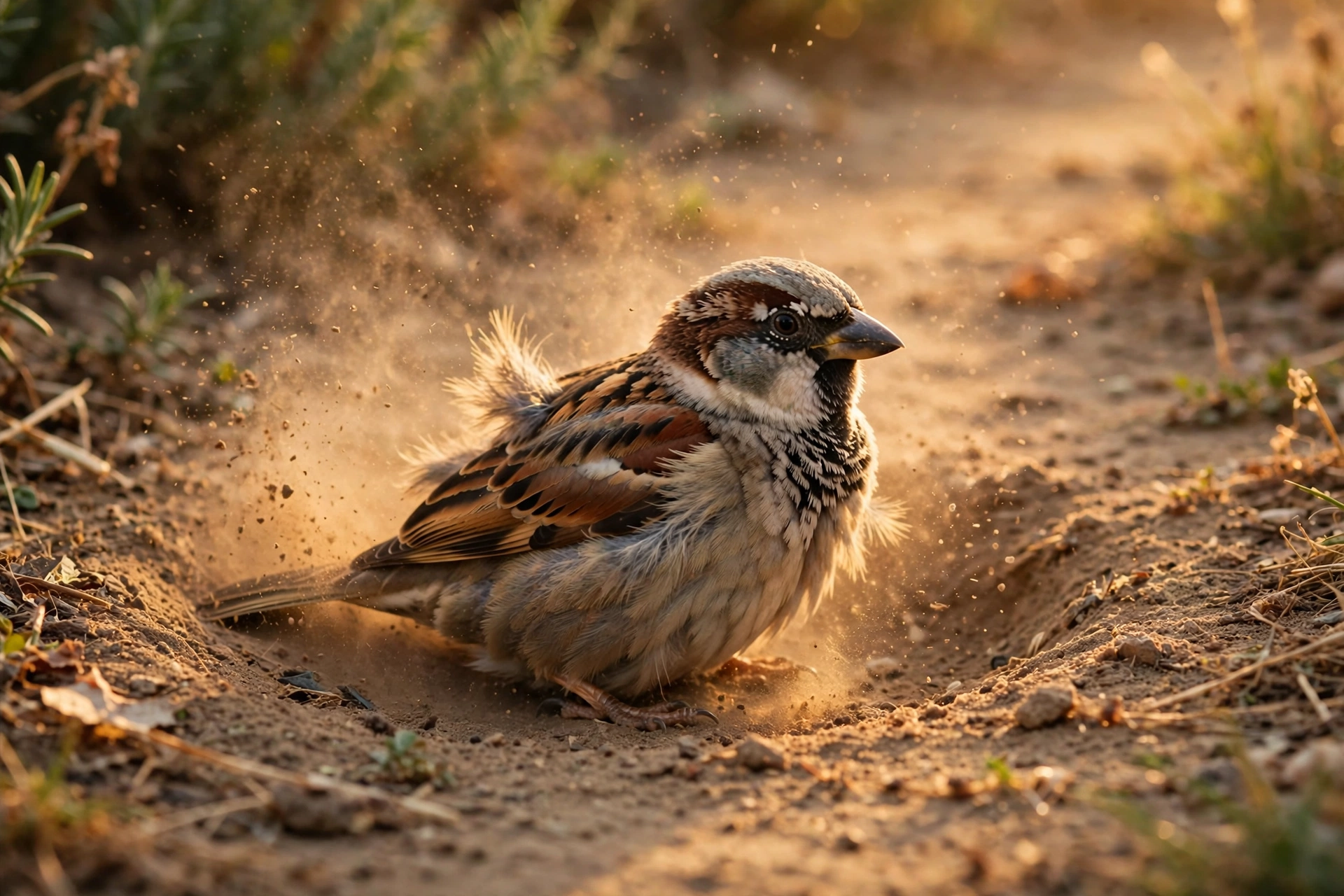
On a hot afternoon, a house sparrow drops into a patch of bare soil at the edge of a path and throws itself sideways. Wings beat in frantic little bursts, dust billows up around its body, and for a full minute it looks like the bird is wrestling an invisible opponent. Then it stands up, shakes hard, and preens its feathers back into place as if nothing happened.
What you just witnessed is a dust bath, and it is one of the most deliberate acts of personal hygiene in the bird world. Far from being a sign of madness or dirt-loving mischief, dust bathing is how hundreds of bird species manage parasites, control feather oil, and keep their plumage in flying condition.
In this guide, we will look at why birds dust bathe, what actually happens during a dust bath, which species are the biggest fans, how dust bathing differs from water bathing and sunbathing, and how you can offer a safe dust bath spot in your own yard.
What Exactly Is Dust Bathing?
Dust bathing, also called dusting, is a comfort behaviour in which a bird works fine, dry particles into its plumage. The bird typically scrapes a shallow depression in loose soil or sand, settles into it, fluffs its feathers, and wriggles so the dust reaches the skin. When it is done, it stands, shakes off the excess, and usually preens thoroughly to realign every feather.
The dust does real work while it sits between the feathers. According to research on feather maintenance, the dust absorbs excess feather lipids from preening oil, and when the bird shakes it off, those lipids go with it. The plumage is left lighter and better insulated, which matters because feather condition directly affects flight, insulation, and waterproofing.
Dust bathing is most common in birds that live in dry, open country, and it is especially well documented in gamebirds and ground-feeding species. Sparrows dust bathe in garden paths, starlings dust bathe in dry lawns, and chickens will abandon almost any activity for a good dusting session. Some species dust bathe even when fresh water is available, which tells us this behaviour fills a need that water alone cannot.
Why Do Birds Dust Bathe? The Benefits Explained
Avian biologists have proposed several functions for dust bathing, and the evidence supports more than one. Here are the main reasons birds do it:
- Parasite control: fine dust particles clog the breathing openings and joints of feather mites and lice, and the vigorous wriggling physically dislodges parasites clinging to feathers and skin. Controlled poultry studies found that dustbox users had 80 to 100 percent fewer ectoparasites after just one week.
- Excess oil control: birds spread oil from the uropygial (preen) gland across their feathers during preening. That oil keeps feathers supple and water-resistant, but too much of it makes plumage heavy, matted, and less aerodynamic. Dust soaks up the surplus like a dry shampoo.
- Feather condition: removing surplus lipids helps feathers hold their structure and insulating loft. Birds that cannot maintain their plumage lose body heat faster, which is one reason feather care links closely to how birds stay warm in cold weather.
- Skin and debris removal: dusting scrubs away loose skin flakes, dander, and debris that accumulate at the base of feathers, all of which parasites and bacteria could exploit.
The honest caveat is worth stating: the strongest experimental evidence for parasite reduction comes from domestic poultry, not wild birds. Wild-bird evidence is mostly observational, but the behaviour is so widespread and consistent that ornithologists treat feather maintenance as its primary function, with parasite control a strong supporting role.
What Science Says: Dust Baths Really Do Knock Back Parasites
The most cited experiment on dust bathing and parasites was carried out at the University of California, Davis. Researchers Martin and Mullens (2012) gave cage-free hens dustboxes filled with sand plus diatomaceous earth, kaolin clay, or sulphur, then compared ectoparasite loads on hens that used the boxes with those on non-users and caged hens.
The result was striking. All three dust materials reduced ectoparasites, including northern fowl mites and chicken body lice, on user hens by 80 to 100 percent after one week of dustbox use. When the dustboxes were removed, parasite numbers on the user hens recovered, which confirmed the bathing itself, not something else, was doing the work. The authors described it as the first experimental demonstration that dust bathing in naturally available materials can suppress ectoparasites, and concluded the behaviour is probably adaptive.
A follow-up study led by entomologist Amy Murillo looked at whether dust bathing could also prevent mite outbreaks rather than just treat them. As Science News reported, cage-free hens given dustboxes containing diatomaceous earth and sand reliably kept northern fowl mite populations below economically damaging levels. Dust damages the mites’ waxy outer coating and kills them by drying them out. When the dust baths were removed, mite populations skyrocketed. Hens carrying more than 100 mites each laid 2 to 4 percent fewer eggs, so this was a health measure with real consequences.
These are poultry studies, and wild birds face different parasite pressures. But the mechanism is simple physics, and it applies to any bird: fine particles plus vigorous movement plus a good shake-off removes parasites and the oily debris they live in. Poultry keepers have long treated a dust bath as essential grooming rather than optional entertainment, and the science now backs them up.

How a Dust Bath Works, Step by Step
Watch a dust bath once and you will recognise the choreography every time. The sequence is remarkably consistent across species:
- Site selection: the bird picks a patch of fine, dry, loose soil or sand, ideally in sun where the ground is warm and dry.
- Scraping the wallow: it scratches with its feet to create a shallow depression, loosening the top layer into powdery dust.
- Settling and fluffing: the bird squats into the depression and erects its feathers so dust can reach the skin.
- Vertical wing shaking: short, sharp flaps throw dust up and over the body while the bird stays low.
- Wriggling and head rubbing: the bird rolls side to side and rubs its head against the ground, coating the shorter head and neck feathers.
- Bill raking: some birds rake the bill through the substrate, working dust into the breast feathers.
- The shake-off: the bird stands, shakes vigorously from beak to tail, and usually follows with a long preening session to realign feathers and remove any lingering particles.
A full session can last several minutes, and birds often dust bathe in groups. Chickens famously crowd around a dust bath as it is being refilled, and California quail dust bathe in coveys. In many species, a dust bath is followed by a water bath, or the reverse, suggesting the two behaviours complement rather than replace each other.
Which Birds Are the Dust Bath Enthusiasts?
Dust bathing is widespread but not universal. The keenest dust bathers tend to be ground-foraging birds of dry, open habitats:
- Sparrows: house sparrows and their relatives are classic dust bathers, frequently seen wriggling in garden paths and dry soil.
- Starlings and thrashers: regular dust bathers that also water bathe, showing the behaviours are complementary.
- Quail and other gamebirds: California quail dust bathe socially in coveys, and pheasants, grouse, and partridges all dust bathe.
- Chickens and turkeys: domestic fowl are the textbook example, and wild turkeys dust bathe too.
- Wrens and larks: smaller ground species, including skylarks, create tiny depressions and shuffle through dry soil.
Birds that rarely dust bathe include most waterfowl, which maintain plumage through water bathing and preening, and many raptors. Dust bathing is also a strongly motivated behaviour: hens deprived of substrate will perform “sham” dust bathing on bare wire, going through all the motions with no dust at all. That tells us the urge runs deep in their biology.

Dust Bathing vs Water Bathing vs Sunbathing
These three comfort behaviours look similar at a glance but serve different jobs. This comparison shows how they differ:
| Feature | Dust bathing | Water bathing | Sunbathing |
|---|---|---|---|
| Main purpose | Absorb excess preen oil, dislodge parasites, condition feathers | Remove dirt and debris, rehydrate feathers, cool down | Warm the body, spread preen oil through feathers |
| How it works | Dry particles worked into plumage, then shaken off | Water splashed through plumage, then shaken off | Feathers spread and fluffed while sitting in direct sun |
| Best conditions | Dry, sunny weather; fine loose soil or sand | Any season with liquid water available | Cool mornings or after rain; direct sunlight |
| Typical fans | Sparrows, quail, chickens, turkeys, thrashers | Almost all birds, including waterfowl | Cormorants, vultures, many songbirds |
| Followed by | Preening, sometimes a water bath | Preening | Preening |
Notice that water bathing and dust bathing are not rivals. Many birds do both in the same day. Water removes what dust cannot, and dust removes what water cannot, which is why our guide to how birds stay cool treats bathing as part of a whole comfort-behaviour toolkit rather than a single habit.
Pet Birds and Dust Baths: What to Know
If you keep pet birds, you may wonder whether to offer a dust bath at home. The answer depends on the species, and one popular product deserves a warning.
Chinchilla dust is not recommended for birds. It is an extremely fine volcanic-pumice powder made for chinchilla fur, and avian keepers report it irritates birds’ eyes and respiratory systems. Bird respiratory systems are far more sensitive than mammals’, so a product that is merely dusty for a chinchilla can be genuinely harmful to a bird. Use plain fine sand or dry, sterilised garden soil instead, and never use potting soil, which contains mulch, fertilisers, and other additives.
Many parrots are not natural dust bathers at all. They evolved in humid environments where water bathing is the norm, and some will try to eat offered dust rather than roll in it. For parrots and other pet birds that do enjoy a dry bath, such as some finches and canaries, a shallow dish of clean fine sand a few centimetres deep is enough. Supervise first attempts, remove the dish if the bird eats the substrate, and check with an avian vet if you are unsure.
The safest rule is simple: match the bath to the bird’s wild habits. Desert and grassland species appreciate dust, tropical forest species prefer mist or a shallow water dish, and every pet bird benefits from clean substrate.
How to Offer a Dust Bath Spot in Your Yard
You do not need much to give wild birds a dust bath. A simple bare patch in a sunny corner will attract sparrows, starlings, and other ground birds within days. Here is how to do it well:
- Pick a sunny, dry spot: dust baths only work when the substrate stays powdery, so choose a location with good drainage and full sun.
- Keep the soil loose: break up compacted earth and remove stones, roots, and mulch from a patch about 60 cm across.
- Top up with fine sand: a bag of washed play sand mixed into the soil keeps the texture light and dust-ready.
- Add no chemicals: never use fertilised soil, pesticides, or herbicides in or near the bath, since birds work the dust right down to their skin.
- Shelter it nearby: place the bath within a few metres of shrubs or cover so birds can retreat quickly from predators.
- Pair it with water: a nearby bird bath completes the setup, letting birds dust, drink, and water bathe in one visit.
A dust bath fits naturally into a bird-friendly garden alongside feeders and plantings. If you are already working on how to attract cardinals to your yard, a dry soil patch is one more habitat layer that ground-feeding visitors will use every day.

Frequently Asked Questions
Is dust bathing a sign that a bird is sick?
No. Dust bathing is normal, healthy comfort behaviour, and a bird rolling in the dirt is usually doing excellent feather maintenance. Sick birds tend to sit fluffed and still, not perform energetic bathing sequences.
Do birds dust bathe in wet weather?
Rarely. Wet soil clumps instead of flowing between feathers, so birds wait for dry, sunny conditions. After rain, most birds switch to sunbathing and preening until the ground dries out.
Can birds dust bathe and water bathe on the same day?
Yes, many do. The two behaviours serve different purposes: water removes dirt and cools the bird, while dust absorbs excess oil and dislodges parasites. They complement each other.
What kind of soil is best for a dust bath?
Fine, dry, loose soil or sand works best. It should be powdery enough to sift between feathers but fall away easily when shaken. Avoid clay-heavy soil, which clumps, and anything treated with chemicals.
Do all birds dust bathe?
No. Most waterfowl maintain their plumage through water bathing and preening, and many raptors rarely dust bathe. The behaviour is most common in ground-foraging birds of dry, open habitats.
Is chinchilla dust safe for birds?
No, it is not recommended. Chinchilla dust is extremely fine and can irritate birds’ eyes and sensitive respiratory systems. Use plain fine sand or dry, sterilised garden soil instead, and consult an avian vet if you are unsure.
Should I stop my chickens dust bathing in the garden?
There is no need to stop them. Dust bathing is essential grooming for chickens and helps keep mites and lice in check. If the bare patches bother you, give the flock a dedicated dust bath area in a sunny corner, which they will happily adopt.
The Takeaway
Dust bathing is nature’s dry shampoo: fine particles absorb excess preen oil, dislodge feather parasites, and help birds keep their plumage light, insulating, and flight-ready. The behaviour is deeply wired, strongly motivated, and backed by real science showing dramatic parasite reductions in birds that use dust baths.
So the next time you see a sparrow thrashing in the dirt, resist the urge to worry. It is not in trouble. It is doing its laundry, and it knows exactly what it is doing.
Related reading on BirdsBuzz: Do Birds Sweat? How Birds Stay Cool Without Sweat Glands, How Do Birds Stay Warm in Winter?, and How to Attract Cardinals to Your Yard.






[…] with birds fluffing soil through their feathers while sitting in a dry hollow. Our guide to why birds dust bathe shows the contrast […]