 Skip to content

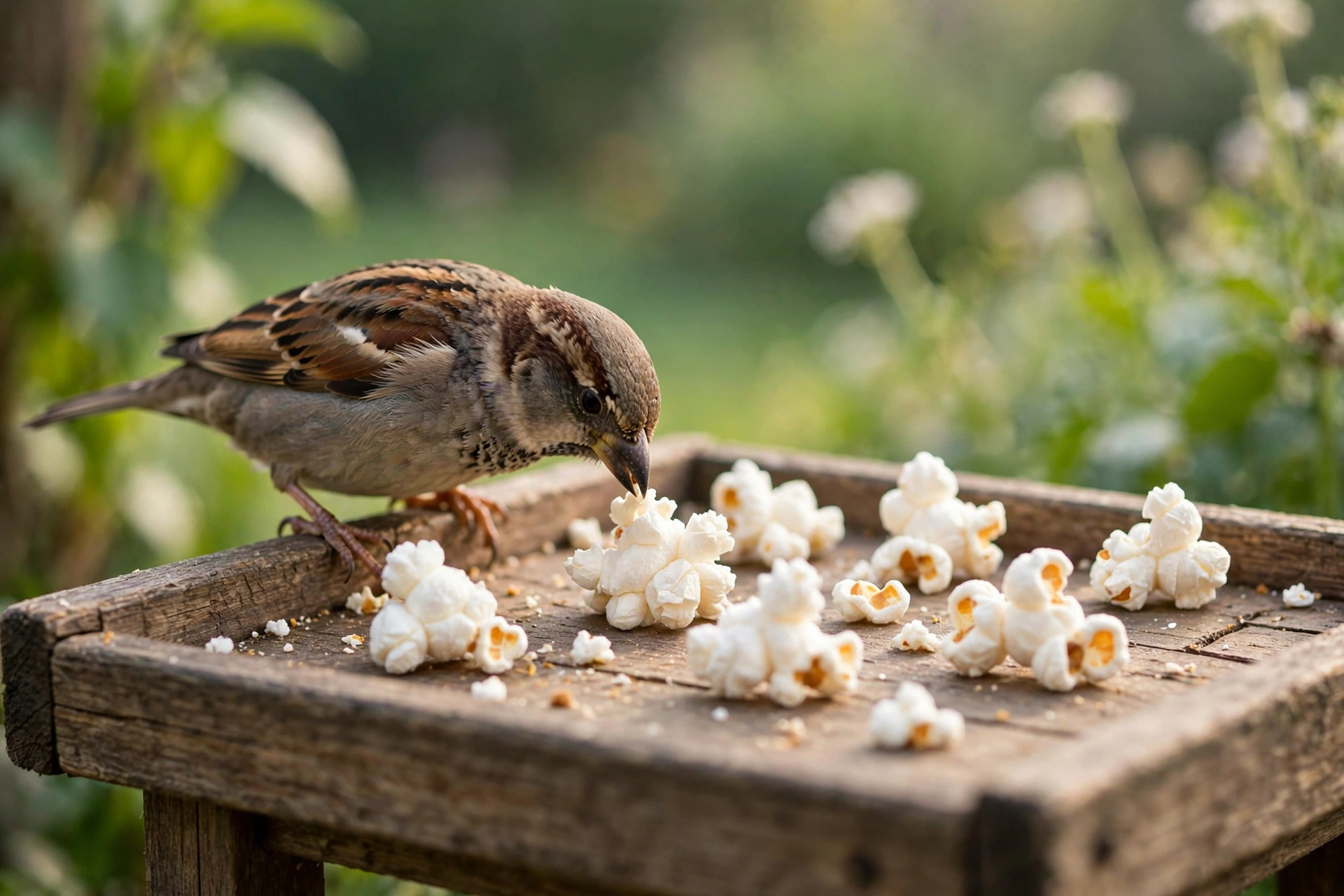
You are curled up for movie night, a big bowl of popcorn on your lap, and then you see them. Sparrows lined up on the fence, a jay on the railing, all watching you with hopeful eyes. You want to toss them a piece, but the question pops up first: can birds eat popcorn, or is this one of those human foods that only looks harmless?
Here is the short answer. Yes, birds can eat popcorn, but only plain, air-popped popcorn with nothing added. No butter, no salt, no oil, no cheese powder, no caramel. And it should be a small occasional treat, not a regular meal. Most popcorn we eat at home or at the cinema is loaded with exactly the things that make it unsafe for birds.
In this guide we will break down which popcorn is safe, the specific dangers hiding in common types, how to serve it the safe way, and how the answer changes for wild birds versus pet birds. By the end, you will know exactly what to share and what to keep to yourself.
Can Birds Eat Popcorn? The Short Answer
Plain, air-popped popcorn is safe for birds in small amounts. It is just corn that has been heated until it bursts, and birds have been eating corn in various forms forever. The problem is never really the corn itself. It is everything we humans add to it.
Butter, salt, cooking oils, cheese dust, caramel, and the flavor coatings on microwave popcorn can all harm birds. Some of these are mildly risky in tiny doses, while others can make a small bird seriously ill. That is why the rule is simple: if your popcorn has anything on it, do not share it.
Even plain popcorn is not perfect food for birds. It is mostly air and starch, with very little of the protein, fat, and vitamins that birds need. Think of it as the bird equivalent of an occasional snack, fun and harmless in small doses, but never a meal.
Which Popcorn Is Safe for Birds
The gold standard is popcorn popped in a hot air popper with no oil, no salt, and no flavorings. This is the only popcorn you should offer to birds. It is light, easy to break apart, and free of every additive that causes problems.
Stovetop popcorn popped in a very small amount of plain vegetable oil can be acceptable in a pinch, but air-popped is still better. Birds do not need added fats the way we think they do, and even plain oil adds calories with no benefit. If you want to share with the backyard birds, keep a separate plain batch just for them.
Here is what qualifies as bird-safe:
- Plain air-popped: no salt, no butter, no oil, no seasoning at all
- Fully popped: every piece soft and fluffy with no hard centers
- Fresh: popped recently, not stale or soggy from sitting out
- Small amounts: a small handful at a time, only occasionally
If you are making popcorn for yourself anyway, setting aside a little plain portion before you season the rest is the easiest way to do this. Pop it first, share it while it is fresh, and flavor your own bowl afterward.

The Danger List: Popcorn You Must Never Share
Most popcorn sold or served to people is unsafe for birds. This is not about being overly cautious. Several common popcorn additives are genuinely harmful to small animals, and birds are much smaller than we are. What tastes fine to you can be a real dose for a chickadee.
Butter and oils
Butter, margarine, and heavy cooking oils are not part of a natural bird diet. Large amounts of fat can cause digestive upset, and rancid oils on stale popcorn can harbor harmful bacteria. Birds get their fats from seeds and insects, not from dairy butter.
Salt
Salt is one of the biggest concerns. Birds have no need for added sodium, and salted foods can cause dehydration and, in larger amounts, sodium toxicity in wild birds. This is one reason you should never toss cinema popcorn out for the birds in the park. That salty coating is exactly what they do not need.
Microwave popcorn
Microwave popcorn is the least safe option of all. The bags contain flavorings, salt, oils, and butter substitutes that are not meant for birds. Many brands have used artificial butter flavoring called diacetyl, a chemical linked to serious lung problems in factory workers exposed to large amounts, and the bag linings have raised separate health questions. This is people food with a chemical profile that has no place in a bird feeder.
Cheese, caramel, and seasonings
Cheese powder, caramel coating, kettle corn sugar, chocolate drizzle, and spice blends all add sugar, salt, dairy, or chemicals that birds should not eat. Sugary coatings can lead to digestive problems, and sticky caramel can gum up a bird’s beak and feathers. If it tastes like anything other than plain corn, it is not for birds.
Unpopped and half-popped kernels
Always check your popcorn and remove every hard kernel before sharing. Unpopped kernels are rock hard and can crack a small beak or cause choking. The tough hulls can also scratch a bird’s crop and digestive tract, and in some cases cause blockages. Avian veterinarian Dr. Laurie Hess has warned that popcorn hulls and unpopped kernels can get stuck in a bird’s crop and scratch the delicate lining of the gastrointestinal tract. This is the most overlooked danger, because it hides at the bottom of the bowl.
Safe vs Unsafe Popcorn for Birds
This quick table makes it easy to remember what you can share and what to keep away from birds:
| Type of popcorn | Safe for birds? | Why |
|---|---|---|
| Plain air-popped | Yes, in moderation | No additives, light and easy to eat |
| Stovetop popped in light oil, unsalted | Okay occasionally | Small amount of oil is not ideal but not harmful in tiny doses |
| Buttered or salted | No | Salt and dairy fat can cause dehydration and digestive problems |
| Microwave popcorn | No | Chemical flavorings, salt, oils, and bag-lining concerns |
| Cheese, caramel, or kettle corn | No | Sugar, salt, dairy, and sticky coatings are all harmful |
| Unpopped or half-popped kernels | No | Choking hazard, can crack beaks and scratch the crop |

How to Serve Popcorn to Birds Safely
Sharing popcorn with birds takes about two minutes of prep. Follow these steps and you can treat your backyard visitors without worry.
- Pop it plain: use an air popper, or a covered pot with no oil. Do not add salt, butter, or anything else.
- Pick out the hazards: pour the popcorn onto a tray and remove every unpopped kernel and every half-popped hard piece. Take your time, this is the most important step.
- Break it into small pieces: tear large popped pieces into smaller bits. Small birds like chickadees and finches will find bite-size pieces much easier to handle. For pet birds like budgies, crushing it finer is a good idea too.
- Offer a small amount: scatter a small handful on a clean platform feeder, a flat rock, or the ground. A little goes a long way.
- Clean up leftovers: remove anything uneaten by the end of the day. Damp popcorn molds quickly, and mold is dangerous for birds.
Never put popcorn in a tube feeder. It is too big and too soft for the ports, and it will get damp and spoil inside. Platform feeders, tray feeders, or the ground all work well. And just like with any feeder food, keep the feeding area clean so it does not attract unwanted pests.
If you want to give your birds a real winter energy boost, popcorn is not the food for the job. A good homemade suet recipe for birds packs far more calories and nutrition into every bite, which is what birds actually need when temperatures drop.
Wild Birds vs Pet Birds: What Changes
The basic safety rules are the same for wild birds and pet birds, but a few things work differently in practice. Knowing the difference helps you share responsibly in both cases.
Wild birds
Wild birds that visit feeders, like jays, crows, sparrows, doves, woodpeckers, and chickadees, will happily sample plain popcorn. Ground feeders such as doves and juncos handle small pieces well, while bigger birds like crows and jays can manage larger pieces. Wild birds burn enormous amounts of energy, so a few pieces of popcorn are a minor addition to a day of foraging.
The main concern with wild birds is volume. If you scatter popcorn every day, some birds may start filling up on empty carbs instead of hunting for insects and seeds, which are far more nutritious. Keep it occasional, like a weekend treat, not a daily routine.
Pet birds
Pet birds such as budgies, cockatiels, parrotlets, and larger parrots can also enjoy plain air-popped popcorn as an occasional treat. Many parrot owners report that their birds love the crunch. For smaller species, crush the popcorn into finer pieces to remove any choking risk, and always supervise while they eat it.
For pet birds the bigger concern is diet balance. Pet birds are already at risk of getting too many treats and not enough of their formulated diet, fresh vegetables, and pellets. Popcorn should be a tiny part of the day, a fun foraging snack, not a staple. Some avian organizations advise against popcorn as a regular pet bird food because the hulls can cause crop irritation, so treat it as an occasional novelty rather than a routine snack.
If you are deciding between pet bird species, our comparison of the cockatiel vs budgie breaks down diet and care differences that matter for feeding choices like this.
Popcorn at the Feeder: Practical Tips
If you want to try popcorn at your backyard feeder, a few practical tips will keep it safe and enjoyable for the birds.
- Scatter, do not pile: spread pieces out so rain cannot soak a big clump into a moldy mess
- Mix with real food: toss a few popcorn pieces into a tray of quality seed so birds get nutrition alongside the treat
- Watch who shows up: jays, crows, and starlings love popcorn, while some small finches may ignore it entirely
- Skip wet weather: do not put popcorn out on rainy days, since damp pieces spoil fast
- Rotate your treats: alternate popcorn with fruit, peanuts, or mealworms so birds get variety
One more note: never feed popcorn to baby birds. Nestlings and fledglings need soft, protein-rich food from their parents, and hard or dry human snacks can harm them. If you ever find a baby bird, read our guide on what baby birds eat before offering anything.
The Nutritional Reality Check
Popcorn is mostly carbohydrate with a little fiber and very small amounts of B vitamins. It is low in protein, low in healthy fats, and lacks the vitamins and minerals birds get from seeds, insects, fruit, and nectar. In other words, it is filler food.
That is not a reason to panic about sharing a few pieces. It is simply a reason not to mistake popcorn for real bird food. Seeds, suet, nuts, fruit, and insects are the foods that keep birds healthy, and popcorn will never replace them.
Think of popcorn the way you think of bird feeding in general. It is enrichment. It brings birds to your yard, gives them something fun to pick apart, and gives you a great view. The nutrition comes from everything else in the feeder.

Frequently Asked Questions
Can birds eat popcorn every day?
No, popcorn should be an occasional treat, not a daily food. It is mostly empty carbohydrates with little nutritional value, so daily servings could displace the seeds, insects, and fruit birds actually need. Once in a while is fine.
Is microwave popcorn safe for birds?
No. Microwave popcorn contains salt, oils, butter flavorings, and other additives that are harmful to birds. The bag linings have also raised health concerns. Always pop popcorn in an air popper or a plain pot instead.
Can birds eat unpopped popcorn kernels?
No, unpopped kernels are dangerous for birds. They are hard enough to crack a small beak or cause choking, and the tough hulls can scratch a bird’s crop and digestive tract. Always remove every unpopped kernel before sharing popcorn.
Can parrots and budgies eat popcorn?
Yes, pet parrots, budgies, cockatiels, and finches can eat plain air-popped popcorn as an occasional treat. Break or crush it into small pieces for smaller species, supervise while they eat, and keep it a tiny part of an otherwise balanced diet.
Can baby birds eat popcorn?
No. Baby birds have sensitive digestive systems and need soft, protein-rich food from their parents. Never offer popcorn or other hard human snacks to nestlings or fledglings.
Do birds like popcorn?
Many do. Jays, crows, sparrows, doves, and chickadees will often sample plain popcorn eagerly. Some finches and insect-eating birds may ignore it. Every bird has its own taste, just like people.
Is buttered or salted popcorn okay for wild birds?
No. Salt can cause dehydration and sodium problems in wild birds, and butter adds fat and dairy that their digestive systems are not built for. Only plain, unsalted, unbuttered popcorn is safe to share.
Conclusion
So, can birds eat popcorn? Yes, with one firm rule: plain, air-popped, and fully popped, in small amounts, only sometimes. Remove every hard kernel, break the pieces small, and keep it away from rain. Everything else, butter, salt, oil, microwave bags, cheese, and caramel, stays in your bowl.
Popcorn will never be a health food for birds, but shared the right way it is a harmless and fun treat that brings more birds to your feeder. Pop a plain batch, toss out a small handful, and enjoy the show.
Sources
- World Wide Birds: Can birds eat popcorn?, guidance on plain air-popped popcorn and feeding it in moderation
- Avian Bliss: Can Birds Eat Popcorn?, safe types, risks, and feeding tips for wild and pet birds
- Birdie Learning: Can Birds Eat Popcorn? 2026 Guide, the four safety rules including the unpopped kernel warning





