 Skip to content

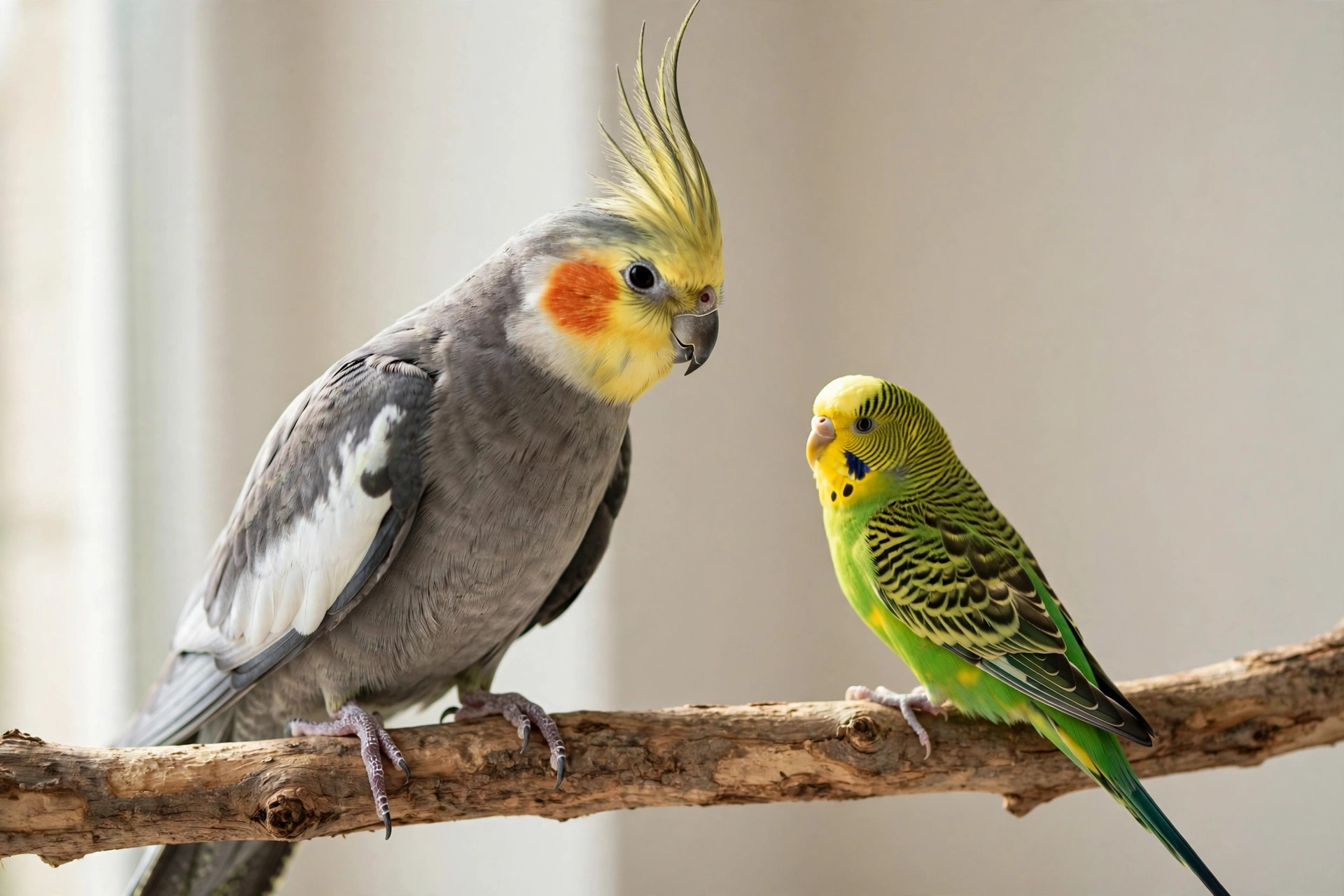
Walk into any pet store’s bird aisle and two species dominate the beginner section: the cockatiel and the budgie. Both are small Australian parrots. Both are friendly, affordable, and endlessly entertaining. And yet they are completely different roommates.
Choosing between them is one of the most common questions in the pet bird world, and most answers are useless. They list a few facts, shrug, and say it depends. This guide does the opposite. We compare cockatiel vs budgie across every category that actually affects your daily life: noise, mess, affection, lifespan, cost, and commitment. Then we give you a clear verdict based on who you are. No jargon, no hedging, just the trade-offs that matter once the bird is actually living in your home.
Cockatiel vs Budgie: The Short Answer
Budgies are the low-commitment starter bird: smaller, cheaper, quieter on average, and easier to fit into an apartment or a busy life. Cockatiels are the deeper commitment: bigger, louder in bursts, dustier, pricier, but far more likely to become a cuddly shoulder companion that bonds with you for 20 years.
If you want a cheerful, chatty bird that asks little of your space and wallet, get a budgie. If you want a bird that leans into your hand for head scratches and greets you with a whistle it learned from you, get a cockatiel. Everything below explains why.
Meet the Contenders
The Budgie
The budgie, also called the parakeet in the US, is a small grass parakeet from Australia. Wild budgies are green and yellow, but decades of breeding have produced blues, whites, albinos, and dozens of color combinations. Adults measure about 7 to 8 inches long and weigh roughly 30 to 40 grams, about the weight of two tablespoons of sugar.
Budgies are flock birds to their core. They are happiest with company, either another budgie or a human who talks to them regularly. They chatter almost constantly, play hard with toys, and can become hand-tame with patience. A well cared-for budgie lives 7 to 15 years, though many pet budgies live around 8 years when care is average rather than excellent, according to ManxSPCA guidance.
The Cockatiel
The cockatiel is also Australian, but built on a bigger plan: 12 to 13 inches long, weighing 80 to 120 grams, with a dramatic crest that broadcasts its mood. The classic grey body, yellow face, and orange cheek patches are iconic, and mutations range from lutino to pearl to whiteface.
Cockatiels are the cuddlers of the small-parrot world. They bond deeply, often with one person, and many genuinely enjoy head scratches, shoulder time, and being part of whatever you are doing. That bond comes with a longer contract: with good care, cockatiels live 15 to 25 years, per Animal Humane Society care guidance. Some individuals reach 30.
Cockatiel vs Budgie: Side-by-Side Comparison
| Category | Budgie | Cockatiel |
|---|---|---|
| Size | 7-8 inches, 30-40 g | 12-13 inches, 80-120 g |
| Lifespan | 7-15 years (many reach ~8) | 15-25 years (some reach 30) |
| Noise level | Constant soft chatter, low volume | Quieter stretches, louder bursts and contact calls |
| Talking ability | Excellent mimics, large vocabularies possible | Better at whistling tunes, simpler speech |
| Affection style | Social, playful, often hands-off | Cuddly, seeks scratches, bonds to one person |
| Mess and dust | Seed hulls scattered everywhere | Seed hulls plus constant feather dust |
| Bird price (US) | Roughly $20-40 | Roughly $75-200+, more for rare mutations |
| Cage minimum | 18 x 18 x 24 inches | 20 x 20 x 24 inches or larger |
| Diet | Seed mix, pellets, fresh veggies | Seed mix, pellets, fresh veggies (watch fat intake) |
| Beginner difficulty | Easy | Easy to moderate |
| Apartment suitability | Excellent | Fair (noise and dust) |

Size and Space: Small Bird, Big Difference
A cockatiel is roughly twice the length and three times the weight of a budgie, and that gap shows up everywhere. The cage, the perches, the toys, the food bill, and the droppings all scale up. A budgie cage can fit on a sturdy table. A cockatiel needs a proper stand or floor space, with room to fully spread its wings and accommodate that long tail without crushing it against the bars.
Both species need daily out-of-cage time to stay healthy and sane. Neither should live its whole life behind bars. But the budgie’s smaller footprint makes it the practical choice for dorm rooms, small apartments, and anyone short on floor space.
Lifespan: The Commitment Gap
This is the category people underestimate most. A budgie’s 7 to 15 year lifespan is a real commitment, but a cockatiel’s 15 to 25 years is a different life decision. Get a cockatiel in your twenties and it may still be with you in your forties. Moves, relationships, careers, and children all have to fit around the bird.
Longer life also means longer veterinary history. Cockatiels are prone to obesity and fatty liver disease on seed-only diets, and hormonal behavior issues if overstimulated. Budgies face their own risks, including tumors and nutritional problems, but the shorter timeline and smaller body mean lower lifetime care costs. Neither bird is disposable, and both deserve the full span they are given.
Noise: Chatter vs Contact Calls
Here is the honest breakdown. Budgies are almost never silent. They chirp, chatter, and warble through most of the day. But the volume stays low, more like pleasant background radio than an alarm. Most households stop noticing it, and neighbors rarely hear a thing.
Cockatiels are quieter for long stretches, then suddenly not. The contact call, a sharp whistle used to locate their flock (you), can pierce through walls. Dawn and dusk are the loud hours, and hormonal seasons amplify everything. A cockatiel’s whistle is charming until it happens during a work call. If you share thin walls with neighbors, the budgie is the safer bet by a wide margin. One caveat: budgies left alone all day can get louder too, calling for a flock that is not there. A second budgie or a radio left on usually settles them.

Talking and Whistling
Budgies are the surprise champions of speech among small pet birds. Pound for pound, they are among the best talkers in the pet trade, with recorded vocabularies reaching into the hundreds of words. Males tend to be the better mimics, and a young, hand-raised budgie exposed to daily speech can learn phrases with startling clarity.
Cockatiels talk too, but whistling is their true art form. They learn tunes, ringtones, the microwave beep, and your laugh, often with eerie precision. Their speech tends to be simpler and breathier. If your dream is a bird that chats in words, lean budgie. If you want a bird that whistles your favorite song back at you, lean cockatiel.
Affection: The Cuddle Factor
This is where cockatiels pull ahead decisively. Many cockatiels actively solicit affection: bowing their heads for scratches, nuzzling into necks, and riding around on shoulders for hours. They read human body language well, partly thanks to that expressive crest, which rises, flattens, and tilts with their mood.
Budgies are affectionate in a different register. They love being near you, preen your fingers, chatter at you, and play games. But most budgies are not cuddle birds. They tolerate handling rather than crave it, and forcing physical affection usually backfires. If hands-on snuggling is the point of getting a bird, the cockatiel wins. If you are happy with a lively little companion that entertains from a respectful distance, the budgie delivers.
Dust, Mess, and Allergies
Cockatiels produce powder down, a fine keratin dust from specialized feathers that keeps their plumage conditioned. It coats everything near the cage: furniture, electronics, walls. For most people it is a cleaning annoyance. For anyone with asthma, allergies, or another bird species sensitive to dust, it is a genuine health consideration. An air purifier near the cage helps, but it does not eliminate the issue.
Budgies make almost no feather dust. Their mess is the classic seed-hull explosion: tiny husks flung in a surprising radius around the cage. A seed guard or a cage with a deep base contains most of it. On the mess scale, budgies are the easier bird to live with, and for allergy-prone households they are the clear choice.
Cost: Bird, Setup, and Lifetime
The purchase price tells only part of the story. In the US, a budgie typically costs $20 to $40 from a pet store, while a cockatiel runs $75 to $200 or more, with rare color mutations climbing higher. Hand-raised babies from breeders cost more than parent-raised birds in both species, and the extra money is usually worth it for tameness.
Setup costs follow size. The cockatiel’s larger cage, bigger toys, and higher food consumption add up, and its longer lifespan multiplies every recurring cost: food, toys, and avian vet visits over 20 years instead of 10. A budgie is one of the cheapest pets you can keep well. A cockatiel is still affordable as birds go, but budget honestly for the long haul.
Diet and Daily Care
Both species eat the same basic menu: a quality seed mix or pellets as the base, plus fresh vegetables, some fruit, and occasional extras like cooked egg. Both need fresh water daily, cuttlebone for calcium, and a clean cage. The differences are emphasis, not kind.
Cockatiels demand more vigilance about fat. They are prone to obesity and fatty liver disease, especially on all-seed diets with no exercise, as WebMD’s cockatiel overview notes. Pellets, vegetables, and daily flight time are the prevention plan. Budgies have the same dietary needs in miniature, with tumors and iodine-related thyroid issues among the breed’s known vulnerabilities. Whichever you choose, seed-only is not a diet, it is a slow problem.
The Verdict: Which Bird for Which Owner
- Apartment dwellers: Budgie. Lower volume, smaller footprint, no feather dust drifting into the neighbor’s vents.
- First-time bird owners on a budget: Budgie. Cheaper to buy, cheaper to house, cheaper to feed, and forgiving of beginner mistakes.
- Families with gentle kids: Either, with supervision. Budgies are sturdier to beginner handling errors, while a tame cockatiel’s patience with gentle children is legendary. Teach the kids first, then let them meet the bird.
- Owners who want a cuddle companion: Cockatiel. No contest. If head scratches and shoulder time are the dream, this is your bird.
- People who work from home: Budgie for background chatter you can talk over, or cockatiel if you can tolerate the occasional contact-call interruption. Know your meeting schedule.
- Anyone with allergies or asthma: Budgie. Cockatiel powder down is a real trigger, not a minor detail.
- Owners ready for a 20-year bond: Cockatiel. The long lifespan is a feature if your life is stable enough to promise it.
Whichever you choose, buy from a reputable breeder or adopt from a rescue, quarantine new birds, and find an avian vet before you need one. Our guides on whether to cover the cage at night, signs your pet bird is sick, and even how birds hear will help you get the details right from day one.

FAQs
Which is easier to care for, a cockatiel or a budgie?
The budgie. Smaller cage, lower food bill, less mess, no feather dust, and a shorter lifespan to plan around. Cockatiels are not difficult, but everything about their care is scaled up.
Which is louder, a cockatiel or a budgie?
Budgies vocalize more constantly but at low volume. Cockatiels are quieter overall but produce louder bursts, especially contact calls at dawn and dusk. For noise-sensitive homes, the budgie is the safer choice.
Can budgies and cockatiels live together?
Not in the same cage. The size difference makes accidental injury likely, and cockatiels can be territorial. They can share a room in separate cages and often enjoy each other’s company from a safe distance.
Which talks better, a cockatiel or a budgie?
Budgies are the better word mimics, with some individuals learning hundreds of words. Cockatiels excel at whistling tunes and household sounds. Neither ability is guaranteed in any individual bird.
Do cockatiels really produce that much dust?
Yes. Powder down is constant and coats nearby surfaces. It is manageable with cleaning and an air purifier, but it is a genuine problem for allergy and asthma sufferers, and for dust-sensitive bird species housed nearby.
Which is better for beginners?
Both are recommended for beginners, but for different beginners. The budgie suits someone testing the waters of bird ownership. The cockatiel suits someone who already knows they want a deeply interactive, long-lived companion.
How much does each bird cost per year?
Costs vary by region and vet prices, but expect roughly $100 to $200 per year for a budgie’s food, toys, and basic care, and $200 to $400 for a cockatiel, before vet bills. Avian vet visits are the wildcard in both budgets.
Conclusion
The cockatiel vs budgie question has no universal winner, but it has a right answer for you. The budgie is the sensible, joyful, low-drama choice: a tiny chatterbox that fits anywhere and asks for little. The cockatiel is the heart choice: a bigger, dustier, louder commitment that pays you back in head scratches, whistled duets, and two decades of companionship.
Be honest about your noise tolerance, your space, your budget, and how many years you can promise. Then pick the bird that matches the life you actually have, not the one you imagine. Either way, you are getting one of the best starter parrots on Earth. The only wrong choice is the bird you were not ready for.





