 Skip to content

October brings crisp air, falling leaves, and a surprise many bird lovers notice: the backyard fills with music again. If you have stood on your porch on a cool autumn morning and wondered why do birds sing in fall, you are not imagining things. The fall chorus is real, even though most field guides focus on spring.
Spring song is about finding a mate and defending a nest. Fall song plays by different rules. The singers are mostly year-round residents, the songs are quieter and less urgent, and the reasons have everything to do with winter survival.
In this guide, we explain the real science behind the autumn chorus, which birds sing in fall, how their songs differ from spring, and how you can enjoy every note from your own backyard.
In short: When people ask why do birds sing in fall, the answer is that the autumn chorus is real but serves different goals than spring song. Resident birds defend winter feeding territories, young birds practice their songs for next year, and pairs and flocks stay in touch. Shorter days and falling hormones make fall songs quieter and less polished.
Why Do Birds Sing in Fall? 5 Real Reasons
Understanding why do birds sing in fall starts with one simple idea: song has more than one job. In spring, it advertises a male to females and warns rivals away from a nest. In autumn, the goals shift toward survival, practice, and social bonding.
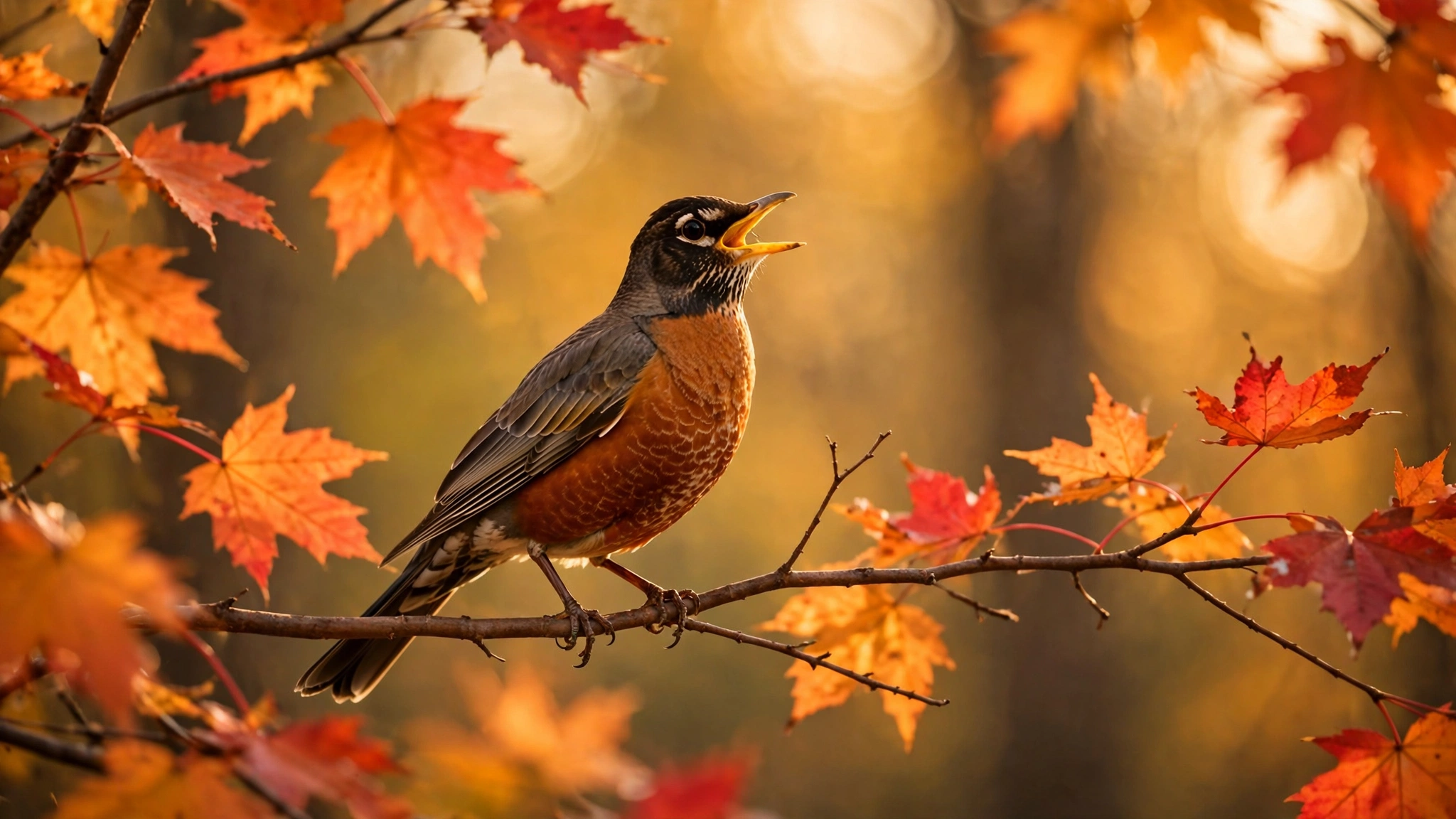
- Territory defense: After breeding ends, resident birds such as American robins and northern cardinals claim feeding territories for winter. Song tells neighbors that the good food spots are taken. This is the number-one reason why do birds sing in fall.
- Practice for the young: Birds hatched this spring are still learning. They sing soft, rambling subsong, a quiet rehearsal of the adult songs they heard months ago.
- Keeping in touch: Song and loud calls help pairs and flocks stay together as trees lose their leaves. Singing strengthens these social bonds before winter.
- A hormonal echo: Hormones do not switch off overnight. As testosterone drops with shorter days, some males keep singing for weeks on a fading hormonal signal.
- Claiming winter food: Singing around berry bushes, feeders, and roost sites is a cheap way to hold a claim. It avoids the cost of real fights when food will soon be scarce.
Which Birds Sing in Autumn?
Most fall singers are year-round residents rather than long-distance migrants. Here are the five voices you will hear most often across North America, and what each one is saying.
American Robin
If you want to hear why do birds sing in fall for yourself, the American robin is the best teacher. Robins sing a soft, sweet version of their spring carol, often from high perches at dawn and dusk. They are defending winter feeding territories rich in berries and fruit. Learn more in our guide to identifying and caring for American robins.
Carolina Wren
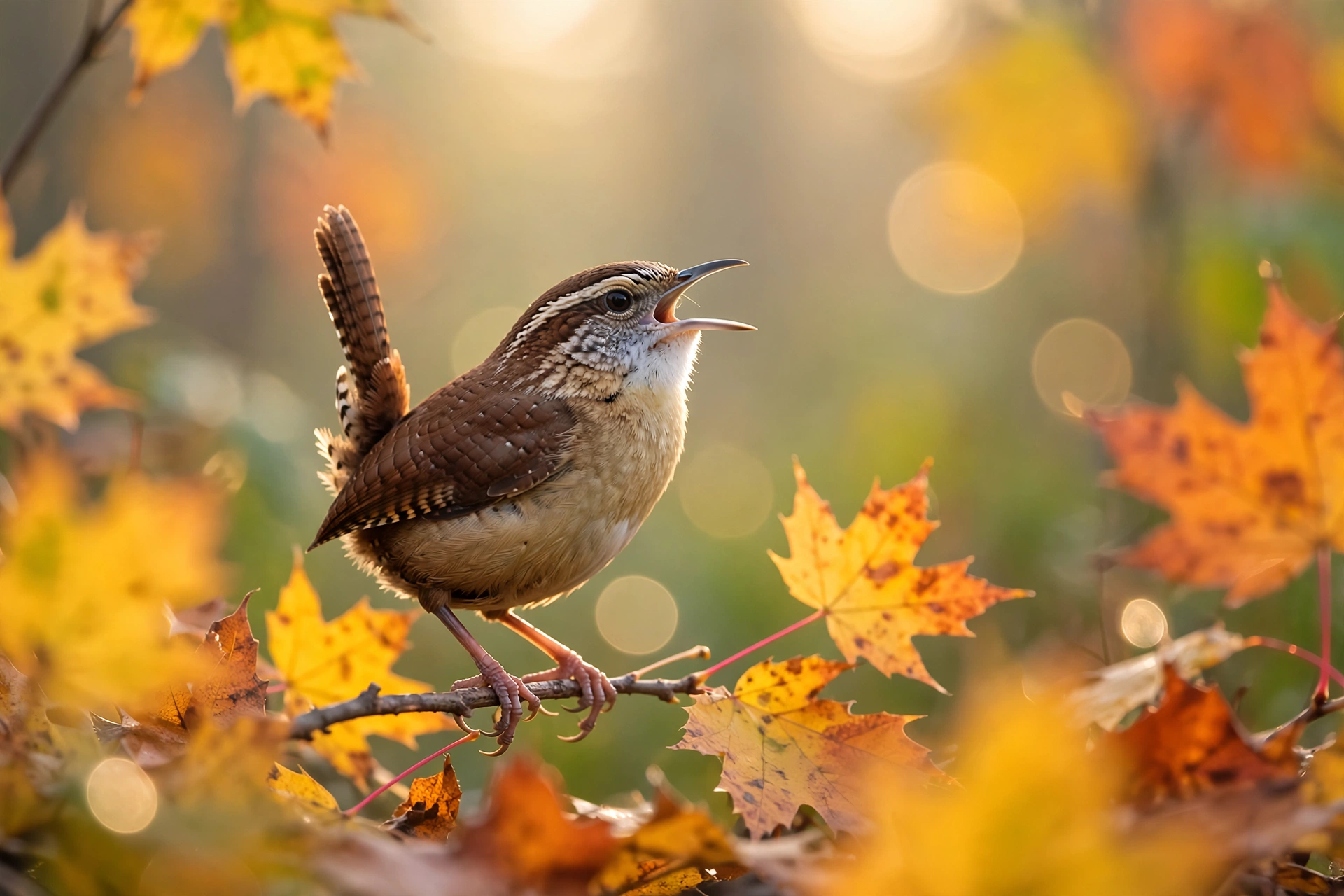
The Carolina wren barely stops singing all year. Its loud teakettle-teakettle song rings through fall as pairs defend their territory together. Unlike most songbirds, both male and female wrens sing.
Northern Cardinal
Cardinals are famous fall and winter singers. Males and females both sing, and pairs often duet to strengthen their bond. Their clear whistles mark winter territories and keep the pair together when leaves fall and visibility drops.
Black-capped Chickadee
Chickadees are more callers than singers, but their sweet two-note fee-bee song appears on warm fall days. Most of the time you will hear their chick-a-dee-dee calls keeping the winter flock together.
White-throated Sparrow
The white-throated sparrow’s pure, whistled song is a classic sound of fall in the eastern states. These sparrows arrive from northern breeding grounds and sing while settling into winter territories.
How Fall Songs Differ From Spring Songs
Fall song is not a failed copy of spring song. It is a different performance for a different audience. The table below compares how the same species use song across the two seasons. Together, they show why do birds sing in fall: not to impress mates, but to survive the winter.
| Species | Spring song role | Fall song role | What fall song sounds like |
|---|---|---|---|
| American robin | Attract a mate, defend the nest | Defend winter feeding territory | Softer carol, often at dusk |
| Carolina wren | Pair bonding, territory defense | Year-round territory defense | Just as loud, slightly less frequent |
| Northern cardinal | Mate attraction, pair duets | Winter territory, pair bonding | Clear whistles, shorter phrases |
| Black-capped chickadee | Rare spring song | Flock contact, occasional song | Fee-bee on warm days, mostly calls |
| White-throated sparrow | Breeding territory up north | Settling winter territory | Pure whistle, softer and sparing |
| Song sparrow | Mate attraction | Practice, loose territory claims | Sloppier, dropped notes |

The Science of the Autumn Chorus: Hormones and Day Length
The biology behind why do birds sing in fall comes down to light. Photoperiod, the amount of daylight in each 24-hour day, is the main clock birds use to track the seasons. As days shorten in September and October, photoperiod tells the brain that breeding season is over.
That signal lowers testosterone, the hormone that drives intense spring singing. In many male songbirds, the brain regions that control song actually shrink as testosterone falls. A well-known study of song sparrows found that fall songs become less crisp, with dropped notes and looser timing, exactly when these brain changes occur.
Young birds add another layer. Birds hatched this year sing subsong, a soft, rambling, almost babbling rehearsal of adult song. If you hear a quiet, messy, half-formed song from the bushes in October, you are probably hearing a young bird in music school.
Female singing matters too. In northern cardinals, Carolina wrens, and several other species, females sing in fall to defend territories and keep pair bonds strong.
Fall Songs vs Fall Calls: How to Tell the Difference
Another piece of why do birds sing in fall is that not everything you hear is a true song. Birds make two kinds of sounds, and fall is full of both.
True song is a long, complex, learned vocalization, usually sung by males in spring to attract mates. Calls are shorter, simpler sounds used year-round for alarms, contact, and coordination. In fall, calls often outnumber songs.
- Song example: A robin’s soft autumn carol from a treetop at dusk is true song, just quieter and less urgent than in May.
- Call example: A chickadee’s chick-a-dee-dee or a blue jay’s harsh jeer is a call, not a song, even though it carries far.
- How to tell: Songs are musical and patterned, while calls are short and functional.
Do Birds Sing in Winter Too?
Once you know why do birds sing in fall, the next question is whether the music keeps going. The answer is yes, for many species. Winter singing is quieter and more scattered, but it never fully stops for year-round residents. Cardinals, Carolina wrens, and mockingbirds sing on mild winter days, especially in late January and February as days lengthen. In short, why do birds sing in fall and winter comes down to survival: holding food, holding flocks, and holding on until spring.
How to Enjoy the Autumn Chorus in Your Backyard
You do not need special gear to enjoy the autumn chorus. You only need to step outside and listen with intention — and discover why do birds sing in fall right outside your window.
- Listen at dawn and dusk: Fall singing peaks in the first hour after sunrise and again before sunset. Our guide to the dawn chorus explains why mornings are so musical.
- Learn one song at a time: Pick the loudest singer in your yard and learn its fall song first.
- Keep a fall song journal: Note the date, weather, and which species sang.
- Offer food and water: A feeder with black-oil sunflower seeds and a fresh birdbath will draw singers closer.
The Fall Chorus by Region: What to Listen For
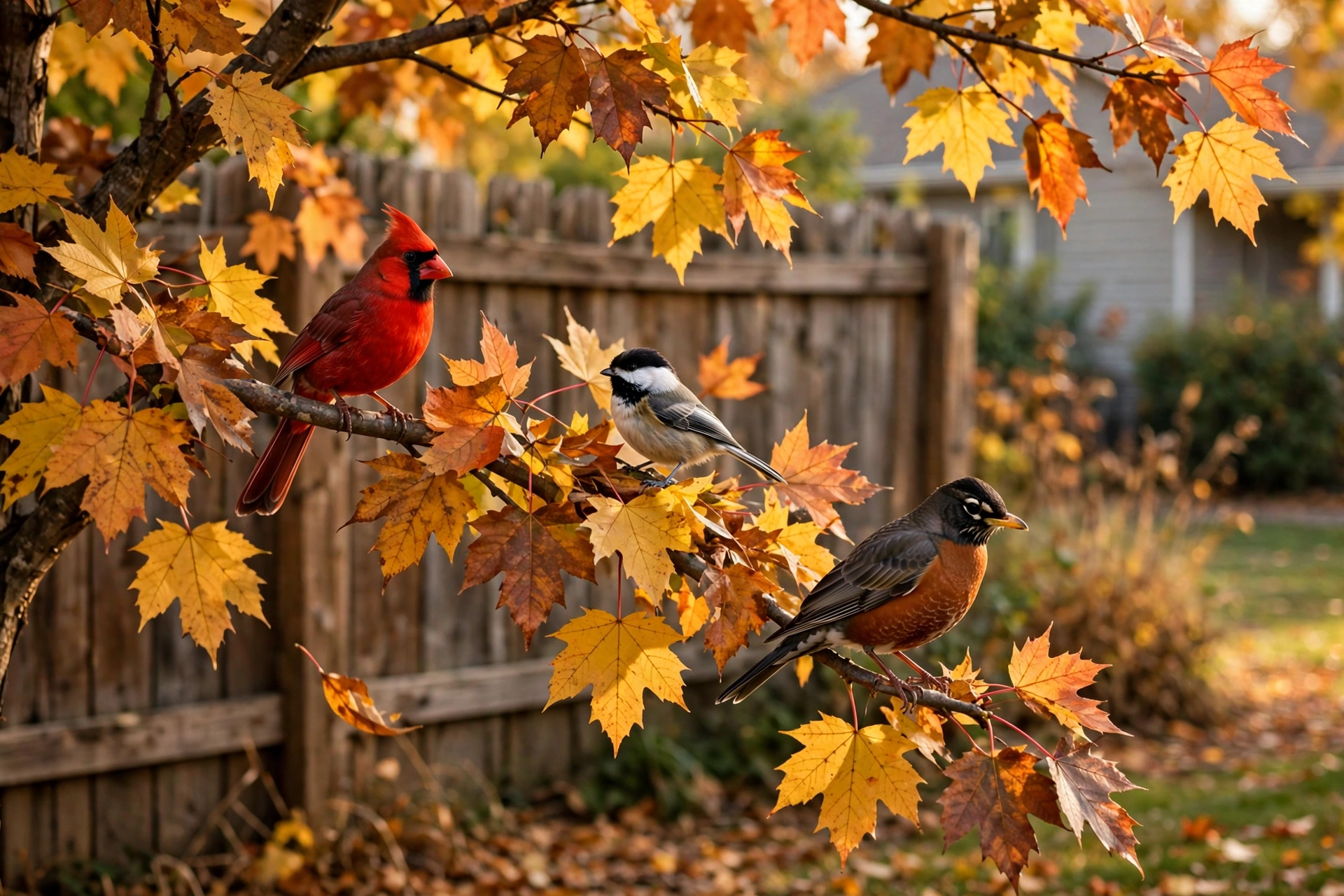
The fall chorus sounds different depending on where you live. Here is a quick regional guide to the voices of autumn. No matter your region, the reasons why do birds sing in fall stay the same: territory, practice, and keeping in touch.
- Northeast and Midwest: White-throated sparrows, black-capped chickadees, cardinals, and late robins dominate.
- Southeast: Carolina wrens, cardinals, and mockingbirds sing nearly year-round.
- West Coast: Bewick’s wrens, song sparrows, and resident robins carry the chorus.
- Southwest and desert: Cactus wrens, verdins, and curve-billed thrashers stay vocal.
Why Do Birds Sing in Fall: Frequently Asked Questions
Why do birds sing in autumn if breeding season is over?
The short answer to why do birds sing in fall is that song has more than one job. In autumn, birds sing to claim winter feeding territories, help young birds practice, and keep flocks and pairs together.
Which birds sing in autumn in North America?
The most reliable fall singers are year-round residents: American robins, Carolina wrens, northern cardinals, black-capped chickadees, and white-throated sparrows. These are the voices you will hear most clearly when you listen for why do birds sing in fall.
Is fall bird song the same as spring song?
No. Fall songs are generally softer, shorter, and less intense than spring songs. Research on song sparrows shows that falling testosterone and shrinking song-control brain regions make autumn songs less crisp.
Do birds sing in winter too?
Yes, many resident species sing on mild winter days. Cardinals, wrens, and mockingbirds are the most reliable winter singers.
Why do young birds sing in fall?
Birds hatched this year are still learning their species’ song. They sing soft, rambling subsong as practice, memorizing and rehearsing the notes they will need to attract mates next spring.
What is the difference between a bird song and a bird call?
Songs are long, complex, musical vocalizations, while calls are short, simple sounds for alarms and contact. In fall you hear far more calls than songs. Knowing the difference helps you pick out true songs when you wonder why do birds sing in fall on a crisp October morning.
When do birds stop singing in fall, and do they sing at night?
Most intense singing fades by late November as days grow shortest and temperatures drop. Some nighttime sound in fall comes from nocturnal migrants giving flight calls overhead. If you hear a full song after dark, our guide to why birds chirp at night covers the most common reasons.
So the next time you step outside on a crisp October morning and wonder why do birds sing in fall, you will know the answer: they are holding winter territories, rehearsing for spring, and keeping their flocks together. The autumn chorus may be quieter than spring’s, but it is every bit as worth hearing.





