 Skip to content

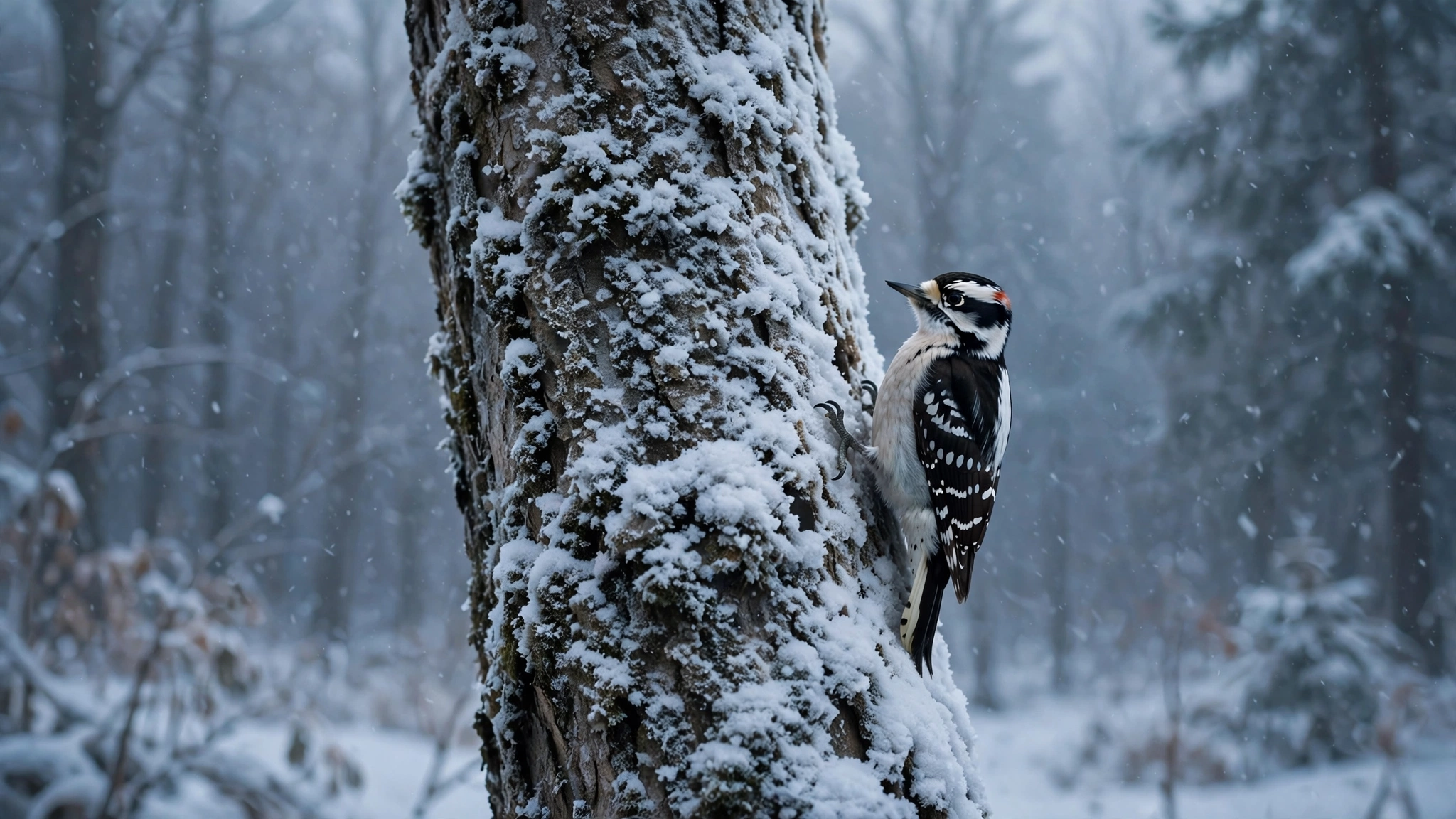
If you keep a suet feeder, you have probably asked yourself: do woodpeckers migrate when the snow starts falling? The good news for backyard birders is that the drumming you hear in January is real, because most woodpecker species never leave their home territory. The story gets more interesting once you look at the exceptions.
A small group of North American woodpeckers does travel south each fall, led by the yellow-bellied sapsucker, the one true long-distance migrant of the family. Others, like northern flickers and Lewis’s woodpeckers, migrate only partly or wander wherever the food takes them.
In this guide you will learn exactly which woodpeckers migrate, which stay put, and how the resident species survive months of freezing weather. You will also find practical tips for helping them through fall and winter at your own feeders.
In short: most woodpeckers do not migrate and stay on territory year-round. The yellow-bellied sapsucker is the main true migrant, flying to the southeastern United States, Mexico, and Central America each fall. Northern flickers and Lewis’s woodpeckers migrate only partially or nomadically, while food shortages can trigger irregular irruptive movements in resident species.
Do Woodpeckers Migrate? Why Most Stay Put Year-Round
The short answer is no, not really. The Cornell Lab of Ornithology describes species like the downy woodpecker, hairy woodpecker, red-bellied woodpecker, and pileated woodpecker as year-round residents across nearly their entire range. According to All About Birds, the downy woodpecker is one of the most familiar and widespread nonmigratory woodpeckers in North America.
Woodpeckers can afford to stay because their food supply does not vanish in winter. While insect-eating songbirds must chase flying insects south, a woodpecker simply switches to dormant insects hidden under bark, plus seeds, nuts, and berries.
Territory matters too. Many woodpeckers defend the same patch of woods for years, and a bird that leaves in fall would have to fight its way back into a home range come spring. That is why the hammering you hear on a crisp October morning usually comes from the same pair that drummed there in April, a behavior you can read more about in our guide to why woodpeckers drum on metal.
If you are unsure which resident species is visiting your yard, our downy vs hairy woodpecker identification guide will help you tell the two most common backyard woodpeckers apart.
Which Woodpeckers Migrate South?
When birders ask do woodpeckers migrate, the honest answer is that only a handful of the roughly two dozen North American woodpecker species undertake real fall migrations. Here are the movers worth knowing.
- Yellow-bellied sapsucker: the only truly long-distance migrant woodpecker in eastern North America.
- Northern flicker: a partial migrant, meaning northern breeding populations travel south while southern ones stay home.
- Lewis’s woodpecker: a western species that is nomadic rather than strictly migratory, wandering to wherever acorns and flying insects are abundant.
- Red-headed woodpecker: a partial and irruptive migrant in the eastern United States, strongly tied to acorn and beechnut crops.
- Williamson’s sapsucker: a mountain-west species that moves downslope and southward for the winter.
Notice what these migrants share: most are either sapsuckers that need flowing sap and the insects it attracts, or insect and mast specialists whose winter food is unreliable.
Where Do Sapsuckers Go in Winter?
The yellow-bellied sapsucker breeds across Canada and the northern United States, from Alaska to Newfoundland, then vacates almost that entire range each fall. According to Audubon’s field guide, it winters across the southeastern United States and south through Mexico and Central America to Panama, with some birds reaching the West Indies.

That is a serious journey for a bird that weighs about as much as three AA batteries. Sapsuckers leave their breeding grounds from September into October and return in April and May, timing their comeback to the first spring sap flow. You can spot them by their neat horizontal rows of sap wells, small holes drilled in tidy lines across tree trunks.
Unlike true woodpeckers that mostly excavate insects, sapsuckers make a living from tree sap and the insects that get stuck in it. When northern trees freeze and sap stops flowing, the bird’s restaurant closes for the season, so it has no choice but to head south. Learn more in the Audubon field guide to the yellow-bellied sapsucker.
Do Northern Flickers Migrate?
Northern flickers are the classic partial migrants: populations that migrate only from the colder parts of their range while the rest stay home. Yellow-shafted flickers breeding in Canada and the northern tier of the United States head south each fall, many wintering in the southern states. Red-shafted flickers of the West, living in milder climates, are largely sedentary.
Flickers are unusual among woodpeckers because they feed mostly on the ground, probing for ants with their long, barbed tongues. When snow covers the ground and ants retreat deep underground, northern flickers lose their main food source and must move to where the soil stays workable.

Even migratory flickers do not travel as far as sapsuckers. Many simply shift a few hundred miles south or drop to lower elevations, and some years they barely move at all if the winter stays mild.
What Triggers Irruptive Woodpecker Movements?
Sometimes woodpeckers move not on a schedule but in a panic. An irruption is a sudden, irregular mass movement of birds into areas where they do not normally occur, usually driven by food failure. For woodpeckers, the trigger is almost always a poor crop of the nuts and seeds they depend on.
Red-headed woodpeckers are the poster birds for this behavior. In a good acorn year they stay put, but when oaks produce almost nothing, whole populations drift south or east in search of better mast crops. Irruptions differ from true migration in every way that matters: they happen in some years and not others, involve unpredictable numbers of birds, and the direction of travel follows the food rather than a compass heading.
How Do Woodpeckers Survive Winter If They Don’t Migrate?
Staying through a northern winter sounds brutal, yet resident woodpeckers do it with a toolkit of behaviors that would impress any survivalist. Three strategies do most of the work.
Food caching
Several species stockpile food the way squirrels do. Red-headed woodpeckers wedge acorns and beechnuts into bark crevices and fence posts. Acorn woodpeckers of the West take this to an extreme, drilling thousands of holes in dead trees and stuffing each one with an acorn to create a communal granary.
Roost cavities
A woodpecker that can excavate its own bedroom has a huge advantage on a subzero night. Many species sleep alone in snug roost cavities that they carve into dead trees, where the enclosed space holds body heat far better than an open branch.
Suet and backyard feeders
High-fat foods are winter gold for woodpeckers, and suet feeders have become an important supplement across the northern states. Suet delivers concentrated calories that help birds maintain body heat through long, cold nights. For a full plan, see our guide on how to attract woodpeckers to your yard.

How to Tell a Migrant Woodpecker from a Resident at Your Feeder
In fall, your suet feeder may host both lifelong locals and birds just passing through. Start with the calendar: a sapsucker appearing in October in the mid-Atlantic is almost certainly a migrant heading south, while a downy woodpecker in the same yard in January is a resident. True migrants often feed urgently and move on within days. Residents act like they own the place, chasing rivals off the feeder and returning at the same times each day.
Do Woodpeckers Migrate in the UK and Europe?
Across the Atlantic the pattern is similar: most European woodpeckers stay home. Great spotted woodpeckers, green woodpeckers, and lesser spotted So do woodpeckers migrate in Europe? With the exception of the wryneck, the answer is no, and the pattern is much like North America.woodpeckers are resident throughout the year in Britain and much of continental Europe. The wryneck, a peculiar ant-eating member of the woodpecker family, is the notable exception and migrates to Africa each winter.
Helping Woodpeckers Through Fall and Winter
You do not need to do much to make your yard a winter refuge, but a few targeted steps go a long way. The single most valuable thing you can offer is a suet feeder, preferably two: one standard cage and one tail-prop feeder. Leave dead trees standing whenever it is safe to do so: a dead trunk, called a snag, is a woodpecker apartment block, providing roost cavities, nesting sites, and insect-rich bark all in one. Offer fresh water too, and skip the fall cleanup in a corner of the yard: leaf litter shelters the insects woodpeckers glean when snow covers everything else.
Woodpecker Migration Status: Species Comparison Table
Use this quick reference to see at a glance which common species migrate and which stay put.
| Species | Migration status | Fall and winter behavior |
|---|---|---|
| Downy woodpecker | Resident | Stays on territory year-round; frequent winter feeder visitor |
| Hairy woodpecker | Resident | Stays on territory year-round; may wander locally in harsh weather |
| Pileated woodpecker | Resident | Holds large year-round territories in mature forest |
| Red-bellied woodpecker | Resident | Stays put; range has expanded northward in recent decades |
| Yellow-bellied sapsucker | True migrant | Breeds in Canada and northern US; winters in southeastern US, Mexico, Central America, and the West Indies |
| Northern flicker | Partial migrant | Northern populations move south; southern and western birds mostly stay |
| Red-headed woodpecker | Partial and irruptive | Migrates or wanders depending on acorn and beechnut crops |
| Lewis’s woodpecker | Nomadic | Moves through the West following acorn crops and insect supplies |
| Acorn woodpecker | Resident | Stays with its granary colonies; defends stored acorns all winter |
| Williamson’s sapsucker | Short-distance migrant | Moves downslope and south from mountain breeding areas |
Frequently Asked Questions
Do woodpeckers migrate south for winter?
Most do not. The majority of North American woodpeckers, including downy, hairy, pileated, and red-bellied woodpeckers, are year-round residents. Only a few species, led by the yellow-bellied sapsucker, undertake true southward migrations each fall.
Where do yellow-bellied sapsuckers go in winter?
They travel to the southeastern United States, Mexico, Central America, and parts of the West Indies. They return north in April and May, timed to the spring sap flow.
Do downy woodpeckers migrate?
No, downy woodpeckers are nonmigratory across their range. The Cornell Lab of Ornithology lists them as permanent residents, and the same individuals often defend a territory for several years.
Do pileated woodpeckers migrate?
No, pileated woodpeckers stay on their large forest territories all year. They survive winter by excavating carpenter ants and wood-boring beetle larvae from dead trees.
Why do I see more woodpeckers at my feeder in winter?
Natural foods become harder to find, so suet and peanuts become relatively more attractive. In some years, irruptive movements bring extra birds from farther north.
Do woodpeckers sleep in their nest holes in winter?
They sleep in cavities, but usually not the nest hole from spring. Most woodpeckers excavate or claim separate, smaller roost cavities for winter nights.
When do migrating woodpeckers return in spring?
Yellow-bellied sapsuckers typically return to northern breeding grounds in April and early May. Northern flickers arrive around the same window. Exact timing shifts a week or two depending on spring weather.





