 Skip to content

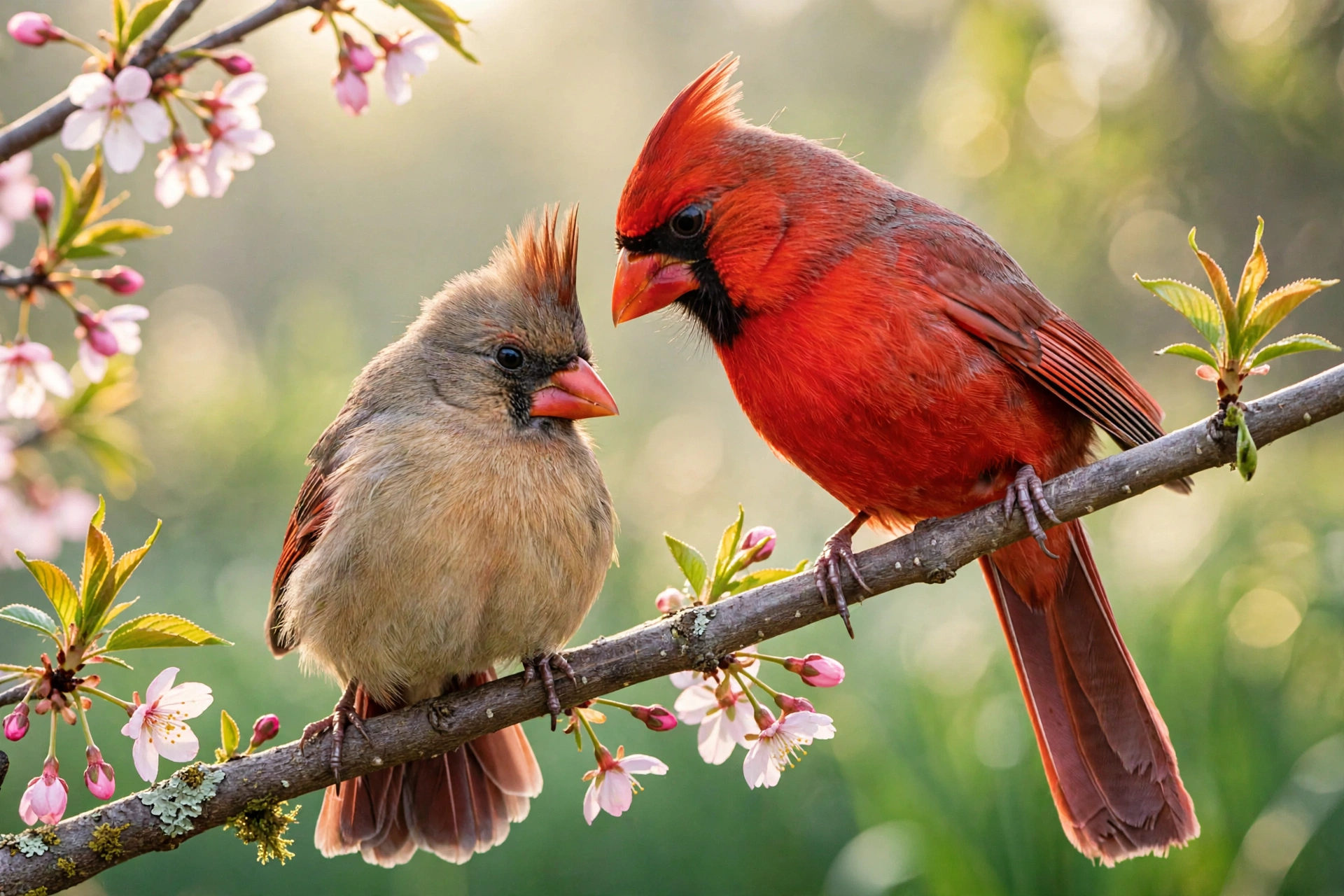
If you have ever watched two backyard birds flutter together on a branch and wondered what was happening, you are not alone. The question of how do birds mate is one of the most searched bird questions on the internet, and the answer is stranger than most people expect. Unlike mammals, most birds have no external sex organs at all. Instead, mating happens through a split-second act biologists call the cloacal kiss: a brief touch of rear openings that transfers sperm from male to female. It is fast, efficient, and over in seconds, yet it sits at the end of a long chain of courtship, song, and pair bonding that can take weeks to unfold. This guide walks through the full story in plain English: what the cloaca is, how courtship leads to mating, exactly what happens during the cloacal kiss, how eggs get fertilized afterward, and the fascinating exceptions to the rule.
What Is the Cloacal Kiss?
The cloaca is a single chamber at the rear of a bird’s body where the digestive, urinary, and reproductive tracts all open to the outside. Every bird has one. It is the passageway through which droppings pass, urine leaves the body, and, during breeding season, reproductive cells travel. The word itself comes from the Latin for sewer, which tells you how multi-purpose this structure is.
During mating season, something remarkable happens to this chamber. In both sexes, the cloaca swells and protrudes slightly from the body. When the male and female press their swollen cloacas together, sperm passes from the male into the female. Biologists call this momentary contact the cloacal kiss. The entire exchange usually lasts only a few seconds, sometimes less.
This matters because most birds lack the external genitalia that mammals have. Roughly 97 percent of bird species have no penis at all. Without one, sperm cannot be deposited inside the female’s body in the mammalian sense. The cloacal kiss solves this problem elegantly: the female takes up the sperm into her cloaca and draws it up her reproductive tract, where it travels to meet an egg cell. As Cornell Lab ornithologist Kevin McGowan explains, in most birds the male and female make contact with each other’s cloaca, sperm is transferred, and the whole action takes place very quickly. You can read more about this process in Live Science’s explainer on how birds have sex, which draws on his expertise.
Before Mating: Courtship and Pair Bonding
The cloacal kiss may take seconds, but the road to it is often long and dramatic. Birds are famous for their elaborate courtship rituals, and these displays serve a serious purpose. A male must convince a female that he is healthy, well-fed, and carrying good genes. She is the one who ultimately decides whether mating happens at all.
Courtship takes many forms. Male songbirds sing complex songs that advertise their fitness and territory. Peacocks fan their iridescent tails into shimmering fans. Red-crowned cranes perform synchronized dances, leaping and bowing together. Male bowerbirds build decorated structures and arrange colorful objects to impress visitors. In many species, males offer food gifts: a male tern presents a fish to a female, and the quality of the gift directly influences her choice. These performances are not just beautiful. They are auditions.
Once a female accepts a male, the pair often forms a bond that lasts through the breeding season or much longer. Many species are socially monogamous, raising each chick together and sometimes reuniting year after year. If you are curious about which birds stay together, read our guide to birds that mate for life. This bond is reinforced through shared behaviors like mutual preening, nest building, and duet singing. A familiar pair actually mates more successfully than new partners, partly because they have already worked out the timing and coordination the act requires.

The Mating Act, Step by Step
Despite the drama of courtship, the physical act of bird mating is one of the briefest in the animal kingdom. It almost always follows the same choreography. Here is how it unfolds in most species:
- Mounting: The male hops or flies onto the female’s back. She crouches slightly to steady him, and he grips her neck or back feathers gently with his beak for balance.
- Positioning: The female lifts and shifts her tail feathers to one side, exposing her swollen cloaca. At the same moment, the male arches his body and twists his own tail underneath and around hers to bring their openings into alignment.
- Contact: The two cloacas touch in the cloacal kiss. The male releases sperm, and the female’s cloaca draws it inward. This contact may last only two or three seconds.
- Separation: The male hops off. Both birds typically fluff their feathers, preen briefly, and go back to their day. Many pairs repeat the act multiple times over the fertile period to improve the odds of fertilization.
There is only one standard position in the bird world. As with the steps above, the male is on top and the female is below, and the whole sequence relies on precise timing rather than force. Interestingly, the female stays in control throughout. She can move her tail aside to end contact, and in many species she must actively solicit the male before he can proceed at all. Multiple matings with the same partner are common because they increase the chance that enough sperm reaches the eggs.
Inside the Female: From Sperm to Fertilized Egg
The cloacal kiss is only the delivery mechanism. What happens next is a remarkable piece of internal biology. Once sperm enters the female’s cloaca, it does not fertilize an egg on the spot. Instead, it must travel up through her reproductive tract, a winding oviduct that leads to the ovary.
Many female birds can store sperm in special pockets called sperm storage tubules, tucked into the walls of the oviduct. This lets a single mating fertilize eggs laid days or even weeks later, which is a huge advantage for a bird that may lay one egg per day across a whole clutch. This storage strategy also explains why a female does not need to mate immediately before each egg is laid.
Fertilization itself happens high in the oviduct, before any shell or egg white exists. A released yolk, which is the actual egg cell, is caught by a funnel-like structure called the infundibulum. Sperm waiting in the tract penetrates the yolk’s membrane, and the nucleus of one sperm fuses with the nucleus of the egg. From that moment, the egg is fertilized.
The fertilized yolk then travels down the oviduct, collecting its layers along the way. First comes the albumen, or egg white, secreted in a section called the magnum. Then two shell membranes are added in the isthmus. Finally, in the shell gland, a hard calcium carbonate shell forms around the egg. The entire journey from fertilization to laying can take roughly a day in small birds, and the female lays the finished egg through her cloaca. If you want to know the timing of the season itself, see our guide on when birds lay their eggs.

The Exceptions: Birds That Do Have a Phallus
About 3 percent of bird species break the rule. These include most ducks, geese, swans, and the ratites: ostriches, emus, cassowaries, and their relatives. The males of these species possess a phallus, which is not quite a mammalian penis. It evolved independently, is stored inside the cloaca when not in use, and becomes erect through hydraulic pressure during mating. Sperm travels along grooves on its surface rather than through an internal tube.
In ducks, the organ takes an extreme form. The Argentine lake duck has a corkscrew-shaped phallus that can reach about 20 centimeters, roughly half the length of the bird itself. The female duck’s reproductive tract coils in the opposite direction, which makes forced mating difficult and gives the female significant control over which male fathers her offspring. Scientists view this as an evolutionary arms race between aggressive males and females protecting their choice of mate.
The table below summarizes the two mating systems:
| Feature | Cloacal Kiss (97% of species) | Phallus (about 3% of species) |
|---|---|---|
| Examples | Songbirds, raptors, parrots, gulls, chickens | Ducks, geese, swans, ostriches, emus |
| Sperm delivery | Brief press of two cloacas | Phallus extends into the female |
| Duration | A few seconds | Longer, often minutes |
| Mating position | Male on top, tails twisted together | Mounted, with internal contact |
| Female control | High, she exposes her cloaca | High in ducks, via counter-coiled tract |
You can explore these differences in more depth in BBC Wildlife Magazine’s guide to how birds mate, which covers the 97 percent rule and the waterfowl exception with helpful detail.
Myths About Bird Mating, Debunked
Few animal topics attract as much folklore as bird reproduction. Here are the most common myths, corrected:
- Myth: Birds mate in the air: Despite persistent rumors, birds do not have sex while flying. Copulation requires balance, coordination, and precise contact that simply cannot happen on the wing. What people sometimes see are courtship flights, not the act itself.
- Myth: All birds have a mating season ritual that lasts days: The courtship may last weeks, but the physical act takes seconds. The brief kiss is normal and fully effective.
- Myth: Male birds are always the colorful sex: In many species the male is showier, but females of some species sing, defend territory, and choose mates just as actively. Roles vary widely across the bird family tree.
- Myth: One mating fertilizes one egg: Thanks to sperm storage, one or a few matings can fertilize an entire clutch laid over many days.
- Myth: Birds are private about it: There is nothing secretive about avian courtship. Birds sing, dance, and display in the open because the audience is the point: advertising fitness to potential mates and rivals alike.
What Happens After Mating
A successful cloacal kiss sets off a chain of events that turns a mated pair into parents. Within days, the female begins laying eggs, usually one per day, until the clutch is complete. Clutch size varies enormously: a hummingbird lays just two pea-sized eggs, while a duck may lay a dozen or more.
Incubation follows laying. In most species, one or both parents sit on the eggs to keep them at the precise warmth the embryo needs. This shared duty is one reason pair bonds matter so much. A single parent working alone would struggle to keep eggs warm while also feeding. For a sense of the timelines involved, check our breakdown of how long incubation takes in different species, which ranges from under two weeks in small songbirds to more than two months in large seabirds.
When the chicks hatch, parental care continues. Altricial chicks, like those of songbirds, hatch blind, naked, and helpless, demanding constant feeding from both parents. Precocial chicks, like ducklings, hatch covered in down and ready to walk, though the mother still guards and guides them. Either way, the brief cloacal kiss has done its job: it delivered the sperm that made the next generation possible.

Frequently Asked Questions
Do birds kiss when they mate?
Not in the human sense. The “cloacal kiss” is a term biologists use for the brief pressing together of the male and female cloacas during mating. No beaks are involved. The name simply describes two openings touching for a moment to transfer sperm.
How long does bird mating take?
In most species, the physical act lasts only a few seconds. The male mounts the female, their cloacas touch, sperm is transferred, and it is over. Pairs often repeat the act many times across the fertile period to maximize the chances of fertilization.
Do female birds choose their mates?
Yes, emphatically. In the vast majority of species, the female decides. She evaluates the male’s song, plumage, dances, territory, or food gifts before accepting him, and she must actively position her tail to expose her cloaca for mating to succeed. Without her cooperation, the cloacal kiss cannot happen.
Why don’t most birds have penises?
The leading scientific explanation involves a gene called Bmp4, which causes the embryonic genital structure to regress in most bird lineages. Birds lost the external organ through evolution, likely because the quick cloacal kiss reduced the risks of injury and infection while still delivering sperm effectively. The 3 percent of species that kept a phallus, such as ducks and ostriches, tend to be ones where male competition is intense.
Can one mating fertilize all the eggs in a clutch?
Often, yes. Female birds can store sperm in tubules within the oviduct for days or weeks, releasing it to fertilize each yolk as it is produced. This is why a female can lay a full clutch of eggs over many days without mating before every single one.
Conclusion
So, how do birds mate? For roughly 97 percent of species, the answer is the cloacal kiss: a seconds-long pressing together of swollen cloacas that transfers sperm from male to female. Behind that fleeting moment sits an entire reproductive strategy, from the songs and dances of courtship, to the female’s power of choice, to sperm storage and the careful assembly of each egg inside the oviduct. The handful of exceptions, the ducks and ostriches with their independently evolved phalluses, only highlight how well the simple kiss works for everyone else. The next time you watch two birds flutter on a branch in spring, you will know the full story behind the act. It is brief, it is practical, and it is one of evolution’s most elegant solutions to the problem of making the next generation.





