 Skip to content

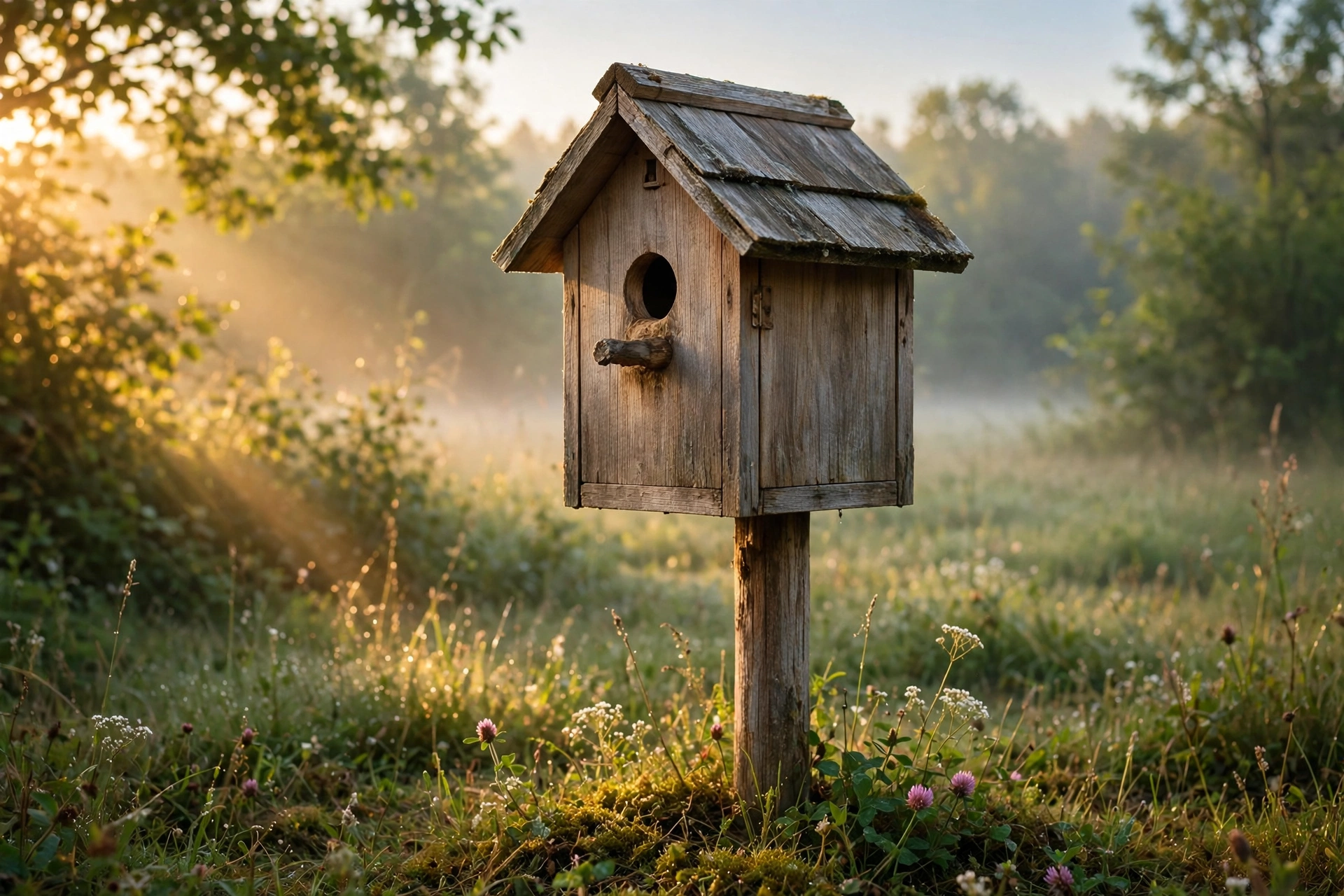
If you only remember one rule about birdhouse placement, make it this: face the entrance hole east or southeast. That one choice gives the box gentle morning sun, keeps the brutal afternoon heat off the nest, and turns the opening away from the prevailing winds that drive rain straight through the door.
Most empty birdhouses stay empty because of placement mistakes, not because of the box itself. Direction is the biggest of them. A box aimed at the western afternoon sun can overheat fast enough to threaten eggs and nestlings, while a box facing into the wind stays damp and chilly. Birds know this instinctively, and they will skip your box for a better cavity down the street.
This guide walks through the east-facing rule, the situations where it bends, the right mounting height for the species you want, and the predator and drainage details that turn a wooden box into a home birds actually raise chicks in.
Why the Direction of Your Birdhouse Matters
A birdhouse is a small wooden box with almost no insulation. On a hot July afternoon, the temperature inside can climb far above the air outside, and nestlings cannot leave to find shade. They depend entirely on where you pointed the front of the box months earlier.
Sun is the first reason direction matters. Audubon reports that nest boxes sitting in direct afternoon sun have caused outright nest failures, and recommends orienting the opening toward the north and east, away from the afternoon light. Morning sun is a different story. A box that catches the first light warms up quickly after a cool night, which helps the parent get the chicks fed and moving early.
Wind is the second reason. In much of North America the prevailing winds blow from the west and southwest, and they often carry rain with them. An entrance facing west or southwest invites every storm straight through the hole. Facing east puts the solid back of the box toward the weather instead.
Rain runoff is the third reason, and it is about tilt as much as compass direction. A box mounted perfectly level can pool water on the roof and let it seep in around the seams. Tilted a few degrees forward, rain sheets off the roof and drips clear of the entrance hole instead of running inside.

The East-Facing Rule (and When to Break It)
For the Northern Hemisphere, the standard advice from birding groups is consistent: point the entrance east or southeast. The box gets the soft morning sun, avoids the punishing western afternoon sun, and stays out of the prevailing westerly winds. If you can only satisfy one of those, bird experts generally say shade from afternoon sun matters most.
There are exceptions worth knowing. Cornell’s NestWatch lists south or east as the preferred facing for Western Screech-Owl boxes, since the birds like to sit in the entranceway and soak up sunlight. Wood duck boxes break the rule entirely: face the hole toward the water, because the hen needs a clear flight path to the pond or marsh.
Your local wind matters more than any compass rule. If you live somewhere the prevailing winds come from the east, such as parts of the Atlantic coast with steady sea breezes, then face the hole away from those winds even if that means pointing it southeast or south. Watch which way the rain usually slants during storms and aim the entrance the opposite way.
Tree cover changes the math too. A box tucked under a leafy canopy is protected from the worst sun no matter which way it faces, so direction becomes less critical. An open-field bluebird box, on the other hand, lives and dies by its orientation. When in doubt in open country, east is the safe bet.
If you are in the Southern Hemisphere, flip the rule. There, the hot afternoon sun comes from the west just the same, but the cooler, shaded side is the south. Face boxes north or northeast to catch the gentle morning sun there.

How High to Mount: A Species-by-Species Chart
Height is the second half of placement, and it varies a lot by species. Bluebirds like their boxes low, at a height you can check from the ground. Owls and woodpeckers want theirs high in the air, the way a natural tree cavity would sit. The chart below pulls together the standard ranges used by Mass Audubon and other birding groups.
| Species | Mounting height | Notes |
|---|---|---|
| Eastern Bluebird | 4 to 6 feet | Open areas with scattered trees; space boxes at least 100 yards apart |
| House Wren | 4 to 10 feet | Old fields and thickets; tolerates a wide range of heights |
| Black-capped Chickadee | 5 to 15 feet | Open woods and edges; add a few inches of wood chips inside |
| Tufted Titmouse | 5 to 15 feet | Woods and edges; similar needs to chickadees |
| Tree Swallow | 5 to 10 feet | Open land near water; pairs well near a bluebird box |
| Purple Martin | 10 to 20 feet | Open areas; most use multi-room houses on tall poles |
| Downy Woodpecker | 5 to 20 feet | Forest openings and edges; fill the box with wood chips |
| Hairy Woodpecker | 8 to 20 feet | Higher than the downy; needs a larger box |
| Eastern Screech-Owl | 10 to 30 feet | Farmland and woods; face the hole east or south |
| Wood Duck | 5 to 15 feet over land | Near water; face the entrance toward the water |
| American Kestrel | 10 to 30 feet | Open country; add wood chips, no perch needed |
Notice the pattern: small songbirds that nest in low shrubs and fence posts do fine at eye level, while woodpeckers, owls, and martins expect height. When you are not sure which species will move in, aim for the middle of the range, around 6 to 10 feet, and let the birds decide.
Pole or Tree: Choosing Your Mount
A smooth metal pole beats a tree trunk almost every time. Raccoons, cats, and snakes climb trees easily, but a slick pole with a predator baffle stops most of them cold. Poles also let you aim the box in any compass direction, while a tree trunk forces you to work around the bark and branches.
If you do mount on a tree, pick a trunk at least as wide as the box and keep nearby branches trimmed back so they do not form a bridge to the entrance. Never mount a box on a fence, where cats and raccoons stroll along the top rail like a highway.
Whatever you mount on, make it sturdy. A box that sways and bangs in the wind makes birds nervous, and most cavity nesters will abandon a site that feels unstable. Sink the pole deep, brace it, and check it every spring before nesting season starts. You can read more about when birds lay eggs and how nesting season unfolds to time your installation.
Predator Protection: The Details That Save Nests
Orientation and height mean little if a raccoon empties the box in one night. Predator protection is part of placement, so plan it at the same time you pick the direction.
- Install a baffle: a cone or tube baffle on the pole below the box blocks climbing predators. This is the single most effective upgrade you can make.
- Skip the perch: perches are for decoration, not birds. Cavity nesters do not need them, and perches give predators and house sparrows a convenient foothold.
- Guard the hole: a metal portal plate around the entrance stops squirrels and woodpeckers from chewing the hole bigger and letting starlings in.
- Size the hole exactly: a 1.5-inch hole admits bluebirds but excludes European starlings; a 1.125-inch hole admits chickadees and wrens. The right diameter is a predator filter.
- Clear the launch zone: keep the box 8 to 10 feet from branches, roofs, or fences that a cat could jump from.
- Never use pesticides in or near the box: they kill the insects that parent birds feed their chicks, and the chemicals can harm the birds directly.
Ventilation, Drainage, and Weatherproofing
A well-placed box still needs to breathe. Heat rises, so ventilation gaps near the top of the box, or a small gap between the roof and the walls, let hot air escape on summer afternoons. Audubon’s heat guidance notes that boxes with top ventilation stay noticeably cooler inside than sealed ones.
Drainage matters just as much. Drill a few quarter-inch holes in the floor so any water that blows in can escape instead of soaking the nest. Recess the floor slightly or caulk the seams so water cannot wick up into the nesting material.
That slight forward tilt mentioned earlier does quiet work all season. It keeps rain from pooling on the roof, stops drips from running back into the entrance, and helps the floor drain fully. If you treat the wood, use a water-based preservative on the outside only and leave the interior raw, since fumes inside a small box can harm chicks.
7 Placement Mistakes That Keep Birds Away
- Facing the entrance west: the box takes the full force of the afternoon sun and the prevailing weather. This is the most common mistake and the easiest to fix.
- Parking it in all-day sun: even an east-facing box fails if it sits in an open, shadeless spot in a hot climate. A little afternoon shade from a tree or building helps enormously.
- Putting it next to the feeder: feeders draw crowds, squirrels, and hawks. Give the box some peace by keeping it well away from busy feeding stations. If you are setting up feeding areas too, see our guide to the best bird feeder for cardinals and place feeders where they will not disturb nesters.
- Mounting it too low: anything under 4 feet is in easy reach of cats, raccoons, and curious dogs. Height is cheap insurance.
- Pointing the hole at a wall: the entrance needs a clear flight path. Aim it into open space, not into dense branches or the side of a shed.
- Crowding multiple boxes: bluebirds are territorial and need roughly 100 yards between boxes. Chickadees and wrens tolerate closer neighbors, but give every box its own breathing room.
- Forgetting winter: many birds use boxes as cold-weather roosts. Leaving the box up all winter gives them shelter on freezing nights, as explained in our guide to how birds stay warm in winter.

Frequently Asked Questions
Should a birdhouse face east or south?
East is the better default in the Northern Hemisphere. A southeast facing splits the difference nicely: it catches the morning sun, dodges the worst afternoon heat, and turns the entrance away from prevailing westerly winds. South-facing boxes work for some species, like screech-owls, but they take more midday sun.
Can a birdhouse face west?
It can, but it is the least favorable direction. West-facing boxes absorb the hottest sun of the day and face into the prevailing winds and storms in much of North America. If west is your only option, add shade, ventilation, and a generous roof overhang to compensate.
How much should a birdhouse tilt forward?
Just a few degrees is enough, roughly a quarter to a half inch of drop from back to front. You want rain to sheet off the roof and drip clear of the entrance, not a visibly crooked box. Check it with a quick glance after mounting.
Does a birdhouse need direct sunlight at all?
A little morning sun is helpful because it warms the box after cold nights, but full-day sun is dangerous. Partial shade, especially in the afternoon, is the ideal. In very hot climates, full afternoon shade matters more than any morning sun benefit.
Should I put my birdhouse near my bird feeder?
No. Keep them well apart. Feeders attract constant traffic, squirrels, and sometimes hawks, which makes nesting birds anxious. Place the box in a quieter corner of the yard where the parents can come and go without a crowd watching.
What height is too low for a birdhouse?
Anything below 4 feet puts the nest within easy reach of cats, raccoons, and dogs. Most songbird boxes do best between 5 and 10 feet, and owl or martin boxes should go higher. Low enough to check and clean the box easily is the practical ceiling for small species.
Do birds care about direction if the box is fully shaded?
Less so, but it still matters. Shade solves the heat problem, yet wind-driven rain can still enter a poorly aimed hole. Even in deep shade, facing east or away from your prevailing winds keeps the interior drier and more appealing.
The Bottom Line
Face the entrance east or southeast, mount it at the right height for your target species, tilt it slightly forward, and put a baffle on the pole. Those four moves solve the vast majority of placement problems before a single bird ever inspects the box.
Birds are practical house hunters. They want a dry, safe cavity with a clear flight path and a quiet neighborhood. Give them that, and the box you hung this spring could host its first family within weeks. Once chicks hatch, you might enjoy reading about what baby birds eat to understand the constant feeding flights you will be watching.
For species-specific construction and placement details, Cornell’s NestWatch birdhouse pages (nestwatch.org) and Audubon’s nest box guides, including how to build a bluebird nest box and how to keep nest boxes from overheating, are excellent references.





