 Skip to content

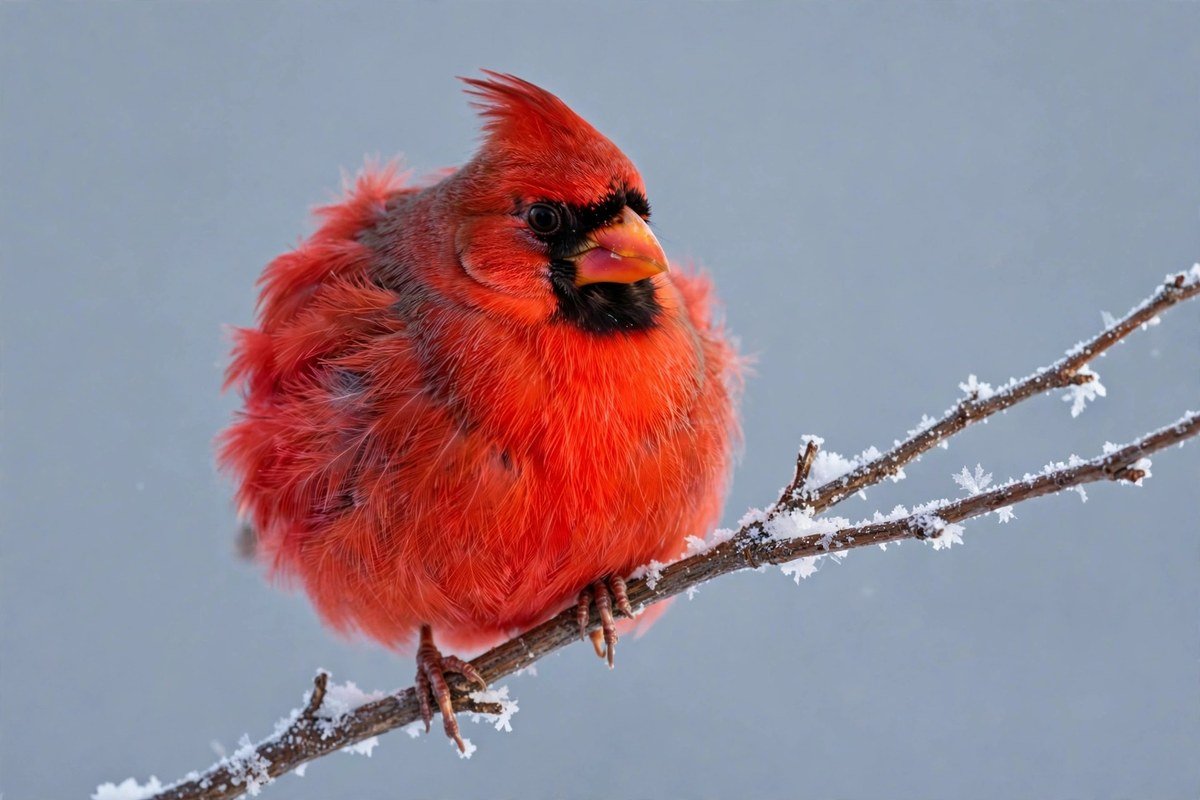
You have seen it on a frosty morning: a chickadee that usually looks trim has become a round gray ball on a branch, every feather lifted. The most common reason is simple. Birds puff up to trap warm air against their bodies, turning their plumage into a thicker winter coat. Many species avoid the coldest months entirely by migrating south each fall, but the ones that stay have to make insulation work.
Answering the question why do birds puff up their feathers starts with warmth, but feathers fluff for more than cold. Birds also puff up to sleep, groom, sun themselves, and look bigger to rivals. And in some cases, especially in pet birds, constant puffing points to illness.
A puffed-up bird that is active and alert on a cold day is almost certainly doing normal thermoregulation. Fluff that appears on a mild day, or comes with stillness and half-closed eyes, can mean illness. This guide covers the science of feather insulation, the other everyday reasons for fluffing, and how to tell normal puffing from a warning sign.

Why Do Birds Puff Up Their Feathers in Cold Weather
Birds run hot. A resting songbird holds a body temperature near 106 degrees Fahrenheit, well above ours, and it must keep that furnace burning through freezing nights. Feathers are the main tool. Tiny muscles at the base of each feather lift the plumage away from the skin in a reflex called ptiloerection. The lifted feathers create hundreds of small air pockets, and because still air barely conducts heat, the bird’s own warmth stays wrapped around it instead of leaking into the sky.
Not all feathers do the same job. The Cornell Lab’s Bird Academy explains that downy feathers are loose and fluffy, with a branching structure that traps air right against the warm body, while stiff contour feathers zip together into a smooth, windproof outer shell. Puffing lifts both layers at once, thickening the insulation like pulling a down comforter higher. Some species even grow more feathers for the season: feather density in songbirds can climb 35 to 70 percent in the colder months, and big birds like geese and grouse grow an extra set of downy feathers for winter, according to reporting on winter bird physiology.
Wind is the enemy of this system. Wet or matted feathers lose their loft and stop trapping air, which is why preening matters as much as puffing. A bird that looks puffy but sleekly groomed is insulated. A bird with ragged, damp plumage on a cold day is in trouble, which is why shelter from wind and rain matters.
Beyond the fluff: the rest of the winter toolkit
Puffing is only one tool in the cold-weather kit. Birds also shiver, activating opposing muscle groups to generate heat without much visible trembling. Audubon’s guide to how birds cope with cold winter weather notes that tiny chickadees, too small to carry heavy fat reserves, are genuine shivering experts. Because shivering burns calories fast, winter birds spend much of the day eating, which is why what to feed birds in winter matters so much: fat-rich foods like suet and sunflower seed are survival fuel.
Legs and feet get special treatment. A countercurrent heat exchange runs through a bird’s legs: warm blood traveling down to the foot flows right alongside cold blood returning upward, handing over its heat before it reaches the toes. The feet can run near freezing while the core stays toasty. Birds may also tuck one leg up into their breast feathers, cutting the bare skin exposed to the air in half.
At night, birds stack more tricks. Small species huddle together in cavities and roost boxes, sometimes in mixed flocks. Hummingbirds and some other small birds go further, entering torpor: a short-term state where body temperature and metabolism drop sharply for a few hours, stretching their remaining energy until dawn.

Sleep, Grooming, and Other Normal Reasons a Bird Fluffs Up
Puffing does not always mean cold. Birds about to sleep fluff their feathers, settle low on the perch, and tuck the beak into the back feathers or under a wing. It is their version of pulling up a blanket. Overnight roosting is one of the most vulnerable times in a bird’s day, and the sleepy ball of feathers is a comfort posture, not an alarm. It fits the wider story of where birds sleep at night: hidden, tucked in, and conserving every calorie.
Grooming is another everyday cause. When a bird preens, it fluffs, shakes, and settles its feathers to realign the tiny interlocking barbules, zips its contour feathers back together, and spreads preen oil from the gland at the tail base. A bird that shakes into a puff, works its beak through the plumage, and smooths back down within a few minutes is simply doing housekeeping. Molting birds can look ragged during this process too, so if the plumage looks off, compare it with the signs of feather loss, molting versus plucking before worrying.
On sunny winter days, watch for a cousin behavior: sunning. A bird turns its back to the sun, raises its feathers slightly, and lets solar heat reach the skin. Wings may droop and the tail may spread. It looks lazy. It is deliberate.
Puffing as a message: display and bluffing
Sometimes fluffed feathers are aimed at another bird, not the weather. Birds puff to look larger during territorial standoffs, courtship displays, and moments of alarm. A sparrow facing off at a feeder, a grouse on a spring lek, a parrot startled by something new: all may swell up for seconds or minutes. The giveaway is context. Display puffing arrives with other signals, tail fanning, a raised crest, vocalizing, and it vanishes the moment the situation resolves.
Puffed-Up Bird: Sick or Cold? How to Tell the Difference
Here is the distinction that matters most. A bird puffing up in freezing weather, hopping between feeder and branch, eating, and reacting to movement around it is almost certainly just staying warm. The real question is what the puffing means when the cold cannot explain it. Pet birds live at room temperature, so fluffing that lingers through a warm afternoon has no thermoregulation excuse.
The Merck Veterinary Manual lists fluffed-up feathers as one of the classic signs that a pet bird may be sick, especially when they arrive with others: sleeping more than usual, sitting low on the perch or at the bottom of the cage, talking or singing less, changes in appetite or droppings, and breathing trouble such as wheezing or tail bobbing. Birds are prey animals and hide weakness by instinct, so a bird that stays fluffed and still is often further into trouble than it looks. Any cluster of these signs calls for an avian veterinarian, not a wait-and-see approach.
| Cold-weather puffing (normal) | Possible sickness (warning) |
|---|---|
| Fluffing tracks the temperature | Fluffed up on a mild or warm day |
| Bird is active, alert, and eating | Lethargic, half-closed eyes, not reacting |
| Brief puffing between bursts of activity | Constant fluffing that never settles |
| Normal posture, perching high | Sitting low, tail bobbing, breathing hard |
| Fluff drops when the bird flies or feeds | Bird stays puffed even while trying to move |
Wild birds get sick too, and Project FeederWatch’s disease reports show the pattern clearly. Sick finches described by watchers sit all fluffed up, slow, and unresponsive, sometimes letting people walk right up to them. House finch eye disease adds red, swollen, crusty eyes to the puffiness, and salmonella outbreaks leave birds listless at feeders. With wild birds, the test is the same: puffy plus alert and mobile in the cold is fine; puffy plus still, unresponsive, or visibly unwell is not.
What to Do If You Spot a Worrying Puffed-Up Bird
For wild birds at the feeder, the priority is protecting the whole flock. A sick bird at a feeder can pass disease to others through shared perches, seed, and droppings, so act quickly:
- Observe from a distance: approaching stresses a sick bird and risks contact with droppings.
- Take the feeder down: sick birds linger at feeders, and gathering spots become disease hubs.
- Disinfect before rehanging: scrub with a diluted bleach solution, one part bleach to nine parts water, rinse thoroughly with hot water, and let it dry completely.
- Wait before putting it back up: if the same bird keeps returning, keep feeders down for a week or two so the spot stops concentrating sick visitors.
- Get help if you can do it safely: a licensed wildlife rehabilitator can assess a bird you can catch, but never handle wild birds barehanded.
For pet birds, the response is simpler and more urgent: call an avian veterinarian the same day. While waiting, keep the bird warm, quiet, and undisturbed, with food and water within easy reach. Do not medicate on guesswork, and do not move a sick bird to a cold or drafty room. Most common pet birds descend from warm-climate species, so keep the cage away from drafty windows and doors and let the bird’s behavior, not just the thermostat, guide you. The fluffing is the bird trying to hold onto body heat, so a draft-free spot helps; the vet visit is what helps it recover.

Frequently Asked Questions
Why do birds fluff up in winter?
They are insulating themselves. Lifting the feathers traps warm air near the body, and the thicker that trapped layer, the slower heat escapes. It is the same principle as a down jacket, executed in feathers.
Is a puffed-up bird always cold?
No. Birds fluff up to sleep, preen, sun themselves, and look bigger during territorial or courtship displays. Brief, situational puffing that smooths back down is normal comfort and communication behavior.
How can I tell if my puffed-up bird is sick or just cold?
Check the weather, the posture, and the energy. Cold-day fluffing with normal activity is fine. Fluffing on a warm day, or fluffing plus lethargy, bottom-of-cage sitting, appetite changes, or labored breathing, points to illness and deserves a prompt avian vet visit.
Do birds puff up in summer too?
They can, but for the opposite reason: lifted feathers let breezes reach the skin and release heat, sometimes combined with panting. Heat fluffing looks looser and usually comes with wing-spreading or shade-seeking, not the tight round ball of a cold day.
Why does my pet parakeet sit fluffed up at the bottom of its cage?
That combination is a classic warning sign. A fluffed bird that stops perching high and sits low may be conserving energy because it is ill. Schedule an avian vet visit promptly rather than assuming the bird is just a little chilly.
Why does my bird puff up and then shake itself?
That is a shake-off, and it is healthy maintenance. After preening or a startle, birds fluff every feather, shake hard, and settle the plumage back into its interlocking order. A regular shake-and-smooth cycle keeps the insulation layer working at full loft.
Can a healthy bird still get too cold, even while puffed up?
Yes, if its feathers get wet or it runs out of fuel. Wet plumage loses its insulating loft, and shivering through a long night can drain a small bird’s fat reserves. That is why unfrozen water and calorie-rich food are winter lifelines for feeder birds.
Conclusion
A puffed-up bird is usually a bird doing something right. It is trapping warm air, resting safely, or tending its feathers, all normal business in a bird’s day. The skill is in reading context: cold, active, and alert means a healthy insulation strategy at work. Warm weather, stillness, or a bird that never seems to smooth back down means something is wrong.
If you remember nothing else, remember the pairing. Puffing plus normal behavior is a winter coat. Puffing plus lethargy, appetite changes, or labored breathing is a warning sign that deserves an avian vet for pet birds or a rehabilitator for wild ones. Well-fed, well-sheltered birds handle the hardest nights on their own, and a watchful eye helps the sick ones get found in time. That is the full answer to why do birds puff up their feathers: mostly warmth, sometimes comfort, and occasionally a quiet request for help.




