 Skip to content

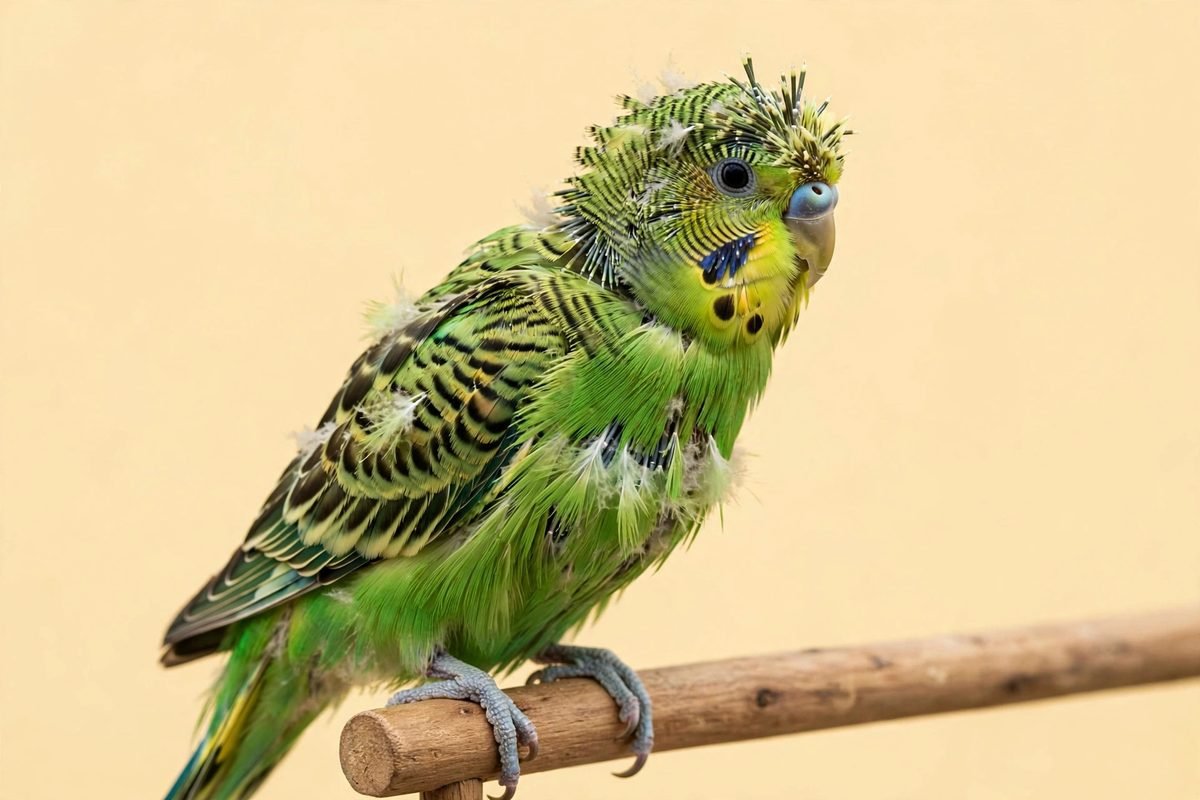
If you’re wondering why your bird is losing feathers, finding a pile of feathers at the bottom of the cage is alarming. Your first thought is probably that something is wrong, and sometimes it is. But often, feather loss is completely normal.
The key question is whether your bird is molting or plucking. Molting is a natural, healthy process where old feathers fall out and new ones grow in. Plucking is a behavioral or medical problem where the bird damages or pulls out its own feathers. They look different, they mean different things, and they need different responses.
This guide will teach you to tell the two apart with confidence, walk through the most common causes of plucking, and show you exactly when to handle it at home and when to call an avian veterinarian. By the end, you’ll know exactly why your bird is losing feathers and what to do about it.

Why Is My Bird Losing Feathers? The Short Answer: Molting vs Plucking
If you are in a hurry and wondering why is my bird losing feathers, here is the fastest way to tell the difference.
It is probably molting if: Feather loss is gradual and even across the body, you can see new pin feathers (small spiky shafts) growing in, there are no bald patches of bare skin, and your bird is eating and behaving normally.
It is probably plucking if: You see bald patches or exposed skin, feathers look chewed or broken rather than cleanly shed, the head looks normal while the body is bare (birds cannot pluck their own heads with their beaks), or the bird is actively pulling feathers with its beak.
The single most useful clue is the pin feather. Pin feathers are new feathers growing in, and their presence means the body is replacing feathers normally. Their absence in a bald area points toward plucking. Keep this clue in mind whenever you ask why is my bird losing feathers, and read on for the full picture.
What Normal Molting Looks Like
Molting is how birds renew their plumage. Feathers wear out from sun, friction, and daily life, so birds shed old ones and grow fresh replacements, usually once or twice a year depending on the species. For many owners, a seasonal molt is the reassuring answer to why is my bird losing feathers.
Signs of a healthy molt:
- Gradual, even loss: Feathers fall out symmetrically, so the bird never looks lopsided. You find whole, intact feathers around the cage.
- Pin feathers: Small, spiky, straw-like shafts push through the skin. These are new feathers still wrapped in a protective sheath. They are the hallmark of molting.
- Scruffy appearance: Birds often look patchy or less sleek mid-molt. This is normal and temporary.
- More preening: Birds spend extra time grooming during a molt, working the sheaths off pin feathers and realigning new growth.
- Slightly lower energy: Molting takes energy and protein. Your bird may rest more but should still eat and drink normally.
Timing: Most pet birds molt after breeding season, often in late summer or fall. Some species molt twice a year. Young birds go through juvenile molts as they replace baby feathers with adult plumage.
Species notes: Cockatiels and budgies tend to molt gradually over weeks. Larger parrots may molt more dramatically. Canaries and finches often have a distinct annual molt where they can look quite ragged for a short period. If you share your home with a budgie, our guide on telling male from female budgies helps you understand your bird’s development stages. For a second opinion on your bird’s feather loss, Lafeber’s veterinary team answers the molting vs plucking question with guidance that applies to most pet birds.
What Feather Plucking Looks Like
Feather plucking, also called feather destructive behavior, is when a bird damages its own feathers through over-preening, barbering (chewing feather edges), or pulling feathers out entirely. Unlike molting, it is not a natural process, and it always deserves attention. If you’re asking why is my bird losing feathers and you recognize these signs, don’t ignore them.
Signs of plucking:
- Bald patches: Areas of bare skin, most often on the chest, wings, legs, or back.
- Broken or chewed feathers: Feathers look snapped, frayed, or barbered instead of cleanly shed.
- Normal-looking head: Because birds pluck with their beaks, they cannot reach their own heads. A bare body with a fully feathered head is a classic plucking pattern.
- Irritated skin: Redness, flaking, or small wounds where feathers were pulled.
- Active pulling: You catch the bird yanking feathers with its beak, sometimes with visible effort or distress.
- Down feathers left behind: Some birds pluck only the vaned feathers and leave fluffy down, creating grayish patches.
Important exception: If feathers are missing from the head too, and there are no pin feathers or the pins look deformed, suspect disease or malnutrition rather than plucking, and see a vet promptly. Birds cannot pluck their own heads, so head feather loss has a different cause.
Molting vs Plucking: Side-by-Side Comparison
| Sign | Normal Molting | Feather Plucking |
|---|---|---|
| Pattern | Even and symmetrical | Patchy, often lopsided |
| Pin feathers | Present and obvious | Absent in bare areas |
| Feather condition | Whole, cleanly shed | Broken, chewed, frayed |
| Bare skin | Rare, brief | Common, persistent |
| Head feathers | Shed and regrow normally | Usually untouched and normal |
| Behavior | Normal, maybe sleepier | May seem stressed, bored, or itchy |
| Timing | Seasonal, predictable | Anytime, often persistent |
| Action needed | Supportive care | Vet visit to find the cause |
7 Common Causes of Feather Plucking
Plucking is a symptom, not a diagnosis. Avian veterinarians emphasize that medical causes must be ruled out before assuming the problem is purely behavioral. Lafeber’s veterinary handout on feather destructive behavior gives a clear overview of the diagnostic approach. Here are the most common culprits, grouped by type.
1. Medical Problems
A surprising share of plucking starts with physical discomfort. Possibilities include skin or feather follicle infections, parasites, liver disease, and nutritional deficiencies. VCA Animal Hospitals notes that true feather loss, meaning loss not associated with a normal molt, is typically the result of disease. Because a bird may keep plucking out of habit even after the medical issue resolves, early vet diagnosis matters. Never assume plucking is “just stress” without a checkup.
2. Poor Diet
An all-seed diet is one of the most common contributors to feather problems in pet birds. Seeds are high in fat and low in key nutrients. Deficiencies in protein, vitamin A, and minerals produce dull, brittle feathers and itchy, flaky skin that invites plucking. A balanced diet built on quality pellets, supplemented with vegetables, fruits, and healthy extras, grows stronger feathers.
3. Boredom and Lack of Enrichment
Parrots are among the most intelligent animals on earth. A bird left alone in a bare cage for ten hours a day will find something to do with its beak, and feathers are available. Boredom plucking often starts during long alone periods and improves dramatically with foraging toys, puzzle feeders, and daily out-of-cage bonding time. If your bird is new or nervous, our budgie taming and bonding guide shows how trust-building sessions reduce stress.
4. Stress and Environmental Change
Moves, new pets, new family members, construction noise, or even rearranged furniture can trigger plucking in sensitive birds. Cockatoos and African greys are especially prone to stress-related plucking. Keep routines predictable and introduce changes gradually.
5. Dry Air and Infrequent Bathing
Low humidity dries skin and makes growing pin feathers itchy and uncomfortable. Birds that never bathe accumulate feather dust and dander that irritate the skin. Regular misting, shallow baths, or shower perches help enormously, especially in winter when indoor heating dries the air.
6. Hormonal Behavior
During breeding season, hormonal birds may pluck feathers from their chest or abdomen, partly mimicking the natural brood patch behavior wild birds use to warm eggs. Sexual frustration in single birds can also manifest as plucking. Reducing daylight hours to 10 to 12 hours, avoiding nest-like spaces, and limiting stroking to the head and neck can calm hormonal behavior.
7. Anxiety and Night Frights
Some birds pluck at night or after being startled. Cockatiels are famous for night frights, thrashing episodes triggered by sudden sounds or shadows in the dark. A night light, a covered cage in a quiet room, and a predictable bedtime routine reduce these episodes.

How to Help a Molting Bird
If the answer to why is my bird losing feathers turns out to be a normal molt, your bird does not need treatment, but it does need support. Growing thousands of feathers is nutritionally expensive.
Step 1: Boost protein and nutrition. Feathers are made mostly of keratin, a protein. Offer a high-quality pellet base plus protein-rich extras such as cooked egg, legumes, and leafy greens. Avoid the temptation to load up on fatty seeds.
Step 2: Offer regular baths. Lukewarm misting or shallow baths soothe itchy pin feathers and help sheaths soften. Let the bird dry in a warm, draft-free spot.
Step 3: Minimize handling of pin feathers. New pin feathers have a blood supply and can be painful if bent or broken. Handle your bird gently and avoid touching visibly spiky areas.
Step 4: Keep a consistent routine. Molt is mildly stressful. Keep sleep, feeding times, and handling predictable.
Step 5: Watch, do not worry. A scruffy-looking bird that is eating, drinking, and behaving normally is almost certainly fine. The sleek plumage returns within weeks.
How to Help a Plucking Bird
Plucking requires detective work. If you’ve been wondering why is my bird losing feathers, these steps help while you arrange a vet visit.
Step 1: See an avian vet first. This is the most important step. Ask for a full workup to rule out infections, parasites, liver issues, and nutritional deficiencies. UC Davis veterinary school advises that your avian veterinarian will want to perform a full physical examination and run laboratory tests to rule out medical causes of feather picking. Treating behavior while missing a medical cause wastes precious time.
Step 2: Upgrade the diet. Transition toward pellets and fresh foods if your bird eats mostly seed. Better nutrition improves feather quality within weeks.
Step 3: Enrich the environment. Rotate foraging toys, add puzzle feeders, teach simple tricks, and increase supervised out-of-cage time. A busy beak is less likely to turn on feathers.
Step 4: Fix the air and bathing routine. Add regular misting or baths, and consider a humidifier near the cage in dry months. Aim for the 40 to 60 percent humidity range that suits most parrots.
Step 5: Audit stressors. Look for recent changes, noise, poor sleep, or too much alone time. Birds need 10 to 12 hours of quiet, dark sleep nightly. If you are unsure what healthy bird sleep looks like, read our explainer on how birds sleep.
Step 6: Do not punish plucking. Scolding or spraying a plucking bird increases stress and usually makes the behavior worse. Redirect with toys and reward calm, toy-focused behavior.
A note on collars: Avian vets sometimes prescribe protective collars for severe cases, but these treat the symptom while you address the cause. Never improvise a collar at home without veterinary guidance.
When to See an Avian Vet Immediately
If you’re asking why is my bird losing feathers and you notice any of these red flags, do not wait and watch.
- Bald patches with no pin feathers: Suggests plucking or a medical problem rather than molting.
- Head feather loss: Birds cannot pluck their own heads, so this points to disease, parasites, or malnutrition.
- Bleeding or wounded skin: Broken blood feathers or self-inflicted wounds need prompt care.
- Changes in droppings, appetite, or energy: Feather loss plus systemic signs often means illness.
- Deformed pin feathers: New feathers growing in twisted or stunted can signal viral disease or severe deficiency.
- Plucking that spreads or intensifies: Early intervention prevents a habit from becoming permanent.
If you’re still asking why is my bird losing feathers after checking the red flags above, find a board-certified avian veterinarian rather than a general small-animal vet when possible. Avian medicine is a specialty, and feather disorders are notoriously tricky to diagnose.

Frequently Asked Questions
Is it normal for birds to lose feathers?
Yes. All birds molt, shedding old feathers and growing new ones once or twice a year. Finding whole, intact feathers around the cage during molting season is completely normal. In short, molting is the harmless answer to why is my bird losing feathers. Feather loss is only concerning when it creates bald patches, involves broken feathers, or comes with behavior or appetite changes.
How long does molting last?
It depends on the species and the individual. Budgies and cockatiels often molt gradually over 6 to 8 weeks. Larger parrots may take 2 to 3 months to complete a full molt. Canaries and finches can finish faster but look rougher during the process.
Why is my bird plucking its chest feathers?
Chest plucking is one of the most common reasons owners ask why is my bird losing feathers. Causes include boredom, hormonal behavior, dry skin, dietary deficiency, and underlying medical issues such as liver disease. Because the list is long, a vet visit is the right first step rather than guessing.
Can a plucking bird regrow its feathers?
Often yes, if the feather follicles are not permanently damaged. Birds that stop plucking usually regrow normal plumage at the next molt. However, years of severe plucking can scar follicles, making regrowth partial. This is another reason to intervene early.
Do birds pluck from stress?
Yes. Stress is a well-documented trigger, especially in cockatoos, African greys, and other sensitive species. Common stressors include loneliness, unpredictable routines, new household members or pets, and lack of sleep. Reducing stressors while enriching the bird’s day is the core of behavioral treatment.
Should I spray my bird to stop plucking?
No. Punishment-based approaches, including spraying with water or bitter sprays, increase stress and typically worsen plucking. Avian behaviorists recommend redirecting the bird toward foraging and play instead, alongside veterinary care.
What should I feed a molting bird?
Focus on protein and overall diet quality. A pellet-based diet supplemented with cooked egg, legumes, whole grains, and dark leafy greens supports feather growth. Keep seeds as treats rather than the main diet, and always provide fresh water.
Conclusion
If you’re still asking why is my bird losing feathers, look for pin feathers first. Their presence, along with even, symmetrical loss and normal behavior, means your bird is molting, and supportive care is all that is needed. Bald patches, broken feathers, a bare body with a feathered head, or active pulling point to plucking, which deserves a prompt avian vet visit to rule out medical causes.
Feather problems feel scary, but most have solutions. Better nutrition, regular baths, an enriched environment, and early veterinary care resolve the majority of cases. Pay attention to what your bird’s feathers are telling you, act early, and you will usually see those beautiful new pin feathers pushing through within weeks. A bird that feels safe, eats well, and gets proper rest grows the strong, glossy plumage it was meant to wear. The next time you wonder why is my bird losing feathers, you’ll know exactly what to check first.





