 Skip to content

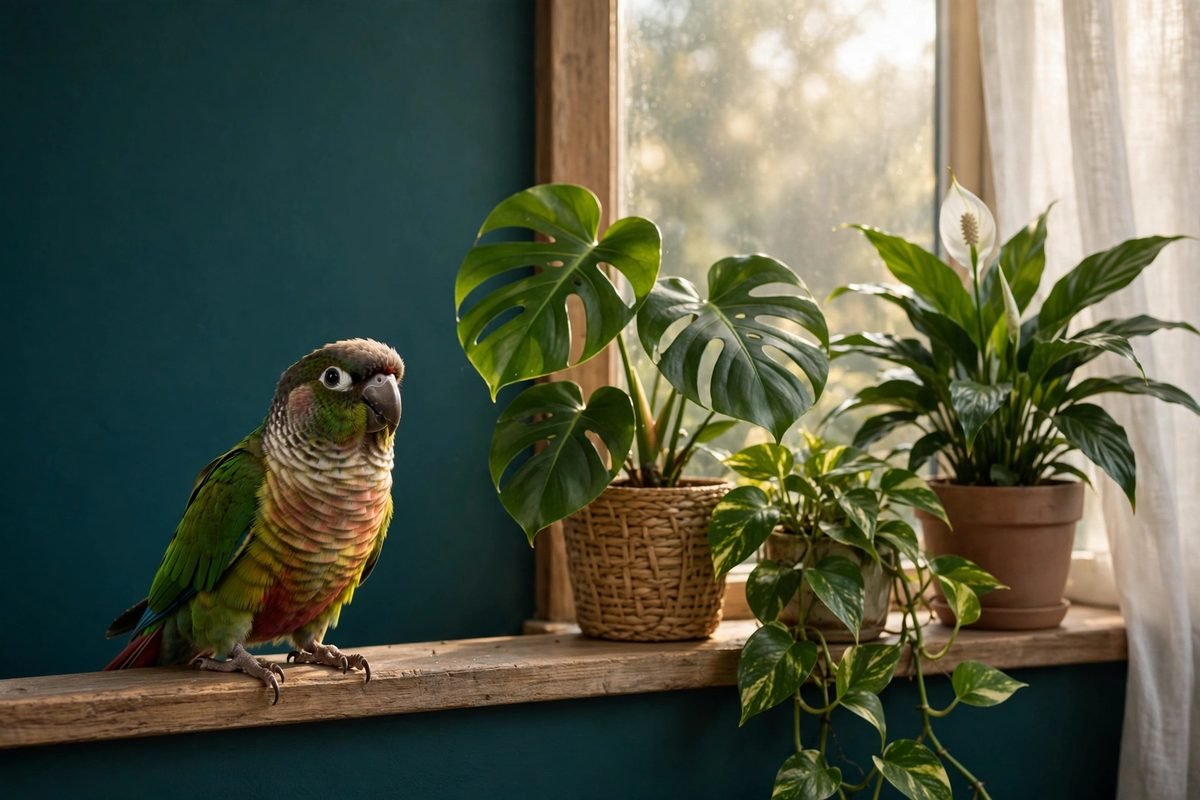
Your monstera looks great on the shelf. Your pothos trails beautifully from the bookcase. But if you share your home with a parrot, budgie, or cockatiel, you need to know which toxic houseplants for birds could seriously harm your feathered friend.
Birds explore the world with their beaks. A curious nibble on the wrong leaf can cause anything from a painful swollen throat to fatal organ damage, sometimes within hours. Yet plant toxicity information for birds is scattered, contradictory, and often borrowed from cat and dog lists that do not fully apply.
This guide focuses on the 15 houseplants most dangerous to pet birds, explains what makes each one harmful, tells you exactly what to do in an emergency, and lists genuinely bird-friendly alternatives so you do not have to choose between greenery and your feathered friend. Whether you own a budgie, cockatiel, conure, or macaw, the same precautions apply.
Why Houseplants Are So Dangerous for Birds
Three traits make birds uniquely vulnerable to plant toxins.
Constant chewing: Parrots and parakeets chew to explore, play, and maintain their beaks. A free-flying bird can reach plants you assumed were safely out of the way, including hanging baskets and high shelves.
Small body size: A budgie weighs about 30 grams. A dose of toxin that would barely affect a cat can overwhelm a small bird’s system quickly. Avocado toxicity, for example, can kill a bird within 12 to 24 hours of exposure.
Sensitive systems: Birds have highly efficient respiratory and digestive systems that absorb substances fast. This is the same reason avian veterinarians warn against scented candles, aerosols, and nonstick cookware fumes around birds.
An honest caveat: research on plant toxicity specifically in pet birds is limited. Veterinary toxicology references note that bird-specific data is thinner than for cats and dogs, and that published safe-plant lists should be treated as starting points, not guarantees. Where sources disagree, this guide sides with caution.
One more risk factor deserves mention: commercially grown plants are frequently treated with systemic pesticides that persist inside the leaves. A plant considered botanically safe can still poison a bird through chemical residue, which is why pesticide-free sourcing matters as much as species selection.
The 15 Most Toxic Houseplants for Birds
The plants below are cross-checked against Lafeber’s veterinary toxic plant reference, which specifically marks plants reported as toxic in birds, and the Merck Veterinary Manual’s toxicology guidance on houseplants.
1. Avocado (Persea americana)
The single most dangerous plant on this list. Every part of the avocado plant contains persin, a toxin that causes cardiac distress and respiratory difficulty in birds. Leaves, bark, fruit, and pit are all hazardous, and exposure can be fatal within 12 to 24 hours. Never let birds near avocado plants or discarded pits and skins.
2. Dieffenbachia (Dieffenbachia spp.)
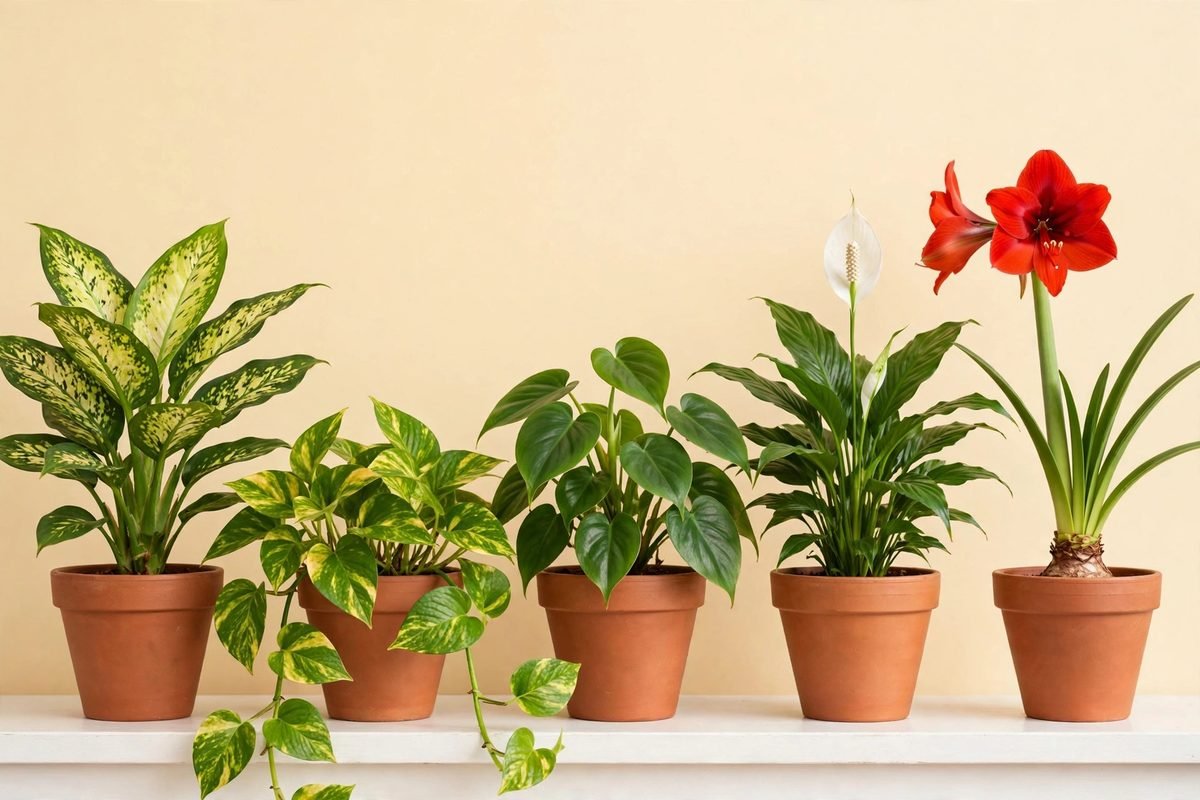
Commonly called dumb cane, this popular houseplant contains needle-sharp calcium oxalate crystals. Chewing releases them into the mouth and throat, causing intense pain, swelling, drooling, and difficulty breathing or swallowing. In severe cases the airway swelling can be life threatening.
3. Oleander (Nerium oleander)
Every part of oleander contains cardiac glycosides that disrupt heart function. It is considered one of the most toxic ornamental plants for animals generally, and birds are no exception. Even a small amount of leaf material is dangerous. Do not keep oleander anywhere a bird could access, including patios where birds fly free.
4. Sago Palm (Cycas revoluta)
Despite the name, the sago palm is a cycad, not a true palm. All parts contain cycasin, but the seeds are the most concentrated. Ingestion can cause severe liver damage, and sago palm poisoning is frequently fatal without rapid veterinary treatment. A common and deceptively attractive houseplant.
5. Philodendron (Philodendron spp.)
Heartleaf philodendrons and their relatives are among the most common houseplants in the world, and all contain calcium oxalate crystals. Chewing causes oral pain, swelling, drooling, and digestive upset. Given how many homes have philodendrons, this is one of the most frequent exposure risks.
6. Pothos / Devil’s Ivy (Epipremnum aureum)
Golden pothos and Marble Queen are cultivars of the same species, and the Merck Veterinary Manual lists pothos among houseplants containing insoluble calcium oxalate crystals. The crystals cause mouth and throat irritation, and severe swelling can interfere with breathing. If your bird can reach or chew the plant, remove it rather than trusting the bird to leave it alone.
7. Peace Lily (Spathiphyllum spp.)
The elegant white blooms hide the same calcium oxalate crystals found in philodendrons and dieffenbachia. Chewing the leaves or flowers causes oral irritation, swelling, and digestive distress. Peace lilies are common gifts, so check before placing one where a bird flies.
8. Amaryllis (Hippeastrum spp.)
A holiday favorite with a dangerous bulb. All parts contain toxins affecting the gastrointestinal system, but the bulb concentrates them. Ingestion can cause vomiting, diarrhea, tremors, and in severe cases death. Be especially vigilant during gift-giving seasons when amaryllis arrives unannounced.
9. Lilies (Lilium spp. and Hemerocallis spp.)
True lilies and daylilies are notorious kidney toxins in cats, and they are listed as dangerous for birds as well. Lily pollen itself is hazardous. Easter lily arrangements deserve particular caution in bird households.
10. English Ivy (Hedera helix)
This trailing vine contains compounds that cause drooling, vomiting, diarrhea, and in larger exposures difficulty breathing. It is a frequent hanging-basket plant, which puts it exactly at the height curious birds explore.
11. Azalea and Rhododendron (Rhododendron spp.)
These flowering shrubs contain grayanotoxins that affect the heart, nervous system, and digestion. All parts are toxic. Indoor azalea bonsai and gift plants bring this outdoor hazard inside.
12. Bird of Paradise (Strelitzia spp.)
The irony of the name is unfortunate. The seeds and flowers are reported to cause nausea, vomiting, and digestive distress, though bird-specific toxicity data is limited. As a precaution, keep the flowers and seed pods away from beaks.
13. Calla Lily (Zantedeschia spp.)
Like its relatives, the calla lily contains calcium oxalate crystals that burn and swell the mouth and throat on contact. A popular Easter and sympathy plant that often enters homes without warning.
14. Yew (Taxus spp.)
All parts of yew except the fleshy red aril contain taxine, a fast-acting cardiac toxin. Yew is more often an outdoor shrub, but cut branches used in holiday decorating bring the danger indoors.
15. Mistletoe (Phoradendron and Viscum spp.)
Holiday mistletoe berries are the main concern, causing digestive upset, slowed heart rate, and in significant exposures collapse. If you hang mistletoe, keep it in a room your bird never enters, and clean up fallen berries immediately.
What to Do If Your Bird Chews a Toxic Plant
Act fast. Small birds can deteriorate quickly, so treat every exposure as urgent until a vet says otherwise.
Step 1: Remove the plant material. Gently take any remaining leaf or stem from your bird’s beak. Do not chase a panicked bird around the room, which adds stress.
Step 2: Do not induce vomiting. Birds cannot vomit safely on command, and attempting it can cause aspiration. Skip home remedies entirely.
Step 3: Call your avian veterinarian immediately. Describe the plant (take a photo of it), estimate how much was eaten, and note the time. If your regular vet is unavailable, call the ASPCA Animal Poison Control hotline at 888-426-4435 (US, available 24/7; a consultation fee may apply).
Step 4: Watch for symptoms. Drooling, pawing at the beak, swelling around the face, vomiting, diarrhea, difficulty breathing, lethargy, or tremors all warrant emergency care. Do not “wait and see” with breathing difficulty or collapse.
Step 5: Bring the plant. If you head to the clinic, bring a sample of the plant in a bag. Correct identification speeds treatment.
7 Bird-Safe Houseplants to Grow Instead
You do not have to give up indoor greenery. The plants below are absent from veterinary toxic-plant references for birds, including Lafeber’s veterinary toxic plant list, and are widely kept by bird owners. Even so, keep them pesticide-free and remember that any plant can cause mild stomach upset if a bird gorges on it.
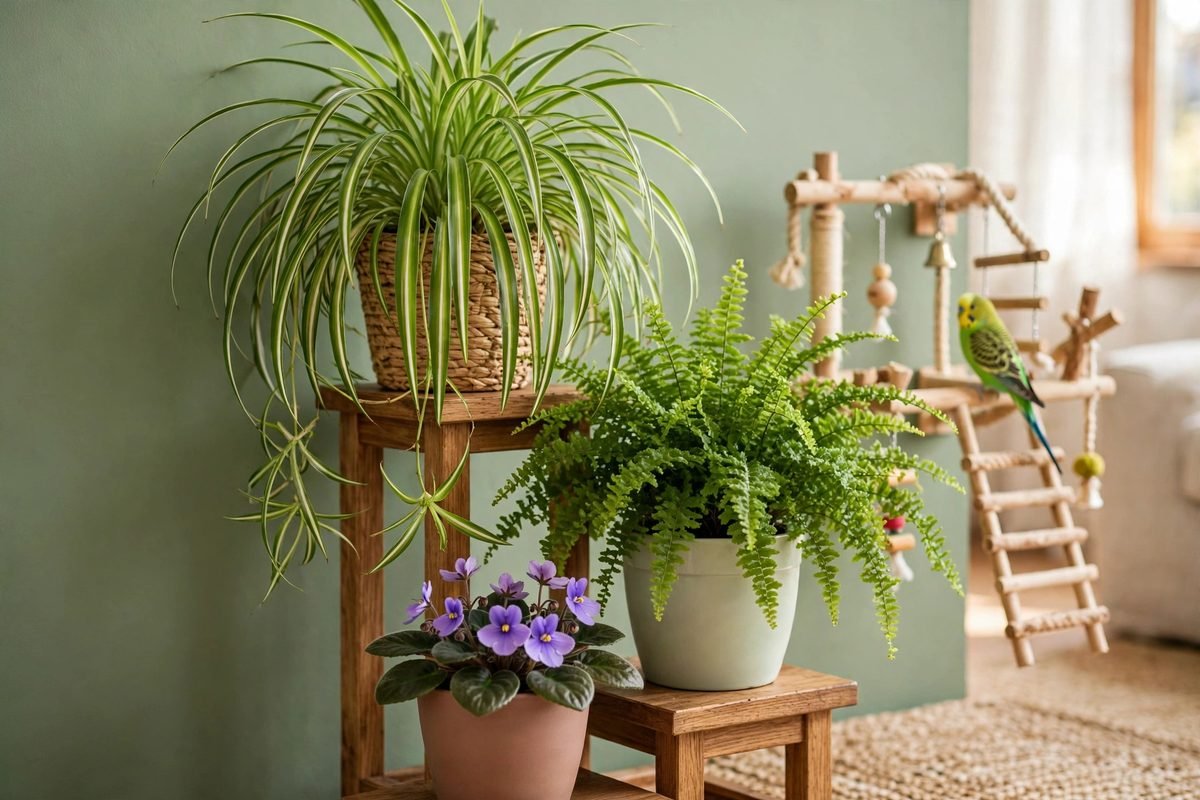
- Spider plant (Chlorophytum comosum): Tough, trailing, and non-toxic. A classic for good reason.
- Boston fern (Nephrolepis exaltata): Lush and safe, though it likes humidity.
- African violet (Saintpaulia): Compact flowering plant that adds color safely.
- Parlor palm (Chamaedorea elegans): A true palm with no known bird toxicity.
- Bamboo (true bamboo species): Sturdy and safe, but confirm the species since “lucky bamboo” is actually Dracaena.
- Boston fern relatives: Bird’s nest fern and maidenhair fern are also listed as safe foliage.
- Herbs like basil and parsley: Culinary herbs grown without pesticides double as foraging enrichment.
Always buy from sources that do not treat plants with systemic pesticides, or grow your own from seed. Pesticide residue on a “safe” plant can still poison a bird.
How to Bird-Proof Your Plants
Separate by room: The simplest strategy is a bird-free plant room. Birds get the living room, plants get the office, and the door stays closed.
Hang high, but verify: Hanging baskets keep plants away from cage-bound birds, but free-flying birds land on anything. Watch where your bird actually goes before trusting height alone.
Use barriers: Decorative stones on soil surfaces discourage digging, and plant stands with enclosed bases block access better than open shelves.
Quarantine new plants: Every new plant gets identified by its scientific name and checked against toxicity lists before it enters the bird’s space. Common names are unreliable, since different species share them.
Audit seasonal plants: Holidays are the highest-risk period. Poinsettias, amaryllis, lilies, mistletoe, and yew cuttings arrive as gifts and decorations. Do a holiday plant sweep every year.
If you are new to bird ownership, our guide to the best pet birds for beginners covers the full checklist of household hazards beyond plants. And if your bird is already showing signs of illness such as appetite loss, read our guide on when not eating is an emergency.
Frequently Asked Questions
Are pothos toxic to birds?
Yes. Pothos (Epipremnum aureum, including golden pothos and Marble Queen) contains insoluble calcium oxalate crystals. Chewing causes mouth and throat pain and swelling, and severe swelling can interfere with breathing. Keep pothos completely out of your bird’s reach.
Is monstera toxic to birds?
Monstera deliciosa is in the same plant family as philodendron and contains calcium oxalate crystals. It should be treated as toxic to birds and kept inaccessible.
What if my bird took just one small bite?
Do not assume a small bite is harmless. Bird-specific toxicity data is limited, and sensitivity varies by species and individual. Contact your avian veterinarian for advice based on your bird and the exposure.
Are succulents safe for birds?
It depends on the succulent. Jade plant is generally listed as safe, while others like crown of thorns (Euphorbia) are toxic. Identify the exact species before allowing access.
Can I keep plants in the same room as my bird’s cage?
Only if every plant in the room is verified bird-safe by scientific name, pesticide-free, and positioned where the bird cannot reach during out-of-cage time. A separate plant room is simpler and safer.
Do air purifying plants help birds?
Some bird-safe plants may modestly improve air quality, but no houseplant meaningfully protects a bird from airborne toxins like candle fumes, Teflon fumes, or cigarette smoke. Source control matters far more than plants.
What is the most toxic houseplant for birds?
Avocado is widely considered the most dangerous because persin can cause fatal cardiac and respiratory failure within 12 to 24 hours. Oleander and sago palm are close contenders for overall lethality.
Conclusion
Fifteen common houseplants can seriously harm or kill pet birds, from the pothos trailing off your shelf to the holiday amaryllis on the table. The good news is that prevention is straightforward: identify every plant by its scientific name, remove the toxic ones from your bird’s world, and replace them with genuinely bird-safe alternatives.
Keep your avian vet’s number and the ASPCA Poison Control hotline (888-426-4435, US, 24/7, consultation fee may apply) where you can find them in a panic. And remember that plant lists evolve as research grows, so recheck your greenery once a year. Your bird explores with its beak, so make sure everything within beak’s reach deserves its trust. A home that is safe for your bird is a home where both of you can relax.





