 Skip to content

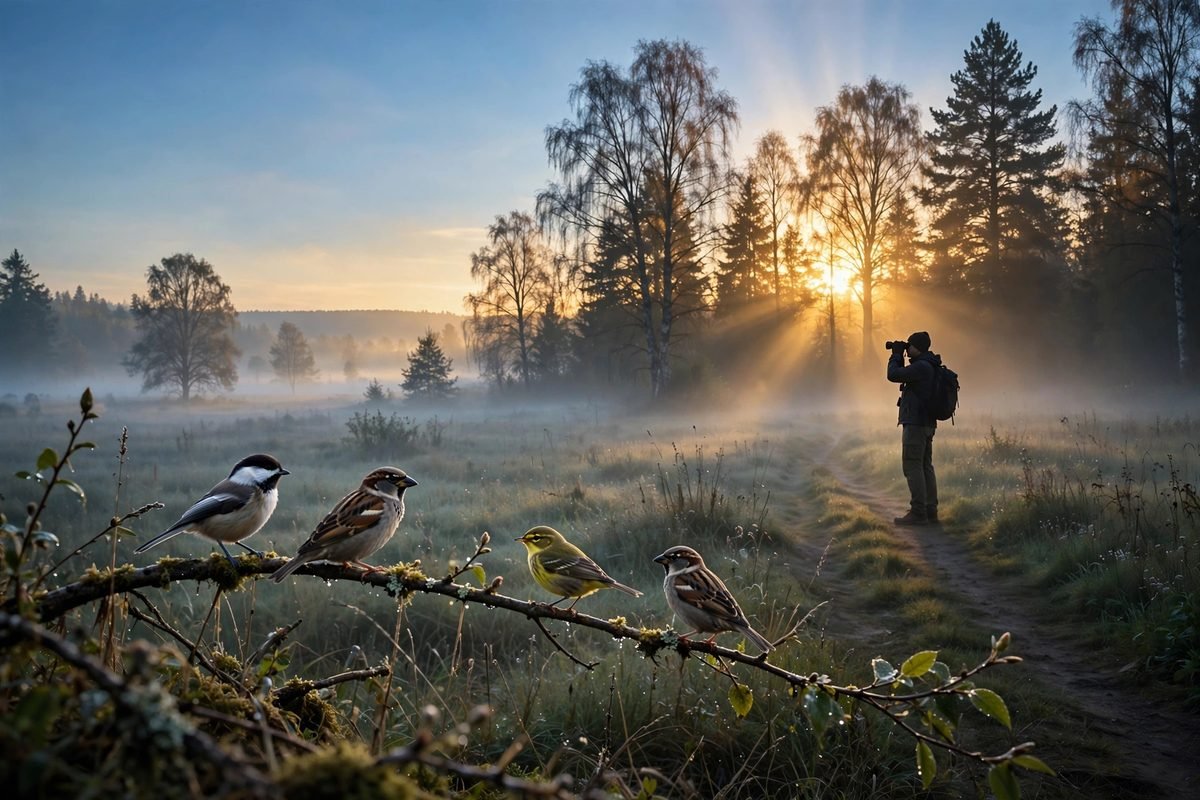
Show up at noon on a hot July day and the woods feel empty. Show up at the same spot an hour after sunrise and it is alive with song, fluttering wings, and birds everywhere you look. Timing is one of the biggest factors in birdwatching success, and it costs nothing to get right.
The short answer is simple: early morning is the best time of day to see birds. But the full answer is more useful. Late afternoon offers a second window, midday has surprising exceptions, and nighttime belongs to owls. Seasons, weather, and habitat all shift the schedule.
This guide breaks down exactly when to go, why birds follow these rhythms, and how to plan outings that put you in front of the most birds with the least waiting. You will also learn the exceptions that break the rules, because knowing when midday or midnight beats dawn is what separates casual watchers from skilled birders.

The Short Answer: Go Early
If you remember one thing from this article, make it this: the first two to three hours after sunrise are the most productive birding hours of the day.
Across habitats and continents, birds are most active, vocal, and visible in the early morning. Songbirds pour out of their roosts hungry after a night without food and spend the first hours foraging intensively. Males sing to defend territories and attract mates. Insects, a key food source, become active as the air warms. Cooler temperatures mean birds can move around without overheating, and calmer morning air makes it easier to hear calls and songs.
Guided birding tours consistently schedule their prime outings for 7 to 10 AM, and experienced birders treat dawn as sacred. Feeder data points the same way: Birdfy claims in its 2026 platform report, drawn from over 2 billion of its AI identifications, that backyard feeder activity rises fourfold by 6 AM and peaks at 8 AM. That is a company platform report rather than independent science, but it matches what field birders observe. The famous dawn chorus, when dozens of species sing simultaneously before and just after sunrise, is nature’s own announcement that the birding day has begun. Even a short walk around the block at this hour will usually beat a long midday hike for species count.
Why Birds Are Most Active at Dawn
Understanding the biology makes the timing advice stick.
Overnight fasting: Small songbirds burn significant energy staying warm overnight. They wake up hungry and must refuel quickly, which drives intense morning foraging. Hormonal shifts, including a pre-dawn drop in melatonin, help wake the body before light arrives. Watch a robin work a lawn at 7 AM and you are watching a bird making up for lost calories.
The dawn chorus: Male songbirds sing most intensely at dawn to advertise territory ownership and fitness. Research from the Cornell Lab of Ornithology published in 2025, studying 69 bird species across 43 forest sites, found that highly territorial birds and omnivorous species are the most dedicated dawn singers. Singing before breakfast is energetically costly, which is exactly why it works as an honest signal of health to potential mates and rivals.
Sound conditions are a bonus, not the cause: Cooler, denser morning air with higher humidity and lighter winds carries sound farther with less distortion, which helps birders hear more species. But interestingly, the Cornell team found little support for the idea that sound transmission is why birds sing at dawn. Environmental conditions did not significantly influence dawn singing; social factors like territoriality and feeding habits did.
Insect activity: Many insects become active as temperatures rise after dawn, creating a moving feast for insect-eating birds like warblers, flycatchers, and swallows.
Light for identification: Soft, angled morning light illuminates birds beautifully without the harsh glare of midday sun, making field marks easier to see and photographs dramatically better.
The Second-Best Window: Late Afternoon
If dawn is out of reach, aim for the two hours before sunset. Birds feed actively again to load up on calories before the overnight fast. This evening feeding bout is often nearly as productive as the morning one.
Late afternoon also brings its own specialties:
- Raptors ride the last thermals of the day, and hawks often hunt actively before roosting.
- Swallows and swifts sweep low over fields and water, snatching evening insects.
- Wading birds like herons and egrets stalk shorelines in the golden light.
- Dusk is prime time for nighthawks, owls, and nightjars beginning their nightly routines.
Photographers prize this window for the same reason painters do: warm, low-angled golden-hour light.
What About Midday?
The middle of the day, roughly 11 AM to 3 PM, is generally the slowest birding period. Birds rest in shade to conserve energy and water, sing less, and stay hidden from predators and heat. If you bird at noon in summer, you will mostly find empty branches.
But midday has exceptions worth knowing:
Raptors love midday thermals. Hawks, eagles, and vultures soar on rising columns of warm air that peak in the early afternoon. If you want soaring raptors, 11 AM to 2 PM on a sunny day is actually ideal. Check our hawk identification guide before you go.
Winter flips the script. On cold winter days, birds may wait until midday when temperatures rise and insects thaw before becoming active. A sunny 1 PM in January can be livelier than a frigid 7 AM.
Waterbirds keep their own schedule. Ducks, gulls, shorebirds, and waders are often visible all day, governed more by tides and food availability than by the songbird clock.
Overcast days extend the morning. Cloud cover keeps temperatures down and light levels dim, so birds may stay active several hours longer than on bright sunny days.
Night Birding: Owls, Nightjars, and the Dawn Chorus Warm-Up
Some of the most exciting birding happens after dark. Owls become active at dusk, and many species call most reliably in the first few hours of night. Nightjars like whip-poor-wills and nighthawks emerge to hawk insects. Our guide to why birds chirp at night covers the species to listen for.
Night birding requires extra preparation: bring a headlamp with a red-light mode, stick to safe and familiar locations, go with a companion, and learn calls beforehand since you will mostly bird by ear. The Merlin app’s sound identification feature is invaluable after dark.
And here is a secret: arriving 30 to 45 minutes before sunrise lets you catch the dawn chorus building. Robins and other early singers often start well before first light, and being in position early means you miss nothing.
How Seasons Change the Best Time of Day to See Birds
Spring: The single best season for morning birding. Migration brings waves of warblers and other songbirds, breeding males sing at full volume, and dawn choruses peak. During spring migration, early morning is non-negotiable. See our guide to when birds migrate in spring and fall for timing your trips.
Summer: Start as early as you can tolerate. Activity shuts down fast once heat builds, often by 9 or 10 AM. Late afternoon outings work but expect a shorter window.
Fall: Migration continues with hawks, warblers, and sparrows on the move. Mornings remain best, but the comfortable temperatures make afternoon birding pleasant too.
Winter: Sleep in a little. Birds conserve energy on cold mornings and become active as the day warms. Late morning through early afternoon is often the sweet spot, especially for waterfowl and raptors.

Weather and Timing
Weather reshapes the daily schedule:
- After rain: Birds emerge hungry and active once storms pass. Some of the best birding happens in the hour after a rain shower ends.
- Cold fronts in migration season: Can ground migrating birds, creating spectacular “fallouts” where exhausted migrants pile into the nearest habitat.
- Wind: Strong winds suppress activity for most songbirds but can push seabirds and migrating raptors into viewable corridors.
- Fog: Dulls the morning but can concentrate birds at lower elevations and closer to trails.
Check the forecast the way you check tide tables for fishing. eBird’s migration forecast tools and local birding listservs help you pick not just the time of day but the right day entirely.
Timing Tips for Your Backyard vs. the Field
In your backyard: You do not need dawn patrol. Birds visit feeders throughout the morning, and a comfortable 8 to 10 AM watch from your window is highly productive. Keep feeders filled and add a water source. Our guide on attracting cardinals shows how habitat tweaks multiply your sightings.
In the field: Arrive before sunrise during spring and summer. Position yourself at habitat edges, near water, or along trails before the chorus peaks. Move slowly, stop often, and let birds come to you.
Gear matters at every hour: Good binoculars transform any outing. If you are shopping, our guide to 8x vs 10x binoculars for bird watching covers the magnification trade-offs. And a good birding app will help you identify what you find by sight and sound.
Planning Your Perfect Birding Morning
Here is a simple timeline for a spring morning outing, the gold standard of birding:
45 minutes before sunrise: Arrive at your spot. Robins, thrushes, and wrens are already warming up. Find a comfortable position near water or a habitat edge and just listen.
Sunrise to 8 AM: Peak activity. Walk slowly, stopping every few minutes. This is when warblers, vireos, and flycatchers feed most actively in the canopy. Keep your binoculars ready and your Merlin app listening.
8 to 10 AM: The chorus quiets but foraging continues. Focus on visual identification as light improves. Check mudflats, shorelines, and open fields where birds gather after the first feeding rush.
10 AM onward: Activity tapers. Switch to raptor watching as thermals build, visit a wetland where waterbirds stay active, or head home knowing you caught the best hours.
The night before matters too: Charge your phone, lay out layers, check the weather and eBird hotspot activity, and set two alarms. The biggest barrier to dawn birding is not the birds. It is the snooze button.

Frequently Asked Questions
What is the absolute best time to go birdwatching?
The first two to three hours after sunrise, year-round. Birds are feeding, singing, and most visible. In spring, arrive 30 minutes before sunrise to catch the dawn chorus.
Is evening good for birdwatching?
Yes. The two hours before sunset are the second-best window, with active feeding, raptors hunting, and owls emerging at dusk. Golden-hour light is also ideal for photography.
Why are birds quiet at midday?
Birds rest during midday heat to conserve energy and water, and they sing less because sound carries poorly in hot, turbulent air. Exceptions include soaring raptors riding thermals and winter birds active in midday warmth.
What time do birds wake up?
Many songbirds begin stirring 30 to 45 minutes before sunrise, with robins among the earliest singers. Exact times shift with season and latitude.
Is birding better after rain?
Often yes. Birds emerge hungry and highly active once rain stops, and insects become abundant. The hour after a storm passes can be exceptional.
Can you see owls during the day?
Occasionally. Some owls, like burrowing owls and northern hawk owls, hunt by day. But most owls are reliably found at dusk, night, or dawn. Listen for calls rather than looking for perched birds.
Does the best time change in winter?
Yes. On cold days, birds often wait until late morning or midday when it warms up. Winter birding from 10 AM to 2 PM on sunny days is often more productive than dawn.
Conclusion
The best time of day to see birds is early morning, with late afternoon as a strong second choice. That simple rule will improve your birding more than any gear upgrade. But the deeper lesson is that birds run on rhythms of hunger, temperature, light, and season, and learning those rhythms turns every outing into better timing.
Start with dawn during spring migration, adjust for summer heat and winter cold, watch the weather, and give the night shift a try for owls. Keep a simple log of when and where you see the most birds, and within a few weeks you will have a personalized timing playbook for your local patch. The birds are out there on a schedule. Now you know it too.





