 Skip to content

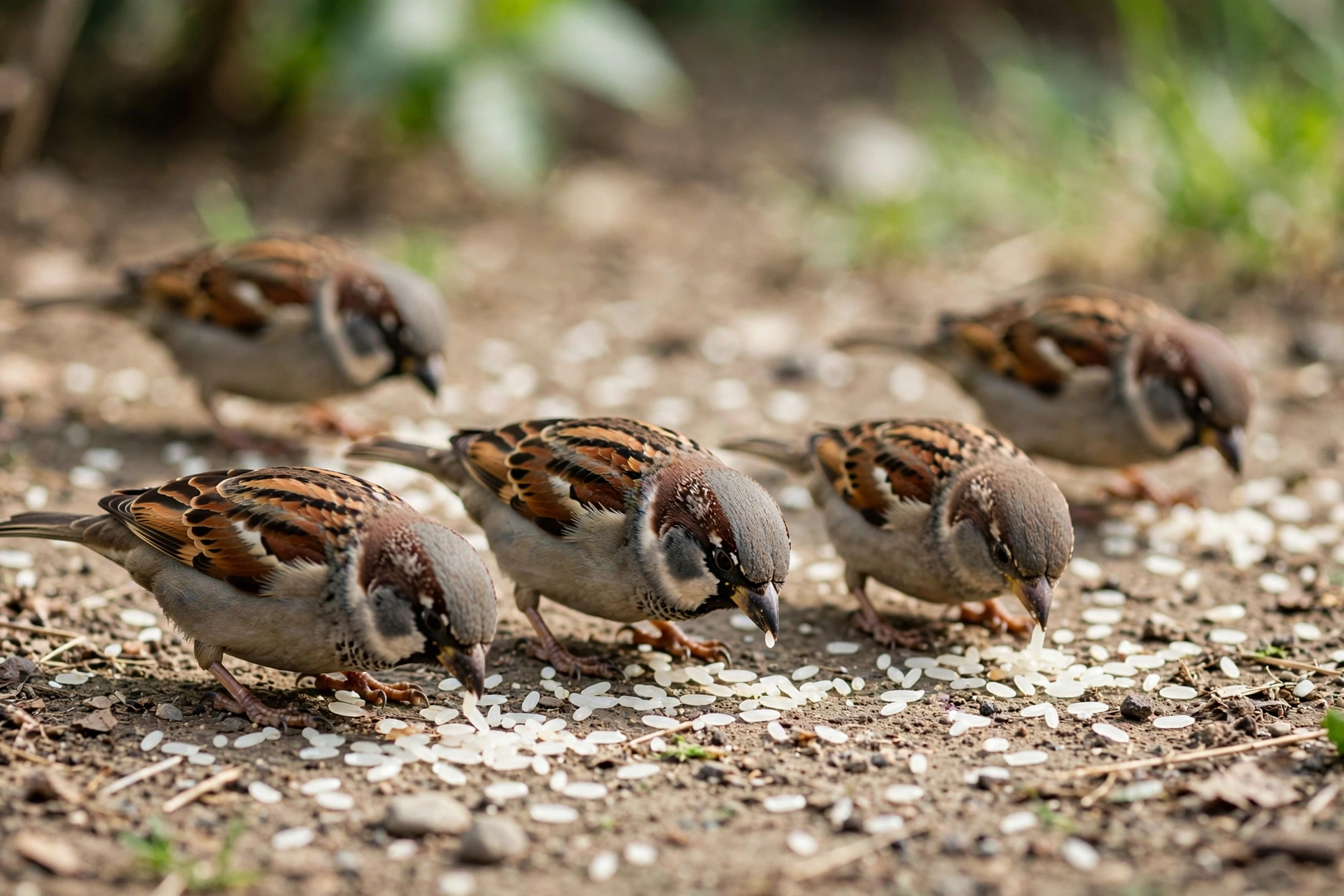
Can birds eat rice? Yes. Cooked or uncooked, white or brown, rice is perfectly safe for birds. The old warning that uncooked rice will swell inside a bird’s stomach and make it explode is a myth, and ornithologists have been debunking it for decades. No bird has ever exploded from eating wedding rice.
So why does almost everyone believe the opposite? The story behind the myth is almost as interesting as the science that kills it. It involves a 1985 Connecticut legislator, a famous advice columnist, and a Cornell ornithologist who had to set the record straight in print. This guide traces that story, explains why raw rice cannot hurt birds, compares rice types, covers feeding it safely, and finishes with the foods that actually are dangerous to birds.
Can Birds Eat Rice? The Short Answer
Birds can eat rice in any form: raw, cooked, white, brown, or wild. Uncooked grains are a staple in the natural diet of countless bird species, from sparrows cracking seeds in a backyard to ducks gleaning leftover grain in flooded rice fields. Rice is simply a small, starchy seed, and birds are built to process exactly that kind of food.
The only real rules are common sense. Serve rice plain, with no salt, oil, butter, or spices. Offer it as a treat or supplement, not as the whole diet, since rice is mostly carbohydrate and light on protein. And skip old or moldy rice, since mold is genuinely dangerous to birds. Beyond that, the bag in your pantry is fine.
Where the Wedding-Rice Myth Came From
The myth has a paper trail, and it starts in 1985. That year, Connecticut state representative Mae Schmidle proposed a bill that would ban the throwing of rice at weddings in her state. Her claim: uncooked rice thrown at weddings would be eaten by birds, swell in their stomachs, and cause them to suffer violent deaths. Schmidle said she got the idea from the Audubon Society, but local Audubon members interviewed at the time disagreed with her reasoning.
The story might have died in committee, but in 1988 it got a massive boost. Advice columnist Ann Landers printed a letter from a bride-to-be who worried about “sounding like some kind of a nut” for asking guests not to toss rice. Landers told the reader to spread the no-rice rule through the wedding party. Millions of readers absorbed the message: rice kills birds.
Three months later, Landers printed a retraction in the form of a letter from Cornell ornithologist Steven Sibley. His words are worth quoting in full, because they ended the scientific debate for good: “Rice is not threat to birds. It must be boiled before it will expand. Furthermore all the food that birds swallow is ground up by powerful muscles and grit in their gizzards.” Landers apologized for spreading misinformation, but the retraction never traveled as far as the original warning.
The myth proved remarkably sticky. In 2002, University of Kentucky biologist Jim Krupa asked 600 students in his undergraduate biology classes whether it was safe to throw rice at weddings. Forty-five percent said no, and cited exploding birds as the reason. Decades after the debunking, nearly half of a college biology class still believed it.
Why Uncooked Rice Can’t Hurt Birds
The myth sounds plausible because everyone has seen rice swell in a pot. The mistake is assuming a bird’s stomach works like a pot. It does not, and the difference comes down to heat.
Rice expands during cooking because boiling water forces rapid water absorption into the starch. The starch granules contain water-loving molecules, and at boiling temperature, water floods in and the grain swells dramatically. A bird’s digestive tract never gets anywhere near boiling. A bird’s body temperature runs higher than a human’s, but it is still far below the boiling point of water, so rice simply cannot “cook” inside a bird.
Digestion works differently from cooking in other ways too. Food is broken apart mechanically, starting in the crop, then ground by the powerful muscles and grit of the gizzard, exactly as Sibley described. Enzymes begin breaking down carbohydrates immediately. By the time rice reaches the intestines, it is a softened, fragmented mass, not an intact grain waiting to inflate.
Krupa tested the claim directly. In a 2005 experiment with his students, he measured how much different foods expanded at room temperature and in warm conditions. Bird seed, the food everyone considers perfectly safe, actually expanded more than rice. Instant rice expanded more at lower temperatures than regular uncooked rice. Then he offered birds both instant and regular uncooked rice. The birds preferred the regular rice, and they were completely unharmed regardless of which type they ate.
The National Audubon Society says it plainly in its bird FAQ: “Uncooked rice is also not harmful. Uncooked grains are a staple for the diet of species of many birds, so throwing rice at weddings is not going to harm any birds.” When the country’s leading bird conservation organization and Cornell ornithologists agree, the case is closed.
Cooked Rice vs Uncooked Rice for Birds
Both are safe, but they are not identical foods. Here is how the common types compare.
| Rice type | Safe for birds? | Nutrition notes | Best use |
|---|---|---|---|
| Uncooked white rice | Yes | Mostly starch, low in fiber and micronutrients | Scatter for wild birds, mix into seed blends |
| Uncooked brown rice | Yes | More fiber, B vitamins, and minerals than white | Slightly better choice for regular offering |
| Cooked white rice | Yes | Soft, easy to digest, still mostly carbohydrate | Good for pet birds, pigeons, doves |
| Cooked brown rice | Yes | Most nutritious common option, more fiber | Best everyday choice if you cook for birds |
| Wild rice | Yes | Higher protein than true rices, good mineral content | Excellent but pricey treat |
| Instant or minute rice | Yes | Pre-cooked and dehydrated, still safe | Fine in a pinch, plain only |

Cooked rice has one real advantage: digestibility. The cooking process has already done some of the breakdown work, so soft cooked rice is gentle on birds recovering from illness and easy for small species to manage. It is a favorite of pet parrots, cockatiels, budgies, and pigeons. Just serve it plain and let it cool to room temperature first.
Uncooked rice has its own advantage: convenience. You can scatter it dry for wild birds, mix it into homemade seed blends, or even sprout it. Sprouted rice is a nutritional step up, since sprouting unlocks enzymes and increases vitamin content. Rinse the grains, soak them overnight, then drain and rinse twice daily until tiny sprouts appear.
One caution applies to both forms: preparation matters more than the rice itself. Cooked rice must be plain, with no salt, oil, butter, garlic, onion, or spices. Fried rice from a restaurant is not bird food. And any rice, cooked or raw, that smells musty or shows mold should go in the trash. Mold produces toxins that can kill birds quickly.
Can I Feed Rice to Ducks?
Yes, ducks can eat rice safely in any form, raw or cooked. This is one of the easiest claims to verify, because wild ducks do it constantly without any human help. Across the southern United States, mallards, pintails, and geese flock to flooded rice fields every winter to glean leftover grains. For many waterfowl, waste rice is a staple winter food source, eaten raw, straight from the stubble.
If you feed ducks at a local pond, plain cooked rice or dry uncooked rice both work. Scatter it on the bank or in shallow water rather than tossing huge piles, which can foul the water. And keep portions modest. Rice is fine as a supplement, but ducks do best with variety: cracked corn, oats, peas, and chopped greens round out the offering.
One honest note: rice is not the most nutritious thing you can offer ducks. Cracked corn and oats are usually cheaper and provide similar or better nutrition. Rice shines as an occasional treat or as a way to use up plain leftovers, not as the foundation of a feeding routine.

How to Feed Rice to Birds Safely
Follow these simple guidelines and rice becomes a perfectly good part of the menu:
- Keep it plain: No salt, no oil, no butter, no spices, no sauces. Seasoned rice is people food, not bird food.
- Serve it as a supplement: Rice should be a treat or a small part of the diet, not the main course. Birds need protein, fat, and micronutrients that rice alone cannot provide. For wild birds, pair it with quality seed blends, suet in winter, or mealworms during breeding season. Our guides to feeding suet and choosing mealworms cover the high-value foods that balance rice out.
- Watch the portions: A small handful scattered for wild birds is plenty. For a pet bird, a tablespoon or two of cooked rice a few times a week is a reasonable treat within a balanced diet of pellets, vegetables, and fruit.
- Skip the mold: Old rice that smells musty or looks dusty can harbor mold toxins. When in doubt, throw it out.
- Clean up leftovers: Uneaten cooked rice spoils fast, especially in warm weather. Remove what birds do not eat within a few hours to avoid attracting pests or growing bacteria.
Pet bird owners sometimes worry about rice and crop impaction, but plain rice in normal portions causes no such problems. If your parrot loves rice, you can mix it with chopped vegetables to make a more complete meal. Think of rice as the neutral base, like pasta in a human dish, and build nutrition around it.
Foods That Actually Are Dangerous to Birds
Here is the irony of the rice myth: while everyone worried about a harmless grain, genuinely dangerous foods sat in plain sight. If you want to protect birds, memorize this list instead:
- Chocolate: Contains theobromine and caffeine, both toxic to birds. Darker chocolate is more dangerous. Even small amounts can cause vomiting, rapid heart rate, seizures, and death.
- Avocado: All parts of the plant contain persin, a compound reported as a cardiac toxin in birds. Small species like budgies and canaries are especially vulnerable, and signs can appear within twelve hours.
- Caffeine: Coffee, tea, and energy drinks overstimulate a bird’s heart and nervous system. A sip that means nothing to you is a massive dose for a thirty-gram budgie.
- Alcohol: Depresses a bird’s system the way it does a human’s, but at far lower doses. It can cause breathing problems, poisoning, and death.
- Onion and garlic: Contain compounds that can damage red blood cells and cause anemia, especially with repeated exposure. Concentrated forms like garlic powder are the most potent.
- Salt: Excess salt leads to dehydration, kidney strain, and potentially death. Never offer salty snacks, salted peanuts, or chips.
- Apple seeds and fruit pits: Contain compounds that convert to cyanide during digestion. The fruit flesh is fine, but remove seeds and pits from apples, cherries, peaches, plums, and apricots.
- Uncooked beans: Raw kidney beans and some other raw beans contain toxins harmful to birds. Beans must be thoroughly cooked before any bird eats them.
- Xylitol: This sugar substitute, found in sugar-free gum and some peanut butters, is dangerous to birds. Check labels before sharing peanut butter, and choose brands without it. Plain peanuts themselves are fine for many birds, as our peanut feeding guide explains.
Notice what is not on the list: rice. The foods that truly threaten birds are the ones with real chemical toxins, not a humble grain that wild birds have eaten for millennia.

What About Rice at Weddings?
So should couples bring back the rice toss? Biologically, there was never a reason to stop. But practically, many venues still discourage it, and their reasons are fair: dry rice on hard floors is slippery underfoot, and it makes a mess to clean up. Those are housekeeping concerns, not bird-safety ones.
If you want a toss that photographs beautifully and feeds the local birds, you have lovely options. Birdseed tossed from paper cones is the classic bird-friendly choice. Dried lavender buds, wildflower petals, and even bubbles all make gorgeous send-offs. Some couples hand out seed-embedded paper that guests can plant later. Whatever you choose, you can choose it for the photos and the cleanup, not out of fear for the sparrows. The sparrows were never in danger.
FAQs
Will uncooked rice make birds explode?
No. This is the myth in its purest form, and it is false. Rice needs boiling water to expand the way it does in a pot, and a bird’s body never reaches boiling temperature. Food is also ground up by the gizzard and broken down by enzymes long before it could swell. No bird has ever exploded from eating rice.
Can birds eat uncooked rice?
Yes. Uncooked rice is safe for birds. Wild birds eat raw grains constantly as a natural part of their diet, and the National Audubon Society confirms that uncooked rice is not harmful. Serve it dry and plain.
Can birds eat cooked rice?
Yes, and cooked rice is slightly easier to digest since cooking has already softened the grain. Let it cool to room temperature and serve it plain, with no salt, oil, butter, or seasoning. It is a favorite treat for pet parrots, pigeons, and doves.
Is brown rice better than white rice for birds?
Nutritionally, yes. Brown rice retains its bran layer, so it has more fiber, B vitamins, and minerals than white rice. Wild rice is better still, with more protein. That said, white rice is perfectly safe too. Think of brown as the upgrade, not white as a hazard.
Can I feed rice to ducks and geese?
Yes. Ducks and geese eat rice safely in any form. Wild waterfowl glean raw rice from harvested fields every winter across the southern United States. For pond ducks, scatter modest amounts of plain rice on the bank or in shallow water.
Can baby birds eat rice?
Rice poses no special choking risk to young birds. In the nest, parents crush or soften food before feeding chicks, and breeding parents mostly bring insects and other high-protein food anyway. You do not need to worry about rice around nesting birds.
What foods are actually dangerous to birds?
The real danger list includes chocolate, avocado, caffeine, alcohol, onion and garlic, excess salt, apple seeds and fruit pits, uncooked beans, and xylitol. These contain actual toxins. Rice, cooked or raw, is not on it.
Conclusion
The wedding-rice myth survived for decades on a vivid image: tiny birds, swelling grain, a tragedy at the reception. It took a Connecticut bill, an Ann Landers column, a Cornell ornithologist’s public correction, and a biologist’s classroom experiment to fully dismantle it. The science was never complicated. Rice needs boiling water to expand, birds are not boiling water, and their gizzards grind everything to paste anyway.
So feed the sparrows your leftover rice without guilt, toss birdseed at the wedding if you like, and save your worry for the foods that genuinely harm birds. Chocolate, avocado, and the rest of the real danger list deserve the caution that rice never did. Myths are stubborn, but this one has been debunked by everyone from Audubon to Cornell. It is time to let it go.





