 Skip to content

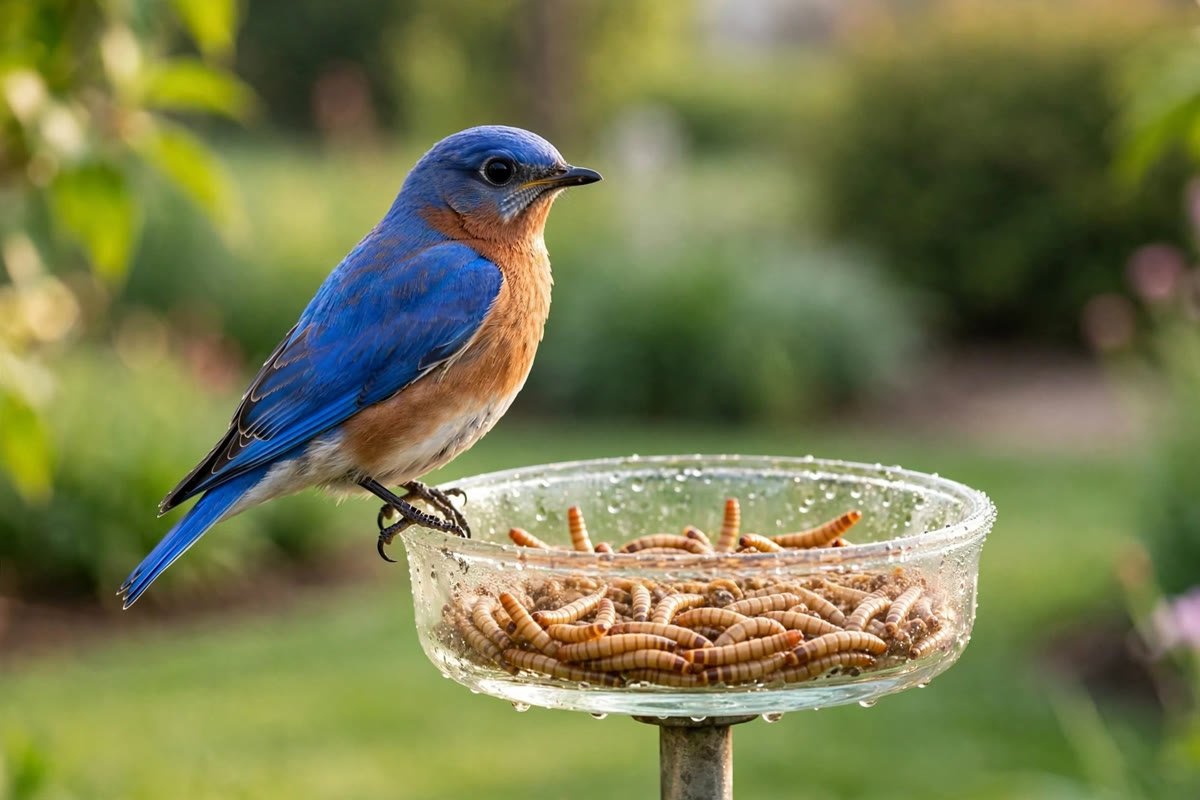
Few feeder foods cause as much excitement as mealworms. Offer a dish of them and watch chickadees, bluebirds, and robins queue up like regulars at a favorite restaurant. But then comes the question every bird lover asks at the store: should you buy live mealworms or dried?
Mealworms for birds come in two main forms, and each has real advantages. Live mealworms offer moisture and movement that birds find irresistible, while dried mealworms deliver concentrated protein with none of the storage hassle. The right choice depends on your birds, your budget, your squeamishness, and the season.
In this guide, you will get a clear dried vs live comparison, the nutritional differences that actually matter, which backyard birds eat mealworms, how to serve each type, how many to offer, and the calcium caveat that every mealworm feeder should know.

Mealworms for Birds: Dried vs Live at a Glance
If you want the quick version before the details, here is how the two forms compare on the factors that matter most to backyard birders.
| Factor | Live mealworms | Dried mealworms |
|---|---|---|
| Moisture | About 62 percent water, a real hydration source | About 5 percent water, nearly none |
| Protein (by weight) | Around 20 percent | Around 53 percent, concentrated by drying |
| Fat (by weight) | Around 13 percent | Around 28 percent |
| Bird appeal | Highest, movement triggers hunting instinct | High, especially once birds learn them |
| Storage | Need cool storage and occasional feeding; perishable | Keep in a cool, dry place for months; up to two years |
| Convenience | Low, they wriggle and need care | High, scoop and serve |
| Cost | Higher per feeding | Lower per feeding |
| Best for | Nesting season, fledglings, picky species | Everyday feeding, winter energy, busy schedules |
The nutritional numbers look dramatically different, but remember they describe the same animal with and without water. Drying concentrates everything, protein, fat, and fiber alike, because the water is gone. A live mealworm and a dried one offer similar total nutrition per worm; the dried form just packs it into a smaller, lighter package.
What Mealworms Are and Why Birds Love Them
Mealworms are the larval stage of the darkling beetle, Tenebrio molitor. They are not actually worms at all. In the wild, insect-eating birds spend much of their day hunting grubs, caterpillars, and larvae just like these, so mealworms match a food source birds evolved to seek.
The appeal is nutritional. Insects deliver the protein and fat that breeding birds need to produce eggs and that growing chicks need to build feathers and muscle. During nesting season, many “seed eating” birds switch to insects for their young. Chickadees, for example, feed their nestlings almost exclusively on caterpillars and other insects even though the adults eat seed all winter.
Mealworms also solve a backyard problem: they attract birds that ignore seed feeders. Bluebirds, robins, wrens, and warblers may visit your yard for years without touching a seed tube, but a dish of mealworms can bring them in within days. That is why mealworms are considered a gateway food for diversifying your feeder visitors.
Live Mealworms: Pros, Cons, and How to Offer Them
Live mealworms are the gold standard for bird appeal. The movement is the magic: a wriggling larva triggers the hunting response in insect-eating birds in a way that a still, dried one cannot fully match. Picky species and recent fledglings often accept live mealworms first.
The moisture content is the other major advantage. At roughly 62 percent water, live mealworms provide meaningful hydration, which matters during hot weather and nesting season when birds are feeding thirsty chicks. Dried mealworms, at about 5 percent water, offer almost none.
The downsides are practical. Live mealworms are perishable and need cool storage, typically refrigeration, plus occasional feeding with bran or vegetables to keep them alive and nutritious. They cost more per serving, they wriggle, and some people find handling them unpleasant. Escapees in the house are a real possibility if you are careless.
To serve them, use a smooth-sided dish or a dedicated mealworm feeder with high sides. Mealworms can climb textured surfaces, so glass, glazed ceramic, or metal dishes work best. Place the dish near cover where birds feel safe, and offer them in the morning when insect-eating birds forage most actively. If you want to attract the classic mealworm lover, see our guide to attracting bluebirds to your yard.
Dried Mealworms: Pros, Cons, and How to Offer Them
Dried mealworms, produced by oven-drying or freeze-drying live larvae, are the convenient choice, and for most backyard birders they are the right one. They keep for months in a cool, dry place, with some suppliers rating them for up to two years. No refrigeration, no feeding the food, no escapees.
Nutritionally, they are concentrated protein and fat: roughly 53 percent protein and 28 percent fat by weight, compared with about 20 and 13 percent in the live form. The difference is almost entirely the missing water. For winter feeding, when birds need dense energy, that concentration is a genuine asset.
The main drawback is the missing moisture, which matters most for nestlings. The standard fix is simple: soak dried mealworms in warm water for 10 to 15 minutes before serving during breeding season. Soaking softens them and restores much of the hydration, making them safer and more palatable for young birds.
Serve dried mealworms in a dish feeder, a platform feeder, or mixed into seed or suet. They also work well scattered on a tray. In winter, mixing them with suet creates a high-energy combo that insect eaters and
woodpeckers both appreciate. For the broader winter menu, see what to feed birds in winter.

Which Backyard Birds Eat Mealworms?
Mealworms attract a different crowd than seed, which is precisely their value. Species most likely to visit a mealworm dish include:
- Eastern bluebirds: the classic mealworm bird; many bluebird landlords consider them essential.
- American robins: enthusiastic ground foragers that quickly learn a dish location.
- Chickadees and titmice: grab one worm at a time and carry it to a perch.
- Nuthatches and wrens: insect specialists that may ignore seed entirely.
- Woodpeckers: downy and hairy woodpeckers take mealworms readily, especially in winter.
- Gray catbirds and mockingbirds: fruit and insect eaters that appreciate the offering.
- Warblers and orioles: during migration, when insects are scarce, mealworms can be a lifeline.
It may take a few days for birds to recognize an unfamiliar food. Be patient, keep the dish in the same spot, and serve at consistent times. Once one bird figures it out, others follow quickly. If you are choosing foods strategically, our guide to the best bird seeds for different birds helps you match every feeder to its audience.
How Many Mealworms to Offer and How Often
Mealworms should be a supplement, not the whole diet. A commonly cited guideline is around 100 mealworms per day for a typical backyard setup, split between morning and afternoon servings. That is plenty to attract insect eaters without displacing the varied diet birds need.
During nesting season, you can offer more, since breeding birds are feeding hungry chicks as well as themselves. In winter, a steady small ration provides reliable high-fat energy. The key principle is regularity: birds learn feeding schedules, and a dependable dish builds a dependable audience.
Do not put out more than birds eat in a day or two. Dried mealworms left in rain will spoil, and live ones will die and rot. A small daily serving beats a large weekly pile. And always keep fresh water nearby, especially when serving dried mealworms, since the birds need to make up the missing moisture somewhere.
The Calcium Caveat Every Mealworm Feeder Should Know
Here is the nutritional catch that marketing often skips: mealworms are low in calcium relative to phosphorus. A diet too heavy in mealworms can contribute to calcium deficiency, which matters most for egg-laying females and growing chicks, the very birds people most want to help with mealworms.
The fix is dietary variety, not abandoning mealworms. Birds that also eat seed, suet, fruit, and wild insects get calcium from other sources. Some experienced bluebird landlords dust mealworms lightly with calcium carbonate powder during breeding season, a practice borrowed from reptile keeping. If you try this, use plain calcium carbonate with no vitamin D3 additives meant for reptiles, and use it sparingly.
The broader lesson is one that applies to all supplemental feeding: no single food is complete. Mealworms are an excellent protein and fat source, but they work best as part of a diverse feeding station, not as the entire menu.

Common Mealworm Mistakes to Avoid
- Serving dried mealworms dry to nestlings: soak them first during breeding season so young birds get the moisture they need.
- Putting out too many at once: uneaten worms spoil or die; small daily servings stay fresh.
- Using a dish they can climb out of: live mealworms scale rough surfaces, so choose smooth-sided glass, ceramic, or metal.
- Feeding mealworms as the only food: the calcium-to-phosphorus ratio is poor, so keep seed, suet, and fruit available too.
- Placing the dish in the open: insect eaters are wary; put the dish near shrubs or cover where birds feel safe from hawks.
- Giving up after two days: birds need time to recognize a new food. Give it at least a week of consistent offering.
Frequently Asked Questions
Are dried mealworms as nutritious as live mealworms?
Per worm, essentially yes. Drying removes water, which concentrates the protein, fat, and fiber by weight, but the underlying nutrition of each larva is the same. The real difference is moisture: live mealworms are about 62 percent water and dried are about 5 percent. Soak dried mealworms before serving to nestlings to close that gap.
Do birds prefer live or dried mealworms?
Most birds show a stronger immediate response to live mealworms because the movement triggers their hunting instinct. However, birds learn quickly, and established feeder visitors eat dried mealworms enthusiastically. If your birds already know the dish, dried works beautifully and costs less effort.
Can I feed mealworms to baby birds I found?
No, do not feed found baby birds yourself. Young birds need species-specific diets and feeding techniques, and well-meaning feeding often does harm. Keep the bird warm, dark, and quiet, and contact a licensed wildlife rehabilitator. Mealworms are for healthy wild birds at your feeder, not for rescue situations.
Will mealworms attract unwanted animals?
They can attract squirrels, raccoons, and starlings along with the desired birds. Serving modest daily portions rather than large piles limits the surplus that draws pests. A dish placed on a pole with a baffle, away from launching points, reduces mammal raids.
How should I store dried mealworms?
In a sealed container in a cool, dry place, away from moisture and direct sun. Properly stored, dried mealworms keep for many months, with suppliers rating them up to two years. Do not refrigerate them; condensation when they warm up can cause mold. Discard any that smell off or show mold.
Are mealworms safe for pet birds?
Plain dried or live mealworms are generally safe as an occasional treat for insect-eating pet birds, but they should not replace a balanced formulated diet. As with wild birds, variety matters. If your pet bird has health conditions, check with an avian veterinarian before adding new foods.
Conclusion
Mealworms for birds come down to a simple trade. Live mealworms win on appeal and moisture, making them the best choice during nesting season and for the pickiest insect eaters. Dried mealworms win on convenience, storage, and cost, making them the practical everyday choice for most backyard feeders. Nutritionally, each worm is the same animal with or without its water.
The smartest approach is seasonal: serve live in spring and summer when chicks need moisture and protein most, and switch to dried, or soaked dried, the rest of the year. Keep portions modest, keep the dish near cover, keep fresh water available, and keep the overall menu varied to cover the calcium that mealworms lack.
Do that, and the mealworm dish becomes one of the most rewarding feeders in your yard. Few sights beat a bluebird landing, selecting a worm with visible care, and carrying it off to a waiting nest box. That is the whole point of feeding birds, and mealworms deliver it.





