Skip to content

Making suet for birds at home is simpler than most people expect. You melt a safe fat such as rendered beef suet or plain lard, stir in dry ingredients like cornmeal, oats, flour, and bird seed, then chill the mixture in a pan and cut it into cakes that fit a standard suet feeder. The whole process takes under an hour, and the cakes cost far less than store-bought suet.
Homemade suet also gives you full control over what goes into it. You can skip the preservatives and artificial colors found in cheap commercial cakes and use fresh, plain ingredients that backyard birds love. This guide walks you through what suet is, which ingredients are safe, three tested recipes, and how to serve your homemade suet the right way.
What Is Suet and Why Do Birds Love It?
Suet is technically defined as the hard fat around the kidneys and loins of beef cattle and mutton. In everyday use, most kinds of beef fat are also called suet and can safely be fed to birds. The Cornell Lab of Ornithology notes that animal fat is easily digested and metabolized by many birds.
What makes suet special is its energy density. Fat packs more calories per gram than seeds, which makes suet an ideal cold-weather food. When nighttime temperatures drop, birds burn enormous amounts of energy just staying warm. A high-fat food like suet helps them rebuild that energy quickly, which is why suet feeders see so much traffic in winter.
According to Cornell’s FeederWatch survey, about 54 percent of participants offer suet to the birds at their feeders. It ranks just behind black-oil sunflower seeds and nyjer seed in popularity. If you already know what to feed birds in winter, suet deserves a permanent spot on the menu.
Which Birds Eat Suet?
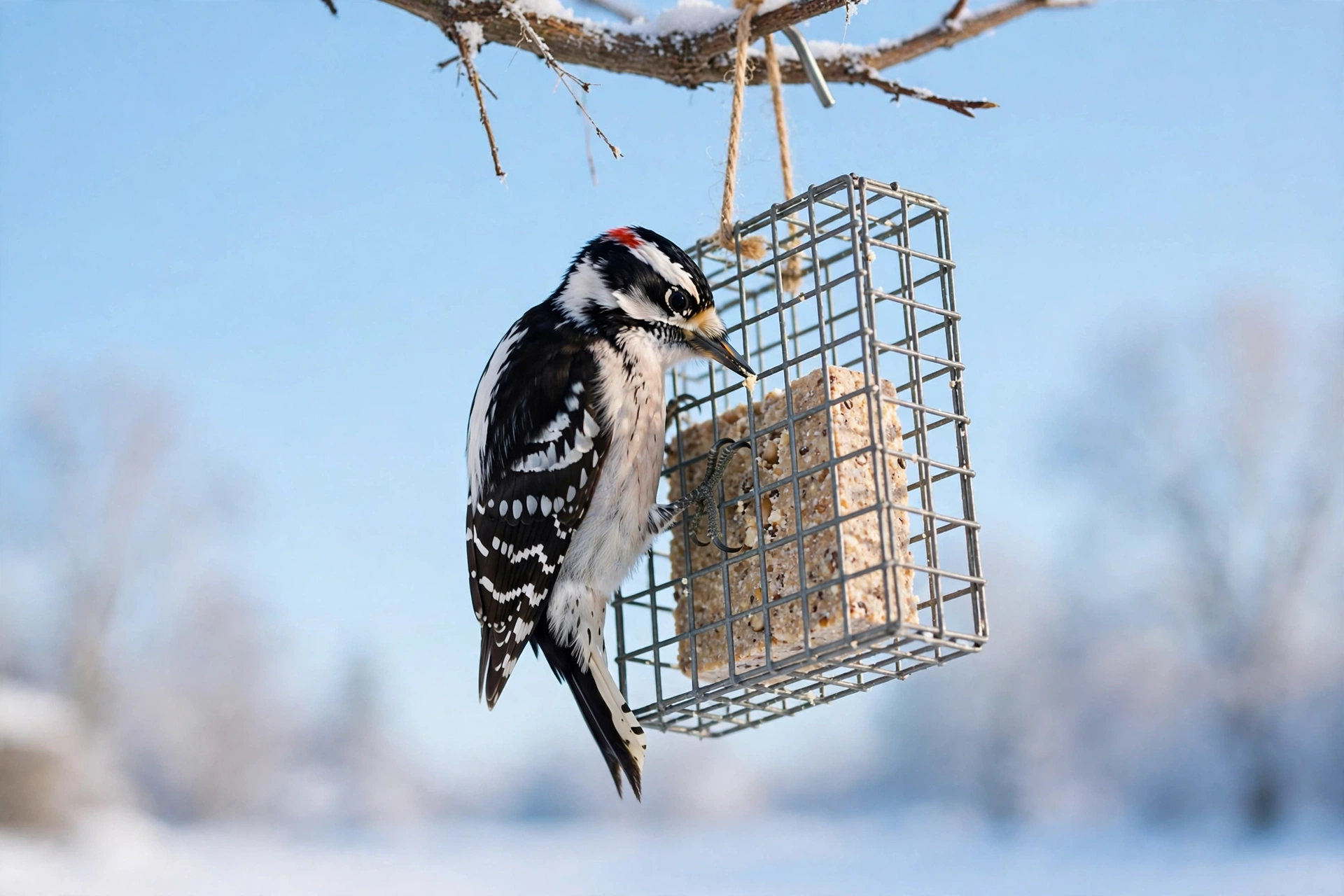
Suet is particularly attractive to woodpeckers, nuthatches, chickadees, jays, and starlings. Downy, hairy, and red-bellied woodpeckers are regulars at suet cages, and white-breasted nuthatches often muscle in alongside them. Black-capped and Carolina chickadees grab small bites and carry them off to eat at a safe distance.
Wrens, creepers, kinglets, and even cardinals and some warblers also visit suet feeders on occasion. These species feed mainly on insects in warmer months, so suet works as a winter stand-in for the insect protein that disappears when cold weather arrives. Offering suet can bring species to your yard that never touch a seed feeder.
Safe Ingredients for Homemade Suet
Start with plain, fresh ingredients and keep the recipe simple. The classic homemade mix combines a rendered animal fat with dry grains and seeds. Rendered beef suet from a butcher or meat counter is the traditional choice, and plain lard from the grocery store works just as well for most recipes.
Plain cornmeal, quick oats, and all-purpose flour make up the dry base in most recipes. These grains give the fat structure so it holds together in the feeder. Add black-oil sunflower seeds, shelled peanuts, dried cranberries or blueberries, and a little grated cheese for variety. Keep everything unsalted and unseasoned.
Safe Mix-Ins
These add-ins are widely used by bird feeders and birding groups:
- Peanut butter: Plain, unsalted, with no added sugar or artificial sweeteners.
- Cornmeal and oats: Plain yellow cornmeal and regular or quick oats.
- Bird seed: Black-oil sunflower seeds, hulled seed mixes, and seed without shells.
- Dried fruit: Chopped cranberries, blueberries, or raisins in small amounts.
- Unsalted peanuts: Shelled or chopped, plain with no seasoning.
- Flour: All-purpose or whole wheat, to firm up warm-weather recipes.
Ingredients to Avoid
Some common kitchen fats are not suitable for birds. Avoid these ingredients:
- Bacon grease: Skip it. Most birding groups advise against it because bacon grease carries high salt levels and nitrites from the curing process, and used cooking fats can contain unknown seasonings.
- Anything with onion or garlic: Both are widely listed as potentially harmful to birds, so keep flavored seasonings, onion powder, and garlic out of the mix.
- Xylitol-sweetened peanut butter: Xylitol is highly toxic to dogs, and bird experts advise skipping it for birds too since its effects on birds are not established. Always check the label of sugar-free peanut butter.
- Vegetable oils and margarines: The Natural History Museum in London advises against polyunsaturated margarines and vegetable oils because they smear onto feathers. Stick to solid animal fats or nut butters.
- Moldy or stale grains: Throw out any cornmeal or oats that smell musty or show signs of mold. Grain mold can produce toxins that harm birds.
Recipe 1: Classic Rendered Suet Cakes
This is the traditional recipe: pure rendered beef suet blended with grains and seed, pressed into cakes that fit a standard suet feeder. Rendering sounds complicated, but it just means melting the fat slowly and straining out the solids. Ask your butcher for beef kidney fat, sometimes sold as “raw suet” or “fat trim.”
Ingredients:
- 2 cups rendered beef suet (about 1 pound of raw fat yields roughly 1 1/2 cups)
- 1 cup quick oats
- 1 cup plain yellow cornmeal
- 1/2 cup all-purpose flour
- 1 cup black-oil sunflower seeds or mixed bird seed
- 1/4 cup dried cranberries, chopped (optional)
Steps:
- Cut the raw beef fat into small chunks and place it in a heavy pot over low heat. Render slowly, stirring occasionally, until the fat is fully melted and the solid cracklings turn golden brown. This takes 30 to 45 minutes. Do not let it boil or burn.
- Strain the melted fat through a fine mesh strainer or cheesecloth into a clean container. Discard the solid pieces. You now have rendered suet.
- Pour the rendered fat back into the pot over low heat. Stir in the oats, cornmeal, flour, seed, and dried fruit until everything is evenly coated.
- Line a 9-inch square pan with wax paper or parchment paper. Pour in the mixture and press it flat with the back of a spoon.
- Refrigerate for 2 to 3 hours, or freeze for about 1 hour, until the slab is firm. Remove from the pan and cut into cakes sized to fit your suet feeder.
- Store the cakes in the refrigerator for up to a week or in the freezer for up to 3 months, wrapped or bagged.
The finished cakes should feel solid at room temperature and hold their shape when you lift them. If your batch crumbles, melt it down again with a little extra fat and press it back into the pan. This recipe pairs perfectly with a standard wire suet cage, and if you would like to build a suet feeder yourself, sizing your cakes to match is easy.

Recipe 2: No-Melt Peanut Butter Suet for Warm Weather
Regular suet softens and turns rancid in heat, so summer feeding calls for a drier dough. This no-melt style recipe, popularized by Audubon chapters across the country, uses extra cornmeal and flour to firm the mixture. Treat “no-melt” as firmer rather than heat-proof: no recipe stands up to direct summer sun, so hang it in the shade and check it often.
Ingredients:
- 1 cup plain lard (shortening can work if you cannot get lard)
- 1 cup plain peanut butter, unsalted and free of xylitol
- 2 cups regular rolled oats (not instant)
- 2 cups plain yellow cornmeal
- 1 cup all-purpose flour
- 1/3 cup sugar (optional)
- 1 cup bird seed (optional)
Steps:
- Melt the lard and peanut butter together in a large pot over low heat, stirring until smooth. Melt the lard first if you are working with small pieces, since peanut butter scorches faster on its own.
- Stir in the oats, cornmeal, flour, sugar, and bird seed. Mix thoroughly until the dough holds together like a stiff cookie batter. Add a spoonful more flour if it feels greasy or soft.
- Line an 8×8 inch pan with wax paper. Pour in the mixture and press it down firmly so it packs solid.
- Refrigerate for 2 to 3 hours until the slab sets. Run hot water over the bottom of the pan for a few seconds to release the slab, then cut it into fourths or into shapes that fit your feeder.
- Freeze any cakes you will not use within the week. Frozen cakes keep for several months in sealed bags.
This recipe is based on the no-melt suet shared by the York County Audubon chapter, which notes that it can be put out all year. In practice, keep servings small in summer and pull the cake if you see it softening or smelling off. For more seasonal strategy, see our guide to feeding suet in winter.
Recipe 3: Kid-Friendly Pinecone and Log-Smear Suet
This method skips the stove entirely and turns suet making into a hands-on project for kids. You mix peanut butter with dry ingredients by hand, then press the dough into pinecones or spread it onto a log. It is simple, fast, and a great way to get children watching their backyard birds.
Ingredients:
- 1 cup plain peanut butter, unsalted and free of xylitol
- 1 cup plain yellow cornmeal
- 1 cup quick oats
- 1/2 cup bird seed
- Large pinecones or a small log with holes drilled in it
- Twine or string for hanging
Steps:
- Tie a length of twine around the top of each pinecone to make a hanger, or loop it through the eye hook on your log feeder.
- In a large bowl, combine the peanut butter, cornmeal, oats, and bird seed. Mix with a sturdy spoon, then finish with clean hands until the dough holds together.
- Press the dough into the crevices of the pinecone, packing it into every gap. For the log feeder, fill each drilled hole level with the surface and smear a thin layer over the bark.
- Chill the finished pinecones in the refrigerator for about 1 hour so the dough firms up.
- Hang the pinecones or log from a tree branch near some cover, where birds can see predators coming. Remove and clean them when the dough is gone so the pinecone does not collect mold.
An adult should supervise the mixing and hanging, and everyone should wash their hands after handling peanut butter and seed. The National Audubon Society shares a similar kid-friendly suet craft using an ice cube tray and freezing the mixture, which works well if pinecones are not available. Watch the window afterward and turn it into a game: count how many birds visit and which species arrive first.
Comparing Fat Bases for Homemade Suet
The fat base sets the character of your suet. Each option has strengths and trade-offs, so pick the one that fits your climate, budget, and the ingredients you can find.
| Fat Base | Best For | Pros | Watch-Outs |
|---|---|---|---|
| Rendered beef suet | Cold-weather cakes | The traditional bird food; firms up hard; cheap or free from a butcher; birds love it | Requires rendering at home; melts in heat; can be hard to find at modern meat counters |
| Plain lard | Everyday recipes | Widely available at grocery stores; easy to melt; works in warm-weather dough recipes | Choose plain lard without flavorings or seasonings; still softens in hot weather |
| Peanut butter | Kid-friendly and no-cook mixes | No rendering needed; birds take to it readily; pairs well with grains and seed | Must be plain, unsalted, and free of xylitol; the old choking warning has no documented evidence, but mixing it with cornmeal addresses any concern |
| Coconut oil | Vegetarian options | Plant-based and widely available | Stays soft in warm weather; liquid vegetable oils are discouraged by wildlife guidance because they can smear onto feathers, so use sparingly and keep it chilled |
Serving and Storing Homemade Suet
Serve suet in a wire cage feeder or smear feeder, hung in the shade where cats and squirrels have trouble reaching it. Place the feeder near cover such as a bush or tree so birds can retreat quickly, but not so close that predators can hide. A location within sight of a window makes the best viewing spot.
In winter, a cake can stay out for several days without problems. Check it every few days and pull it if it smells sour or shows mold. In warm weather, keep servings small, use the no-melt recipe, and remove the cake at the first sign of softening. Project FeederWatch advises being careful with suet in hot weather because it can become rancid if it has not been specially processed.
Storage is simple. Keep cakes in the refrigerator for up to a week and in the freezer for up to 3 months, wrapped in wax paper or sealed bags. Frozen cakes go straight into the feeder without thawing, which is handy on cold mornings.

Cleanliness matters as much as the recipe. Scrub suet feeders with hot soapy water every few weeks, and rinse and dry them fully before refilling. Dirty feeders spread disease, and homemade food deserves the same hygiene as any store-bought supply.
Frequently Asked Questions

Can I use bacon grease instead of lard in suet recipes?
It is best not to. Birding groups widely advise against bacon grease because of its high salt content, nitrites from the curing process, and unknown seasonings from cooking. Plain rendered beef suet or plain lard gives you the same result without the risks.
Is peanut butter safe for birds?
Yes, when you use plain, unsalted peanut butter with no artificial sweeteners. There is no documented evidence that peanut butter chokes birds, according to Project FeederWatch. Always check the label for xylitol, a sweetener that is highly toxic to dogs and is not recommended for birds either.
Will homemade suet melt in summer?
Regular rendered suet will soften and can turn rancid in heat. The no-melt peanut butter recipe holds up better, but treat “no-melt” as firmer, not heat-proof. Hang suet in the shade, use small servings in summer, and remove any cake that softens or smells off.
How long does homemade suet last?
In the feeder during cold weather, a cake typically lasts several days until the birds finish it. In the refrigerator, homemade cakes keep for about a week. In the freezer, wrapped and sealed, they keep for up to 3 months.
What birds will come to my suet feeder?
Woodpeckers, nuthatches, and chickadees are the most common suet visitors. Wrens, jays, creepers, and sometimes cardinals or warblers also show up. If you mostly see starlings hogging the feeder, switch to an upside-down suet feeder that lets clinging birds feed while discouraging starlings.
Do I need to render the suet, or can I use it raw?
Raw beef fat can be offered as is, and some feeders simply tie raw fat scraps into a mesh bag. Rendering makes the fat cleaner, removes meat bits that spoil faster, and gives you a uniform base that mixes smoothly with grains. Either way works, but rendered fat stores better.
Conclusion
Making suet for birds at home comes down to three simple moves: choose a safe fat, mix it with plain grains and seed, and chill it into cakes. The classic rendered suet recipe suits cold winters, the no-melt peanut butter version carries you through warm weather, and the pinecone method turns a weekend afternoon into a family project. Each one costs less than store-bought cakes and puts better ingredients in front of your birds.
Start with one recipe, watch who visits, and adjust from there. Woodpeckers and chickadees will find your feeder fast, and once they do, they tend to come back. Keep the feeders clean, serve fresh cakes, and your backyard will hum with winter activity from the first frost to the last.
Types of Store-Bought Suet: Which Should You Choose?
Not everyone wants to render fat at home, and store-bought suet has improved enormously. Commercial suet cakes come in several distinct types, each designed to attract different birds.
Seed suet blends millet, cracked corn, and sunflower seed into the fat base, making it a good all-rounder. Nut suet packs in peanuts, walnuts, or peanut butter for extra protein that woodpeckers and jays love. Fruit suet adds apple, cherry, or mixed berries for orioles and other fruit fans.
Insect suet contains dried mealworms and appeals to insect-eating birds like bluebirds and wrens. Pepper suet uses hot pepper flakes or capsaicin, which birds cannot taste but squirrels hate, making it the best choice if squirrels raid your feeders.
When shopping, start simple with a plain seed or nut cake. Read the label and avoid products with excess salt, and store extras in a cool place so they stay fresh.
Suet Feeders: Cages, Log Feeders, and More
The feeder you choose shapes which birds can use it. Standard cage feeders are cheap wire boxes that hold one cake and suit most clinging birds. Upside-down feeders only open at the bottom, which favors woodpeckers and nuthatches while discouraging starlings.
Tail-prop feeders add an extended board below the cage so woodpeckers can brace their tails, just as they do on tree trunks. Log feeders are drilled wooden logs you pack with suet dough, and mesh ball feeders hold round suet balls. Trays and platform feeders work for birds that prefer not to cling.
Hang feeders in a shady spot about five feet off the ground, near cover but out of cat range. One critical safety rule: always remove the plastic mesh net from store-bought suet balls before hanging them, as birds can tangle their feet and legs in the netting.
When to Put Out Suet (and When to Take It Down)
Put suet out when cold weather arrives, typically in October or November. Birds need the extra calories as temperatures drop and natural food becomes scarce.
Keep feeders stocked through the coldest months. Suet is at its best in winter because the cold keeps it firm and fresh, and birds rely on the concentrated energy to survive freezing nights.
Take suet down in spring when daytime temperatures regularly reach the 50s Fahrenheit (around 10 Celsius). Warm suet softens, turns rancid quickly, and can coat feathers, so switch to the no-melt recipe or pause until autumn.