Skip to content

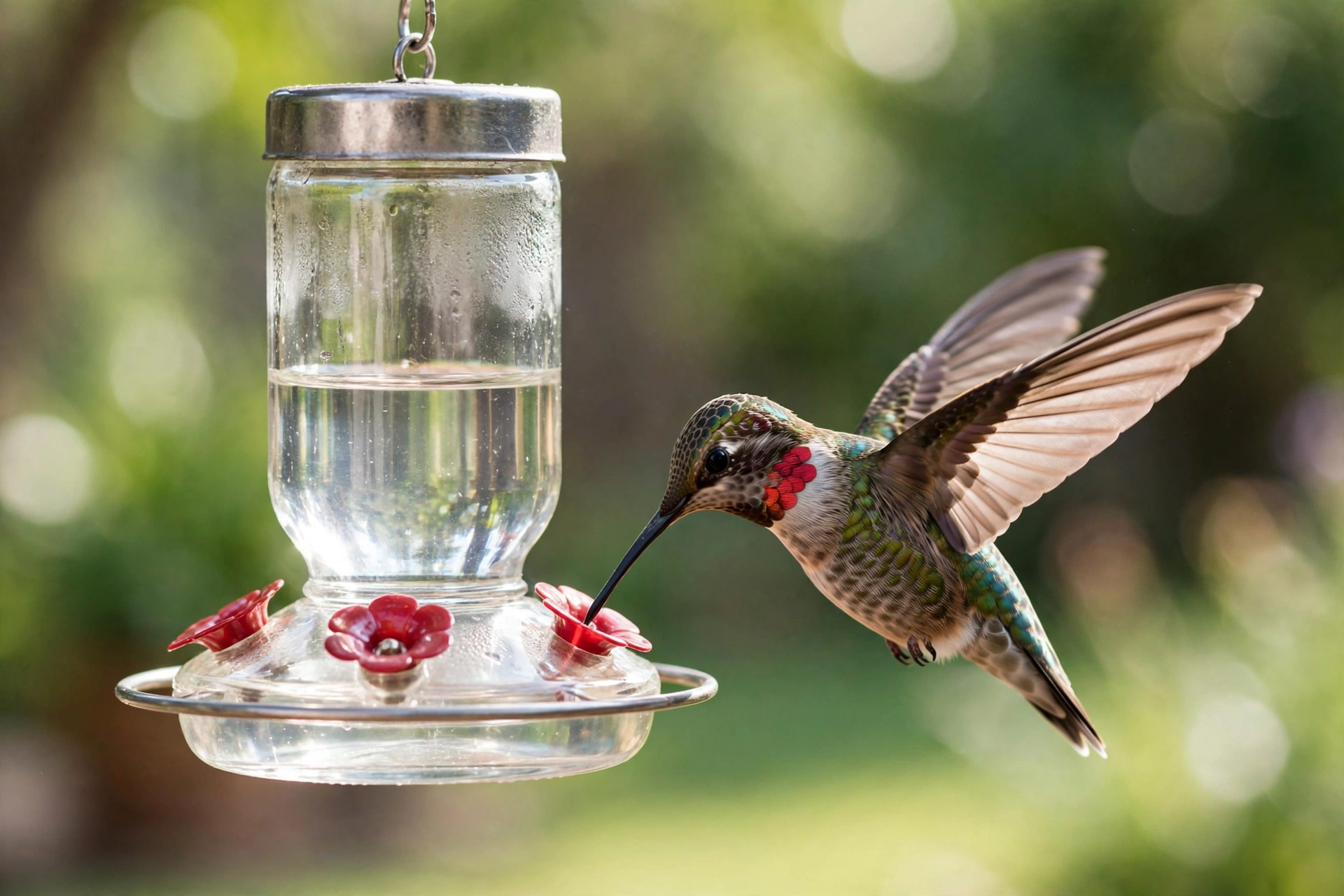
Making hummingbird nectar at home is one of the simplest things you will ever do for birds. It takes two ingredients, about five minutes, and costs almost nothing. The recipe is one part white sugar to four parts water. That is it. No red dye, no store-bought mix, no special equipment.
Yet this simple recipe goes wrong in backyards every single day. People use honey because it sounds natural. They add red food coloring because the bottle at the store is red. They make the mix extra sweet, thinking they are giving the birds more energy. Each of these well-meaning tweaks can make hummingbirds sick, and a couple can kill them.
This guide gives you the exact hummingbird nectar recipe, explains why the 1:4 ratio matters, and walks through the five most common mistakes to avoid. You will also learn how often to change the nectar, how to clean your feeder properly, and how to store extra nectar so nothing goes to waste.
Why the 1:4 Ratio Is the Gold Standard
Natural flower nectar, the food hummingbirds evolved to live on, contains roughly 15 to 25 percent dissolved sugars. When you mix one part plain white sugar with four parts water, you land right in that range, around 20 percent sucrose. The National Audubon Society, the Cornell Lab of Ornithology, the Smithsonian National Zoo, and the Hummingbird Society all recommend this exact ratio.
That agreement is not a coincidence. Decades of field research on bee balm, trumpet vine, salvia, and other hummingbird flowers show their nectar clustering in that band. A 1:4 mix gives hovering birds the energy they expect without forcing their tiny bodies to deal with anything unnatural.
Get the ratio wrong and problems start. Too weak, and the birds burn more calories visiting your feeder than they take in, which makes it a net loss for them. Too strong, and the excess sugar overloads their kidneys and can dehydrate them. The 1:4 recipe is the sweet spot that hummingbird physiology was built for.
The Hummingbird Nectar Recipe, Step by Step
You only need plain white granulated sugar and water. A measuring cup and a spoon help, but nothing fancy. Here is the full process.
- Measure your water: Decide your batch size. A small batch is 1 cup of water, which pairs with 1/4 cup of sugar. A standard batch is 4 cups of water with 1 cup of sugar.
- Bring the water to a boil: Heat the water in a pot or kettle until it reaches a rolling boil. Boiling helps the sugar dissolve completely and kills off bacteria or mold spores in the water.
- Remove from heat: Take the water off the burner. You do not need to keep boiling it, and boiling the sugar mixture for a long time is unnecessary.
- Stir in the sugar: Add the sugar slowly and stir until every crystal is fully dissolved. The liquid should be completely clear.
- Let it cool completely: Set the nectar aside until it reaches room temperature. Warm or hot nectar can warp plastic feeders and is unsafe to hang outside.
- Fill a clean feeder: Pour the cooled nectar into a freshly cleaned feeder and hang it in a shady spot.
- Refrigerate the rest: Store any leftover nectar in a clean, covered container in the fridge.
That is the whole recipe. If you are in a hurry, you can use very hot water instead of boiling, but a quick boil is the most reliable way to start with clean water.
Do This, Not That: A Quick Reference
Before we get to the mistakes, here is a table you can scan in seconds.
| Do This | Not That | Why |
|---|---|---|
| Plain white granulated sugar | Honey, brown sugar, raw sugar | Honey promotes fungal growth and ferments; brown and raw sugars contain iron and minerals that harm birds |
| Clear, colorless nectar | Red dye or food coloring | Dye adds nothing useful and may damage kidneys and liver; feeder color already attracts birds |
| 1:4 sugar to water ratio | Extra-strong mixes | Stronger nectar overloads kidneys and can dehydrate hummingbirds |
| Real sugar only | Artificial sweeteners | Sweeteners provide zero calories, so birds starve while drinking |
| Fresh nectar every 2 to 3 days in heat | Topping off old nectar | Old nectar ferments and grows mold; topping off extends the age of the mix |
| Clean feeder with hot water and vinegar | Leaving soap residue | Soap residue can poison birds; rinse thoroughly if soap is ever used |

The 5 Mistakes to Avoid
Now the details behind each mistake. These are ranked by how much harm they cause, and the first two are genuinely dangerous.
Mistake 1: Using Honey
Honey is the most dangerous substitute in this list. It ferments easily in a feeder and promotes the growth of bacteria and fungi. One fungal infection in particular attacks a hummingbird’s tongue, causing it to swell until the bird can no longer feed. Penn State Extension warns that fermented honey can cause a fatal fungal disease in hummingbirds.
Honey also contains complex sugars that are harder for hummingbirds to digest than simple sucrose. No matter how natural it sounds, honey does not belong in a hummingbird feeder. Ever.
Mistake 2: Adding Red Dye
Store-bought nectar is bright red, so many people assume the color is part of the recipe. It is not. The red parts of your feeder are what attract hummingbirds, not the liquid inside. Red dye adds zero nutrition and may cause kidney and liver damage, according to wildlife experts.
Skip the food coloring completely. Your nectar should be clear, like water. If you want more red on your feeder, tie a red ribbon nearby or plant red flowers instead. The birds will find it.
Mistake 3: Using Brown, Raw, or Organic Sugar
Brown sugar, raw sugar, and turbinado all contain molasses or extra minerals, including iron. Iron is toxic to hummingbirds in excess and can cause liver damage. Organic sugar can also have larger granules that do not dissolve fully.
Plain white granulated sugar is pure sucrose with nothing extra. It is the closest match to what flowers provide and the safest option. This is the one ingredient where the cheapest bag at the store is the right choice.
Mistake 4: Using Artificial Sweeteners
Hummingbirds live on a knife edge of energy. They visit hundreds or thousands of flowers a day because their hovering flight burns calories at an astonishing rate. Artificial sweeteners taste sweet but deliver zero calories.
A hummingbird drinking sweetener-laced water gets no fuel from it. The bird can starve while its feeder is full. Never use any sugar substitute, including stevia, saccharin, sucralose, or diet drink mixes.
Mistake 5: Letting Nectar Sit Too Long
Old nectar ferments, grows mold, and becomes a soup of bacteria. Cloudy nectar is the warning sign. So are black specks, a sour smell, or floating debris. Spoiled nectar can cause crop infections, digestive illness, and death.
Topping off a half-empty feeder with fresh nectar is another version of this mistake. It keeps the old nectar in play for days longer than it should be there. Always empty the feeder, clean it, and refill with a fully fresh batch.

How Often to Change the Nectar
Fresh nectar is as important as the right recipe. Sugar water ferments fast in warm weather, and the schedule depends on temperature.
- 90°F and above: Change every 1 to 2 days.
- 70 to 90°F: Change every 2 to 3 days.
- 60 to 70°F: Change every 3 to 5 days.
- Below 60°F: Change every 4 to 7 days.
Shade buys you time, so hang feeders under trees, porches, or eaves rather than in direct sun. Direct sun heats the nectar and speeds up fermentation dramatically. Audubon recommends shade for exactly this reason.
Trust your eyes too. Any cloudiness, black specks, or mold means the nectar is done, no matter how recently you changed it. When in doubt, dump it out and make a fresh batch.
How to Clean Your Feeder the Right Way
Every nectar change is a cleaning opportunity. Sugar water grows mold, so a quick rinse is not enough. Take the feeder apart fully, including the base, ports, and any removable flowers.
Scrub every part with hot water and a bottle brush, paying special attention to the feeding ports and seams where mold hides. A thin brush or toothbrush works well for the tiny holes. For a deeper weekly clean, soak the parts in a solution of one part white vinegar to four parts water for an hour or two, then scrub and rinse thoroughly.
Avoid dish soap whenever possible. If you must use it, rinse the feeder many times until every trace of soap is gone, because soap residue is harmful to birds. Some people use a very weak bleach solution for stubborn mold, but that requires extremely thorough rinsing too. Hot water and vinegar handle most situations just fine.
For a deeper dive into feeder types and placement, see our guide to the best bird feeder for cardinals, which covers cleaning-friendly designs that work for many feeder types.
Storing Extra Nectar
You do not need to make fresh nectar every time you refill. Unused nectar keeps in the refrigerator for up to one week in a clean, covered container. Some sources stretch that to two weeks, but one week is the safer guideline, and nectar that shows any cloudiness or mold should be thrown out regardless of its age.
Label your container with the date you made it, and bring refrigerated nectar up to room temperature before filling the feeder. Cold nectar straight from the fridge is too cold for hummingbirds to drink comfortably.
Making small batches is smart in hot weather. A large jug that sits in the fridge for ten days is no better than a small one made fresh this morning. Match your batch size to how fast your birds drink. If you enjoy making your own mixes for other birds too, our suet recipe guide follows the same keep-it-simple principle.

When Should You Adjust the Ratio?
For almost all situations, stick with 1:4 year-round. It is the ratio every major bird organization recommends, and it works in spring, summer, and fall.
The one exception some experts mention is cold weather and migration. A slightly stronger mix, around 1:3, is occasionally used during cold snaps or peak migration when birds need extra energy and the cooler temperatures slow fermentation. This is an edge case, not the norm. In warm weather, a stronger mix ferments faster and dehydrates birds, so never bump the ratio up in summer.
If you live somewhere with wintering hummingbirds, like parts of the Gulf Coast or the Southwest, keep the feeders up and keep the nectar fresh. Hummingbirds migrate on their own schedule regardless of your feeder, so you are not keeping them from leaving. Learn more in our guide to where hummingbirds go in winter.
FAQs About Hummingbird Nectar
Can I use tap water for hummingbird nectar?
Yes, tap water is fine, especially since you are boiling it. Boiling kills bacteria and mold spores and helps the sugar dissolve. If your tap water is heavily chlorinated, boiling handles that too.
Do I need to boil the water, or is hot water enough?
Boiling is the recommended method because it starts you with clean water and dissolves sugar completely. Very hot water will also dissolve the sugar if you stir well, but it does less to slow spoilage. Either way, let the nectar cool fully before filling the feeder.
Is organic or cane sugar okay for hummingbird nectar?
Plain white cane sugar is the standard and the safest choice. Organic or raw sugars may contain extra minerals or larger granules that do not dissolve well, so stick with refined white granulated sugar.
Can I make a bigger batch and keep it in the fridge?
Yes. Store extra nectar in a clean, covered container in the refrigerator for up to one week. Date the container, discard anything that looks cloudy or moldy, and let refrigerated nectar warm to room temperature before serving.
Why is my nectar cloudy?
Cloudiness means bacteria or mold is growing, and the nectar is spoiled. Dump it immediately, scrub the feeder thoroughly, and refill with a fresh batch. Cloudy nectar is one of the clearest signs that you need to change your nectar more often.
Will a stronger mix attract more hummingbirds?
No, and it can harm them. A stronger mix does not attract more birds, but it does overload their kidneys and speed up dehydration. The 1:4 ratio matches natural flower nectar, which is exactly what hummingbirds are looking for.
Does red dye really hurt hummingbirds?
Experts universally recommend against it. The long-term effects are not fully studied, but red dye adds no nutrition and is linked to kidney and liver damage. The red parts of your feeder attract birds just fine without coloring the liquid.
Should I take my feeder down in fall so hummingbirds migrate?
No. Hummingbirds migrate on their own schedule, and keeping a feeder up does not delay them. In fact, a feeder left up about two weeks after your last sighting helps late travelers. Clean, fresh nectar matters more than the calendar.
Conclusion
The best hummingbird nectar recipe is also the simplest: one part plain white sugar, four parts water, boiled, cooled, and served fresh. No dye, no honey, no shortcuts. What matters most is not the recipe itself but the routine around it: fresh nectar every few days, a clean feeder, and shade from the sun.
For the bigger picture of what these birds eat beyond your feeder, check out our complete hummingbird diet guide. Get the nectar right, keep it fresh, and your yard becomes a reliable refueling stop for some of the most remarkable birds on earth.
References
- Penn State Extension, Hummingbird Feeders: extension.psu.edu/hummingbird-feeders (1:4 ratio, never use honey because fermented honey can cause fatal fungal disease, no red dye)
- Smithsonian National Zoo and Conservation Biology Institute, via Detroit Free Press (2026): freep.com (1:4 recipe, avoid dyes and honey, change nectar every couple of days)
- Forest Preserve District of Will County, The Recipe for Success with Hummingbird Feeders: reconnectwithnature.org/headlines/news/hummingbird-nectar-recipe (1:4 ratio per Audubon Society, never honey, boil then cool)