 Skip to content

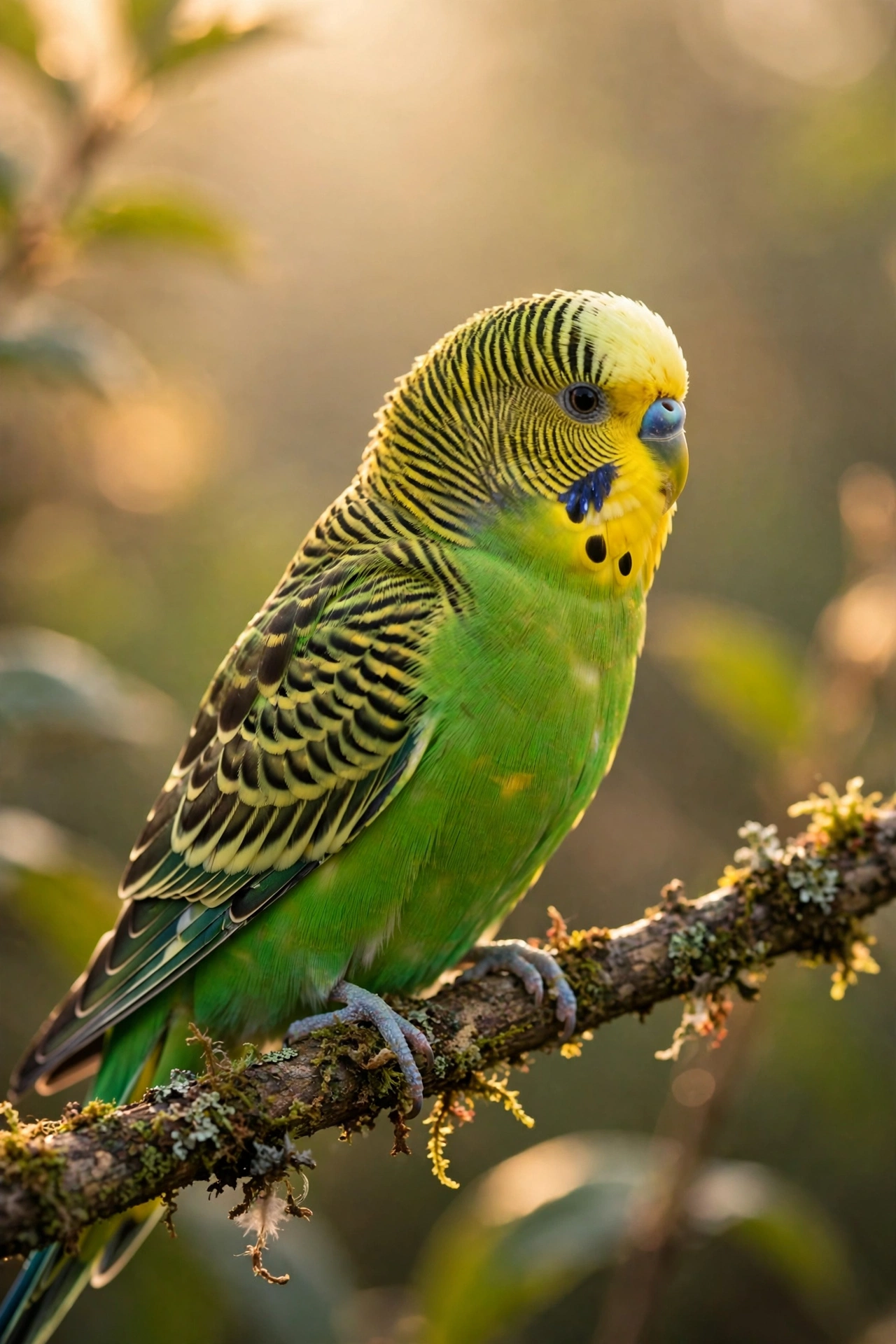
Ask ten people how long budgies live and you will get ten different numbers. One site says eight years. A veterinary college says up to fifteen. Someone in a bird forum swears their grandfather’s budgie made it past twenty. The confusion is understandable, because the honest answer is a range, not a single number. And where your bird lands inside that range comes down, more than anything else, to the daily care you give it.
Here is the short version, drawn from the veterinary sources this guide is built on. Wild budgies average three to six years, and almost never see old age. A typical pet budgie lives to about eight. A well-cared-for pet reaches ten to fifteen years. The confirmed record belongs to a bird named Charlie, who died in 1977 at the age of 29 years and two months. If you want your budgie in the upper half of that range, keep reading. This guide walks through the seven factors that decide a budgie’s lifespan, the signs of aging to watch for, and the daily care routine that quietly adds years to a small bird’s life.
How Long Do Budgies Live? The Short Answer
The table below sums it up. Every figure comes from the sources linked throughout this article, and you will notice the gap between an average pet and a well-cared-for one. That gap is the whole point of this guide.
| Budgie | Typical lifespan |
|---|---|
| Wild budgie | 3 to 6 years |
| Typical pet budgie | About 8 years |
| Well-cared-for pet budgie | 10 to 15 years |
| Record holder (Charlie) | 29 years and 2 months |
In the wild, budgerigars live in enormous flocks of up to a hundred birds, roaming Australia’s interior in search of seeding grasses. Australian Geographic’s budgerigar fact file puts the wild average at three to six years, with up to fifteen years possible in captivity. Wild birds face predators, drought, and disease, so most never come close to their biological ceiling.
Pets trade those hazards for a different set of risks, and on average they do better. The Royal Veterinary College states plainly in its care sheets that “budgies can live up to 10-15 years in captivity.” The ManxSPCA puts the same picture in everyday terms: a well cared-for captive budgie can live up to fifteen years, although most live to about eight. First bred in captivity in the mid-1800s, budgerigars are now kept by the millions around the world, with more than five million in homes globally, and decades of keeper experience sit behind those numbers.
You may run into one outlier. WebMD’s budgerigar guide lists the average budgerigar lifespan as 21 years in captivity. Treat that as an outlier rather than a target. The veterinary consensus lands in the eight-to-fifteen window, with higher figures reflecting exceptional individuals rather than what most owners should expect. Planning around the consensus range, and working to land at its top end, is the sanest approach.
Why the Range Is So Wide (and Why That Is Good News)
The difference between a budgie that dies at six and one that celebrates its fourteenth birthday is rarely luck. It is the accumulation of small daily choices. A seed-only diet versus a balanced one. A cramped cage versus room to fly. Fresh air versus a kitchen full of non-stick fumes. Each factor on its own seems minor, and together they explain almost the entire spread between the average and the ceiling.
That is genuinely good news. You cannot change your bird’s genes, but you control nearly everything else: what goes in the food bowl, how clean the cage is, how much the bird flies, and who it shares its days with. The seven factors below are ordered roughly by impact, and each one comes with the concrete habit that moves the needle. Frame it this way: the typical eight-year budgie is not a failure of nature. It is usually the result of care that was loving but incomplete, which means most of the missing years are recoverable.
7 Factors That Decide Your Budgie’s Lifespan
These are the seven levers that separate the average eight-year budgie from the fifteen-year one. None of them is exotic or expensive. They are habits, repeated daily for years, and their effects compound exactly the way interest does.
1. Diet: The Single Biggest Lever
Diet is where most pet budgies lose years. In the wild, budgies forage a wide variety of grass seeds, moving constantly between food sources. In captivity, the traditional all-seed diet quietly causes harm: common seed mixes are high in fat and low in the vitamins and minerals a budgie needs, which leads over time to obesity, liver problems, and shortened lives.
The Royal Veterinary College recommends a good quality complete pellet diet as the foundation, which the College notes provides a better balance of nutrients than seed mixes. Its sheets suggest a formula such as Harrison’s high potency fine or superfine making up most of the diet, with the remainder from vegetables such as broccoli, kale, spinach, carrot, and sweet potato, a small amount of sprouted seed, and high quality seed kept for treats and training rewards. A cuttlefish bone should always be available, both for calcium and so the bird can wear down its beak. Fresh water, changed daily, should be available for drinking and in a shallow dish for bathing.
The practical takeaway is simple: pellets and fresh vegetables every day, seeds as the occasional treat. If your budgie’s adult plumage starts changing color, take note, because the ManxSPCA flags that as usually a sign of dietary deficiency, not a quirk of aging. A dull, faded look in a bird that has stopped preening is another cue to review the diet.
2. Housing: Big, Clean, and Safe
Budgies are flock birds built for movement, and the cage sets the terms of their whole physical life. The ManxSPCA’s basic requirements start with a large, well-designed cage or aviary kept in a warm room and cleaned daily. Size matters because a bird that can only hop between two perches never gets real exercise, and cleanliness matters because droppings and old food breed the bacteria behind many common infections.
Material and placement matter just as much. The Royal Veterinary College advises that cages and toys be zinc-free, because zinc poisoning is increasingly seen in captive birds, and that enclosures sit out of drafts and direct sun. Perches of different diameters at varying heights mimic branches and keep feet healthy. If you are comparing species before you buy, our guide to cockatiel vs budgie: which bird is right for you covers how the two differ in space needs and temperament.
3. Air Quality: The Invisible Killer
A budgie’s respiratory system is brutally efficient, which is great for flight and terrible for surviving polluted air. The Royal Veterinary College warns that Teflon and non-stick fumes, tobacco smoke, air-freshener plugins, and deodorants can irritate a bird’s respiratory tract and in some cases be fatal. A kitchen with a non-stick pan on high heat is one of the most dangerous rooms in a house for a budgie.
The ManxSPCA’s care list describes the ideal as a smoke-free, low-noise, stress-free home. That means no smoking indoors, no scented plugins or heavy sprays near the bird, and cooking fumes kept well away from the cage. If you want one high-impact change with zero cost, pick this one: move the cage out of the kitchen and keep the air clean.
4. Veterinary Care: Catching Trouble Early
Birds hide illness as a survival instinct, which means by the time a budgie looks sick, it has often been sick for a while. The Royal Veterinary College recommends annual health checks for pet birds, on the grounds that medical problems are more easily treated when detected early. Find an avian vet before you need one, so you are not searching in a panic at the first emergency.
Learn the triggers that should send you to that vet promptly. Fluffed-out feathers, lethargy, loss of appetite, watery stool, watery nostrils or eyes, unusual bleeding, limping, and an overgrown beak are all listed as warning signs in veterinary guidance. Overgrown nails are also common, usually when the cage lacks perches that help file them down, and a vet can trim them and show you how to do it safely. Treat any sudden behavior change as a vet visit, not a wait-and-see.
5. Exercise: Flight Is Not Optional
In the wild, budgies fly miles a day. In a living room, many never fly at all. The Royal Veterinary College calls free flight an essential requirement, not an enrichment bonus, and recommends that birds get the opportunity for exercise daily. A flightless budgie loses muscle, gains weight, and misses out on the mental stimulation that keeps a flock animal engaged.
Daily out-of-cage time is the habit. Bird-proof the room first: windows, doors, and chimneys secured, ceiling fans and heaters off, mirrors and windows covered if the bird is new to the space, and any poisonous houseplants removed. Young birds can be trained to step up onto a finger for an easy return to the cage. Aim for supervised flight time every single day, and treat it as non-negotiable as the morning feed.
6. Companionship: Flock Animals Need a Flock
Budgies are among the most social pet birds on earth, and loneliness shortens their lives in ways that are easy to underestimate. The ManxSPCA lists the company of another budgie as a basic requirement, “because they are such social creatures,” and the RVC notes that most birds are social animals ideally paired with another of the same species for lifetime companionship.
A single budgie can do well, but only with heavy human interaction to fill the social gap, which is why our upcoming guide at can budgies live alone: what a solo budgie needs covers the solo setup in detail. For most owners, the simplest and kindest choice is a pair. Two budgies preen each other, chatter all day, and keep each other active, and the owner gets to watch the natural flock behaviors that make these birds so entertaining.
7. Genetics: The Hand You Are Dealt
Lineage matters. A budgie from careful breeders, raised on good nutrition and never inbred for extreme traits, starts life with an advantage that no amount of kale can fully replace. Mass-produced birds from poor breeding lines are more prone to tumors and organ problems, and they make up a disproportionate share of the budgies that die young.
You cannot rewrite your bird’s genes, but you can tilt the odds at purchase: buy from a reputable breeder or rescue, look for bright eyes, clean vents, smooth feathers, and active behavior, and ask what the parents were fed. After that, genetics is simply the backdrop. Everything in factors one through six is where you win or lose the extra years.

Signs Your Budgie Is Aging
Most budgies are considered senior from around seven or eight years old, which lines up with the typical pet lifespan. Aging is gradual, and the signs are easy to miss if you are not looking. What you are watching for is a pattern of change over weeks and months, not a single off day.
Activity drops first. A senior budgie plays less, flies less, naps more, and may lose interest in toys it once attacked. You may notice it sitting fluffed and quiet for longer stretches, which is normal in an old bird but also one of the classic signs of illness, so any fluffed posture paired with appetite loss or changed droppings deserves a vet visit rather than an assumption of age.
The body shows it too. Beaks and nails tend to overgrow faster in older birds, so check and trim more often. Plumage can look duller, and molts may take longer to complete. Appetite often shrinks while water intake creeps up. None of these alone means much, but three or four together in a bird past seven point to a senior that needs gentler care: lower perches, softer foods, warmer spots, and shorter but still regular flight sessions.

The Add-Years Checklist: A Day in the Life
Longevity in budgies is not built in dramatic moments. It is built in a routine so ordinary you stop noticing it, which is exactly the point. Here is what a lifespan-maximizing day looks like, morning to night.
- Morning: fresh water for drinking and a shallow dish for bathing, fresh pellets, and a small portion of chopped vegetables. Quick visual check: eyes clear, vent clean, droppings normal, bird active and vocal.
- Midday: supervised out-of-cage flight time in a bird-proofed room. Rotate a toy or two to keep the mind engaged.
- Afternoon: top up food if needed, offer a small treat (a sprig of millet works), and let the bird bathe if it wants to.
- Evening: remove uneaten fresh food before it spoils, wipe down perches and food dishes, and settle the bird in a quiet, dim spot for ten to twelve hours of sleep. No all-night lights, no television blaring next to the cage.
- Weekly: full cage clean-out with a bird-safe disinfectant, scrub of all dishes, check of perches, toys, and cage bars for wear or zinc exposure.
- Ongoing: weigh the bird monthly if you can (a kitchen scale and a T-perch do the job), and keep the annual vet check on the calendar.
Run that loop for a decade and you have done more for your budgie’s lifespan than any supplement or gadget ever will. The eight-year average exists because most owners do some of this some of the time. The fifteen-year birds belong to owners who do all of it, all of the time.

Budgie Lifespan FAQs
What is the oldest budgie ever recorded?
The longevity record belongs to Charlie, a budgie who died in 1977 at 29 years and two months old. That is nearly double the top of the normal well-cared-for range, which makes Charlie an extraordinary outlier rather than a benchmark. Do not plan around it. Plan around fifteen, and celebrate anything beyond.
Do male or female budgies live longer?
The veterinary sources behind this guide do not report a meaningful sex-based difference in budgie lifespan. What the sources do emphasize, over and over, is care: diet, housing, air quality, exercise, and companionship. Choose your bird for health and temperament, not for sex, and put your energy into the seven factors above.
When is a budgie considered senior?
Around seven to eight years old, which is roughly the typical pet lifespan. A senior budgie is not a dying budgie: many birds live half their lives past this point. It is simply the age to adjust the routine, with lower perches, easier food, warmer resting spots, and a closer eye on weight, beak, and nails.
Does talking mean a budgie is healthy?
No. Speech ability and health are unrelated, and the famous talking records belong to individual birds, not to some healthier class of budgie. The speech record is actually a different bird from the longevity record: Puck, a male budgie, holds the Guinness record for the largest vocabulary of any bird at 1,728 words. A chatty budgie is a well-socialized budgie, which is lovely, but chatter is not a health certificate. Judge health by the signs in the aging and vet sections above, and enjoy the soundtrack for what it is. If you love budgie vocalizations, our piece on why birds chirp in the morning explains what all that dawn noise is really about.





