 Skip to content

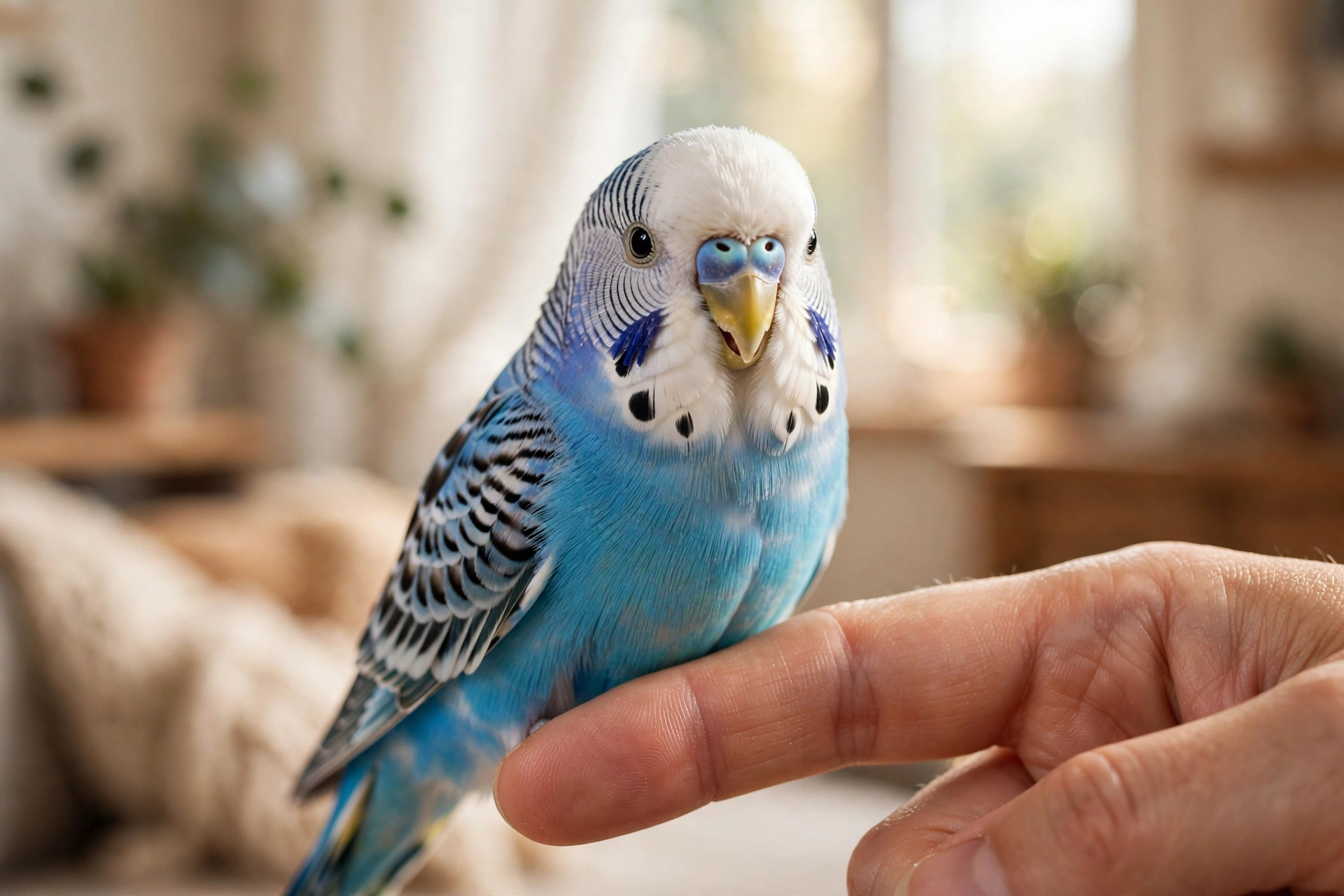
So, can budgies live alone? The short answer is yes, but only when you are honest about the time you can give. A budgie is a flock animal through and through. When a budgie lives alone, you become its flock. That can work beautifully if you are around, and it can go wrong quietly if you are not.
A solo budgie with plenty of daily interaction can thrive and will often bond more closely with its human than a paired bird does. The failure mode is simple. Owners with thin schedules end up with a lonely, bored bird that starts plucking, screaming, or shutting down. This guide walks you through the honest day test, the loneliness warning signs other owners report, and the care playbook that makes a single budgie genuinely happy.
Why the Question Matters: Budgies Are Flock Animals
In the wild, budgerigars live in large, noisy, constantly moving flocks. The Royal Veterinary College budgerigar care sheets describe them as highly social birds that need companionship as a baseline of care, not a luxury. When a single budgie shares your home, you are not just its caretaker. You are the flock.
That is the part new owners underestimate. A budgie alone in a quiet room is not just bored, it is cut off from the social structure its brain expects. This is also why the question of whether budgies can live alone is really a question about your schedule. The bird will adjust to almost any arrangement as long as its social needs are met. What the bird cannot do is fill those needs itself.
If you already keep a budgie, you have seen this flock instinct in small moments. A lone bird calling out when you leave the room, or going silent the moment you sit down nearby, is asking for its flock. Curious about their full lifespan alongside these social needs? Read our guide on how long do budgies live to see how those years play out.
When a Solo Budgie Works
A solo setup works when you are genuinely time-rich. People who work from home, retirees, and owners who spend long hours in the bird’s room often have the happiest single budgies. The pattern is consistent. The bird gets hours of direct and passive company every day, and it relaxes into its role as your shadow.
Solo budgies also tend to bond more deeply with their people. A paired bird has a feathered best friend, so it does not need you as much. A single bird puts that energy into you instead. Many owners of hand-tame budgies say their solo birds follow them from room to room, learn words faster, and demand shoulder time. There is a real upside here if your life allows it.
The honest day test is the filter. Count the hours your bird is truly alone, with no one in the room and no interaction at all. Be brutal with the count. If the bird gets real company for most of the day, with only short quiet stretches, solo life is realistic. If the alone stretches dominate, you already know the answer.
Weekends and holidays can trick you into thinking the arrangement works when it really does not. Of course the bird seems fine on Saturday when you are home all day. The question is how it copes on an ordinary Wednesday. Before deciding your bird can fly solo, look back at your last two workweeks and count the quiet days, not the good ones.
Vacations are the other blind spot. A solo budgie cannot be left alone for a long weekend, even with extra food and water. You need a trusted sitter who visits daily, talks to the bird, and keeps the routine running. If you travel often and have no reliable bird sitter, a companion bird becomes even more sensible, since a pair entertains each other during the long hours you are gone.
When to Get a Second Bird
There is a well-known first-hand account from a budgie owner that lays down the honest rule. If your bird is alone from 9am to 6pm with only a short lunch break of company, that is not enough human time. A second budgie is the right call then. You can read a first-hand account of budgie companionship for the full reasoning, but the logic is plain. Nine hours of silence is a cage sentence, not a companionship plan.
A second bird is also worth considering if you notice your own schedule tightening. New jobs, new relationships, longer commutes, all of these shrink the hours you have. Birds live a long time, and the arrangement that works this year may not work next year. Planning for the companion before the loneliness sets in is kinder than reacting after it does.
Some people hesitate because they are choosing between species and worry a second bird is too much. If you are still deciding what kind of bird fits your life at all, our cockatiel vs budgie: which bird is right for you comparison can help you weigh the commitment before you double it.
7 Signs of Loneliness (As Reported by Owners)
Before this list, one important note. These are owner-reported and community-observed signs, not veterinary diagnoses. Birds hide illness as a survival instinct, so any sudden change in behavior is worth a vet visit to rule out a medical cause. With that said, long-time owners across communities like budgerigarsforum and forums.avianavenue.com report a consistent pattern of behaviors that show up in lonely solo birds.
- Feather plucking: the bird chews or pulls its own feathers, often on the chest or under the wings, leaving bare patches.
- Screaming: long bouts of loud calling, not the normal morning chatter but persistent, distressed vocalizing.
- Lethargy: sitting puffed up on a perch for hours with little interest in toys, food variety, or movement.
- Regurgitating to toys: the bird bonds to a toy or mirror and repeatedly brings up food for it, a social behavior aimed at the wrong target.
- Weight loss: eating less or eating only seed while ignoring other food, sometimes hard to spot until it is serious.
- Talking to toys: constant chatter directed at mirrors, bells, or other objects instead of the bird going quiet or engaging with you.
- Pacing or bar biting: restless movement along the same perch line, or gnawing at the cage bars when someone is nearby.
Use these as a red-flag checklist. One sign on a good day means little. Two or three together, showing up for more than a week or two, means something in the bird’s social life needs to change. That change is usually more of you, or a feathered friend.

The Solo-Budgie Care Playbook
Making a single budgie happy is not complicated, but it is a daily job. The playbook has three parts: a routine the bird can rely on, enrichment that keeps its brain busy, and real out-of-cage time. Miss any one of them and the solo setup gets shaky.
One more thing worth saying plainly. The playbook is not a weekend project. It is a promise you keep for the bird’s whole life, which can be a decade or more. Many owners start strong and let the routine slide after a few months, and that is usually when the loneliness signs creep in. If you commit to solo life, commit for the long haul.
A daily routine that works
Budgies feel secure when the day has a shape. Here is a routine that many successful solo-budgie owners follow.
- Morning out-of-cage time: let the bird out for at least an hour while you get ready or have breakfast nearby.
- Foraging setup: before you leave, hide food in foraging toys so the bird works for its breakfast.
- Background sound: leave budgie sounds or a talk-radio station playing at low volume during quiet stretches.
- Evening interaction: after you are home, give the bird hands-on time, training, shoulder time, or play gym time.
- Wind down: cover the cage at a consistent time so the bird gets 10 to 12 hours of sleep.
Enrichment that actually helps
A bored bird is a lonely bird with time on its hands. Rotation is the secret. A toy that has sat untouched for a month is furniture, not enrichment.
- Foraging toys: rotate these regularly so the bird has to solve a fresh puzzle every few days.
- A safe play area: a play gym or a bird-proofed corner with different perches, textures, and chewables.
- Shreddable toys: paper, palm, and soft wood give the bird something to destroy, which is deeply satisfying for a budgie.
- Background budgie sounds or radio: quiet company noise during the hours you are away.
Out-of-cage time
This is the single most important part of the playbook. A solo budgie needs daily flight or exercise time outside the cage, in a bird-safe room with windows covered, ceiling fans off, and no other pets around. An hour is good. Two is better. This is when the bird burns energy, explores, and spends real time with you, and it is the closest thing to flock life you can offer.
Introducing a Companion Safely
If the honest day test tells you a second budgie is the right call, do it the safe way. Rushing an introduction risks disease, stress, and fights. Take a few weeks and do it right.

Quarantine steps when adding a companion
- Quarantine the new bird first: house the newcomer in a separate room for about four weeks and watch for signs of illness.
- Use a spare cage for introductions: after quarantine, let the birds meet on neutral ground, a spare cage or play area neither has claimed.
- Short, supervised sessions: start with brief visits together and lengthen them over several days.
- Move in together gradually: when they preen each other or sit side by side calmly, try shared cage time, and keep the spare cage ready as a retreat.
Quarantine protects both birds and gives the new one time to settle without pressure. Skipping it is the most common mistake new multi-bird owners make. For perspective on why birds respond to dawn sound the way they do, which also explains why background audio helps solo birds, see our piece on why birds chirp in the morning.
Frequently Asked Questions
Do mirrors help a solo budgie?
Mirrors are a mixed bag. Some budgies enjoy them as casual company, but many become fixated, regurgitating to the “other bird” and ignoring their real flock, you. Owners on sites like alittlebudgietoldme.com report that mirror-obsessed birds often get lonelier, not happier. If you use one, keep it small and watch for the signs above. Pull it if the bird bonds to the mirror instead of you.

Will two budgies still bond with me?
Yes, but differently. A pair will always have each other, so they may be less Velcro-attached to you than a solo bird. That is a fair trade. Hand-taming two birds takes more patience, but plenty of owners have deeply friendly pairs. They will still talk, step up, and ride your shoulder if you put in the time.
Should I get a male or female companion?
Two males usually make the easiest pair, as they tend to be less territorial. A male and female pair can work but watch for hormonal behavior and egg laying, which carries health risks. Two females can squabble over space, so only house them together if you have room and can supervise the early weeks. If you are unsure which sex your bird is, ask your vet or check for the cere color difference.
Can a solo budgie learn to talk?
Yes, and solo birds are often the best talkers. A single budgie focuses its social energy on its human, which makes it more likely to pick up words and whistles. Keep training sessions short, repeat simple words in context, and talk to your bird throughout the day. Consistency matters far more than talent.
Start with the bird’s own name and words tied to daily moments, like “good morning” at uncover time or “come here” during out-of-cage play. Pairing words with treats or head scratches speeds things up. Most birds learn faster before they are two years old, but older birds surprise their owners all the time.
The Bottom Line: Can Budgies Live Alone?
So, can budgies live alone? They can, if you are honestly there. A time-rich owner plus a solid routine, fresh enrichment, and real out-of-cage time adds up to a happy single budgie that may bond with you more closely than any pair would. The honest day test is your compass. If the bird is truly alone from 9am to 6pm with only a lunch break, get the second bird. It is the kinder choice, and the quarantine steps above make it a safe one.
Whatever you choose, keep watching the signs. A budgie that is chatting, playing, and bouncing around its play gym is telling you everything is fine. Trust that, keep the routine steady, and you will have a content little flock of one.





