 Skip to content

Can Birds Eat Apples? The Short Answer
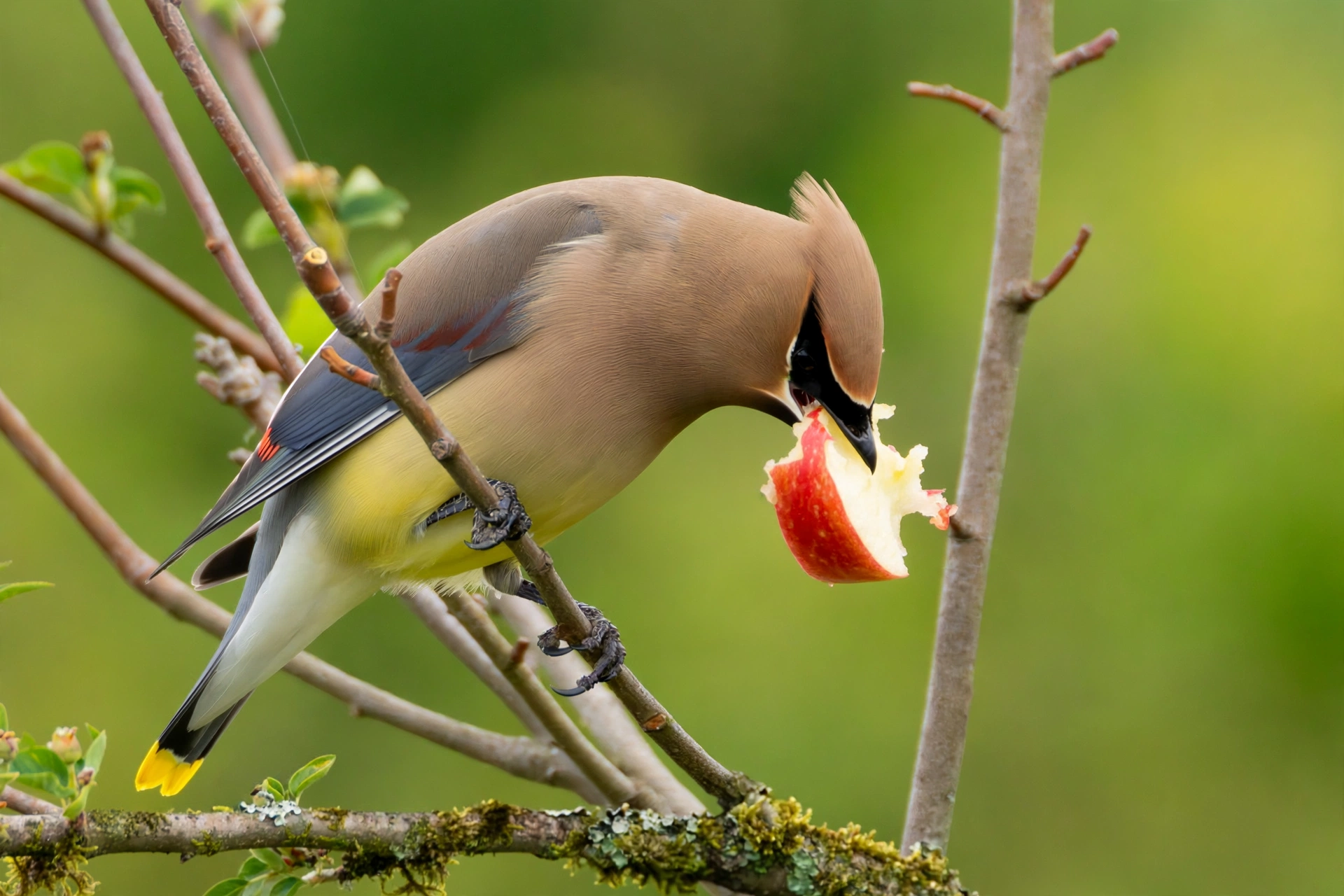
Yes, birds can eat apples. The sweet, juicy flesh is perfectly safe, and many species seek it out eagerly. From cedar waxwings in North America to blackbirds in British gardens, apples are one of the most widely enjoyed feeder fruits in the world.
There is just one important rule. Remove the seeds and the core before you serve apple to any bird. Apple seeds contain a natural compound called amygdalin, which can release cyanide when the seeds are chewed or crushed. Taking out the core removes the risk completely, and it only takes a few seconds.
This guide answers the question in full. You will learn why the seeds matter, which birds eat apples, how to serve them safely, and the simple prep steps that keep both wild birds and pet birds healthy. If you enjoyed our other food safety guides in this series, you may also like our article on whether birds can eat rice.
The Seed Question: Why the Core Has to Go
Apple seeds contain amygdalin, a natural plant chemical found in the seeds and pits of many fruits in the rose family. When a seed is chewed, crushed, or ground up, the amygdalin breaks down and can release hydrogen cyanide. Cyanide is poisonous because it stops cells from using oxygen properly, and birds are sensitive to it.
That sounds alarming, but some context helps. The amount of amygdalin in a single apple seed is tiny. A seed swallowed whole will usually pass through a bird’s digestive system intact, because the hard seed coat resists digestion and keeps the amygdalin locked inside. The danger only appears when the seed is cracked open.
Wild birds usually peck at the flesh and leave the seeds alone, so the risk outdoors is low. Pet birds are a different story. Parrots, conures, and cockatiels are powerful chewers that can easily crack seeds with their beaks. For them, seed removal is not optional. It is essential.
Veterinary sources consistently list apple seeds and fruit pits among the top foods to keep away from pet birds, right alongside chocolate, avocado, caffeine, and onion. The flesh is fine. The seeds are not. That is the whole rule, and it is easy to follow.
The same caution applies to related fruits. Pear, peach, cherry, apricot, and plum seeds and pits also contain amygdalin, so core and pit those fruits the same way before serving them.
Safe Parts vs Unsafe Parts
Here is a quick reference for which parts of the apple are fine for birds and which should never go in the feeder.
| Part of the Apple | Safe for Birds? | Notes |
|---|---|---|
| Flesh and pulp | Yes | Wash well to remove pesticide residue. Organic is ideal. |
| Skin | Yes | Fine to leave on after a good rinse. |
| Seeds | No | Contain amygdalin, which can release cyanide when chewed. |
| Core | No | Holds the seeds, so remove it whole. |
| Stem and leaves | No | Not food. Discard them. |
| Dried apple, no additives | Yes | Must be unsweetened with no sulfur dioxide. |
| Apple sauce or juice | No | Usually contains added sugar and preservatives. |
| Moldy or rotten apple | No | Mold produces toxins that are harmful to birds. |
What Nutrition Do Apples Give Birds?
Apples are mostly water, which makes them a useful source of hydration. That matters in winter, when birdbaths freeze and liquid water is hard to find.
The natural sugars in apple flesh provide quick energy. On a cold morning, a robin or waxwing can refuel fast on fruit after a freezing night, and that energy can make a real difference to survival.
Apples also contain vitamin C, small amounts of vitamin A, and fiber in the form of pectin, which supports healthy digestion. Antioxidants such as quercetin add a little extra nutritional value on top.
None of this makes apple a complete food. It is a treat and an energy top up, not a staple. But as part of a varied diet, it is genuinely useful, not just empty calories.
Which Birds Eat Apples?
Quite a lot of them. Fruit eating birds are drawn to apples both in the wild and at feeders, and offering apple can bring species to your yard that never touch a seed feeder. Robins, thrushes, bluebirds, and waxwings do not usually visit feeders, because seeds are not a major part of their diet. Fruit is how you tempt them in.
Here are the species most likely to enjoy your apples:
- Cedar waxwings: famous fruit lovers that flock to apples and berries.
- American robins: eager apple eaters, especially in winter and early spring.
- Eastern bluebirds: will take chopped apple from a platform feeder.
- Northern mockingbirds: quick to claim a fruit feeder as their own.
- Gray catbirds: love soft fruit of all kinds.
- Baltimore orioles: fond of fruit, especially during migration.
- Scarlet tanagers: visit fruit offerings in season.
- Brown thrashers: happy to peck at halved fruit on the ground or a tray.
- Northern cardinals: occasionally sample small apple pieces.
- Woodpeckers: several species probe halved apples for the flesh.
- Thrushes and blackbirds: in the UK, the RSPB notes that bruised apples and pears are popular with thrushes and blackbirds.
Even dedicated seed eaters will sometimes sample fruit when it is available. Variety at the feeder is what brings variety to the yard.

How to Serve Apples to Birds
A little prep makes apples easy for birds to eat and keeps the feeding area clean. Follow these steps every time:
- Wash the apple: rinse it thoroughly under running water to remove pesticide residue and wax. Organic apples are the safest choice.
- Remove the core and seeds: cut the apple in half and scoop out the core, making sure every single seed is gone.
- Halve and impale: push a cored apple half, cut side out, onto a feeder spike or a sturdy branch stub. This is the classic method, and fruit eating birds take to it fast.
- Chop into chunks: cut the flesh into small, beak sized pieces and scatter them on a platform feeder, a low tray, or a clean patch of ground.
- Try a hanging fruit feeder: a simple spike or cage feeder keeps fruit off the ground, visible, and away from some ground pests.
- Offer dried apple: unsweetened dried apple rings with no sulfur dioxide or added sugar work well in small amounts, especially in winter.
- Replace daily: remove uneaten fruit at the end of the day so it does not rot, ferment, or attract unwanted visitors.
Placement matters too. The RSPB advises that blackbirds are too large for most hanging feeders, so fruit on a bird table or scattered on open ground works best for them. The Cornell Lab of Ornithology suggests offering sliced apples from a plate or shallow bowl set on a platform feeder or on the ground. Either way, keep the feeding spot in the open, away from hedges where cats can hide.
One more tip from experience. Slightly overripe or bruised apples are actually ideal for birds. The flesh is softer and easier to peck, and you get to use up fruit you would otherwise throw away. Just make sure it is bruised, not moldy. There is a big difference.
Fruit Safety Rules for Bird Feeders
Apples are safe, but a few ground rules keep fruit feeding healthy for birds and tidy for you:
- Wash everything: pesticide residue on the skin is a bigger risk than most people realize. Rinse all fruit, and buy organic when you can.
- No mold, ever: moldy fruit can harbor toxins that make birds sick. Toss anything soft, dark, slimy, or fuzzy, and remove old fruit promptly.
- No salt or seasoning: never offer salted, spiced, or cooked apple products. Plain fresh fruit only.
- Skip sweetened products: apple sauce, apple juice, and canned pie filling usually contain added sugar and preservatives. Fresh apple is always the better choice.
- Check dried fruit labels: many commercial dried apples contain sulfur dioxide or added sugar. Choose plain, unsweetened ones with a single ingredient.
- Watch out for dogs: if a dog shares the yard, keep dried vine fruits like raisins away from the feeding area, since they are toxic to dogs. Apple pieces are fine, but keep things tidy.
- Clean the feeder: fruit gets sticky. Wipe down platform feeders, trays, and spikes regularly to prevent mold and the spread of disease.

Apples for Pet Birds
Parrots, budgies, cockatiels, and conures can all enjoy apple as part of a balanced diet. The same safety rules apply, with extra emphasis on the seeds, because pet birds chew far more thoroughly than wild birds do.
A conure or parrot can crack apple seeds open in seconds, releasing the amygdalin inside. Always core the apple first and double check that no seeds remain before handing a slice to your bird. Make it a habit, like washing the fruit.
Keep portions sensible. Apple is a treat, not a meal. A few thin slices a couple of times a week is plenty alongside regular pellets, seeds, and vegetables. Too much fruit can mean too much sugar, even the natural kind.
As with wild birds, wash the fruit first and never offer apple sauce, juice, or anything with added sugar, cinnamon flavoring, or preservatives. Fresh, plain, and cored is the formula.
If your bird accidentally swallows a seed or two whole, do not panic. Whole seeds usually pass through without releasing any cyanide. Just make seed removal part of your routine going forward.
Apples at Feeders in Winter
Winter is when apple feeding matters most. Natural fruit supplies dwindle, insects vanish, and fruit eating birds burn serious energy just staying warm through freezing nights.
In the UK, harsh cold snaps drive fieldfares and redwings into gardens in search of food, and the RSPB has urged the public to put out fruit like apples and pears to help these winter visitors through. The same logic applies in North America for robins, waxwings, and bluebirds when snow covers the ground.
Fruit offers quick energy in the form of natural sugars, plus hydration when water sources freeze solid. Cut apples into slightly larger pieces in winter so they last longer between refills, and check that slices have not frozen into inedible blocks.
Pair fruit with high energy foods like suet for a well rounded winter spread. Our guide to making suet for birds walks through the process step by step. And if you are curious about the science behind cold weather survival, read how birds stay warm in winter.
Apples vs Other Bird Safe Fruits
Apples are a great start, but variety keeps birds coming back. Here is how apples compare with other popular feeder fruits:
- Apples: firm and long lasting, loved by thrushes, waxwings, and robins.
- Pears: softer and sweeter, with the same seed removal rule.
- Grapes: halved grapes are a favorite of robins and mockingbirds.
- Oranges: halved oranges famously attract orioles in spring.
- Berries: blueberries and raspberries are eaten whole with no prep needed.
- Raisins: popular with many birds, but keep them away from dogs.
Rotating fruits through the week gives birds a wider range of nutrients and keeps your feeder interesting. A Monday apple, a Wednesday orange half, and weekend berries is a simple rhythm that works.

Frequently Asked Questions
Do birds eat apple seeds in the wild?
Sometimes, but usually by accident. Wild birds peck at the flesh and tend to leave the seeds alone. A seed swallowed whole normally passes through the bird without harm, since the amygdalin is only released when the seed is chewed or crushed.
Can I put a whole apple out for birds?
You can, but core it first. Scooping out the seed chamber takes seconds and removes the only real risk. A cored apple half impaled on a spike, cut side out, is one of the best feeder treats you can offer.
Are crabapples safe for birds?
Yes. Crabapples are simply small apples, and birds love them. In fact, fermented crabapples left on trees are a well known winter food for waxwings and robins. The same rules apply: the flesh is safe, and seeds should be removed when you are preparing them by hand.
Can parrots and budgies eat apples?
Yes, apple is a healthy treat for parrots, budgies, cockatiels, and conures. Remove all seeds first, wash the fruit, and offer a few thin slices a couple of times a week as part of a varied diet that includes pellets and vegetables.
Is apple juice or apple sauce safe for birds?
No. Juice and sauce usually contain added sugar, preservatives, and sometimes flavorings. They offer none of the benefits of fresh fruit and can upset a bird’s digestion. Stick to fresh apple.
Can birds eat dried apples?
Yes, as long as they are plain and unsweetened. Check the ingredients list for added sugar, sulfur dioxide, or preservatives, and skip any product that lists them. A single ingredient, dried apple, is what you want.
Will putting out apples attract pests?
It can attract wasps, ants, or rodents if fruit sits out too long, especially in warm weather. The fix is easy: offer small amounts, place fruit on a raised feeder rather than the ground, and remove leftovers at the end of the day.
How often should I offer apples to birds?
A few times a week is plenty. Fruit is a supplement, not a staple. Variety is what keeps backyard birds healthy, so rotate apples with other safe foods. For more ideas in this series, see our guide on whether birds can eat rice.
Conclusion
Apples are one of the simplest and cheapest treats you can offer birds. The flesh is safe and nutritious, the prep takes seconds, and the list of species that will visit is long. Few feeder foods bring in as much variety for as little effort.
Just remember the one rule: core first, seeds out, every time. Wash the fruit, skip anything moldy or sweetened, and clear away leftovers at dusk. Do that, and you can put apples on the menu with total confidence.
Sources: fruit feeding guidance from the Woodland Trust, summarizing RSPB recommendations on apples and pears for garden birds; fruit feeding tips from the Cornell Lab of Ornithology; amygdalin and cyanide facts from Medical News Today.





