 Skip to content

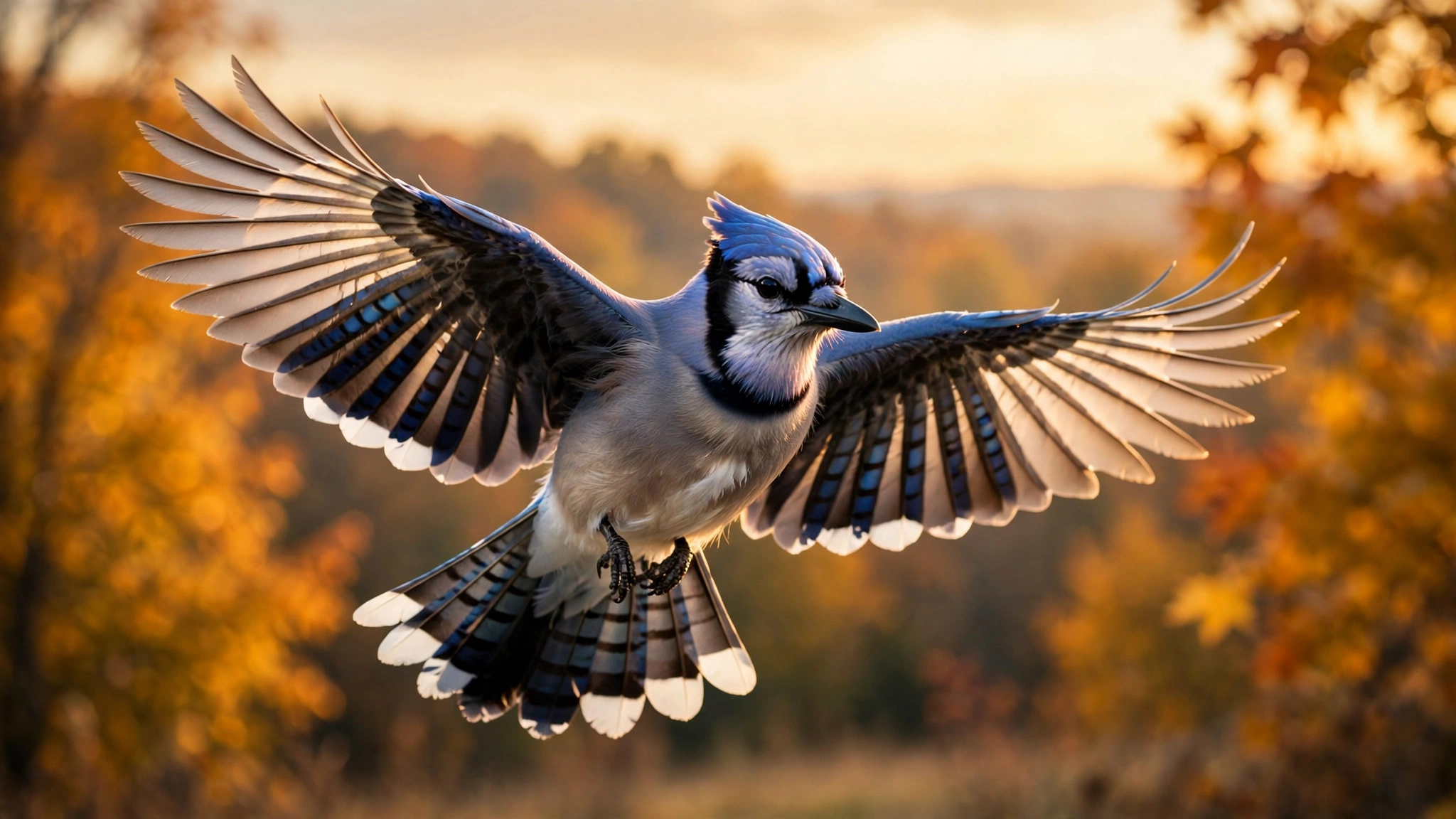
Every October, backyard birders across the eastern United States notice something strange. The blue jays that ruled the feeder all summer vanish for a few days, then a noisy new crowd appears in their place. It is enough to make anyone ask a simple question: do blue jays migrate?
The answer is yes, but only some of them, and only in some years. Blue jays are what ornithologists call partial migrants. A portion of the population heads south each fall while the rest stays put to face the winter at home.
That simple fact hides one of the most interesting puzzles in backyard birding. The jays that leave do not all go every year. A single bird can migrate south one fall and stay home the next, and researchers are still working out exactly which birds go and why.
In this guide, we walk through what is known about blue jay fall movements: when they move, where they go, how food supplies trigger big flight years, and what the whole show means for your feeder.
The Short Answer: Blue Jays Are Partial Migrants
A partial migrant is a species in which some individuals migrate while others do not. Robins and goldfinches follow this pattern, and blue jays are one of the most visible examples in North America. In any given fall, a fraction of the continent’s blue jays moves south while the rest ride out the winter near their breeding grounds.
Figures cited by the Cornell Lab of Ornithology suggest that fewer than 20 percent of blue jays migrate in a given year. That means most of the jays you see in summer will likely spend the winter within a few miles of your yard. The migrants come mainly from the northern part of the range, where winters are harsher and wild food is less dependable.
This pattern sets blue jays apart from classic long-distance migrants like warblers, which leave almost entirely each fall. Jays are flexible travelers, and that flexibility is exactly what makes their autumn movements so fun to watch.
Why Only Some Blue Jays Migrate
The short version is that blue jays migrate when it pays to migrate. Jays are big, tough birds that handle cold weather well, and they can survive northern winters if food is available. When the woods produce a heavy crop of acorns, beechnuts, and hazelnuts, many jays simply stay home and live off the bounty.
The Food Supply Theory
The leading explanation for blue jay migration is food. In years when the nut crop fails across the northern forests, more jays head south to find dinner. In boom years, called mast years, the forest floor is loaded with acorns and far fewer birds bother to leave.
This is why blue jay numbers at your feeder can swing wildly from one fall to the next. A quiet fall usually means a great nut crop up north. A fall when jays pour through in noisy waves usually means the northern woods came up short.
The Age Question Researchers Still Debate
Here is the part science has not fully settled. Some researchers have argued that the migrants are mostly young birds dispersing from their birthplace, while others have claimed that older, experienced birds are the ones that go. The truth may be a mix of both, and it may change from year to year.
What is clear is that migration is not hardwired the same way for every jay. An individual can migrate one fall and stay the next, which means each bird is responding to conditions, not just following a fixed program.
When Do Blue Jays Migrate? The Fall Calendar
Blue jay migration is a fall event, running from late September into November. Spring return movements are much lighter and harder to notice, so almost everything birders see happens on the southbound trip.
The heaviest flights follow the passage of cold fronts. A crisp northwest wind after a front is the classic trigger, and jays stream south on those days in numbers that can stop a hawk counter mid-sentence.
| Period | What Happens | Where to Look |
|---|---|---|
| Late September | First movers push south in small groups | Ridges and lakeshores just after cold fronts |
| Early October | Peak flight; big days can bring thousands past a single watch site | Great Lakes shoreline hawk watches |
| Mid to late October | Steady movement with thinning flocks | Backyard feeders see birds arriving and departing |
| November | Only stragglers still moving | Southern wintering grounds and resident flocks |
Your best odds come in early to mid-October. Pick a morning with clear skies and a northwest breeze, find a vantage point with a wide view of the sky, and listen for the nasal jeer calls that announce a flock before you ever see it.
The Great Lakes Flyway: Where Fall Jays Concentrate
Blue jay migration is not spread evenly across the continent. The biggest flights run along the Great Lakes and the Atlantic Coast, where shorelines and ridges concentrate the birds into visible streams.

Along the lakes, jays seem reluctant to cross open water, so they pile up along shorelines and follow them south. The result is one of fall birding’s great spectacles: loose strings of blue jays passing overhead one group after another, sometimes for hours at a time.
Away from the lakes and the coast, the movement is thinner but still noticeable. A backyard watcher might see a few more jays than usual at the feeder for a day or two, then fewer, as northern birds pass through and some of the local birds slip away with them.
What Hawk Watches Reveal About Jay Movements
Fall hawk watches are some of the best places to witness blue jay migration. While counters scan the sky for raptors, they also tally the daytime songbirds streaming past, and blue jays are among the stars of the show.
The Detroit River Hawk Watch has documented October days when thousands of blue jays moved through the count site in a single day. Similar flights get logged at watch sites around the Great Lakes and through the Appalachian ridges every fall.
What the counts show is how irregular the flights are. A site can go from dozens of jays one day to thousands the next, driven by weather and the nut crop. That boom and bust rhythm is the signature of a partial, food-driven migrant.
Mast Years: How Acorns and Beechnuts Drive the Numbers
To understand blue jay migration, you need to understand mast. Oaks, beeches, and hazels do not produce the same nut crop every year. In mast years they flood the forest with nuts, while in off years the crop can nearly fail.
Jays are built for mast. A blue jay can carry several acorns at once, holding extra nuts in an expandable throat pouch, and a single bird may cache thousands of acorns in a single fall. Biologists credit jays with helping spread oaks across the continent after the last ice age, one cached acorn at a time.

For birders, mast years create a simple prediction. Watch the oaks in your region in late summer. A heavy acorn crop usually means a quiet jay migration, with most birds staying put. A poor crop means get ready: the jays will be on the move, and your feeder may see its busiest October in years.
How Far Do Migrating Blue Jays Travel?
Blue jays are short to medium distance migrants, not marathoners. Most migrants travel a few hundred miles, shifting from the northern breeding grounds into the mid-Atlantic states and the Southeast, where winters are milder and food is easier to find.
Birds from the northernmost parts of the range, such as Ontario and Quebec, may push as far as the Gulf Coast states in big flight years. Southern populations, from the Carolinas southward into Florida, are largely nonmigratory and rarely move at all.
Banding recoveries confirm that individual jays can return to the same wintering areas in later years, although the irregular nature of the migration means many birds simply go wherever the food is. The journey is flexible, not fixed.
Daytime Migrants That Travel in Loose Flocks
Most songbirds migrate at night, but blue jays are daytime travelers. That single fact makes them one of the easiest migrants to watch, because the whole show happens while you are awake and outside.
Migrating jays travel in loose, chatty flocks rather than tight formations. Groups of a half dozen to a few dozen birds move through in a ragged stream, calling constantly as they go. On big flight days along the lakes, these small groups can merge into a near-continuous flow.
How to Recognize a Migrating Flock
A migrating flock looks different from your neighborhood jays. The birds fly with purpose in a steady direction, usually south or southwest, and they rarely stop to squabble. Listen for a higher rate of calling than usual, as flock members stay in contact while on the move.
Timing is another clue. If your yard suddenly holds twice as many jays as last week, and the new birds seem restless and on edge, you are likely watching migrants fueling up before the next leg. If you want to study the birds up close, our guide on male vs female blue jay identification will help you tell the flock members apart.
What This Means for Your Fall Feeder
For feeder watchers, blue jay migration explains the October roller coaster. One week your regular jays are everywhere, the next they are gone, replaced by unfamiliar birds that act a little wilder. Then the numbers settle again as winter residents claim their territories.
You can make your yard a welcome stopover for migrants and a winter home for residents. Jays love peanuts in the shell, black oil sunflower seeds, suet, and cracked corn, and they appreciate a reliable water source during dry fall spells.
Our full guide to feeding jays covers feeder styles, seed choices, and placement tips that work all year. Read it here: how to attract blue jays to your yard.

One more tip: do not worry if your jays vanish for a few days in October. In most cases they have not abandoned you. They are either traveling or following the nut crop, and the feeder regulars usually settle back into their routine by late fall.
How to Watch the Blue Jay Migration Yourself
You do not need to travel to a famous hawk watch to see this migration, although visiting one in October is unforgettable. Your own neighborhood can be a fine viewing spot if you know what to look for.
- Watch the sky on crisp October mornings: pick days just after a cold front, when northwest winds push birds south along ridges and shorelines.
- Listen before you look: migrating jays call constantly. Learn the harsh jeer and the musical queedle, and you will detect flocks before they appear.
- Count in groups of ten: on a good flight day, tally each passing group. You will be surprised how fast the numbers add up.
- Visit a local hawk watch: find a site near you and go on a northwest-wind day in early October.
- Report what you see: eBird checklists help researchers track these irregular flights year after year.
If you want the bigger picture of why birds undertake these journeys at all, our guide on why birds migrate explains the science behind the seasons.
Frequently Asked Questions
Do all blue jays migrate?
No. Blue jays are partial migrants, and figures cited by the Cornell Lab of Ornithology suggest that fewer than 20 percent migrate in a given year. Most jays stay near their breeding grounds all winter, and an individual bird may migrate one year and stay the next.
Where do blue jays go in winter?
Migrants from the northern part of the range shift south into the mid-Atlantic and southeastern United States, sometimes reaching the Gulf Coast in big flight years. Southern populations are mostly resident and stay put year round.
Do blue jays migrate at night or during the day?
During the day. Blue jays are unusual among songbirds because they migrate in daylight, traveling in loose, noisy flocks. That is why hawk watch counters, who work daytime shifts, tally so many of them each fall.
Why do blue jays migrate in some years and not others?
The main driver is food. In years when northern forests produce a poor crop of acorns, beechnuts, and hazelnuts, most jays stay home because they can cache enough food for winter.
How far south do blue jays migrate?
Most are short to medium distance migrants, traveling a few hundred miles south of their breeding areas. Birds from places like Ontario and Quebec may reach the southeastern states or the Gulf Coast in the biggest flight years.
Will blue jays leave my feeder in winter?
Probably not for long. Winter is when resident jays depend on feeders most, and many migrants settle into southern backyards for the season. Keep peanuts, sunflower seeds, and suet stocked, and your winter jays will become loyal regulars.
Do migrating blue jays return to the same place every year?
Banding studies show that some jays do return to the same wintering areas, but the irregular, food-driven nature of the migration means many birds go wherever conditions are best. Site fidelity is looser in blue jays than in many strict migrants.
So the next time a wave of blue jays rolls over your yard on a crisp October morning, take a moment to enjoy it. You are watching one of North America’s most flexible migrants make a decision that even the scientists are still trying to fully understand.





