 Skip to content

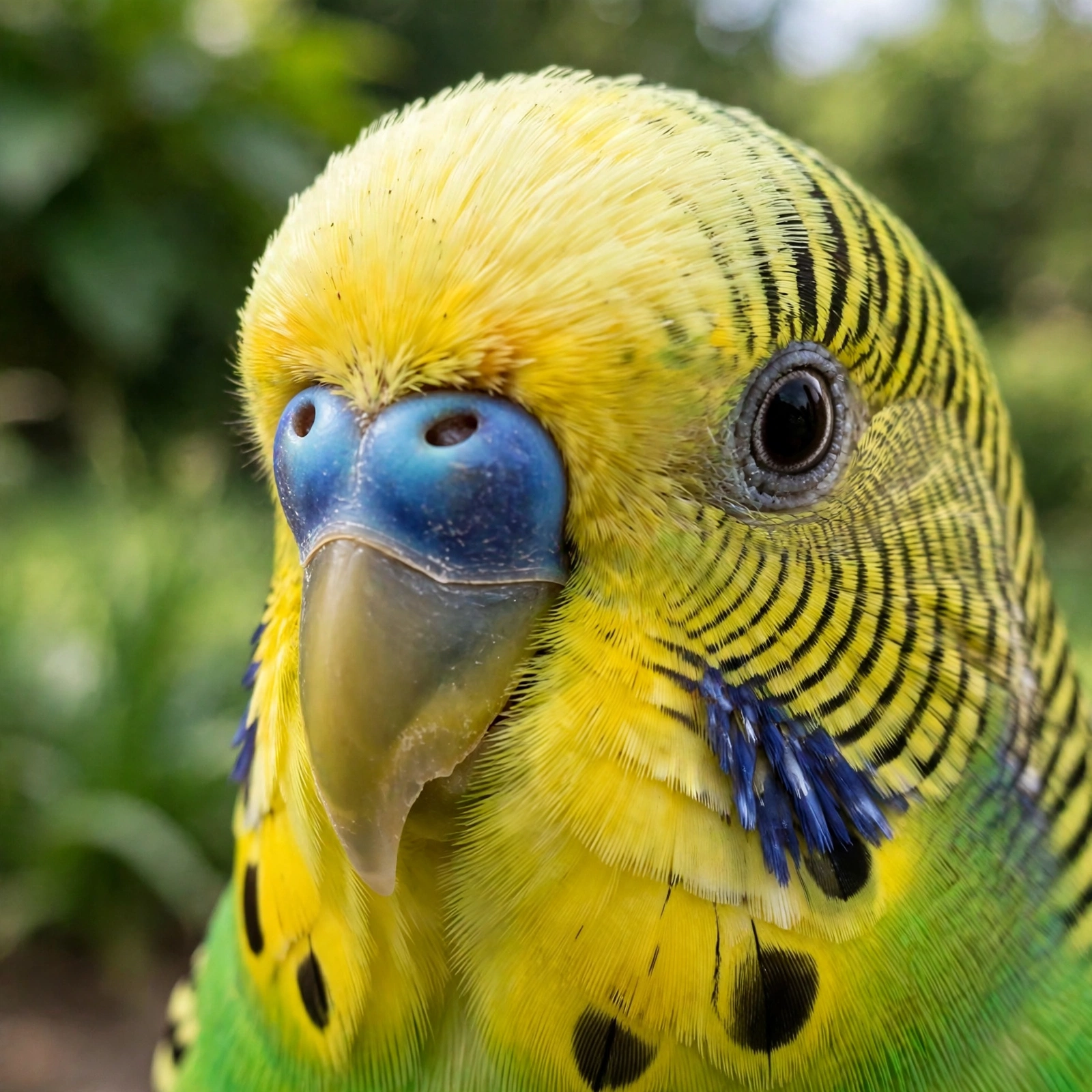
So you just brought home a budgie and one question keeps nagging you: is this little bird a boy or a girl? You are not alone. Sexing budgies is one of the most common questions new owners ask, and for good reason. Knowing your bird’s sex helps you pick the right name, plan for a compatible companion, and understand the behaviors you will see as your bird grows up.
Here is the short answer. Look at the cere, the fleshy band of skin right above the beak where the nostrils sit. An adult male budgie usually has a solid blue cere, while an adult female usually has a tan, white, or crusty brown one. That single clue answers the question for most budgies. There are exceptions though, especially in babies and certain color mutations, so this guide walks you through all six reliable ways to tell male and female budgies apart.
What Is the Cere and Why It Reveals the Sex
The cere (pronounced “seer”) is the waxy, fleshy strip of skin that sits directly above a budgie’s beak and surrounds its nostrils. On most parrots, males and females look identical. Budgies are different. Their cere color changes with age, hormones, and sex, which makes it the single best visual clue for sexing.
Why does it work? Sex hormones drive the color. As a budgie matures, testosterone in males deepens the cere to blue, while estrogen in females shifts the cere toward tan and then brown. In breeding condition, a female’s cere can even turn dark brown and develop a crusty, flaky texture. Checking it takes seconds. Hold your bird near a window in natural light and look closely at that little band above the beak. Artificial lighting can distort the color, so daylight gives you the truest reading.
One warning before we go further. Cere color is a guide, not a guarantee. Young birds, certain color mutations, and hormonal health issues can all blur the rules. That is exactly why you need more than one method, and this guide gives you six.
Way 1: The Adult Cere Color Rule (Blue vs Brown)
This is the classic rule and it works for the majority of adult budgies. Once a budgie passes its first molt at around 6 to 8 months, the cere usually settles into its adult color. For a normal green or blue series budgie, the difference is obvious once you know what to look for.
An adult male has a smooth, solid, waxy blue cere. When he is in breeding condition, the blue turns deeper and richer, almost royal blue. The color is even across the whole cere with no pale rings around the nostrils. The surface stays smooth and slightly shiny.
An adult female has a cere that ranges from pale tan or beige through white to a dark chocolate brown. When she is coming into breeding condition, it becomes rough, crusty, and flaky. This crustiness is normal. Many new owners panic when they see it, but a brown, crusty cere on a mature hen is a sign of a healthy, hormonally active bird. Outside of breeding condition, her cere may lighten back to a pale tan or whitish color.
Cere shape offers a supporting clue. Males tend to have a more rounded, bulbous cere, while females have a flatter one. This is subtle, so use it to back up the color reading rather than as a standalone test.
Way 2: The Baby Budgie Rules (Under 4 Months)
Here is where most people, including plenty of pet shop staff, get it wrong. Baby budgies do not follow the adult rules, and the colors are actually reversed from what human intuition expects. Pink does not mean girl and blue does not mean boy in young budgies. It is almost the other way around.
A young male’s cere is an even pinkish purple across the whole area. The color looks solid and uniform, with no pale rings around the nostrils. A young female’s cere is paler, often pale blue, white, or pinkish, but the giveaway is the distinct white rings around each nostril. Look for those pale halos around the nostril openings. If they are there, you are almost certainly looking at a young hen.
Accurate visual sexing of very young budgies takes a trained eye, and many breeders recommend waiting until at least 3 to 4 months when the first molt clarifies things. If you bought your budgie from a pet shop and the staff gave you a confident answer at 6 weeks old, take it with a grain of salt. Recheck after a few months and you may be surprised.
Way 3: Spotting the Mutation Exceptions
Certain color mutations break the standard rules, and this is the biggest source of sexing mistakes. If your budgie is albino, lutino, or pied, the cere may never follow the blue versus brown pattern. Here are the exceptions you need to know.
- Albino and lutino males: These males keep the pinkish or purplish cere they had as juveniles for their entire lives. It never turns blue. Breeders sometimes get tripped up by this, since a pink cere in an adult albino is a male, not a female.
- Albino and lutino females: Females in these mutations still follow the normal pattern. Their ceres turn tan or brown when mature, just like any other hen.
- Recessive pied males: Adult males of this mutation keep a purplish cere instead of the standard blue. Their eyes also stay dark and never develop the white iris rings that appear with age in other varieties.
- Recessive pied females: Again, females follow the normal pattern with white, tan, or brown ceres.
- Fallows and some dilutes: These mutations can also produce males with lighter, less predictable cere tones. If the cere gives you no clear answer, do not guess. Move on to behavior clues or DNA testing.
Dominant pied budgies, by contrast, usually sex normally, with males developing blue ceres and females turning brown. The key takeaway is simple. Know your bird’s mutation. If you are not sure which mutation your budgie carries, ask the breeder or check photos of the same variety. And when the cere genuinely cannot decide the question, that is what DNA testing is for.

Way 4: Behavior Clues That Back Up the Visuals
Behavior alone will never sex a budgie with certainty. Personality varies from bird to bird. But behavior can support your cere reading, especially in tricky mutations or young birds. Watch your budgie over a few weeks and look for these tendencies.
- Vocalization: Males tend to be the chatterboxes. They chirp more, warble and sing, and are more likely to learn to mimic words or whistle tunes. Females are generally quieter, communicating with softer tweets.
- Head bobbing: Males frequently bob their heads and sing as part of courtship display. If your budgie bobs at a mirror, a toy, or its food dish while chattering, that leans male.
- Chewing and territoriality: Females have a stronger nesting instinct. They are more likely to shred paper, chew cage bars, and guard their favorite perch or corner. They may also bite harder when handled roughly or when feeling territorial.
- Egg laying: This one is definitive. Only females lay eggs. If your budgie lays an egg, every other clue becomes irrelevant. You have a hen.
Treat behavior as a supporting witness, not the judge. A quiet male and a loud female both exist, and judging sex from personality alone is how mistakes happen.
Way 5: Leg Bands and Breeder Records
This method is only useful if your budgie was bred by a responsible breeder, but when it applies, it is very reliable. Many breeders fit their chicks with closed leg bands that carry a code identifying the breeder, the year, and sometimes the bird. Good breeders also keep records of each chick’s sex once it becomes clear.
If your budgie came with a leg band, contact the breeder with the band number. They can often tell you the sex from their records. Even without records, the band itself tells you the bird’s age year, which helps you interpret the cere correctly. A bird with a 2025 band that has a pinkish-purple cere is probably a young male, not a confused case.
The limitation is obvious. Pet shop budgies and rehomed birds usually come with no paperwork and no band. In that case, move on to the sixth and final method.
Way 6: DNA Testing for Total Certainty
When the cere is ambiguous, the bird is a tricky mutation, or you simply need to know for sure, DNA testing is the gold standard. Avian DNA sexing is accurate to over 99.9 percent and works at any age, for any mutation, with no waiting.
The process is simple and non-invasive. You pluck 3 to 5 small chest feathers with the tissue at the root intact, or collect a tiny drop of blood from a clipped nail, then mail the sample to a certified avian lab. Results usually come back online within 3 to 5 business days. The lab analyzes sex-linked genes to determine whether your bird is male or female.
DNA testing costs more than a glance at the cere, but it is worth it when certainty matters. If you are planning to breed, pairing birds without knowing their sexes wastes a whole breeding season. If you bought two “males” and end up with a surprise clutch of chicks, you will understand why breeders test. For a beloved pet, visual sexing is usually enough. For breeding plans, DNA testing is the responsible choice.
Cere Color Quick Reference Table
Keep this table handy the next time you are squinting at a cere in the pet shop. It covers the standard rules for normal mutations.
| Age and Sex | Typical Cere Color | Key Detail |
|---|---|---|
| Baby male (under 3-4 months) | Even pinkish purple | Solid color, no white nostril rings |
| Baby female (under 3-4 months) | Pale blue, white, or pinkish | Distinct white rings around the nostrils |
| Adult male | Smooth solid blue | Deepens to royal blue in breeding condition |
| Adult female (non-breeding) | Pale tan, beige, or white | Flatter cere, may look chalky |
| Adult female (breeding) | Dark chocolate brown | Rough, crusty, flaky texture is normal |
| Albino or lutino male (any age) | Pinkish purple for life | Never turns blue; the big exception |
| Albino or lutino female (adult) | Tan to brown | Follows the normal female pattern |
| Recessive pied male (adult) | Purplish | Keeps juvenile-style color; eyes stay dark |

Why Knowing Your Budgie’s Sex Actually Matters
Is this just trivia, or does it change how you care for your bird? It changes more than most owners expect. Here are the practical reasons to sex your budgie properly.
- Naming: Nobody wants to rename a beloved pet two years in. A confident sexing early on lets you pick a name that sticks.
- Pairing and companionship: Two males usually make the most peaceful pair, while a male and female pair may bond into a breeding pair whether you intended it or not. If you are thinking about getting your budgie a friend, knowing the sexes helps you choose wisely. Our guide to keeping a solo budgie covers what to consider before adding a second bird.
- Breeding decisions: Breeding budgies is a serious commitment. Females face real health risks, including egg binding, and need calcium-rich diets and proper nesting conditions. Never breed casually or without research.
- Egg laying surprises: A lone female can and will lay unfertilized eggs. This is normal, but chronic laying drains her calcium and can lead to health problems. If your “male” suddenly starts laying, you know the sexing was wrong, and you also know to watch her diet and give her cuttlebone.
- Behavior expectations: Males are more likely to learn to talk and whistle, while females may be more independent and territorial. Neither is better. But matching expectations to reality keeps everyone happy.
If you are still building your knowledge as a new budgie owner, our budgie lifespan guide explains how long these birds live and what affects their longevity, which is worth knowing before you commit to a pair.
Frequently Asked Questions

Can you tell a budgie’s sex from its feather colors?
Not reliably. Both male and female budgies come in the same enormous range of colors, from wild-type green to sky blue, yellow, white, and everything in between. Feather color is determined by mutation, not sex. The cere is the visual sex indicator, not the plumage.
At what age can you accurately sex a budgie?
For most budgies, reliable visual sexing is possible after the first molt at around 3 to 4 months, and it becomes very clear by 6 to 8 months. Before that, juvenile ceres can mislead even experienced keepers. DNA testing works at any age if you need an answer sooner.
My adult budgie’s cere changed color. Is something wrong?
Probably not. Cere color shifts with hormones and the seasons. A female’s cere often darkens to brown and turns crusty when she comes into breeding condition, then lightens again afterward. A male’s blue may deepen in spring. Sudden, dramatic changes, especially to yellowish or very dark colors outside breeding season, are worth mentioning to an avian vet.
Can two male budgies live together?
Yes, and they often make the best pairing. Two males typically bond well and are less likely to become territorial than two females. A male and female pair will usually form a breeding bond, so only pair them if you are prepared for that possibility.
Do female budgies lay eggs without a male?
Yes. A healthy female budgie can lay unfertilized eggs on her own, usually in spring when daylight hours lengthen. The eggs will never hatch. If she lays repeatedly, offer cuttlebone for calcium and avoid encouraging nesting behavior, since chronic laying can harm her health. You can read more about the timing in our guide to when birds lay eggs.
Are male or female budgies better talkers?
Males have the edge. Male budgies are more inclined to mimic speech and whistle tunes, likely because vocal display is part of how males attract mates in the wild. Females can learn words too, but they are generally less vocal and less interested in performing.
How accurate is visual sexing compared to DNA testing?
Visual sexing of normal-mutation adults is highly accurate once you know the rules. But accuracy drops sharply for young birds and for mutations like albino, lutino, and recessive pied, where error rates can run very high. DNA testing is over 99.9 percent accurate regardless of age or mutation.
Does a brown crusty cere mean my budgie is sick?
Usually no. A dark brown, rough, crusty cere on a mature female is a normal sign of breeding condition, driven by hormones. It is not mites and not disease. The crust typically sheds and lightens when breeding season passes. If the cere looks swollen, discolored in an unusual way, or the bird seems unwell, consult an avian vet.
Conclusion
Sexing a budgie comes down to one small patch of skin. Check the cere in good light, remember that babies play by reversed rules, and watch out for the mutation exceptions that keep pink ceres on adult males. Add behavior clues as supporting evidence, and reach for DNA testing when you need certainty.
Most owners find the answer within minutes once they know what to look for. Blue and smooth means boy. Brown or tan means girl. Pinkish purple on a baby means probably boy, white nostril rings mean probably girl. And if your bird is albino, lutino, or pied, slow down and double check, because those birds love to break the rules.
For more on these details, see the Budgerigar Society’s guide to sexing budgies and Little Feathered Buddies’ sexing page, both excellent visual references from experienced breeders.





