 Skip to content

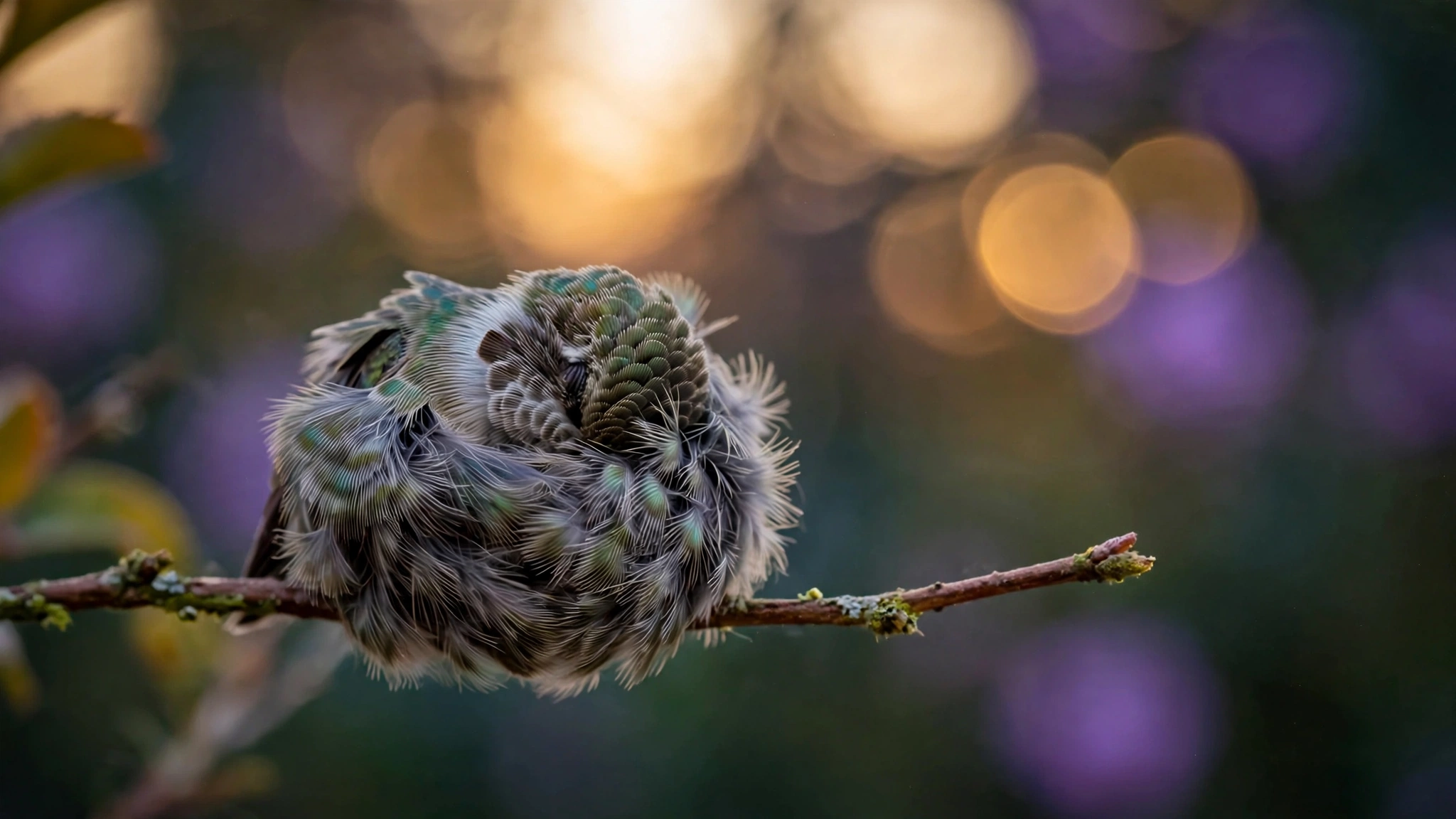
So, do hummingbirds sleep? Yes, they do, but not in the way you probably picture it. A hummingbird cannot afford to drift off for eight hours like a sparrow or a robin, because its body burns fuel at a pace that would empty its tank before morning.
Instead, every night, hummingbirds do something far stranger and more remarkable. They shut their bodies down to a whisper, lowering their heart rate, cooling their body temperature, and pausing almost all movement. Scientists call this state torpor, a hibernation-like slowdown that lets the tiniest birds on Earth survive until sunrise.
If you have ever spotted a motionless, puffed-up hummingbird at dawn and feared it was dead, this guide is for you. You will learn exactly how hummingbird sleep works, what torpor does inside the body, how these birds wake up, and what to do if you find one that seems frozen in place.
In short: Do hummingbirds sleep? Yes. Every night, hummingbirds enter torpor, a hibernation-like state in which their heart rate can fall from around 1,200 beats per minute to as low as 50, and their body temperature drops sharply. This shutdown conserves energy so they do not starve overnight. Waking takes 20 to 60 minutes of shivering before they can fly again.
Do Hummingbirds Sleep Like Other Birds?
Most birds sleep with their heads tucked into their back feathers, perched on a branch. Hummingbirds do perch at night, and they do tuck their bills into their feathers. But that is where the similarity ends.
A sleeping songbird keeps its body temperature high and its metabolism idling. A hummingbird in torpor, a controlled nightly shutdown of body systems, drops its metabolism to a fraction of the daytime level. Cornell Lab of Ornithology researchers report that without torpor, a hummingbird could starve to death in its sleep, because its body would burn through its stored energy in just a few hours.
What Is Hummingbird Torpor?
Torpor is a short-term state of decreased physiological activity, marked by a drop in body temperature and metabolic rate. It is the answer to the question of how hummingbirds sleep through the night without food.
Torpor is not unconsciousness the way we think of sleep. It is closer to a controlled system pause. Hummingbirds are not the only birds that use torpor. Swifts, nighthawks, and poorwills use versions of it too. But hummingbirds are the most dramatic example, because their daytime energy demands are the highest of any bird relative to their size.
How Does Torpor Work in a Hummingbird’s Body?
The change begins around sunset. As light fades and the air cools, a hummingbird finds a sheltered perch, often a thin twig hidden in foliage, fluffs its feathers, and tucks its bill into its back feathers. Within minutes, its body begins a remarkable transformation.
Heart Rate and Breathing
A hummingbird’s heart is the fastest-beating of any bird. In active flight, researchers report rates up to roughly 1,260 beats per minute. During torpor, that number collapses to as low as about 50 beats per minute. Breathing slows to match, dropping from rapid pants to barely perceptible breaths.
Body Temperature
An active hummingbird runs hot, with a body temperature around 105 degrees Fahrenheit. In torpor, researchers report the body cooling dramatically, in some studies to the 50 to 65 degree range, nearly matching the cold night air. This cooling is the biggest energy saver of all.
Burning the Fuel Tank
Even in torpor, the bird burns a little fuel. Hummingbirds prepare for this all day by building up fat, especially late in the afternoon. Researchers estimate that torpor can cut a hummingbird’s overnight energy use by the vast majority, possibly up to around 95 percent compared with staying warm and alert all night.

How Long Do Hummingbirds Sleep Each Night?
Hummingbirds spend most of the night in torpor. They typically settle onto a perch around dusk and remain there until the first light of morning, which can mean eight to ten hours depending on the season and latitude.
Not every minute of the night is spent in deep torpor. A bird may cycle between deeper and lighter states, especially if the night is mild or if it found an especially good meal before sunset. The waking process adds to the total: rising out of torpor takes 20 to 60 minutes of shivering, so a hummingbird begins its warm-up well before it takes its first flight.

Do Hummingbirds Sleep Differently in Cold Weather?
Yes, and this is where torpor shows its true value. A mild summer night is easy. A cold spring night during migration, when temperatures can dip near freezing, is a survival test. In cold weather, hummingbirds enter deeper torpor: body temperature falls lower and metabolic rate drops further.
Cold snaps during migration are the most dangerous time. A hummingbird arriving on the breeding grounds in early spring may face nights far colder than it would prefer. Deep torpor is what gets it through until the morning sun returns.
What Does a Torpid Hummingbird Look Like?
A hummingbird in torpor looks alarming if you do not know what you are seeing. The bird sits motionless on a twig or branch, feathers fluffed out, head tucked, eyes closed. It does not respond to movement or sound. It may hang in an odd posture, and it can look, for all the world, dead.
Key signs that a bird is in torpor rather than dead:
- Posture: feet still gripping the perch firmly, body upright or settled rather than crumpled
- Breathing: very slow, but present if you watch the body closely for a full minute
- Warmth: body may feel cool but not stone cold and stiff
- Timing: found at night, in the early morning, or on a cold day
How Do Hummingbirds Wake Up from Torpor?
Waking up is the hardest part of the night. A torpid hummingbird cannot simply open its eyes and fly. Its body temperature is far too low for its flight muscles to work. The warm-up begins with shivering: the bird vibrates its flight muscles rapidly, generating heat from the inside out. Researchers report that this shivering warm-up can take anywhere from 20 minutes to an hour.
Once its body temperature climbs back toward normal, the heart rate surges, breathing quickens, and the bird becomes alert. The very first order of business is food. A newly wakened hummingbird is running on fumes, and it heads straight for the nearest nectar source.

Torpor vs. True Hibernation: What Is the Difference?
People often ask whether hummingbirds hibernate. The answer is no, not in the strict sense, but torpor and hibernation are close cousins. The table below lays out the differences.
| Feature | Nightly Torpor | True Hibernation |
|---|---|---|
| Duration | Hours, usually one night | Days to months without waking |
| Frequency | Can happen every night | Once per year, seasonally |
| Waking | Daily, with 20 to 60 minutes of shivering | Periodic arousals across weeks or months |
| Body temperature drop | From about 105F to roughly 50 to 65F | Can approach near freezing in some mammals |
| Heart rate | From about 1,200 bpm to as low as about 50 bpm | A few beats per minute in deep hibernators |
| Examples | Hummingbirds, swifts, poorwills | Bears, ground squirrels, bats |
Why Do Hummingbirds Sleep in Torpor Instead of Sleeping Normally?
A hummingbird’s metabolism is the most expensive in the bird world. At rest on a warm night, staying fully warm would burn through its tiny fat reserves in a few hours, long before dawn. Torpor cuts that burn rate to a sliver, stretching a few hours of fuel across the whole night. There is a second benefit: a torpid bird is still, silent, and hidden in foliage, which makes it harder for nighttime predators like owls to notice.
You Found a Motionless Hummingbird: What Should You Do?
Finding a still, fluffed hummingbird can be frightening. Most of the time, especially at night or early morning, the bird is in torpor and needs to be left completely alone. Handling a torpid bird can injure it and interrupt the warm-up it needs.
- Do not touch it: a torpid bird is fragile, and your warmth or handling can shock its system
- Watch from a distance: give it 30 to 60 minutes, especially near dawn, to shiver itself awake
- Keep pets away: bring cats indoors and keep dogs clear of the area
- Note the situation: a bird on a perch at dawn is likely fine; a bird on the ground in daylight may need help
Call a licensed wildlife rehabilitator if the bird is on the ground during the day and has not moved for over an hour, it is visibly injured or bleeding, a cat caught it, or it is hanging limp from a feeder rather than perched.
Never try to warm a torpid bird with a hair dryer, heating pad, or hot water. Never offer it food or sugar water while it is unresponsive, because it cannot swallow and could choke.
Frequently Asked Questions
Do hummingbirds sleep at night like other birds?
Yes, but hummingbirds sleep in a special way. While other birds rest with normal body temperature, hummingbirds enter nightly torpor, dropping their heart rate and body temperature to save energy.
How long do hummingbirds sleep each night?
Most hummingbirds remain on their perch in torpor for most of the night, roughly eight to ten hours depending on the season. Waking adds another 20 to 60 minutes of shivering before the bird can fly and feed again.
Do hummingbirds sleep hanging upside down?
No. Hummingbirds sleep perched upright on a twig or branch, gripping with their feet like other perching birds. A hummingbird hanging upside down or limp is likely injured or in trouble.
Is a motionless hummingbird dead or in torpor?
It is often in torpor, especially if found on a perch at night or early morning. Look for slow breathing over a full minute and feet still gripping the perch. Never assume death; give the bird time and space.
Can cold weather kill a hummingbird in torpor?
Torpor is actually what protects them from cold nights. Danger comes mainly from extreme, prolonged cold combined with no chance to feed the next morning.
Do hummingbirds sleep in winter?
Most North American hummingbirds migrate south for winter rather than sleeping through it. The few that overwinter in northern areas still use nightly torpor every night.
Should I bring a torpid hummingbird inside my house?
No. Bringing a torpid bird indoors can disrupt its natural warm-up cycle and cause harmful stress. Keep pets away, watch from a distance, and let it wake on its own.





