Skip to content

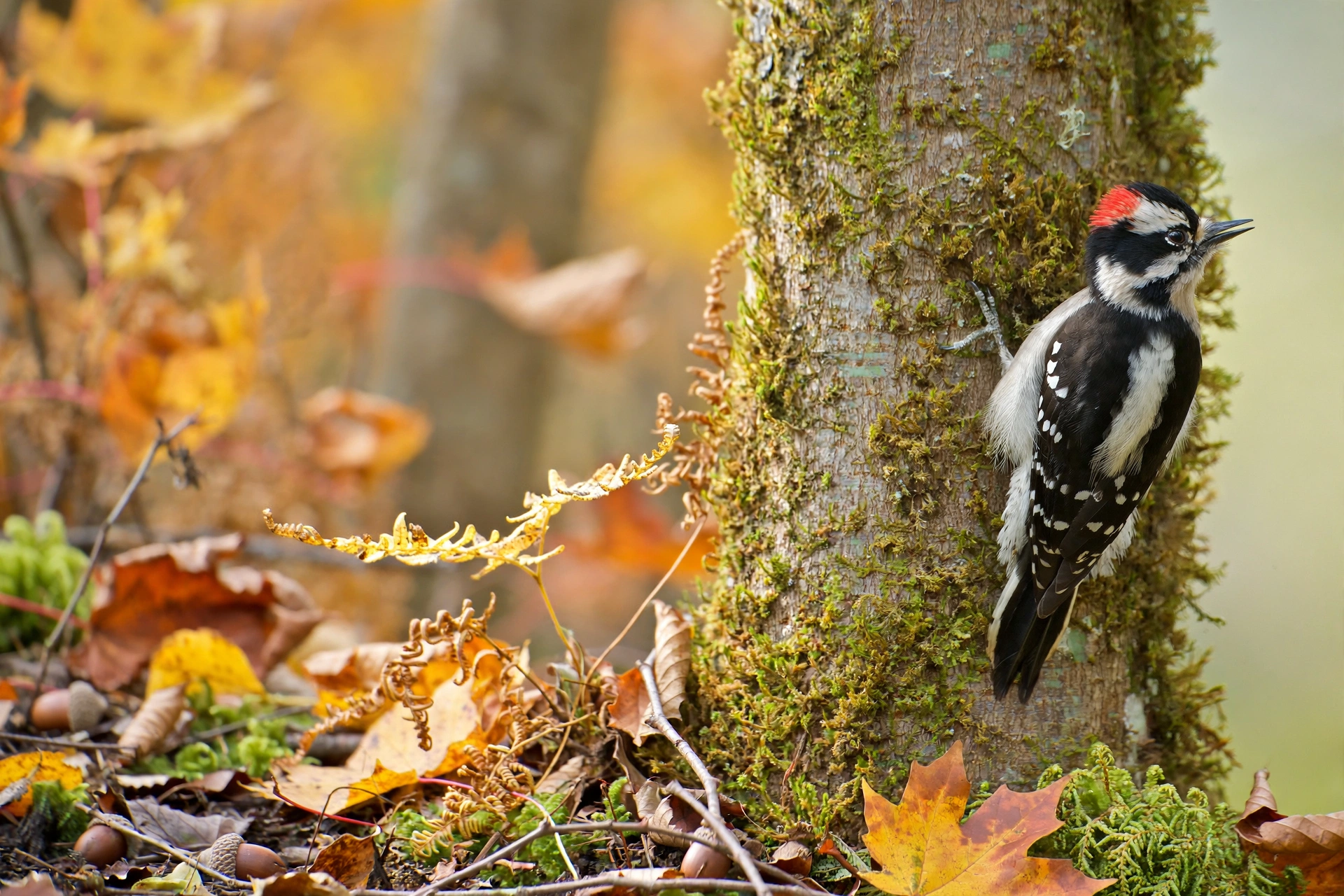
Woodpeckers are among the most specialised diners in the bird world, and their menu is far richer than most people realise. Most backyard watchers know that woodpeckers eat suet from a cage feeder, but that winter staple is only a small chapter in a much bigger story. In the wild, these birds hunt beetle larvae hidden deep inside dead wood, probe for ants by the thousand, lap sweet sap from carefully drilled wells, and gorge on berries, fruit, and nuts when the seasons turn.
What woodpeckers eat changes with the species, the season, and what the landscape offers. A northern flicker spends its days flicking ants off the ground, while a pileated woodpecker tears into rotting logs to reach carpenter ants. A sapsucker runs a network of sap wells like a farmer tending crops, and a red-headed woodpecker stores acorns for lean months the way a squirrel does. Understanding this variety helps you pick the right feeder foods and turn your garden into a place woodpeckers choose to visit again and again.
The Wild Woodpecker Diet: A Closer Look
At the heart of the woodpecker diet sits one food group: insects, and especially wood-boring insects that other birds cannot reach. Beetle larvae, commonly called grubs, are the single most important wild food for most pecking species. These fat, protein-rich larvae tunnel through bark and dead wood, safe from jays, warblers, and almost every other insect eater. Woodpeckers hammer through the barrier, extract the prize, and move on to the next tunnel.
Ants form the second great pillar of the diet, and for some species they are the main course. Carpenter ants, which carve galleries inside dead and dying trees, attract pileated, hairy, and downy woodpeckers in large numbers. A single log riddled with carpenter ants can feed a woodpecker family for weeks. Ground-loving flickers take this further still, with ants making up roughly half of everything some individuals eat across a year.
The supporting cast is long and varied:
- Wood-boring beetle larvae: the top prize, hunted inside trunks, branches, and logs.
- Ants and their pupae: eaten in vast numbers, especially by flickers and pileated woodpeckers.
- Caterpillars: gleaned from leaves and bark in spring and summer.
- Spiders: picked from bark crevices and foliage, an important protein source.
- Plant lice and scale insects: tiny prey that downy woodpeckers prise from twigs and stems.
- Cicadas and other flying insects: snatched in mid-air during summer emergences.
This heavy reliance on insects makes woodpeckers valuable allies in a healthy garden. A woodpecker working a tree is doing free pest control, removing borers and bark beetles that weaken or kill timber. Gardeners who tolerate a few old snags and dead limbs often find that woodpeckers handle infestations long before chemicals become necessary.
Sap, Fruit, and Nuts: The Plant Side of the Menu
Woodpeckers are not pure carnivores, and several species depend on plant foods for much of the year. Tree sap is the most remarkable of these, harvested by sapsuckers with a technique no other bird matches. A sapsucker drills rows of small, neat holes called sap wells into a living tree, then returns again and again to drink the sweet sap that rises to the surface. Other birds, from hummingbirds to warblers, often queue up at active wells to share the bounty, which makes sapsuckers keystone feeders in their forests.
Fruit becomes a major food source from late summer into autumn. Woodpeckers eat wild berries, cherries, grapes, dogwood fruit, elderberries, and poison ivy berries with enthusiasm. Red-bellied woodpeckers are particularly fond of fruit and will visit backyard fruit trees and berry bushes regularly. They even eat fruit that has started to ferment on the branch, which may explain their occasionally wobbly flight late in the season.
Nuts and seeds round out the plant menu and grow in importance as insects become scarce. Acorns, beechnuts, hickory nuts, and pine seeds all appear in woodpecker stomachs. Red-headed woodpeckers take this further than any other species, harvesting acorns and beechnuts in autumn and wedging them into bark crevices, fence posts, and even roof shingles as a stored winter larder. This caching behaviour, more typical of jays and squirrels, is rare among woodpeckers and makes the red-headed species unusually well prepared for cold months. The same seasonal shift happens across the Atlantic, where what UK woodpeckers eat follows the same pattern of an insect-heavy diet giving way to nuts, seeds and berries in autumn and winter.

How Woodpeckers Find and Catch Hidden Insects
The most impressive part of what woodpeckers eat is not the menu itself but how they find it. A woodpecker can pinpoint a grub tunnelling centimetres deep inside solid wood, invisible from the outside. Scientists believe they use a combination of listening and feeling. The bird taps the bark and listens for the faint changes in sound that reveal a hollow tunnel or a moving larva. Sensitive nerves in the bill may also detect the tiny vibrations of an insect shifting inside its gallery.
The Barbed Tongue Mechanism
Once a woodpecker knows where its prey hides, it deploys one of the strangest tools in the bird world. The woodpecker tongue can extend two to three times the length of the bill, sliding deep into tunnels the beak could never enter. The tip varies by species and diet. Birds that spear beetle larvae carry backward-facing barbs that snag the grub like a harpoon. Ant specialists have sticky saliva that glues ants to the tongue on contact. Sapsuckers, which lap sap rather than probe for grubs, have shorter tongues with brush-like tips that mop up liquid efficiently.
Storing such a long tongue inside a small head required an extraordinary solution. The hyoid apparatus, the bone structure that supports the tongue, splits into two horns that travel down the neck, wrap completely around the back of the skull, pass over the top of the head, and anchor near the base of the bill. In northern flickers, the tongue is so long that the hyoid even loops into the right nostril. When the muscles around this structure contract, the tongue shoots forward with speed and precision; when they relax, it retracts along the same track. Researchers note that this same wrapping may help dissipate the shock of drumming, though its primary job is feeding, not protection.
Drumming Versus Feeding Pecks
Not all pecking is about food. Woodpeckers drum, hammering rapidly on resonant surfaces, mainly to communicate, claim territory, and attract mates in spring. Feeding pecks look different: slower, deliberate, and aimed at bark rather than hollow resonators. Birds that hammer on houses, metal gutters, and chimney caps are almost always drumming for sound, not hunting insects, because metal carries their message further. If you want to understand why a woodpecker is attacking your chimney, why woodpeckers drum on metal explains the behaviour in detail.
Diet by Species: What Different Woodpeckers Eat
No two woodpecker species eat exactly the same diet. Each has its own foraging style, bill shape, and favourite prey, which is why a feeder setup that thrills one species may leave another uninterested. Here is how the most familiar species differ.
Downy Woodpecker
The smallest and most common backyard woodpecker, the downy feeds mainly on insects it gleans from bark surfaces and small twigs. Its menu includes wood-boring beetle larvae, caterpillars, ants, spiders, and plant lice. Because it is light and agile, it works the smallest branches that heavier woodpeckers cannot use. At feeders, it is the first and most frequent woodpecker visitor, eagerly taking suet, peanuts, and sunflower seeds. Learning to tell a downy from a hairy woodpecker helps you predict which one is at your feeder, since the larger hairy is shyer and visits less often.
Hairy Woodpecker
A larger lookalike of the downy, the hairy woodpecker digs deeper and harder. It prefers the trunks of large trees, where it excavates for beetle larvae and carpenter ants with powerful blows. It visits feeders less boldly than the downy but appreciates the same foods: suet, peanuts, and sunflower seeds. In winter it becomes more visible at feeding stations when deep snow covers its natural foraging sites.
Red-Bellied Woodpecker
Despite the name, the red belly is barely visible; this is the zebra-backed woodpecker with the bright red cap and nape. It is one of the most omnivorous woodpeckers, eating insects, spiders, fruit, nuts, seeds, and even small vertebrates such as lizards and tree frogs on occasion. Its long, barbed tongue flicks insects out of crevices, and it stores food in bark cracks for later. At feeders it loves suet, peanuts, sunflower seeds, and fruit such as orange halves and grape jelly.
Pileated Woodpecker
The crow-sized giant of eastern forests is a carpenter ant specialist. It rips apart rotting logs and stumps to reach ant colonies, leaving behind the large rectangular holes that mark its work. Beetle larvae are the second staple. Pileated woodpeckers rarely visit feeders, but in hard winters they will come to large suet feeders mounted on trees, especially ones with a tail prop that supports their big bodies.
Northern Flicker
The flicker breaks all the woodpecker rules. It spends most of its feeding time on the ground, probing anthills and grass for ants with its long, sticky tongue. Ants can make up nearly half its diet, and a single flicker may eat thousands of ants in a day. It also takes beetle larvae, termites, and, in winter, fruit and seeds. Flickers visit feeders for suet and sometimes ground-scattered peanuts, but their ground-feeding habit makes them the trickiest woodpecker to attract with a hanging feeder. Birdful confirms that woodpeckers do eat from bird feeders, visiting tube, hopper, suet and platform feeders for seeds, suet and nectar, though natural foods remain their preference.
Red-Headed Woodpecker
The striking crimson-headed woodpecker is the great generalist and the great storer. It eats insects caught in mid-air, beetle larvae, spiders, earthworms, fruit, berries, acorns, and beechnuts. In autumn it harvests and caches nuts in bark crevices and fence posts, building a winter pantry. It visits feeders for suet, peanuts, and corn, though its numbers have declined in many areas, so a visit is a genuine treat.
Best Feeder Foods by Species
Matching the food to the species makes all the difference. The table below summarises which feeder foods each common woodpecker prefers and how best to offer them.
| Species | Top feeder foods | Best way to serve |
|---|---|---|
| Downy woodpecker | Suet, peanuts, black oil sunflower seeds | Standard suet cage or tube feeder |
| Hairy woodpecker | Suet, peanuts, sunflower seeds | Sturdy suet feeder with tail prop |
| Red-bellied woodpecker | Suet, peanuts, fruit, mealworms | Suet cage plus orange halves on a spike |
| Pileated woodpecker | Suet (large blocks) | Oversized suet feeder with tail prop on a tree trunk |
| Northern flicker | Suet, mealworms, scattered peanuts | Ground tray or low platform feeder |
| Red-headed woodpecker | Suet, peanuts, corn | Suet cage or hopper feeder near open woodland |

Seasonal Diet Shifts: From Spring Insects to Winter Suet
What woodpeckers eat is a moving target that shifts with the calendar. In spring and summer, insects dominate. Breeding adults need huge quantities of protein-rich larvae and ants to feed hungry chicks, and a single nest of downy woodpeckers can consume thousands of insects before the young fledge. This is the season when woodpeckers do their most visible pest control, stripping borers and bark beetles from trees just as those insects emerge.
Autumn brings the great pivot from protein to energy storage. As insect activity falls, woodpeckers switch to fruit, berries, and nuts, fattening up for the cold months ahead. Migrating and resident birds alike gorge on dogwood berries, wild grapes, and acorns. Red-headed woodpeckers spend these weeks caching nuts, while sapsuckers keep their sap wells flowing as long as the trees run.
Winter is the season of suet. With insects dormant and most fruit gone, woodpeckers lean on high-fat foods: suet, stored nuts, seeds, and whatever sap they can find. This is when feeder woodpeckers are most loyal and most visible. A suet feeder that gets occasional visits in October can become the busiest spot in the garden by January, hosting downies, hairies, and red-bellies through snowstorms. Keeping feeders stocked through the coldest weeks genuinely helps local birds survive.
Feeder Foods Ranked: How to Serve Them Right
Not all feeder foods attract woodpeckers equally. Ranked by how reliably they bring woodpeckers to the garden, the best options are:
- Suet. Rendered beef fat, and the undisputed champion woodpecker food. It mimics the fat-rich grubs woodpeckers hunt in winter and provides the calories they need in cold weather.
- Peanuts. Shelled or in the shell, raw or roasted (never salted). Peanuts are rich in fat and protein, and woodpeckers hammer them apart with obvious relish.
- Black oil sunflower seeds. The thin shells suit smaller woodpeckers like downies, which crack them easily.
- Mealworms. Dried or live, these mimic the insect larvae woodpeckers hunt naturally and are a firm favourite with red-bellies and flickers.
- Fruit. Orange halves, apple slices, grapes, and raisins attract fruit-loving species, especially red-bellied woodpeckers.
Serving the food correctly matters as much as choosing it. Keep these points in mind:
- Plain suet: best in winter; choose pure suet cakes without added seed for the longest-lasting blocks.
- Insect suet: cakes studded with mealworms or peanuts, excellent for red-bellies and flickers.
- Peanut suet: a favourite of downy and hairy woodpeckers, who work the cage for long stretches.
- Tail prop feeders: woodpeckers brace with their stiff tail feathers while feeding, so a feeder with an extended prop board keeps them comfortable and feeding longer.
- Placement: mount feeders on or near tree trunks where woodpeckers naturally climb, at least 5 to 6 feet off the ground and near cover.
If you are starting from scratch, our full guide on how to attract woodpeckers to your yard walks through feeder placement, water, and habitat in step-by-step detail.

Foods to Avoid at Feeders
Some foods offered with good intentions can harm woodpeckers or simply go untouched. Keep these off the menu:
- Salted nuts or salted suet: excess salt is dangerous for birds, whose kidneys cannot process it well.
- Bread and baked goods: they offer almost no nutrition and can grow mould quickly.
- Chocolate and caffeine products: both contain compounds that are toxic to birds.
- Avocado: contains persin, which can be harmful to many bird species.
- Old, rancid suet: in warm weather suet turns rancid fast; use no-melt suet dough in summer or remove uneaten cakes.
- Honey or jam in quantity: small amounts of fruit jelly are fine for orioles, but sticky sweets can foul feathers.
- Dried beans: raw or undercooked beans contain toxins; they have no place at a feeder.
Freshness matters as much as the food type. Clean suet cages regularly, discard mouldy seed, and refresh water dishes so the feeding station stays a safe place for every visitor.
Frequently Asked Questions
Do woodpeckers eat bird seed?
Yes, but seed is a backup food rather than a favourite. Smaller woodpeckers such as downies and hairies crack black oil sunflower seeds and striped sunflower seeds, and they will pick through mixed seed for the sunflower and peanut pieces. Seed alone rarely attracts woodpeckers the way suet and peanuts do, so a feeder stocked only with millet or cracked corn will see few of them.
What do baby woodpeckers eat?
Nestlings eat almost entirely insects. Both parents ferry soft, protein-rich prey to the nest: beetle larvae, ants, caterpillars, and spiders, all partly digested or softened for the chicks. Fruit and seeds appear in the diet only after the young fledge and start feeding themselves. This is why breeding woodpeckers hunt insects so intensively in late spring.
Do woodpeckers eat other birds or their eggs?
It is rare but documented. Larger species, especially red-bellied and red-headed woodpeckers, occasionally raid nests for eggs or nestlings, and they sometimes eat small lizards and tree frogs on occasion. This is opportunistic behaviour, not a dietary staple. The vast majority of their diet remains insects, fruit, nuts, and seeds.
Why do woodpeckers eat suet in winter?
Suet is concentrated animal fat, and it closely matches the energy profile of the grub larvae woodpeckers hunt in warmer months. In winter, when insects are dormant and hidden, suet gives woodpeckers the calories they need to maintain body heat through freezing nights. It is easy to digest and available without the hard work of excavating frozen bark.
Can woodpeckers eat peanuts in the shell?
Absolutely. Woodpeckers are well equipped to hammer peanuts out of their shells, and whole peanuts in the shell make excellent enrichment that keeps them working at the feeder longer. Offer raw or dry-roasted peanuts with no salt, and avoid flavoured or spiced varieties.
Do sapsuckers only drink sap?
No. Sap is their signature food, but sapsuckers also eat the insects trapped in their sticky sap wells, along with ants, beetles, fruit, and berries. Their brush-tipped tongues are built for lapping sap, yet they glean insects from bark like other woodpeckers when the opportunity arises.
How can I attract more woodpeckers to my feeders?
Offer suet year round, add shelled peanuts, keep a clean water source nearby, and leave dead trees or snags standing where it is safe to do so. Woodpeckers also need cover, so native shrubs and trees near the feeder give them confidence to visit. Patience helps: it can take a few weeks for local woodpeckers to discover a new feeder and add it to their daily rounds.
Conclusion
So, what do woodpeckers eat? Almost everything the woodland offers: beetle larvae pried from dead wood, ants harvested by the thousand, sap sipped from drilled wells, berries and fruit in autumn, and nuts cached against the winter cold. Each species writes its own version of this menu, from the flicker that grazes on anthills to the pileated that demolishes rotting logs for carpenter ants. Their barbed tongues, hyoid slings, and listening bills make them the most specialised diners in the backyard bird world.
For the backyard bird watcher, this knowledge is practical power. Offer suet and peanuts, match the feeder to the species you want to see, keep the menu fresh, and avoid the handful of foods that cause harm. Do that, and the same woodpeckers that hammer the forest all summer will hammer your suet cage all winter, close enough to watch every feather. Few backyard sights reward the effort better.