Skip to content

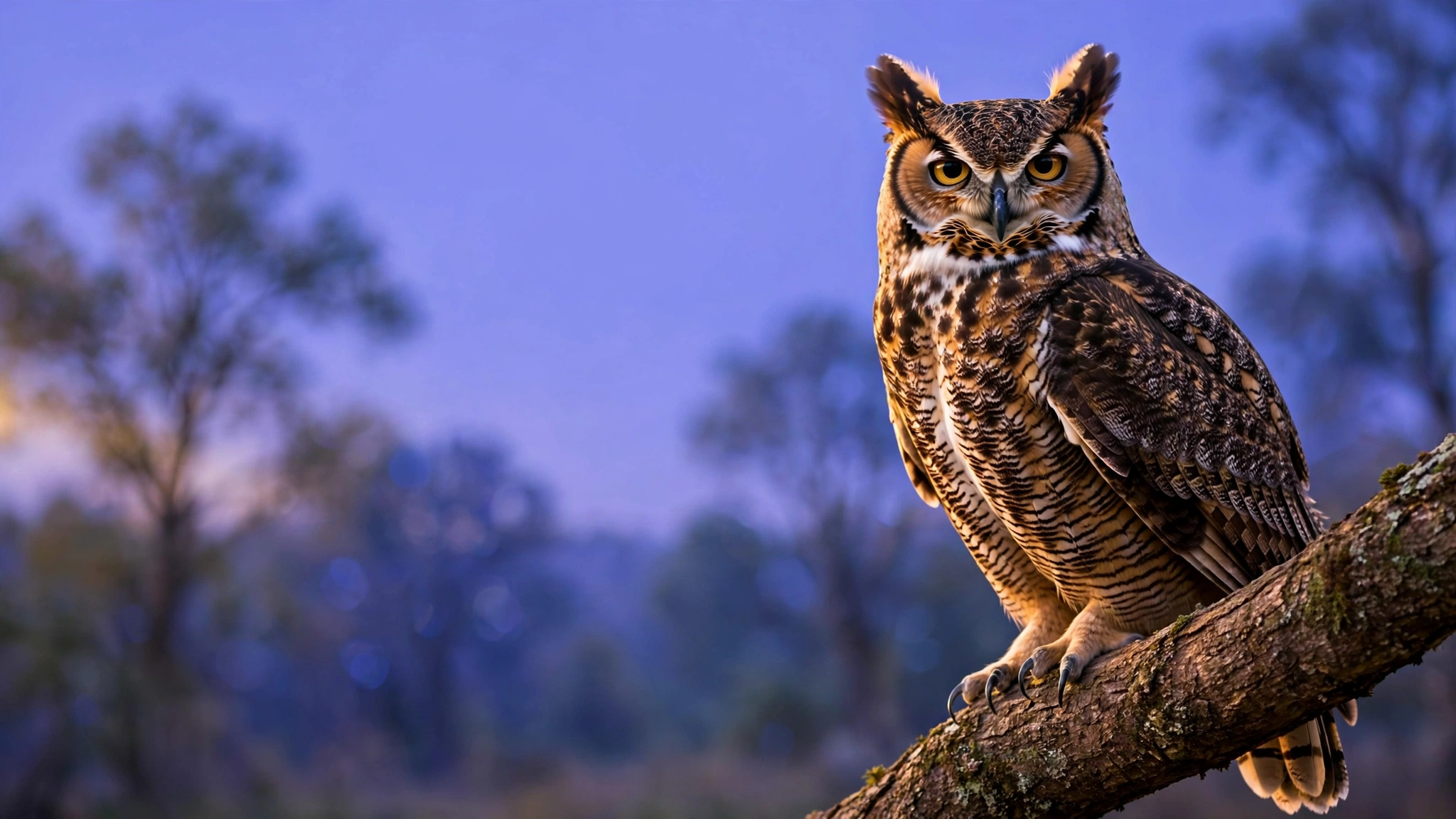
Owls are strict carnivores, and what owls eat depends on the species, the season, and the habitat. Small mammals such as voles and mice form the backbone of most owl diets, but the full menu stretches from songbirds and fish to crayfish, beetles, and even skunks. A barn owl quartering a moonlit meadow and a great horned owl ambushing a rabbit in the dark are both answering the same need: meat, caught fresh, eaten whole or torn apart on the spot.
This guide breaks down the owl diet from every angle. You will learn how owls hunt with near silent flight and extraordinary hearing, which prey categories matter most, how the diet changes species by species in a full comparison table, why diets shift through the seasons, and how researchers reconstruct the menu from owl pellets. It also covers the real value of owls as natural rodent control and clears up common myths about feeding owls in your garden.
How Owls Hunt: Built for the Kill
Owls hunt primarily at night, although a few species such as the burrowing owl and short eared owl hunt by day. Night hunting works because owls own three senses that few other predators can match. Their eyes are large, forward facing, and packed with rod cells for low light vision, giving them superb binocular vision for judging distance in near darkness. Because their eyes are fixed in their sockets, owls swivel their heads up to 270 degrees to scan for movement.
Sound matters as much as sight. Many owls have asymmetrically placed ear openings, one higher than the other, which lets them pinpoint the exact location of a rustling mouse in three dimensions. The stiff facial disc of feathers around the eyes funnels sound toward the ears like a satellite dish, and the barn owl can strike prey hidden under complete darkness or even under snow by sound alone. Researchers describe their directional hearing as accurate to within a degree or two.
The third advantage is silence. Special comb like serrations on the leading edge of the primary feathers break up air turbulence, while a soft velvety fringe on the trailing edge muffles what little noise remains. A mouse never hears the barn owl coming until the talons close. That silent flight is why owls can hunt the same ground night after night without prey learning to flee at the sound of wings.
A typical hunt follows a reliable sequence:
- Perch and scan: the owl settles on a fence post, branch, or pole and listens intently, rotating its head to triangulate sounds.
- Launch: it drops silently from the perch and glides low over the hunting ground, wings beating only when needed.
- Lock on: sight or sound confirms the target, and the owl adjusts its flight path in the final seconds.
- Strike: talons extend forward and punch down onto the prey with a crushing grip.
- Carry or swallow: small prey is swallowed whole, often head first, while larger prey is carried to a perch and torn apart with the hooked beak.

Talon strength varies by species, and the great horned owl is the heavyweight. Researchers estimate its grip at several hundred pounds of pressure per square inch, enough to kill prey as large as skunks, rabbits, and even other raptors. Few woodland animals are off its menu, which is why this species thrives across so many habitats.
The Core Owl Diet: What Most Owls Eat
Across more than 200 owl species worldwide, the diet falls into clear categories. The proportions change from species to species, but these are the building blocks of what owls eat:
- Small mammals: voles, mice, shrews, and rats dominate the diets of barn owls, long eared owls, and saw whet owls. Rodents are energy rich, abundant, and active at night, which makes them the ideal owl food.
- Birds: great horned owls, barred owls, and eastern screech owls all take songbirds, and great horned owls regularly kill other owls, hawks, and even young ospreys. Roosting birds are vulnerable after dark.
- Insects: burrowing owls and eastern screech owls eat large numbers of beetles, grasshoppers, moths, and crickets, especially in summer. Insects are a crucial food for small owl species and for chicks.
- Fish and amphibians: barred owls wade into shallow water to catch fish and crayfish, and many owls take frogs and salamanders from wetland edges.
- Reptiles: snakes and lizards appear in the diets of burrowing owls and great horned owls, particularly in warmer regions.
- Earthworms and snails: eastern screech owls and some other small owls pick up earthworms after rain, a surprising but documented food source.
Owls rarely drink standing water. Most get all the moisture they need from the blood and tissue of their prey, which is one reason they can live in arid grasslands and deserts. Carrion enters the diet only occasionally. Great horned owls and barred owls will scavenge roadkill when live prey is scarce, but owls are hunters first and scavengers only when hungry. For a broad overview of owl biology, see the owl entry on Wikipedia, and for more surprising traits, these fascinating facts about owls cover their senses in detail.
Owl Diet by Species: The Comparison Table
The question of what owls eat gets interesting when you compare species side by side. A 150 gram saw whet owl and a 1.5 kilogram great horned owl live in the same forests yet eat very differently. The table below summarises the main diet of eight familiar species, their hunting style, and the fact that sets each one apart.

| Species | Primary prey | Hunting style | Notable diet fact |
|---|---|---|---|
| Barn owl | Voles, mice, shrews | Low quartering flight over fields, sound based strikes | One of the most specialised rodent hunters; a single owl can eat well over 1,000 rodents a year. |
| Great horned owl | Rabbits, skunks, rats, other birds | Powerful perch and pounce, also hunts on the wing | The least picky large owl; known to kill other owls, hawks, and even porcupines. |
| Barred owl | Voles, mice, crayfish, frogs, small birds | Perch hunting from forest branches | One of the few owls that regularly catches fish and crayfish in shallow water. |
| Eastern screech owl | Large insects, mice, small songbirds, earthworms | Perch and swoop from low branches | Summer diet is insect heavy; it switches to mammals and birds in winter. |
| Snowy owl | Lemmings, voles, seabirds, ducks | Daytime hunting from ground perches, also hovers | Breeding success tracks lemming cycles; an adult may eat 3 to 5 lemmings a day. |
| Burrowing owl | Beetles, grasshoppers, small mammals, lizards | Daytime ground pouncing and short flights | Decorates its burrow entrance with mammal dung to attract the beetles it eats. |
| Long eared owl | Voles, especially field voles | Slow buoyant flight over open ground at night | Among the most diet specialised owls; voles can make up over 90 percent of its food. |
| Northern saw whet owl | Deer mice, shrews, small voles | Low perch hunting in dense forest | Despite its small size it caches surplus prey, sometimes storing several mice in one night. |
Seasonal Diet Shifts: What Changes Through the Year
Owl diets are not fixed. They bend with the seasons as prey availability rises and falls, and the same owl can look like a different hunter in January than in July. Understanding these shifts explains many of the odd items that turn up in pellet studies.
- Winter: small mammals dominate everywhere. Snow cover concentrates voles and mice under the surface, and owls that can hear them through the snow, such as barn owls and great grey owls, keep hunting successfully. Food caching becomes common; saw whet owls and boreal owls stockpile mice in tree cavities.
- Spring: breeding season raises energy demands sharply. Parent owls take larger and more frequent prey to feed growing chicks, and some species broaden the menu to anything catchable. Great horned owl pairs feeding young can take hundreds of prey items in a few weeks.
- Summer: insects surge and small owls cash in. Eastern screech owls, burrowing owls, and elf owls may feed mostly on beetles, moths, and grasshoppers for months. Juvenile birds fledging from nests also become easy targets.
- Autumn: young owls disperse and must learn to hunt fast. Diets widen as inexperienced birds take whatever they can catch, and migratory songbirds passing through provide a seasonal bonus for bird eating species.
Prey population cycles drive the biggest shifts of all. Snowy owls breed successfully only in years when lemmings are abundant, and in crash years many do not breed at all. Irruption winters, when owls move far south in search of food, usually follow a collapse in northern rodent numbers. These cycles are a reminder that owl numbers and rodent numbers are locked together.
Owl Pellets: How Scientists Read the Menu
Much of what we know about what owls eat comes from pellets, the neat grey bundles of fur, bone, and feather that owls cough up after a meal. Owls swallow small prey whole, and the muscular gizzard digests the soft parts while compressing the indigestible parts into a pellet. Six to ten hours after eating, the owl regurgitates the pellet, usually at a favoured roost.
Because pellets preserve skulls, jawbones, and feathers, researchers can identify exactly what an owl ate. Pellet dissection is a classic school science activity for good reason: a single barn owl pellet can contain two or three vole skulls, and a winter collection from one roost can reveal hundreds of prey items. This is how scientists documented the barn owl’s extreme specialisation on rodents and the barred owl’s taste for crayfish.
Pellets also reveal seasonal shifts, prey cycles, and even the presence of rare small mammals that live trapping misses. If you find pellets under a roost, leave them where they are unless you have permission to collect them, since roosts are sensitive spots. For a deeper look at how pellets form and what they contain, read our guide to owl pellets.
Owls as Natural Rodent Control
Farmers and vineyard owners have understood the value of owls for decades. A single barn owl family can consume thousands of rodents in a breeding season, and installing barn owl nest boxes is now a standard practice in integrated pest management. The owls work every night for free, target the exact pests that damage crops, and leave no chemical residue.

The maths is compelling. Rodents can eat or spoil a significant share of stored grain and growing crops, and a pair of barn owls with chicks may take a dozen or more rodents a night during the peak of the breeding season. Unlike poisons, owls do not create secondary poisoning risks for pets, livestock, or other wildlife, although this is exactly why rodenticides are so dangerous to owls: a poisoned rat becomes a poisoned owl meal. If you want owls working your land or garden, habitat matters more than food handouts.
Backyard Owl Food Myths: Do Not Feed Owls
Every year, well meaning people ask what they can put out for the owls in their garden. The answer is nothing. Owls are wild predators, and feeding them does real harm, however kind the intention. Here are the myths that need retiring:
- Myth: owls will eat bird seed or bread. Reality: owls are obligate carnivores. Seed, bread, and fruit are useless to them and will only attract rats.
- Myth: leaving out raw meat helps owls in winter. Reality: handouts make owls dependent, teach them to approach people, and can spread disease at feeding spots. Winter is also when owls need to hunt naturally to stay sharp.
- Myth: a pet mouse from the shop is a good treat. Reality: domestic rodents can carry diseases, and feeding trains owls to associate humans with food, which ends badly for the owl.
- Myth: feeding owls helps them breed. Reality: what helps breeding is habitat, nest boxes, and healthy prey populations, not handouts.
The right way to support owls is to make your garden huntable: leave rough grass where voles thrive, put up a species appropriate nest box, avoid rodenticides, and keep cats indoors at night. For practical steps, see how to attract owls to your yard the safe way.
Frequently Asked Questions
Do owls eat cats and small dogs?
Very rarely, and only the largest species. A great horned owl is physically capable of taking a small kitten or a tiny dog, and such cases have been documented, but they are uncommon. Most owls are far too small to threaten pets. Keeping cats indoors at night protects both the cat and the local owl population.
Do owls drink water?
Rarely. Most owls get all the water they need from the moisture in their prey, and many species are seldom seen drinking. Owls in very hot or dry regions will drink and bathe when water is available, but it is not a daily requirement for most.
Do owls eat other birds?
Yes. Great horned owls regularly eat crows, ducks, and other owls, and barred owls and screech owls take roosting songbirds. Bird eating is most common in larger species and in winter when mammals are harder to find. Small songbirds sleeping in the open are the usual victims.
Why do owls cough up pellets?
Pellets are how owls dispose of the indigestible parts of their food. Fur, bones, teeth, and feathers are compressed in the gizzard and regurgitated, usually six to ten hours after eating. It is a normal, healthy process and a goldmine for researchers studying owl diets.
Do owls eat dead animals?
Occasionally. Owls are primarily live prey hunters, but great horned owls and barred owls will scavenge carrion, especially roadkill, when hunting is poor. Scavenging is a backup strategy, not a preference, and most owl species are rarely seen at carcasses.
What do baby owls eat?
The same prey as adults, delivered in smaller pieces. Parent owls tear food into bite sized morsels for young chicks and gradually bring whole prey as the owlets grow. A fast growing brood of barn owls can demand a dozen rodents a night from hard working parents.
Do owls hoot while hunting?
No. Owls hunt in silence and save their voices for communication. Hooting advertises territory and attracts mates, and a hunting owl calling out would warn every mouse in the field. Night time hooting peaks in the breeding season. Learn more in why owls hoot at night.
The Last Word on What Owls Eat
What owls eat comes down to opportunity plus specialisation. Every owl is a carnivore, most lean heavily on small mammals, and each species tunes its hunting to its body and habitat, from the barn owl’s sound guided sweeps over meadows to the burrowing owl’s daytime beetle hunts. Seasonal shifts, prey cycles, and pellets all tell the same story: owls are flexible enough to survive lean times but specialised enough to keep rodent populations in check.
That balance is worth protecting. Owls provide free, chemical free pest control, and they ask only for habitat, nest sites, and prey that has not been poisoned. Skip the handouts, keep the grass rough, put up a nest box, and let the owls do what evolution built them to do. The silent hunter over your field at dusk is one of the hardest working predators in the bird world.