 Skip to content

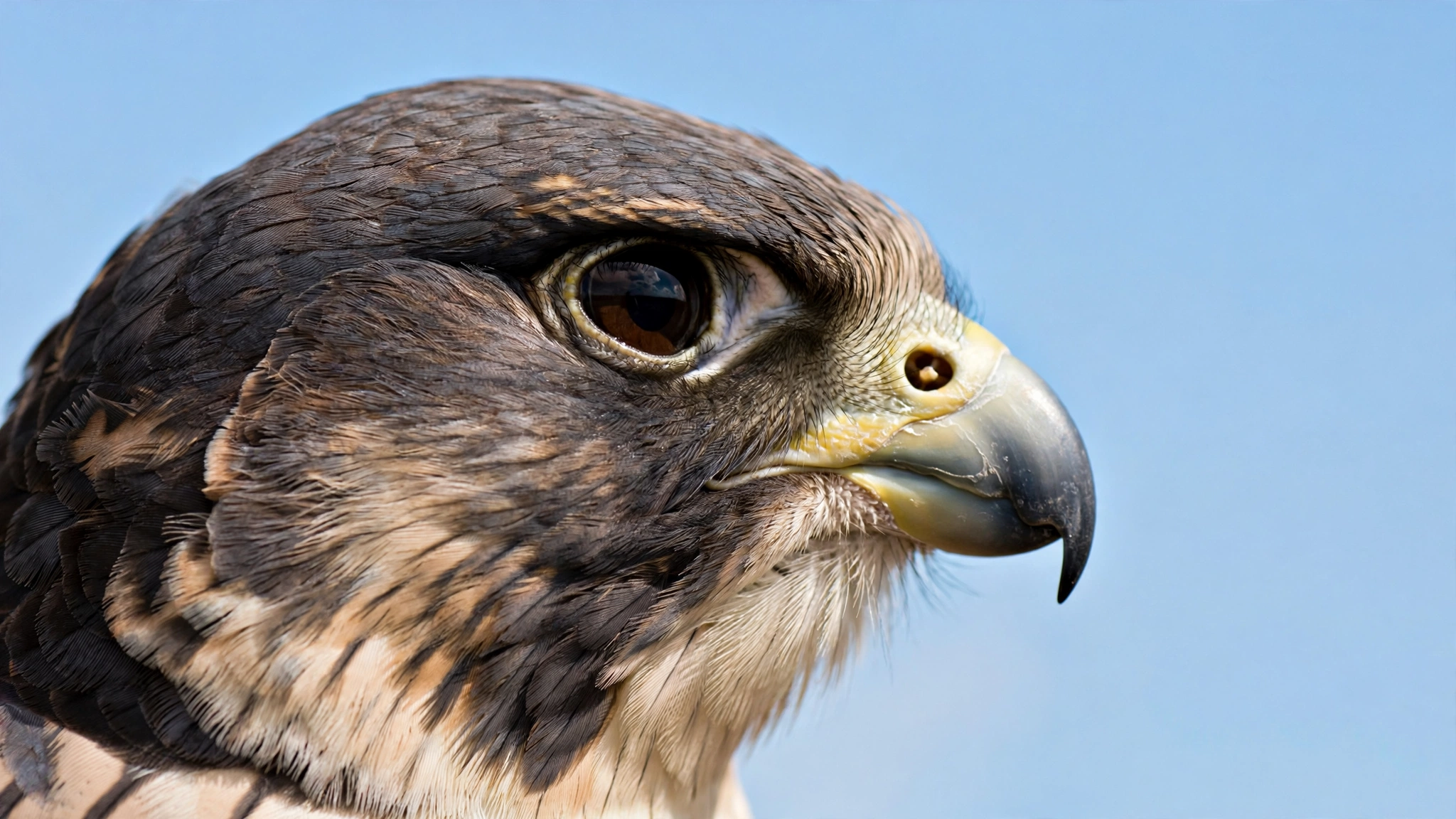
It is one of the most common questions curious minds ask about birds: do birds have teeth? Anyone who has watched a duck dabble along a pond edge or a falcon tear at its prey may well wonder. Some beaks carry ridges, hooks and spikes that look remarkably like teeth.
Here is the surprising answer. No living bird has true teeth. Not one of the roughly 11,000 species alive today. But the full story is far more interesting than a simple no. Bird beaks carry a toolkit of tooth-like structures that grip, filter and slice. Bird chicks hatch with a temporary egg tooth for breaking out of the shell. And the ancestors of modern birds did have teeth, until evolution took them away about 116 million years ago.
This guide gives you the direct answer first. Then it explores the science behind the question: the beak structures that mimic teeth, the egg tooth, the genome study that dated tooth loss, how birds eat without teeth, and the fossil birds that kept theirs.
The Short Answer: No Living Bird Has True Teeth
Every bird alive today eats without a single true tooth. Hummingbirds, ostriches, penguins, parrots: all of them. A true tooth is a hard structure made of dentin capped with enamel and rooted in the jaw. Birds have none of these structures.
Instead, each bird carries a beak. The beak is a lightweight tool built from bone covered in keratin, the same tough protein found in human fingernails. It grows continuously through life and wears down with use, so birds never run out of cutting edge. Different diets have shaped beaks into hooks, cones, sieves and spears, but none of them contains teeth.
The confusion is completely understandable. Look closely at a goose with its mouth open, or watch a duck filter pond water, and you will see spikes and ridges that look exactly like teeth. The sections below show what each of these structures really is. For a quick expert overview, the Cornell Lab of Ornithology also answers this question directly: Do Birds Have Teeth? Spoiler: the answer is no, with fascinating details.
Beak Structures That Look Like Teeth
Birds lost their true teeth, but evolution handed them replacements that do similar jobs. Each of the structures below is made of keratin, not enamel and dentin, so none of them counts as a tooth. They are beak adaptations, and they are remarkably effective.
The Tomial Tooth: A Falcon’s Built-In Weapon
The tomial tooth is a sharp, distinct projection on the upper mandible of falcons, flanked by small notches. It looks like a single fang. Falcons use it to deliver a precise killing bite. The bird slots the projection between the neck vertebrae of its prey and severs the spinal cord through leverage and precision.
Unlike hawks and eagles, which kill mainly with their talons, falcons rely on this beak tool to finish the job quickly. Shrikes, which are songbirds with a taste for vertebrate prey, evolved a similar tomial tooth independently. Their version works with a hooked beak tip to hold prey while they impale it on thorns, making up for feet that are far weaker than a raptor’s.
This is convergent evolution in action: two unrelated groups solving the same problem with the same tool. To see how each beak shape serves its owner, read our guide to bird beak types.
Tomia: The Sharp Cutting Edges
The tomium is the sharp cutting edge of the beak, and birds carry one on each side of both the upper and lower mandible. Depending on the species, the tomia can be smooth, hooked or serrated. They work like shears. When the jaw closes, the upper edge slides just outside the lower edge, creating a slicing action that tears flesh or vegetation.
Scavengers and raptors use strong tomia to slice through muscle, tendon and cartilage. Seed eaters use finer edges to husk seeds with precision. The tomia never stop growing, which keeps them sharp despite constant wear.
Lamellae: Nature’s Built-In Sieve
Watch a duck dabbling and you will see its bill working like a sieve. The secret is the lamellae: fine, comb-like ridges lining the inside edges of the bill. Ducks, geese, swans and flamingos all carry them.
The bird scoops up a mouthful of water, mud or silt, then squeezes it out through the lamellae. The ridges trap seeds, small invertebrates and plant matter while the water drains away. Flamingos take this to an extreme, pumping water through their bills to filter out tiny algae and crustaceans, the same food that gives them their pink colour.

The Spikes Inside a Goose’s Mouth
Few sights surprise people more than an open goose bill. The inner edges carry rows of sharp-looking spikes, and the tongue itself bristles with backward-pointing projections called papillae.
These spikes are serrated tomia and keratin papillae, not teeth. They serve two jobs. First, they grip slippery vegetation so it cannot slide out of the bill. Second, they act like a serrated knife, shearing grass and leaves as the bird pulls. The backward angle of the tongue spikes pushes food toward the throat, which makes swallowing efficient.

Beak Adaptations at a Glance
| Adaptation | What it is | Function | Seen in |
|---|---|---|---|
| Tomial tooth | Single sharp projection on the upper mandible | Delivers a killing bite by severing the spinal cord | Falcons, shrikes |
| Serrated tomia | Tooth-like serrations along the beak edge | Grips slippery food and shears vegetation | Geese, mergansers, toucans |
| Lamellae | Fine comb-like ridges inside the bill | Filters food from water and mud | Ducks, geese, swans, flamingos |
| Hooked bill tip | Downcurved, pointed upper mandible | Tears flesh and holds struggling prey | Hawks, eagles, owls, parrots |
| Tongue papillae | Backward-pointing spikes on the tongue | Pushes food toward the throat | Geese, ducks, woodpeckers |
The table makes one point clear. Birds did not simply lose their teeth and accept the loss. They rebuilt the entire toolkit from keratin, and each design matches its diet with precision.
The Egg Tooth: The Only Tooth a Bird Ever Grows
Every bird hatches with something called an egg tooth. It is a small, hard projection on the tip of the upper bill, and its job is simple: break the shell from the inside.
During the final days of incubation, the chick positions its head and uses the egg tooth to chip a hole in the shell, a process called pipping. The chick then pushes and rotates until the shell cap breaks free. Once hatching finishes, the egg tooth has done its job. It falls off or is reabsorbed within a few days.
The egg tooth is made of keratin, not enamel and dentin, so it is not a true tooth either. It is a temporary tool, grown for one task and discarded. To learn when this drama unfolds in the nesting calendar, see our guide to when birds lay eggs and the nesting season.
Why Birds Lost Their Teeth
Ever since the discovery of the toothed fossil bird Archaeopteryx in 1861, scientists knew that birds descended from toothed ancestors. What they could not see was when, or how, the teeth disappeared. The answer came from DNA.
The 116-Million-Year Genome Study
In 2014, researchers led by Robert Meredith and Mark Springer published a landmark study in the journal Science. They examined the genomes of 48 bird species, representing nearly all living bird orders, and looked at six genes essential for building teeth: one for dentin and five for enamel.
In every one of the 48 species, these genes carried shared inactivating mutations. They were dead genes, broken in exactly the same way across all birds. That pattern points to a single loss of teeth in the common ancestor of all modern birds, rather than teeth disappearing separately in different lineages.
The researchers estimated that the enamel covering of teeth was lost around 116 million years ago. They also proposed a two-step scenario for how the beak replaced teeth:
- Tooth loss and partial beak development began at the front of the upper and lower jaws.
- Tooth loss and beak development then progressed toward the back of the rostrum, producing a complete horny beak.
The team suggested that this transformation may have helped drive the diversification of living birds. IFLScience covered the findings in detail: When Birds Lost Their Teeth.
Shedding Weight for Flight
Why would losing teeth help a bird? The leading idea is weight. Teeth are heavy, and a heavy head is expensive for a flying animal. Every gram saved at the front of the body makes flight cheaper and more agile.
A keratin beak weighs far less than a bony, toothed jaw. By swapping teeth for a light beak, early birds gained a more efficient flying machine. Scientists still debate how much weight loss mattered compared with other advantages, such as faster chick development, but the weight theory remains the most popular explanation.
The Gizzard: A Stomach That Chews
Birds also had a backup plan for grinding food: the gizzard. This muscular chamber sits in the digestive tract and contracts with remarkable force, crushing and grinding food the way teeth would.
Many birds boost the grinding power by swallowing grit: small stones and coarse sand that lodge in the gizzard and act like millstones. Chickens, pigeons and ostriches all rely on grit. The gizzard made teeth redundant, which removed the evolutionary pressure to keep them.
How Birds Process Food Without Teeth
A bird’s digestive system is a production line that handles everything teeth would do. Food enters the beak, where it is torn, filtered or swallowed whole depending on the species.
From the beak, food travels to the crop, a storage pouch in the throat that holds the meal. It then passes to the proventriculus, the glandular stomach, where acids and enzymes begin chemical digestion. Finally, it reaches the gizzard, where muscular grinding breaks everything into small particles.
This system is so effective that birds eat foods mammals could never manage without teeth: whole fish, hard seeds, tough grasses and large insects. The beak handles the gathering, and the stomach handles the chewing.
The Toothed Birds of the Past
To see real bird teeth, you have to travel back in time. The fossil record preserves several birds that carried genuine teeth, rooted in their jaws with enamel and dentin. These extinct species show the transition from toothed dinosaur to toothless modern bird.

Archaeopteryx: The Feathered Fossil With Teeth
Archaeopteryx lived about 150 million years ago in the Late Jurassic. It carried small, conical teeth in its jaws alongside fully developed flight feathers, clawed fingers and a long bony tail. It is the classic transitional fossil: part dinosaur, part bird.
The discovery of Archaeopteryx in 1861 first proved that birds descended from toothed ancestors. Every toothless bird alive today traces its lineage back through creatures like this one.
Hesperornis: The Toothed Diving Bird
Hesperornis swam the shallow seas of the Late Cretaceous, about 80 million years ago. It was a flightless diving bird, roughly the size of a large loon, with powerful legs for chasing fish underwater. Its long jaws carried sharp, pointed teeth for gripping slippery prey.
Hesperornis shows that teeth survived in some bird lineages long after the ancestors of modern birds had lost theirs. It went extinct with the dinosaurs at the end of the Cretaceous.
Ichthyornis: The Gull-Like Fisher
Ichthyornis looked remarkably like a modern gull or tern, but its beak hid a secret: a full set of small, sharp teeth. It flew over the same Cretaceous seas as Hesperornis, snatching fish from the surface.
Ichthyornis was a strong flyer with a keeled breastbone for flight muscles, which proves that teeth and powered flight could coexist. Birds simply found a better solution. For the deeper story of how dinosaurs became birds, see are birds dinosaurs.
Birds With “Tooth” in the Name
A few living birds carry the word tooth in their names, which confuses the picture further. The Tooth-billed Wren of Peru and the Tooth-billed Bowerbird of Australia are the best known examples.
Neither bird has teeth. Both earned their names from serrated edges along their bills that reminded early naturalists of teeth. Like every other modern bird, they are fully toothless. The name is a historical label, not a dental diagnosis.
Frequently Asked Questions
Do any living birds have true teeth?
No. None of the roughly 11,000 living bird species has true teeth. Every modern bird lost the genetic machinery for building teeth around 116 million years ago, and the beak took over all the jobs teeth used to do.
Do ducks have teeth?
Ducks do not have teeth. The ridges inside a duck’s bill are lamellae: fine, comb-like keratin structures that filter seeds and invertebrates from water. They look like teeth, but they are part of the beak, not separate dental structures.
What are the spikes inside a goose’s mouth?
The spikes are serrated tomia along the bill edges and backward-pointing papillae on the tongue. Both are made of keratin. They grip slippery vegetation, shear grass and push food toward the throat. They are not teeth.
Do baby birds have teeth?
Baby birds do not grow true teeth, but they do hatch with an egg tooth: a small keratin projection on the upper bill used to break out of the shell. It falls off or is absorbed within days of hatching.
Why did birds lose their teeth?
The most widely supported explanation is weight savings for flight: a lightweight keratin beak costs less energy to carry than a heavy, toothed jaw. A muscular gizzard that grinds food with swallowed grit also made teeth redundant, removing the pressure to keep them.
Did Archaeopteryx have teeth?
Yes. Archaeopteryx, which lived about 150 million years ago, carried small conical teeth in its jaws. Its discovery in 1861 was the first proof that birds descended from toothed ancestors.
Can birds chew their food?
Birds cannot chew in the mammalian sense, because chewing needs teeth. Instead, they tear food with the beak, swallow it, and let the muscular gizzard grind it internally, often with the help of swallowed grit.
Conclusion: Toothless, But Far From Helpless
So, do birds have teeth? No living bird does, and the answer is written into their DNA. Around 116 million years ago, the common ancestor of all modern birds lost the genes for building teeth, and evolution replaced them with something better: a lightweight, endlessly renewable beak.
That beak turned out to be one of nature’s great multi-tools. The falcon’s tomial tooth kills with surgical precision. The duck’s lamellae sieve ponds like a living filter. The goose’s serrated mouth grips and shears. And when grinding is needed, the gizzard does the chewing from inside. The egg tooth even gives every chick one temporary tool for its first great task: hatching.
The fossil record keeps the memory of what was lost. Archaeopteryx, Hesperornis and Ichthyornis carried real teeth, and they remind us that toothlessness is a recent invention in bird history. Birds did not lose their teeth because they failed. They lost them because they found a lighter, tougher and more versatile way to eat.





