 Skip to content

Can Birds Eat Peanut Butter? Safety, Myths, and How to Serve It
Peanut butter is one of the most talked about foods in backyard birding, and it comes with a long running worry. Many people have heard that it can choke birds, and that fear keeps perfectly good jars on the shelf. Birding experts have looked closely at this claim, and the real story is much more encouraging: yes, birds can eat peanut butter, and most of them love it.
The Short Answer: Yes, Birds Can Safely Eat Peanut Butter
Peanut butter is a safe and nutritious food for most wild birds when you choose the right type and serve it sensibly. It is packed with protein and fat, two nutrients that birds burn through quickly, especially in cold weather when natural food is scarce. Many experienced birders and ornithologists have fed peanut butter to birds for decades with no reported problems.
The myth that peanut butter chokes birds has circulated for years, often repeated in good faith. It sounds plausible: peanut butter is thick and sticky, and birds are small. Yet the experts who have examined the claim say it does not hold up. Kenn and Kimberly Kaufman, two of the most respected birding authorities in North America, have stated plainly that there is no evidence peanut butter chokes birds.
Woodpeckers, nuthatches, and creepers probe tree bark for insects, scraping sticky substances with strong bills. A thin smear of peanut butter on bark is well within what their feeding habits can handle.
The Choking Myth, Debunked
So where did the choking myth come from? Nobody can point to a documented case. The claim appears to have grown out of a reasonable sounding caution that got repeated until it sounded like a fact. Kenn and Kimberly Kaufman, who have answered reader questions on this topic for Birds and Blooms, say they have never seen or heard of this happening in all their years of birding.
There is one kernel of truth worth respecting. A large glob of peanut butter in an open dish could be messy for a small bird. But that is a serving problem, not a food problem. Spread it thin on bark, roll it in seed on a pine cone, or mix it into a suet cake, and the stickiness becomes an advantage.
If you have been avoiding peanut butter out of fear, you can let that fear go. The birding community’s verdict is consistent: peanut butter is fine. Focus your caution on the real hazards, which come next.
Nutrition Profile: Why Peanut Butter Is Good for Birds
Peanut butter is essentially ground peanuts, and peanuts are already a well known bird food. A typical natural peanut butter contains roughly 25 percent protein and 50 percent fat, along with fibre, vitamin E, B vitamins, magnesium, and phosphorus. For birds, the calorie density is the headline benefit, because small birds have extremely fast metabolisms and lose heat rapidly.
In winter, when insects are gone and seeds are buried under snow, a fat rich food like peanut butter can genuinely help birds make it through the night. Birds build up fat reserves during the day and burn them overnight to stay warm.
During migration, the benefit shifts to refuelling. Migrants stop over to rebuild fat stores, and high calorie foods let them top up faster. Even in the breeding season, parent birds appreciate an easy, energy dense food source while they feed hungry nestlings.
The key points in its nutrition profile:
- High energy: roughly 580 to 600 calories per 100 grams, ideal for cold weather feeding.
- Protein rich: supports feather growth and general body maintenance.
- Vitamin E: an antioxidant that supports immune function.
- Palatability: most insect and seed eating backyard birds take to it quickly.
Peanut butter sits comfortably on lists of kitchen foods that are safe for birds, as Southern Living’s roundup of safe kitchen scraps confirms. It is the additives, not the peanuts, that cause trouble.

The Xylitol Warning: Read the Label Before You Buy
Here is the warning that actually matters. Some peanut butters contain xylitol, a sugar substitute also listed as birch sugar or E967. Xylitol is highly toxic to dogs, and it is considered unsafe for birds as well. Birds are small, their metabolism is fast, and sweeteners like xylitol can cause dangerous blood sugar drops and liver stress.
Xylitol is most often found in products marketed as sugar free, reduced sugar, or low calorie peanut butter. The regular, full fat peanut butters that most people keep in their kitchen rarely contain it, but check every jar anyway, since manufacturers change recipes without fanfare.
Read the ingredient list every time you buy a new jar. If you see xylitol, birch sugar, or any ingredient you cannot identify, choose a different jar for the birds. This single habit removes the biggest real risk.
Which Types of Peanut Butter to Buy
The safest choice is the simplest one: natural peanut butter whose ingredient list contains peanuts and perhaps salt, and nothing else. Here is how the options compare:
- Natural peanut butter: peanuts and salt only. The best choice for birds.
- Organic peanut butter: usually just peanuts, sometimes with a little palm oil. Also excellent.
- Regular commercial brands: contain added sugar, salt, and stabilisers like palm oil. Acceptable in small amounts, but natural is better.
- Sugar free or reduced fat versions: often contain xylitol or other sweeteners. Avoid these for birds.
- Flavoured spreads: chocolate, honey, or cinnamon varieties. Skip them. Extra additives add risk with no benefit.
A few practical notes on salt and sugar. The salt in a lightly salted natural peanut butter is well within safe limits for occasional feeding, while added sugar offers nothing but empty calories. When in doubt, pick the jar with the shortest ingredient list.
Crunchy or smooth? It makes little difference to the birds. Crunchy varieties contain peanut pieces that birds happily pick out. Smooth spreads more easily on bark. Buy whichever you prefer.
How to Serve Peanut Butter Safely
The golden rule is to offer peanut butter in thin layers or mixed with other ingredients, never in thick lumps. Here are the most popular serving methods, from simplest to most involved.
Smear It on Tree Bark
Use a butter knife or an old spoon and spread a thin layer directly onto the bark of a tree or a wooden fence post. Rough bark works best because the texture holds the spread and gives birds footing as they cling.
Press a little birdseed into the smear while it is fresh. Woodpeckers, nuthatches, and creepers are the first visitors to this setup, since it mimics their natural foraging on bark. Refresh the smear every day or two, and scrape off any that looks stale before reapplying.
Use a Dedicated Peanut Butter Feeder
Several feeder designs are made specifically for peanut butter. Log feeders are short sections of log drilled with holes, often sold as suet log feeders, that hold dollops of peanut butter or suet plugs. Platform feeders work too, as long as you spread the peanut butter thinly on the tray rather than piling it up.
Mesh peanut butter feeders exist as well, though plain mesh can be hard to clean once peanut butter dries into it. Whatever design you choose, place it where you can reach it easily for cleaning. Avoid putting peanut butter in tube feeders meant for seed, where it will clog the ports.
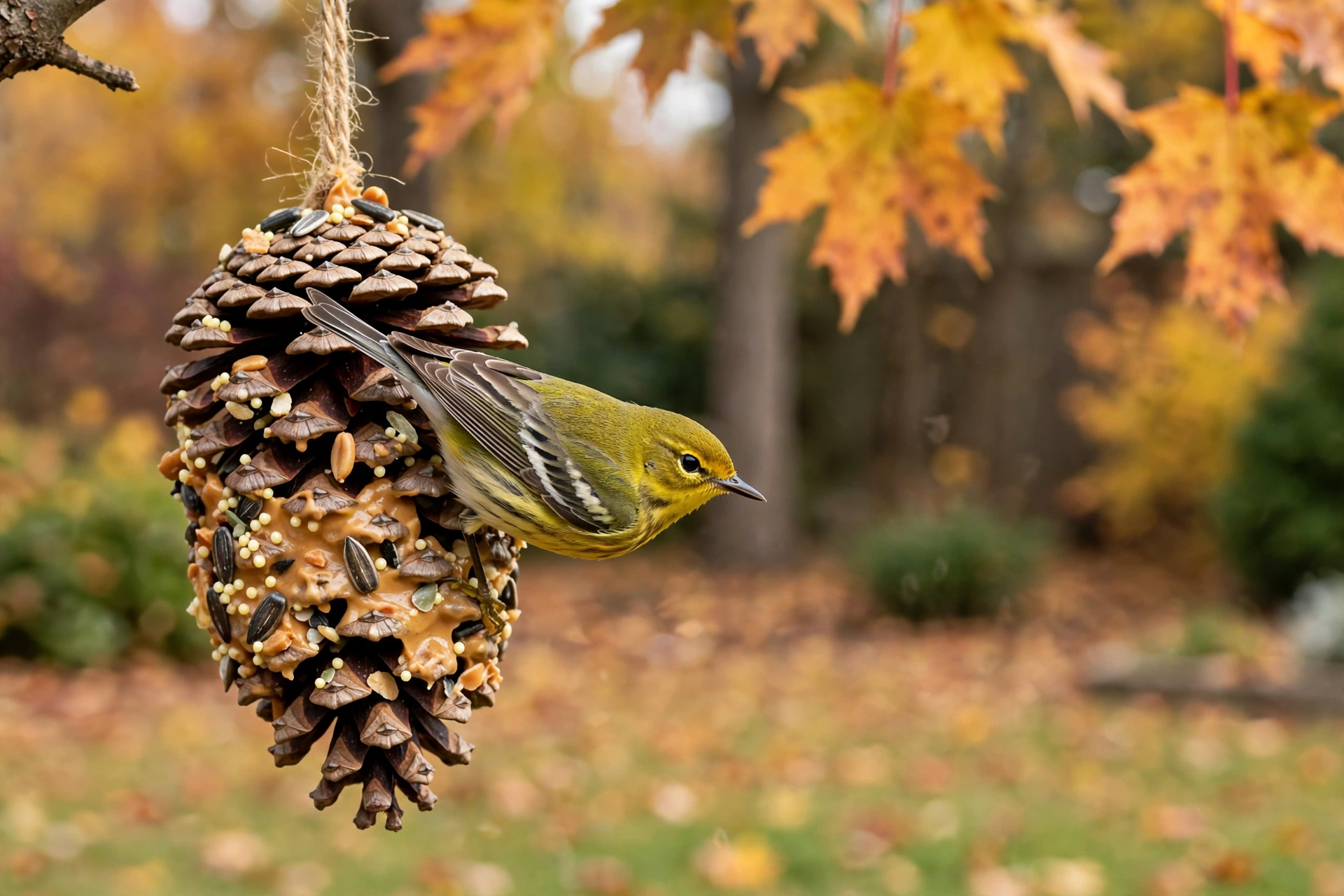
Make a Pine Cone Feeder: Step by Step
The pine cone feeder is a classic for a reason. It is cheap, it works beautifully, and birds love it.
- Choose a large, open pine cone and tie a length of sturdy twine or string securely around its top scales.
- Spread peanut butter into the crevices of the cone with a butter knife, working it between the scales but keeping the layer modest.
- Roll the coated cone in a tray of mixed birdseed until the surface is well covered and most of the stickiness is gone.
- Press a few sunflower seeds or peanut halves into the stickiest spots for extra appeal.
- Hang the finished feeder from a sturdy branch at least 1.5 metres off the ground, away from spots where predators can lurk.
- Check the feeder every two to three days and remove it when the seed is gone.
Tip: let the peanut butter warm to room temperature before spreading. It spreads more easily and you will use less.
Peanut Butter Suet Cake Recipe
Mixing peanut butter into homemade suet cakes is one of the best ways to serve it. The mixture firms up, lasts longer than plain smears, and combines the energy of fat with the variety of seeds and grains.
You will need:
- Melted fat: 250 grams of beef suet, lard, or coconut oil. Never use bacon drippings, which are too salty.
- Peanut butter: 150 grams of natural peanut butter, no xylitol, no added sugar.
- Dry mix: 200 grams of mixed birdseed, 100 grams of rolled oats, and 50 grams of cornmeal.
- Optional extras: a handful of raisins, chopped unsalted peanuts, or dried mealworms.
Method:
- Melt the fat gently in a saucepan over low heat. Do not let it boil or smoke.
- Stir in the peanut butter until the mixture is smooth and fully combined.
- Remove from the heat and fold in the dry ingredients until everything is evenly coated.
- Spoon the mixture into a lined baking tray or individual suet moulds, pressing it down firmly.
- Refrigerate for at least three hours, or until completely firm.
- Cut into blocks, store extras in the fridge for up to two weeks, and place one block in your suet feeder.
This recipe is a natural companion to a full suet making routine. Our guide to making suet for birds covers more recipes and techniques, and our winter suet feeding guide covers cold season strategy.

Best Seasons and Times of Day
Peanut butter shines brightest in the cooler months. Autumn, winter, and early spring are the ideal seasons, because birds need the calories most and the cooler air keeps the food fresh longer. The same feeder in a July heatwave is a spoilage risk.
Heat is the enemy. Peanut butter goes rancid faster in warm weather, and rancid fats are unhealthy for birds. Softened peanut butter can also drip and grow mold quickly. As a rule of thumb, offer peanut butter freely when daytime temperatures stay below about 25 degrees Celsius, and skip it during hot spells.
Time of day matters too. Birds feed most actively in the first few hours after sunrise and again in the late afternoon as they fuel up for the night. Putting out fresh peanut butter in the morning means it is at its best during the busiest feeding window.
Which Bird Species Visit Peanut Butter Feeders
A remarkable range of birds will try peanut butter. The most enthusiastic visitors are the bark foragers and the bold, curious species that investigate anything new:
- Woodpeckers: downy, hairy, and red bellied woodpeckers all love peanut butter, and flickers will visit ground level offerings.
- Nuthatches: white breasted and red breasted nuthatches are peanut butter specialists at many feeders.
- Chickadees and titmice: bold, quick, and among the first to try something new.
- Jays: blue jays and scrub jays carry off mouthfuls to cache.
- Wrens: Carolina and house wrens probe peanut butter smeared in crevices.
- Warblers: pine warblers in particular visit feeders in winter.
- Mockingbirds and thrashers: larger songbirds that appreciate easy calories.
Even species you would not expect sometimes join in. Bluebirds, orioles, and kinglets have all been recorded at peanut butter feeders. Birds watch each other, and one brave chickadee often starts a trend.
Storage and Spoilage Rules
An unopened jar of peanut butter keeps for months in a cool cupboard. Once you start serving it outdoors, different rules apply, because air, moisture, insects, and temperature swings all speed up spoilage.
- Smell before you serve: rancid peanut butter has a sharp, stale, or paint like odour. If it smells off, throw it out.
- Watch the texture: peanut butter that has dried out, darkened, or developed a crust should be replaced.
- Limit outdoor time: in cool weather, refresh offerings every two to three days. In warm weather, every day.
- Store homemade suet cakes in the fridge: they keep for up to two weeks, or months in the freezer.
- Buy sensible quantities: a huge catering jar that sits open for months will go stale long before you finish it.
There is also a broader caution worth knowing. Peanuts in general can harbour aflatoxin, a mold toxin harmful to birds and humans, when stored damp or allowed to go stale. This is another reason to buy fresh jars from reputable brands and never serve peanut butter that smells or looks off.
Cleaning Feeders to Prevent Mold
Peanut butter feeders need more cleaning than seed feeders. The oily residue traps moisture and old seed, creating exactly the conditions mold loves.
Scrape out old peanut butter with a stiff brush or an old knife before each refill. Every one to two weeks, wash the feeder with hot soapy water, rinse thoroughly, and let it dry completely in the sun.
For a deeper clean once a month, soak the feeder in a solution of one part household bleach to nine parts water for a few minutes, then rinse extremely well and air dry completely.
If you notice mold on a feeder, take it down immediately and clean it thoroughly before putting it back. Moldy feeding stations can spread disease through a local bird population, so fast action protects every bird that visits your garden.

Peanut Butter vs Whole Peanuts: Which Is Better?
Peanut butter and whole peanuts both come from the same source, but they serve slightly different roles at the feeder. Neither is strictly better. For the full picture on whole peanuts, read our guide to feeding peanuts to birds.
| Factor | Peanut Butter | Whole Peanuts |
|---|---|---|
| Best for | Clinging birds like woodpeckers and nuthatches | Jays, crows, and larger birds that carry food away |
| Ease of serving | Needs spreading or mixing, more prep | Pour into a feeder, almost no prep |
| Cost | Very cheap per serving | Slightly more expensive, especially shelled |
| Mess | Can be sticky and messy in heat | Shells left behind, less sticky residue |
| Spoilage risk | Goes rancid faster once opened outdoors | Keeps longer, but check for mold |
| Xylitol risk | Check the label, some brands add it | Not a concern with plain peanuts |
| Fun factor | Great for DIY feeders and suet recipes | Fun to watch jays cache them |
Many birders offer both. A peanut butter log feeder for the woodpeckers and a peanut feeder for the jays covers more species than either one alone.
Frequently Asked Questions
Can baby birds eat peanut butter?
It is best not to offer peanut butter directly to nestlings. Baby birds need the soft insects their parents provide. Parent birds may take small amounts of peanut butter themselves while raising chicks, and that is fine.
Is crunchy or smooth peanut butter better for birds?
Both are fine. Crunchy peanut butter contains small peanut pieces that many birds enjoy picking out, while smooth spreads more easily on bark. The ingredient list matters far more than the texture.
Can birds eat peanut butter every day?
Yes, in the cooler months, a daily offering is fine as part of a varied feeding station. Peanut butter should supplement, not replace, seeds, suet, fruit, and fresh water. In hot weather, reduce or pause it because of spoilage risk.
What should I do if peanut butter gets on a bird’s feathers?
This is rare with thin smears and proper feeders. If you see a bird with sticky residue on its feathers, do not try to catch it. Wild birds preen meticulously and will usually clean themselves. If a bird looks genuinely impaired, contact a local wildlife rehabilitator.
Can parrots and pet birds eat peanut butter?
A small amount of natural, xylitol free peanut butter is generally considered safe as an occasional treat for parrots and other pet birds. Offer only a thin smear and keep it infrequent because of the high fat content. Always check with an avian vet about your specific species.
Does peanut butter attract unwanted animals?
Honestly, yes, it can. Raccoons, squirrels, rats, and even bears in some regions are all attracted to peanut butter. Bring feeders in at night if nocturnal visitors are a problem, use baffles on feeder poles, and offer modest amounts that birds finish during the day.
Can I use expired peanut butter for birds?
No. Expired or stale peanut butter can be rancid, and rancid fats are unhealthy for birds. The aflatoxin risk also rises with old, poorly stored peanuts. If you would not eat it yourself because it smells or tastes off, do not feed it to birds.
Conclusion
Peanut butter has earned its place as a backyard birding staple. The choking myth that held it back has been examined by leading experts and found wanting, while its real strengths, dense calories, protein, and irresistible taste, make it one of the most effective foods you can offer through autumn and winter.
The rules are simple enough to remember. Buy natural peanut butter with no xylitol, serve it in thin layers or mixed into suet, refresh it regularly, and clean your feeders. Do that, and you will be rewarded with woodpeckers, nuthatches, chickadees, and jays visiting through the coldest months. Start with a single pine cone feeder this weekend and watch who shows up first; chances are a curious chickadee will claim it within the hour.





