 Skip to content

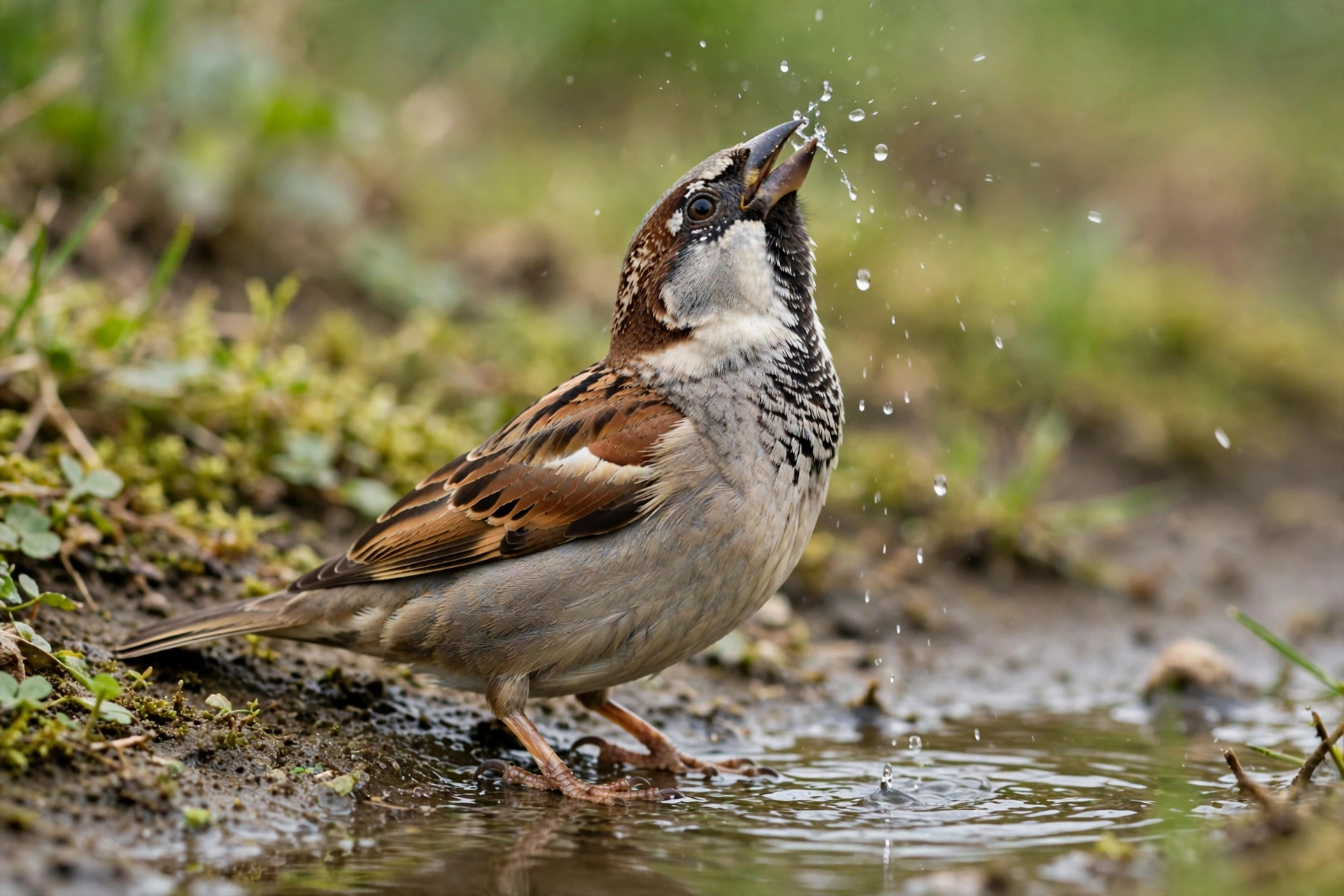
Watch a sparrow at a garden puddle and you will notice something strange. It dips its beak into the water, then throws its head back as if it is staring at the sky.
It repeats the motion, dip and tilt, dip and tilt, until it has had its fill. There are no lips, no cheeks, and no straw involved, yet the bird drinks perfectly well.
So how do birds drink water? The short version is that most birds scoop water up with the bill and let gravity do the rest. The full version is far more interesting. Doves sip as if they own a built-in straw. Hummingbirds take most of their water from flowers.
Seabirds drink the ocean itself and filter the salt back out. In this guide, you will learn exactly how birds drink, why most of them tilt their heads, which species break the rule, and how to offer water in your own garden in the way birds actually use it.
The Short Answer
Birds cannot pucker up. Their beaks are rigid tools with no lips and no cheeks, so most species cannot create the suction a mammal uses to draw liquid upward. Instead, the typical bird dips the tip of its bill into water, traps a small amount in the lower bill, then tips its head back so the water runs down the throat with help from rhythmic tongue and throat movements.
A few groups evolved a better trick. Doves, pigeons, and sandgrouse can draw water up continuously without lifting their heads, using wave-like movements of the throat that work a little like a pump. Hummingbirds get the bulk of their water from nectar and also lap up droplets and rain.
Seabirds drink seawater and excrete the excess salt through specialised glands near the eyes. Almost every bird also tops up its intake with moisture from food, from juicy berries to insects to morning dew.
Watch your local birds for a day and you will see most of these strategies in action. The head-back tilt of a blackbird, the steady sipping of a collared dove, and the hovering sip of a hummingbird at a mister are all solutions to the same problem: getting water past a beak that was never designed for drinking.
The Scoop-and-Tilt Method
For the great majority of birds, drinking is a two-part rhythm: scoop, then tilt. The bird lowers its head, opens the bill slightly, and takes in a mouthful of water. Because the bill cannot seal, the bird cannot suck the water upward. It solves the problem by raising its bill skyward.
Gravity pulls the water to the back of the mouth, the throat muscles contract in sequence, and the water slides down. The bird repeats the cycle until it is satisfied.
The tongue plays a supporting role. In many species it moves back and forth, helping to guide water toward the throat. Some birds also make small pumping movements with the bill itself. Researchers have described variations of this tongue and bill pumping across species, but the core principle stays the same: capture the water, then let gravity and muscle do the moving.
Bill shape changes the details. Short-billed birds like sparrows and finches take quick, neat sips. Long-billed birds such as herons dip deeper and tilt further back. Tiny birds repeat the motion many times because each scoop holds only a drop or two. The method looks effortful, but it works for thousands of species, from garden robins to desert larks.
There is also a quiet logic to when birds drink. Most species visit water in the morning and again in the late afternoon, avoiding the exposed midday hours. Drinking at the edge of open water is risky, so birds stay alert, drink quickly, and often arrive in loose groups where some individuals can keep watch while others sip.
Watch closely and the sequence breaks down into clear steps:
- Dip: the bird lowers its head and touches the bill tip to the water surface.
- Scoop: it opens the bill slightly and traps water in the lower mandible.
- Tilt: it raises its head so the bill points upward and gravity pulls the water back.
- Swallow: throat and tongue muscles move the water down into the crop and oesophagus.
- Repeat: the bird dips again until it has drunk enough, usually within a minute or two.
The Birds That Break the Rule: Doves, Pigeons, and Sandgrouse
Now watch a dove at the same birdbath. It pushes its bill into the water and keeps it there, drawing water up in a long, steady draught. No head tilting, no repeated dipping. Pigeons and doves are the famous exception to the scoop-and-tilt rule: they can drink by suction.
They manage it with rhythmic, wave-like contractions of the throat and oesophagus that pull water upward in a continuous stream. Biologists describe it as peristaltic pumping, and it lets a dove drink deeply and quickly with its bill submerged.
This talent is one reason pigeons thrive in cities, where they can take long draughts from fountains, gutters, and puddles without the vulnerable head-back posture.
Sandgrouse pull off a similar trick. These desert birds of Africa and Asia can suck water up without tipping their heads, and the males go one step further: after drinking, they soak their specially structured belly feathers and fly the trapped water back to their chicks.
The feathers hold the water like a sponge through the flight home, a remarkable adaptation to deserts where waterholes may lie far from the nest.

Flamingos break the rule in a different way. They feed and drink with the head held upside down, and a powerful, piston-like tongue pumps water through the bill.
Hummingbirds and sunbirds take yet another path: their long, grooved tongues flick in and out to collect liquid, and recent high-speed filming has revealed remarkable tongue mechanics that let these tiny birds draw nectar, and water, with impressive efficiency.
For most backyard birds, though, the old scoop and tilt remains the standard. It is simple, it works with every bill shape, and it needs no special anatomy. Evolution rarely replaces a method that already works.
Drinking Methods by Bird Group
| Bird group | Drinking method | How it works | Example species |
|---|---|---|---|
| Songbirds and most perching birds | Scoop and tilt | Bill dips, head tips back, gravity and throat muscles move the water down | House sparrow, American robin, black-capped chickadee |
| Doves and pigeons | Continuous suction | Rhythmic throat contractions draw water up with the bill submerged | Mourning dove, rock pigeon, collared dove |
| Sandgrouse | Suction, then feather transport | Drink by suction; males carry water to chicks in soaked belly feathers | Namaqua sandgrouse |
| Hummingbirds | Nectar sipping plus droplets | Most water comes from nectar; tongues lap up rain and dew | Ruby-throated hummingbird |
| Flamingos | Tongue pump | Muscular tongue pumps water through the bill while the head hangs upside down | Greater flamingo |
| Raptors | Scoop and tilt, but rarely | Most moisture comes from prey; they drink at water edges when they must | Red-tailed hawk, kestrel |
| Seabirds and ducks | Scoop, with salt handling | Drink fresh or salt water; salt glands excrete excess salt | Herring gull, mallard, albatross |
What About Salt Water, Snow, and Dew?
Fresh water is the easy option, but birds do not always get the easy option.
Seabirds live surrounded by water they supposedly cannot drink, yet many do exactly that. Gulls, albatrosses, petrels, and penguins possess specialised salt glands above the eyes that pull excess salt from the bloodstream and excrete it as a concentrated brine, often seen dripping from the nostrils.
This plumbing lets them drink seawater and keep the water. Most land birds lack this equipment, so salt water is off the menu for your garden visitors. Keep birdbaths fresh, and never add salt to stop the water freezing.
Snow is the winter fallback. Birds will eat snow when liquid water is frozen, and you will see it often in cold climates. It works, but it costs energy: the bird must melt the snow with body heat, which is expensive on a freezing day. That is one reason a reliable open water source draws crowds of birds in winter, and why a heated bird bath can become the busiest spot in a snowy garden.

Dew, rain, and dripping leaves serve the rest of the year. Hummingbirds sip droplets from foliage and catch rain on the wing, and many small birds drink from wet leaves after a shower. Moisture from food matters just as much. Insect eaters get a large share of their water from their prey, fruit eaters from berries, and nectar feeders from flowers. In deserts, some birds get by almost entirely on the water in their food and may visit open water rarely or never.
A bird’s water budget therefore has several lines: direct drinking, food moisture, dew and rain, and snow in winter. Direct drinking is the one you can help with most, and it is the one birds prefer whenever they can get it.
How to Offer Water the Way Birds Actually Drink
Now that you know the mechanics, you can set up water that matches how birds really drink.
Shallow beats deep. Most birds drink and bathe in water no deeper than a few centimetres, because they stand in it while they sip. A depth of about 2.5 to 5 centimetres suits the widest range of species, with a gently sloping edge so small birds can choose their own depth. Deep, steep-sided basins put small birds off and can even be dangerous for fledglings.
Movement attracts. A dripper, a small fountain, or even a slowly dripping hose draws birds from a surprising distance. Moving water signals freshness, and the sound carries further than you might expect. Place the bath where you can enjoy watching it, but within a few metres of shrubs or trees so birds have cover to retreat to between sips.
Clean it like a dish. Birdbaths foul quickly with droppings, feathers, and algae, and dirty water spreads disease. Scrub the basin every few days in warm weather and refill with fresh water. Our complete guide to choosing, placing, and cleaning a bird bath walks through the full routine, from the best materials to the cleaning schedule that keeps birds healthy.
Think about winter early. When temperatures drop, open water becomes precious and birds will remember a reliable source. A heated bird bath keeps a small area ice-free without warming the whole basin, and it draws species you might otherwise never see in January.

Skip the extras. Do not add chemicals, oils, or antifreeze to bath water; all of them can harm birds. Glycerine is sometimes suggested online, but the evidence for its safety is thin, so plain fresh water remains the best choice.
Quick rules for a bird-friendly water station:
- Shallow water: 2.5 to 5 centimetres deep with a sloped edge.
- Moving water: a dripper or gentle fountain to catch their attention.
- Nearby cover: shrubs or trees within a few metres for quick escapes.
- Regular cleaning: scrub and refill every few days, more often in heat.
- Winter plan: keep water open with a heater when frost arrives.
- No additives: fresh water only, never chemicals or antifreeze.
Frequently Asked Questions
Why do birds tilt their heads back when they drink?
They have no choice. Without lips or cheeks, birds cannot seal the mouth and suck liquid upward the way mammals do. Tipping the head back lets gravity carry the scooped water to the back of the mouth, where throat muscles take over. Doves and pigeons are the notable exception, using throat contractions to draw water up without the tilt.
Can birds drink salt water?
Seabirds can. Gulls, albatrosses, and penguins drink seawater and excrete the excess salt through specialised salt glands. Most land and garden birds cannot handle much salt at all, so always offer fresh water at a birdbath and never add salt to prevent freezing.
Do hummingbirds drink water, or only nectar?
Both. Nectar provides most of a hummingbird’s water along with its energy, and a feeder or flower patch covers much of the need. Hummingbirds also sip droplets from leaves, drink from drips and misters, and catch rain. On freezing nights they can enter torpor, a deep energy-saving sleep, to survive until morning.
Do birds drink water in winter?
Yes, and they need it just as much. Liquid water is scarce when everything freezes, so birds eat snow at an energy cost or visit the few open sources they can find. A heated or regularly refreshed birdbath can attract remarkable winter traffic, since birds remember reliable water and return to it daily.
Do baby birds drink water?
Nestlings get their moisture from the food their parents bring: soft insects and regurgitated meals that are mostly water. Fledglings start visiting water sources on their own soon after leaving the nest. If you find a baby bird, do not try to give it water with a dropper, as it can easily go down the wrong way. Contact a wildlife rehabilitator instead.
How much water does a bird need each day?
It varies with size, diet, and weather. Small active birds lose water quickly through breathing and droppings, so they drink little and often, especially in heat. Insect and fruit eaters need less direct water than seed eaters, because their food arrives pre-hydrated. Offer fresh water daily and let each bird balance its own budget.
The Simple Takeaway
Birds drink without lips by working with physics instead of against it. Most scoop water into the bill and tip the head back so gravity finishes the job, helped along by the tongue and throat. Doves and pigeons sip continuously as if they have a straw, hummingbirds drink from flowers and rain, and seabirds filter salt from the sea itself.
Once you understand the method, a birdbath stops being decoration and becomes infrastructure. Shallow, clean, moving water near cover serves the way birds actually drink, and in winter it can matter more than food. Put the water out, keep it fresh, and watch the dip-and-tilt show begin.





