 Skip to content

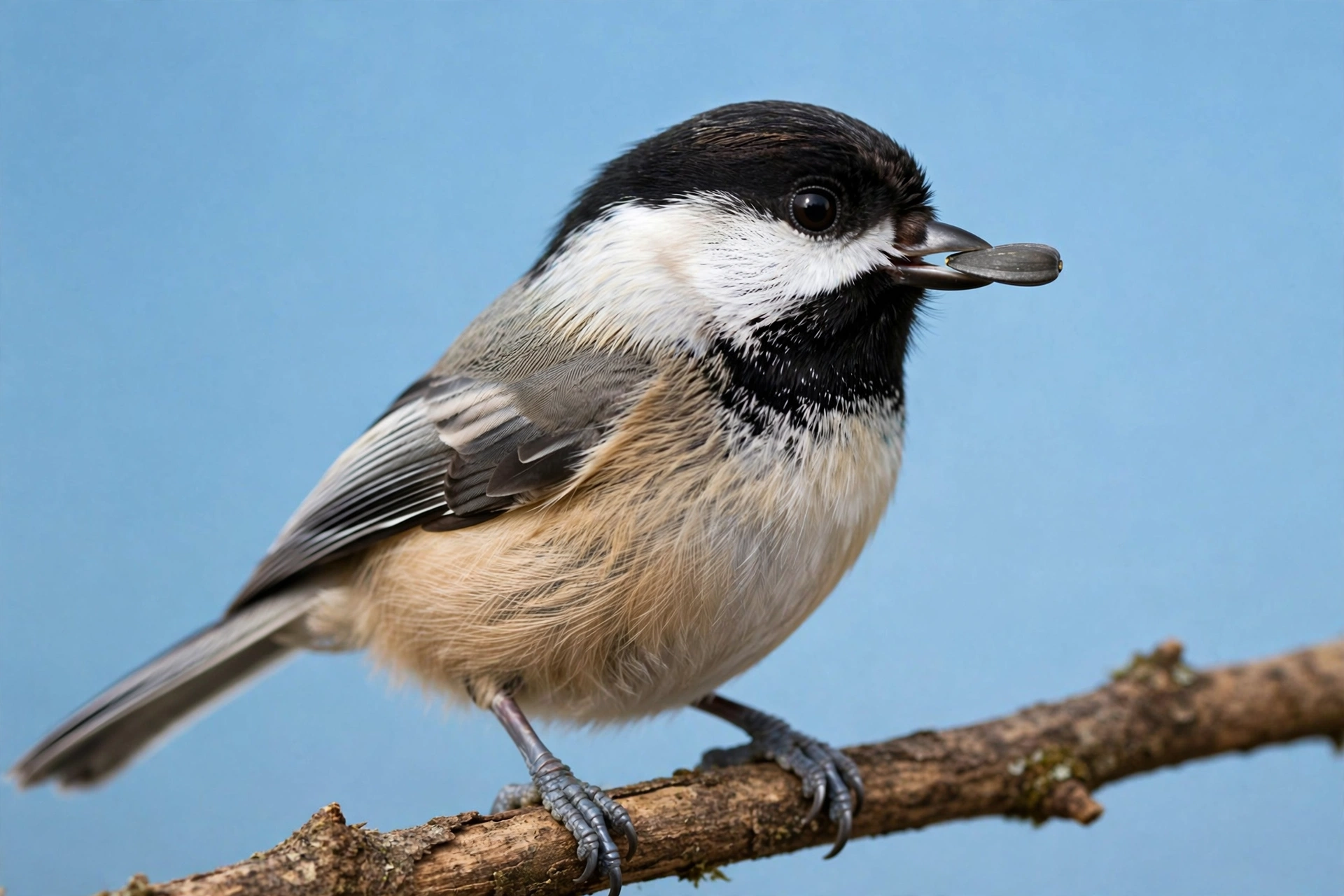
A black-capped chickadee lands at a feeder, grabs a single sunflower seed, and flies off before you can blink. A minute later it is back for another. Ask what chickadees eat and the short answer is almost everything, but the honest answer changes with the season. These small songbirds are protein hunters in summer, obsessive hoarders in autumn, and pantry raiders in winter. Their menu shifts dramatically across the year, which is exactly why a feeder stocked with the right foods in October can keep chickadees visiting all winter. This guide follows their diet season by season, so you know what wild chickadees eat, what they crave at feeders, and how to offer food the way they actually use it.
Why the Chickadee Diet Changes With the Seasons
Chickadees do not have a fixed menu. They eat what the season provides, and their energy needs swing wildly between a soft July afternoon and a minus twenty January night. According to the Cornell Lab of Ornithology, insects, spiders, and other animal food make up 80 to 90 percent of a black-capped chickadee’s diet in spring, summer, and autumn. In winter the balance shifts to roughly half seeds, berries, and other plant matter and half animal food, which includes insects, spiders, suet, and occasionally fat or bits of meat from frozen carcasses.
This seasonal swing is no accident. Insects deliver the protein and fat that growing chicks need in summer. Seeds and cached food deliver the calories that keep a tiny body warm through long winter nights. A chickadee weighs only nine to fourteen grams, yet it must survive cold it would take a much larger animal down. Food is its furnace, and it burns through it fast. Understanding this rhythm is the key to feeding chickadees well, because the food they ignore in August may be exactly what they need in December. If you want to make your whole garden more inviting, read our guide on how to attract chickadees to your yard alongside this one.
Summer: Protein Hunters in the Foliage
Summer belongs to the insects. Audubon’s field guide reports that vegetable matter, meaning seeds and fruit, makes up no more than about ten percent of the black-capped chickadee’s summer diet. The rest is caterpillars and other insects, plus spiders, snails, and other small invertebrates, with some berries mixed in. Caterpillars are the standout. They are soft, rich in protein, and available in huge numbers on tree foliage just when chicks are growing fastest.
Watch a chickadee feed in July and you will see real acrobatics. These birds hop along twigs and branches, gleaning food from bark and leaves, and they happily hang upside down to reach the underside of a branch. Audubon notes they sometimes snatch food while hovering and may even dart out to catch insects in mid air. It is a style of hunting that suits a bird built for quick bursts of effort rather than long pursuits.

What Nestling Chickadees Eat
Baby chickadees eat almost nothing but insects. Both parents hunt constantly, returning to the cavity nest with beaks full of caterpillars, spiders, and other soft invertebrates. This is why a garden full of native plants that host caterpillars is worth far more to nesting chickadees than any feeder. Native oaks, birches, and willows support far more caterpillar species than exotic ornamentals, so the trees you plant in spring feed chickadee families all summer.
Parent chickadees can make hundreds of feeding trips a day during peak nesting. They prefer soft-bodied prey they can break down quickly, which is another reason caterpillars top the list. A chick cannot crack a seed, but it can swallow a caterpillar whole. By the time young birds leave the nest, they have already learned to watch their parents probe bark and flip leaves, picking up the foraging habits that will carry them through winter.
Autumn: The Great Caching Frenzy
As days shorten, chickadees turn from hunters into hoarders. Throughout autumn they gather seeds and tuck individual items into bark crevices, under dead leaves, into knotholes, and behind loose flakes of bark. Audubon describes how a chickadee at a feeder takes sunflower seeds one at a time and flies off to stuff them into bark crevices, and backyard watchers see exactly this behaviour from September onward.
The scale of the caching is remarkable. Research summaries from Cornell describe chickadees remembering thousands of hiding places for up to a month, returning to recover food when supplies run short. Scientists believe a specialised region of the chickadee brain, the hippocampus, grows slightly larger each autumn to handle the memory load, then shrinks again in spring. The exact numbers vary between studies and species, but the pattern is consistent: chickadees that cache in autumn survive winter better than those that do not.
Not every cached seed is recovered, and that is good news for trees. Forgotten seeds can germinate, making chickadees accidental gardeners as well as hoarders. For the bird, though, the autumn pantry is pure insurance. When a January storm locks every feeder under ice, a chickadee with a few hundred hidden seeds has options that its neighbours may lack.

Winter: The Survival Pantry Opens
Winter is when the chickadee’s varied diet shows its full range. Cornell reports the winter diet as roughly half seeds, berries, and plant matter and half animal food. The animal half is what surprises most people. Chickadees probe bark for overwintering insect eggs and pupae, pry out dormant spiders, and will work over suet, peanut butter, and even the fat of dead animals they find frozen in the woods. Audubon confirms that winter feeding includes insects, especially their eggs and pupae, alongside seeds, berries, and small fruits.
This mixed diet is a survival strategy. Seeds deliver quick carbohydrate energy, while the fat and protein from suet and insects provide the dense fuel a chickadee needs to shiver through a freezing night. Chickadees can enter a state of regulated hypothermia on the coldest nights, dropping their body temperature to save energy, but they still need to refuel at first light. A bird that goes to sleep with an empty stomach may not wake up.
Winter also brings company. From autumn through winter, chickadees feed in loose flocks, often joined by titmice, nuthatches, brown creepers, and kinglets. These mixed species flocks give every member more eyes watching for predators, which means each bird can spend more time feeding and less time looking over its shoulder. If you enjoy counting the birds in these winter flocks, Project FeederWatch lets backyard watchers contribute their observations to real research on feeder bird populations. If your feeder goes quiet in midwinter, it often means the local flock is working a productive patch of natural food nearby. They will be back.

Spring: The Shift Back to Protein
As March turns to April, the flocks break up and pairs claim nesting territories. Insects begin to emerge, and the chickadee diet tilts back toward animal food week by week. Early spring brings spiders, overwintering larvae, and the first caterpillars. By May, when most chicks hatch, the menu is nearly all insects again.
This is also when the male begins feeding the female, starting courtship feeding very early in spring as Audubon notes. The pair bond strengthens through food, and the female depends on these deliveries while she incubates. A well stocked feeder in early spring can genuinely help a pair through the lean weeks before insects become abundant, which is why many experienced birders keep feeders running until late April rather than taking them down at the first warm day.
Spring feeding looks different at the feeder too. Chickadees that visited steadily all winter may vanish for days while they chase the first insect hatch in the treetops. Do not mistake this for losing your birds. They are following the protein, and they will return to the feeder between nesting duties all summer long.
Feeder Favorites: What Chickadees Actually Prefer
At feeders, Cornell reports that chickadees take mostly sunflower seeds, peanuts, suet, peanut butter, and mealworms. But not all feeder foods are equal in a chickadee’s eyes. They are famously picky about seed size and shell thickness, and their feeding style shapes what works best. A chickadee rarely sits and eats at a feeder. It grabs one item, flies to a nearby perch, and works on it there, safe from hawks and jostling competitors.
Cornell describes their seed technique precisely: they peck a hole in the shell, then chip out and eat tiny bits of seed while expanding the hole. This is why thin shelled seeds win. A chickadee can open a black oil sunflower seed in seconds, but it will struggle with, and usually ignore, thick shelled striped sunflower seeds.
| Food item | Chickadee preference | Feeding tips |
|---|---|---|
| Black oil sunflower seeds | Top choice: thin shells, high oil content, easy to carry one at a time | Offer in a tube feeder; learn more in our sunflower seeds for birds guide |
| Sunflower hearts and chips | Excellent: no shell to open, fast energy | Best in tray or hopper feeders; no waste shells under the feeder |
| Peanuts, shelled | High favourite: rich in fat and protein | Use a peanut or mesh feeder; see can birds eat peanuts for safe serving sizes |
| Suet | Winter essential: dense fat calories for cold nights | Hang in a wire cage; rendered suet cakes work well in freezing weather |
| Mealworms | Strong draw, especially in spring and summer | Offer live or dried in a shallow dish; a protein boost during nesting season |
| Peanut butter | Readily eaten, high energy | Smear on bark or a log feeder; choose unsalted varieties with no added sugar |
What Not to Offer
Chickadees will sample almost anything, but some foods do them no good. Avoid bread, which fills them up without real nutrition, and skip anything salted. Flavoured or salted peanuts, salted suet products, and kitchen scraps seasoned for humans have no place at a feeder. Millet and cracked corn, the cheap fillers in economy seed mixes, are mostly ignored by chickadees and end up feeding house sparrows instead. If chickadees are tossing seed aside, check the mix. They are telling you what they think of it.
Frequently Asked Questions
Do chickadees eat sunflower seeds?
Yes, and they are one of their favourite feeder foods. Black oil sunflower seeds are the top pick because the thin shells are easy for a chickadee to open and the kernels are rich in oil. Striped sunflower seeds have thicker shells that chickadees usually avoid. Hulled sunflower hearts are even easier, since there is no shell at all.
Do chickadees eat insects in winter?
Yes. Even in deep winter, roughly half the chickadee diet is animal food, according to Cornell. With flying insects gone, they hunt for insect eggs, pupae, dormant spiders, and other invertebrates hidden in bark crevices. This is why chickadees keep probing tree trunks all winter instead of relying on feeders alone.
How do chickadees remember where they hide food?
Chickadees have an exceptional spatial memory powered by a brain region called the hippocampus, which appears to enlarge each autumn during peak caching season. Research summarised by Cornell indicates they can remember thousands of cache locations for up to a month. They still lose track of some caches, and forgotten seeds can sprout into new trees.
Do chickadees visit feeders in groups?
In autumn and winter, yes. Chickadees travel in loose flocks, often mixed with titmice, nuthatches, creepers, and kinglets. Flock members usually take turns at the feeder rather than crowding it, each grabbing one seed and flying off to a perch. In spring the flocks break up as pairs claim nesting territories.
What is the single best food to attract chickadees?
Black oil sunflower seeds, offered in a tube feeder near cover. They are the food chickadees choose first in most feeder studies and observations, they suit the chickadee’s grab and go feeding style, and they attract few of the bully species that dominate platform feeders. Add a suet cage in winter and you have covered their two biggest cold weather needs.
Conclusion
What chickadees eat depends on the calendar. Summer turns them into protein hunters, gleaning caterpillars and spiders from the foliage to feed hungry chicks. Autumn makes them hoarders, stashing thousands of seeds in bark crevices with a memory that puts most mammals to shame. Winter finds them living off that pantry, splitting their diet between seeds, berries, and the insect eggs and pupae they pry from bark, with suet and fat filling the coldest gaps. Spring swings the pendulum back to insects as new families begin.
For the backyard bird watcher, the lesson is simple: match your feeder to the season. Black oil sunflower seeds year round, suet when the temperature drops, mealworms when chicks hatch, and native plants that host caterpillars all summer. Feed them the way they already eat in the wild, and chickadees will reward you with daily visits from October’s first frost to April’s last snow. Few birds give so much entertainment for so little seed.





