 Skip to content

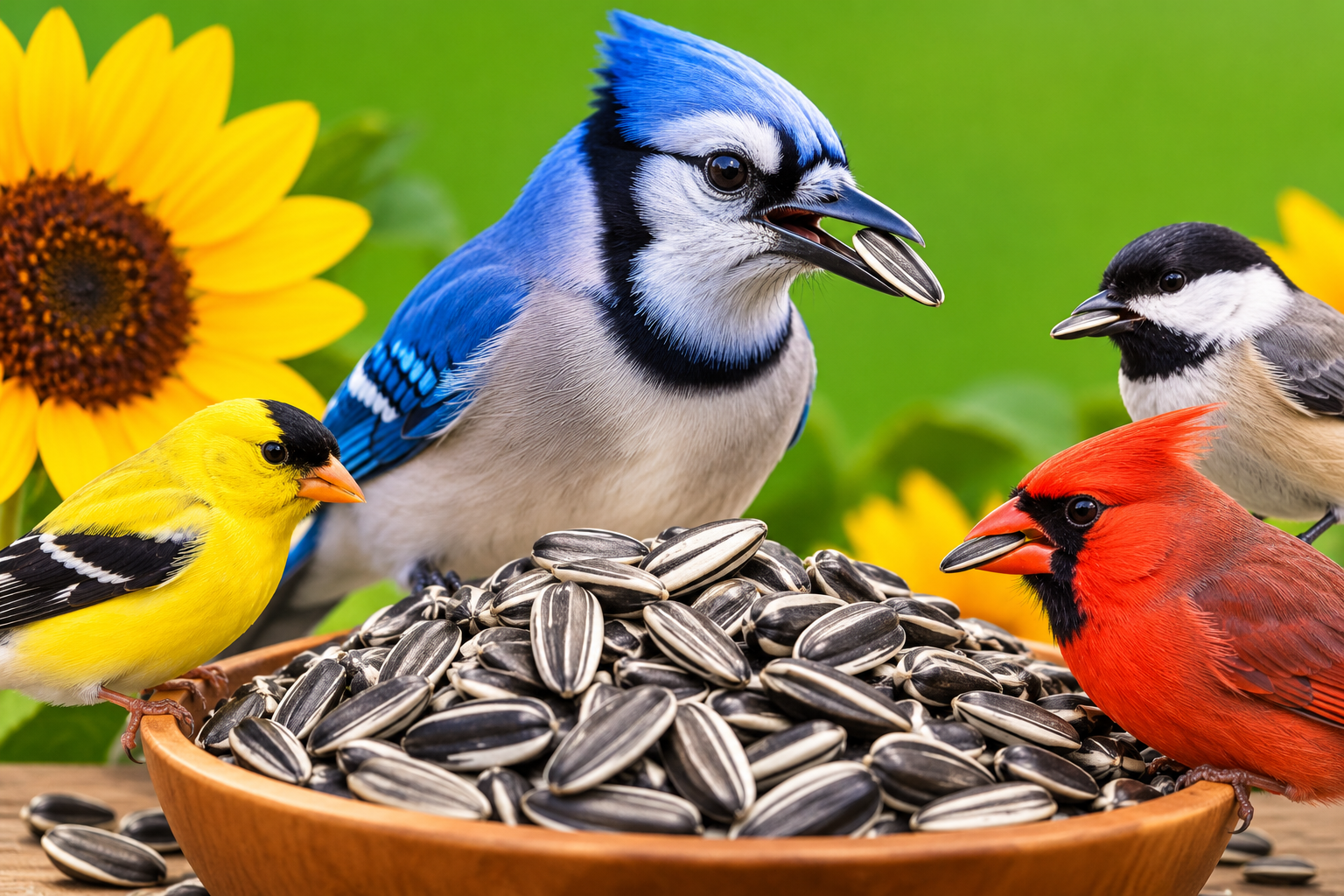
Sunflower seeds are the single most popular birdseed among backyard bird enthusiasts — and for good reason. Few foods attract as many species to one feeder. Finches, cardinals, chickadees, nuthatches, and many more all eat sunflower seeds, making them the closest thing to a universal feeder food.
Which sunflower seeds are best for birds? Black oil sunflower seeds are the most widely used choice for wild birds because their thin shells are easy for many seed-eating species to crack, and their kernels are rich in energy-giving oils.
Hulled sunflower seeds (hearts and chips) offer a less-mess alternative with no shells to discard, while striped sunflower seeds, with their thicker shells, suit larger-billed birds like cardinals and grosbeaks.
The best choice for your yard depends on which birds you want to attract, your feeder design, how much mess you can tolerate, and your budget. This guide covers the species that eat sunflower seeds, compares the three main seed types, and walks through feeding, storage, and the mistakes to avoid.
What Types of Sunflower Seeds Are Best for Birds?

Not all sunflower seeds are equal at the feeder. Shell thickness, kernel accessibility, and the hulls left behind all affect which birds can use them and how much cleanup you face.
Black Oil Sunflower Seeds
Black oil sunflower seeds are the standard recommendation for backyard feeders, backed by the Cornell Lab of Ornithology and university extension programs. Their thin shells are easy for small-billed birds to crack, and the kernels pack a high oil content that delivers concentrated energy — a trait Penn State Extension highlights as nutritionally important for birds.
Common visitors include cardinals, chickadees, finches, sparrows, titmice, nuthatches, and some woodpeckers. If you offer only one seed, black oil sunflower is the one most experts point to: it works as an everyday staple across the widest range of feeder birds.
Striped Sunflower Seeds
Striped sunflower seeds are larger, with noticeably thicker shells than black oil seeds. Larger-billed birds — cardinals, grosbeaks, and blue jays — handle them comfortably, but many smaller species struggle to crack them open.
They suit feeders aimed at bigger birds and can be a good option where you specifically want to favor strong-billed species. Just know that offering only striped seeds will exclude some of the smaller birds that black oil seeds would attract.
Hulled Sunflower Seeds (Sunflower Hearts and Chips)
Hulled sunflower seeds have the outer shell removed by the manufacturer, leaving just the edible kernel — sold as sunflower hearts (whole kernels) or chips (broken pieces). Birds get instant access with no cracking required, which makes them popular with finches and other small species, and there are almost no discarded hulls piling up beneath the feeder.
The trade-off is storage: without their protective shells, hulled seeds are more sensitive to moisture and can spoil faster. Keep them dry, buy in quantities you will use while fresh, and check for off smells before refilling.
Sunflower Seed Kernels vs. Whole Sunflower Seeds
Whole sunflower seeds include the shell; kernels are the edible interior. Kernels mean easier feeding and far less waste, but they cost more per pound and demand careful dry storage. Whole seeds are cheaper and stay fresh longer, at the cost of hull debris under the feeder. Kernels are not a separate plant variety — they are simply what is left when the shell comes off.
Which Birds Eat Sunflower Seeds?
A wide range of backyard birds eats sunflower seeds, though exactly which species visit depends on your location, the season, your feeder type, and what natural food is available. Preferences also differ between species and even individuals not every bird on this list eats every sunflower variety equally. Cornell Lab and Audubon identify cardinals, chickadees, finches, sparrows, nuthatches, and woodpeckers among sunflower-feeding birds.
Northern Cardinals
Cardinals favor larger seeds and have the strong, conical bills to handle them. Sunflower seeds — both black oil and striped — fit naturally into their varied diet of seeds, grains, and fruit. Offer them on a platform or hopper feeder with a sturdy perch, since cardinals dislike swinging tube feeders.
Blue Jays
Blue jays are powerful seed handlers that can crack whole sunflower seeds and carry several away at once. They are famous for caching food, so do not be surprised to see a jay stuff its throat pouch and fly off to store seeds for later. A platform or large hopper feeder suits them best.
American Goldfinches
Goldfinches are seed specialists. They readily take sunflower kernels and chips, and their small bills handle black oil seeds well. Feeder design matters: tube feeders with small ports, or mesh finch feeders, keep the seed accessible to them while discouraging larger competitors.
House Finches and Purple Finches
Both finch species are regulars at sunflower feeders, cracking black oil seeds with their stout bills. Tube feeders and hopper feeders both accommodate them, and they are among the birds most likely to appear within days of a new feeder going up.
Black-capped Chickadees and Carolina Chickadees
Chickadees are methodical: they select a single seed, carry it to a nearby branch, pin it with their feet, and hammer it open. Black oil sunflower seeds are a favorite because the thin shells suit their small bills. Any feeder style works — chickadees are agile and bold.
Tufted Titmice
Titmice visit sunflower feeders much like chickadees do, typically grabbing one seed at a time and flying off to eat it elsewhere. They prefer black oil seeds for the same reason: thin shells, easy access. Hopper and tube feeders both serve them well.
White-breasted Nuthatches
Nuthatches wedge seeds into bark crevices and hack them open with their chisel-like bills — a habit you may see repeated at the feeder edge. They handle black oil sunflower seeds easily and will carry seeds away to tree bark or other feeding spots.
Mourning Doves
Mourning doves feed mainly on the ground, vacuuming up seeds that other birds drop — including sunflower seeds and kernels. They prefer flat, open feeding surfaces, so a low platform feeder or a swept patch of ground beneath your main feeder keeps them coming.
Woodpeckers
Several woodpecker species, including downy and hairy woodpeckers, eat sunflower seeds when they are available. They visit platform feeders or feeders designed for larger, clinging birds, and they particularly appreciate black oil seeds and peanut offerings nearby.
Black Oil vs. Striped vs. Hulled Sunflower Seeds: Comparison
| Feature | Black Oil | Striped | Hulled |
| Outer shell | Thin | Thicker | Removed |
| Accessibility | Suitable for many seed-eating birds | Better for birds that crack larger seeds | Easy access to the edible kernel |
| Common visitors | Finches, cardinals, chickadees | Larger-billed seed eaters | Many sunflower-eating species |
| Leftover hulls | Yes | Yes | Minimal |
| Storage | Keep dry and fresh | Keep dry and fresh | More sensitive to moisture and spoilage |
| Main advantage | Broad appeal | Larger, tougher seed | Less mess, easier feeding |
Which Sunflower Seed Attracts the Most Birds?
Black oil sunflower seeds are the most commonly recommended seed for attracting a variety of feeder birds. Their thin shells open the food to small-billed species that striped seeds would exclude, while still satisfying cardinals and jays. That said, broad appeal is not universal preference — offering a second food like nyjer or peanuts can draw species that sunflower alone will not.
Which Sunflower Seeds Create the Least Mess?
Hulled sunflower seeds — hearts and chips — leave almost no shell debris beneath the feeder, since birds eat the entire kernel. If hull buildup on a patio, deck, or lawn is your main frustration, switching to hulled seeds solves it. Expect to pay more per pound and to store them more carefully.
What Are the Benefits of Sunflower Seeds for Birds?
Provide Energy Through Dietary Fat
Sunflower kernels are rich in oils and fats, giving birds concentrated energy per bite. That energy density is valuable year-round but especially meaningful when birds burn extra calories staying warm or feeding young.
Supply Protein and Other Nutrients
Sunflower kernels also supply protein and a range of nutrients. They are an excellent supplement, though not a complete diet on their own — birds still need the variety they get from natural foraging and, ideally, more than one feeder food.
Support Feeding During Colder Weather
When natural food grows scarce in winter, energy-rich foods like sunflower seeds help birds bridge the gap. Audubon notes that supplemental feeding is most valuable during cold conditions and periods of scarcity, when every calorie counts.
Attract a Variety of Backyard Birds
Few single foods draw as many species to one feeding station. A feeder stocked with black oil sunflower seeds can host finches, chickadees, titmice, nuthatches, cardinals, and woodpeckers in a single morning — which is exactly why it is the default recommendation for new birders.
How to Feed Sunflower Seeds to Backyard Birds
Choose the Right Bird Feeder
Feeder design decides which species can comfortably reach the food. Tube feeders suit smaller seed-eating birds like finches, chickadees, and titmice. Hopper feeders welcome a broad range of visitors, including cardinals and jays. Platform feeders serve larger birds and ground-feeding species like doves. If squirrels or starlings dominate, consider feeders designed to restrict access by weight or with cages around the feeding ports.
Place Feeders in a Safe Location
Position feeders where birds can spot approaching predators, with shrubs or natural cover nearby for quick escape — but not so close that the cover hides a waiting cat. Keep window-collision risk in mind: feeders placed either very close to windows (under 3 feet) or well away from them are safer than those at middle distances. And keep every feeder reachable for regular cleaning.
How Much Sunflower Seed Should You Offer?
Start with a manageable quantity and refill based on bird activity. Avoid leaving large amounts exposed to rain or moisture, and remove old, spoiled, or contaminated seed promptly. It is better to refill a small feeder often than to let a large one go stale.
Can You Mix Sunflower Seeds With Other Birdseed?
Yes. Sunflower seeds pair well with white proso millet, nyjer, safflower, or peanuts. When different species have different preferences, separate feeders work better than one mixed feeder — for example, a sunflower feeder for the general crowd and a nyjer tube just for finches. Audubon’s feeding guidance recommends offering different seeds at different feeders to cut waste and serve more species.
How to Store Sunflower Seeds for Birds
Use an Airtight Storage Container
Sealed containers protect seed from moisture, which is the fastest route to mold, and from pantry pests and rodents. A metal container with a secure lid is ideal — it also keeps mice and squirrels out of your supply.
Keep Seeds in a Cool, Dry Location
Heat and humidity degrade seed quality and encourage spoilage. A cool garage, shed, or basement corner works well. Do not carry seed over from one winter to the next; buy fresh each season.
Check for Mold, Odors, and Insects
Before refilling, look and smell: discard seed that is clumped, musty, dusty with mold, or crawling with insects. Moldy seed can carry aspergillosis, a respiratory fungal infection that is often fatal to birds. When in doubt, throw it out — a fresh bag costs less than a feeder full of sick birds.
Buy Quantities You Can Use While Fresh
Match your purchase to your feeding rate and storage space. A 40-pound bag is economical only if your birds finish it within a few months; otherwise, smaller bags stay fresher. Hulled seeds deserve extra caution here since they spoil faster than seeds in the shell.
Common Mistakes to Avoid When Feeding Sunflower Seeds
Buying Low-Quality Seed Mixes
Cheap mixes bulked out with filler seeds — red milo, wheat, and other grains most songbirds ignore — end up swept off the feeder uneaten. You pay for waste and attract fewer of the birds you want. A bag that is mostly black oil sunflower, even at a higher price per pound, feeds more birds with less mess.
Leaving Wet or Moldy Seeds in Feeders
After rain, check feeders and clear out any damp or clumped seed. Wet seed molds quickly, and moldy seed spreads disease. Tube feeders are especially prone to moisture trapping at the base — empty and scrub them rather than topping up over old seed.
Using the Wrong Feeder for Your Target Birds
Feeder ports, perch size, and feeding height all affect who can eat. Tiny ports frustrate cardinals; perches built for finches will not hold a jay; ground-feeding doves cannot use a hanging tube at all. Match the feeder to the birds you most want to see.
Ignoring Squirrels and Other Feeder Visitors
Squirrels love sunflower seeds as much as birds do. Practical defenses include pole baffles, feeders placed well away from launch points like trees and roofs, and weight-sensitive or caged feeder designs. As a last resort, offering squirrels their own feeding spot away from bird feeders can reduce raids.
Neglecting Feeder Cleaning
Project FeederWatch recommends cleaning seed feeders about every two weeks — more often if you suspect disease. Disassemble the feeder, scrub with soap and water, soak briefly in a one-part-bleach to nine-parts-water solution, rinse thoroughly, and let it air-dry completely before refilling. Also rake up hulls and droppings beneath feeders, where mold and parasites collect.
Frequently Asked Questions About Sunflower Seeds for Birds
What birds eat sunflower seeds?
Cardinals, blue jays, chickadees, titmice, nuthatches, finches (goldfinches, house finches, purple finches), sparrows, mourning doves, grosbeaks, and some woodpeckers all eat sunflower seeds. Black oil seeds attract the widest range; striped seeds favor larger-billed species.
Are black oil sunflower seeds better for birds than striped seeds?
For most backyard feeding, yes. Black oil seeds have thinner shells and higher oil content, so more species — especially smaller birds — can open and benefit from them. Striped seeds suit cardinals, grosbeaks, and jays but exclude many small-billed birds.
Can birds eat sunflower seeds with shells?
Yes — cracking shells is natural behavior for seed-eating birds, and most feeder species handle black oil shells easily. The main downside is the hull debris left behind, not any danger to the birds.
Are sunflower seeds safe for wild birds?
Plain, unsalted sunflower seeds are safe and nutritious for wild birds. Avoid salted, flavored, or seasoned seeds, and never offer moldy seed — mold can cause fatal respiratory infections.
Can you feed birds salted sunflower seeds?
No. Salted and sugared foods can be dangerous for small birds, whose bodies cannot handle the excess sodium. Always choose plain, unsalted sunflower seeds for feeders.
Do sunflower seeds attract squirrels?
Yes — squirrels, chipmunks, and other rodents love sunflower seeds. Use baffles, careful feeder placement, and squirrel-resistant feeder designs if they become a problem.
Can baby birds eat sunflower seeds?
Nestlings cannot handle whole seeds; parent birds feed them insects and regurgitated food. Fledglings learning to feed themselves may pick at kernels or chips, but sunflower seeds are primarily an adult-bird food.
Should I use sunflower hearts or whole sunflower seeds?
Choose hearts and chips for the least mess and easiest access, especially on patios or decks — but store them carefully and buy fresh. Choose whole black oil seeds for the best value and longest storage life, accepting the hull cleanup.
How often should I refill a sunflower seed feeder?
Refill based on activity: daily in peak winter when flocks drain feeders fast, less often in milder weather. Never top up over old, damp seed — empty, check, and clean first.
Do birds eat sunflower seeds in winter?
Yes — winter is peak sunflower season at feeders. Natural food is scarce, birds burn more energy staying warm, and the high oil content of black oil seeds makes them especially valuable in cold months.
Why are birds throwing sunflower seeds out of my feeder?
Birds toss aside seeds they cannot open or do not want, hunting for preferred ones — common with mixed seed blends. Switching to straight black oil sunflower or hulled kernels usually stops the wasteful sorting.
How do I keep sunflower seeds fresh?
Store them in an airtight container in a cool, dry place, buy only what your birds will eat within a few months, and discard any seed that smells musty, looks moldy, or shows insects.
Conclusion: Which Sunflower Seeds Should You Choose for Birds?
Black oil, striped, and hulled sunflower seeds each have a role. Black oil sunflower seeds are the widely used all-rounder — thin shells, energy-rich kernels, and appeal to the broadest mix of backyard birds, from chickadees to cardinals. Hulled seeds (hearts and chips) are the clean, no-mess option, ideal where hull debris is a problem, as long as you store them dry and buy fresh. Striped seeds suit larger-billed birds that can crack their thicker shells.
Match your seed to the birds visiting your yard and the feeder you own: black oil in a hopper or tube feeder covers most situations. Then keep the routine that matters most clean feeders regularly, keep seed dry, and discard anything spoiled. Do that, and a simple bag of sunflower seeds will bring more birds to your yard than almost any other single food.





