Skip to content

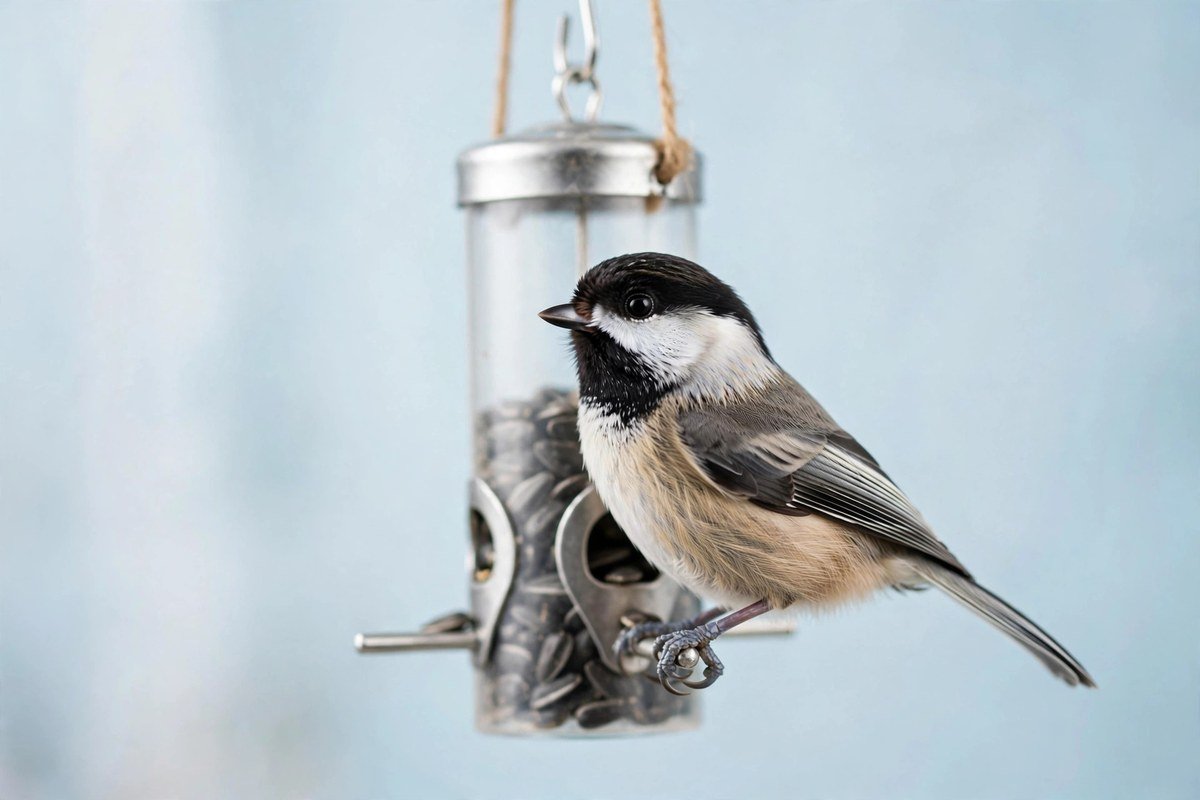
Chickadees are the boldest small birds at most backyard feeders. A black-capped chickadee weighs less than half an ounce, yet it will dart past jays and cardinals to snatch a single sunflower seed, then whisk it away to a hiding spot it will remember for weeks. Learning how to attract chickadees is refreshingly simple: offer the right food, in the right feeder, with cover nearby and a safe place to nest.
This guide covers all four pieces in order. You will find the best food for chickadees, which chickadee feeder type gives you the most visits, the native plants that keep them coming back season after season, and the exact chickadee nest box size recommended by Cornell’s NestWatch program. Most yards can draw their first chickadees within days of putting out black-oil sunflower seed. The long-term wins come from habitat: native trees, brush cover, and a properly sized box mounted before spring.

Meet the Black-Capped Chickadee
The black-capped chickadee is the species most US bird watchers mean when they say “chickadee.” It carries a crisp black cap and bib, clean white cheeks, a gray back, and warm buffy flanks. Both sexes look alike, and the familiar “chick-a-dee-dee-dee” call is an alarm note that varies with the threat level. More “dees” at the end means the bird sees more danger.
Chickadees are caching birds, which is the technical way of saying they run a take-out business. A chickadee grabs one seed, flies to a branch or bark crevice, and stashes it for later. One bird can hide hundreds of seeds in a single day and remember most of the locations. This habit explains their feeding style: quick visits, one seed at a time, all day long.
A close relative, the Carolina chickadee, replaces the black-capped across the southeastern United States. The two look nearly identical, so range is your best identification clue. Where their ranges meet, they sometimes interbreed. The advice in this guide works for both species, and for their western cousins, the mountain and chestnut-backed chickadees.
How to Attract Chickadees with Food They Actually Want
Chickadees are not picky, but they have clear favorites. Black-oil sunflower seed sits at the top of the list. Penn State Extension calls it the best all-round seed, noting it is preferred by smaller species including chickadees, nuthatches, and titmice. Its thin shell cracks easily in a chickadee’s small bill, and its high oil content delivers the energy these active birds burn through constantly.
Suet runs a close second, especially from fall through spring. This dense beef fat is pure calories, and chickadees work suet cages readily in cold weather. Peanuts, either shelled or as small peanut hearts, add protein and variety. Hulled sunflower hearts cost more but leave no shell mess under the feeder. Safflower rounds out the menu and has a useful side benefit: squirrels tend to leave it alone.
| Food | Why chickadees love it | How to serve it |
|---|---|---|
| Black-oil sunflower seed | Thin shell, high oil content, easy to crack | Tube feeder or hopper feeder |
| Hulled sunflower hearts | No shell to crack, no mess below | Tube feeder with small ports or tray |
| Suet | Concentrated fat for cold days | Suet cage, year round |
| Peanuts and peanut hearts | Protein and quick energy | Mesh peanut feeder or tray |
| Safflower seed | Good energy, squirrels usually ignore it | Hopper or tube feeder |
Skip the bargain seed mixes full of red milo, wheat, and cracked corn. Chickadees simply toss those fillers aside while hunting for the sunflower seeds they came for. If you buy only one bag, make it black-oil sunflower seed. For a deeper breakdown of seed choices across species, see this guide to bird seed options.

The Best Chickadee Feeder Type for Your Yard
Chickadees will visit almost any feeder, but a tube feeder with perches earns the most visits. The narrow tube keeps larger bully birds from dominating the ports, while chickadees happily cling and feed. Choose a tube with metal ports if squirrels are a problem in your yard. Hang it five to six feet off the ground, within ten to fifteen feet of dense cover like an evergreen or brush pile.
A hopper feeder works well as a second station because it holds more seed and shelters it from rain. Platform or tray feeders suit peanuts and hulled hearts, though they need more frequent cleaning since seed sits exposed. A standard suet cage hung from a branch or pole covers the fat side of the menu. Mesh peanut feeders let chickadees pick out small pieces without carrying whole nuts away.
Placement matters as much as feeder style. Chickadees are prey for hawks, so they feed boldly only when escape cover is close. If your feeder hangs in the middle of a wide-open lawn, move it near shrubs or trees and watch visits climb. Keep feeders filled during cold snaps and storms, when chickadees burn enormous energy staying warm overnight. Clean feeders regularly, since damp, moldy seed can make birds sick. For a broader strategy, pair these tips with this broader backyard bird guide.
If you enjoy a weekend project, you can also build a simple tube or platform feeder from scrap lumber. A homemade feeder costs little, and chickadees do not judge craftsmanship as long as it holds black-oil sunflower seed and stays dry. This DIY bird feeder guide walks through a step-by-step build sized well for small birds.
Native Plants That Attract Chickadees
Here is something feeders alone cannot provide: insects. Despite their feeder fame, chickadees feed mostly on insects and spiders during the breeding season, and they raise their young almost entirely on caterpillars. Native trees and shrubs host the caterpillar species that non-native ornamentals never will. Planting for insects is planting for chickadees.
Birches are a standout. National Audubon Society guidance recommends birches and sumacs for chickadees and titmice, noting that birch trees host hundreds of caterpillar species while also producing seeds chickadees eat. Oaks support even more caterpillar diversity, with a single white oak hosting more than 400 butterfly and moth species. Serviceberry and dogwood add berries to the menu plus insect habitat.
| Plant | What it gives chickadees |
|---|---|
| White oak (Quercus alba) | Hundreds of caterpillar species, acorns, sturdy nesting branches |
| River birch or paper birch (Betula spp.) | Caterpillars, birch seeds, cavity-friendly wood |
| Serviceberry (Amelanchier spp.) | Early summer berries, insects, dense cover |
| Flowering dogwood (Cornus florida) | Fall berries, insects, layered branching for shelter |
| Staghorn sumac (Rhus typhina) | Persistent winter berries, fast-growing cover |
Pick species native to your region so they thrive without fuss. A single native tree does more for chickadees than any feeder ever will, and it keeps working when you forget to refill. The Washington Department of Fish and Wildlife’s songbird habitat guide lists more plant and bird pairings worth exploring.
Chickadee Nest Box Size, Placement, and Care
Chickadees are cavity nesters. In the wild they excavate soft, rotting wood or move into old woodpecker holes. A well-built nest box gives them the same opportunity in yards short on dead trees. Cornell’s NestWatch program publishes exact specs for a black-capped chickadee box, and following them closely raises your odds of a tenant.
| Specification | Chickadee recommendation |
|---|---|
| Entrance hole diameter | 1-1/8 inches, exact |
| Interior depth | 8 inches |
| Interior floor | About 5-1/2 by 5-1/2 inches |
| Mounting height | 5 to 15 feet |
| Facing | Away from the prevailing wind |
| Bedding | 1 inch of wood shavings on the floor |
| Timing | Up by late March or early April |
The 1-1/8 inch hole is the detail that matters most. That diameter admits chickadees while excluding house sparrows and starlings. Skip the cute little perch under the hole: nesting chickadees do not need it, and predators use perches as a foothold. Use plain, untreated wood, and add a predator baffle if you mount the box on a pole.
Face the entrance away from prevailing winds and give the box 40 to 60 percent sun exposure. A spot near mature trees, with a clear flight path to the hole, works best. Put the box up by late March so prospecting pairs find it before nesting season. Clean out old nesting material each fall to reduce parasites. Cornell’s NestWatch page for the black-capped chickadee has the full plan and placement guidance.
Water, Cover, and Winter Care
Fresh water pulls chickadees in just as reliably as food. A shallow dish or pedestal bath, no more than two inches deep with a textured surface for grip, is all they need. Moving water works even better: a simple dripper or mister turns a quiet bath into a chickadee magnet. In freezing weather, a heated bath keeps water open when natural sources ice over. See this bird bath guide for choosing and maintaining one.
Cover is the other half of the winter equation. Evergreen trees and shrubs give chickadees roosting spots and windbreaks. A brush pile of fallen branches offers the same service on a budget. Avoid pruning everything into tidy shapes in fall; the messy corners of a yard are prime chickadee shelter.
Winter feeding deserves extra attention. Chickadees do not migrate. They survive cold nights by entering a controlled overnight torpor, dropping their body temperature to save energy, then refueling at dawn. That makes a full feeder at sunrise genuinely important. Keep black-oil sunflower and suet available through cold snaps, and check this suet feeding guide for seasonal tips.

Frequently Asked Questions
What is the best food for chickadees?
Black-oil sunflower seed is the single best choice. Its thin shell suits a chickadee’s small bill, and its high oil content fuels their constant activity. Suet, shelled peanuts, hulled sunflower hearts, and safflower are all strong backups.
What size entrance hole does a chickadee nest box need?
Exactly 1-1/8 inches in diameter. This size admits chickadees while keeping out house sparrows and European starlings. If an existing box has a larger hole, a metal portal plate can reduce it to the right size.
How high should I mount a chickadee nest box?
Between 5 and 15 feet off the ground, per Cornell NestWatch guidance. Mount it on a tree trunk or a pole with a predator baffle, facing away from prevailing winds, with a clear flight path to the entrance.
Do chickadees migrate in winter?
No. Black-capped chickadees are year-round residents that survive brutal cold with a remarkable toolkit: dense winter plumage, cached food, and overnight torpor that lowers their body temperature to conserve energy. That is why winter feeding helps them so much.
How do I tell a black-capped chickadee from a Carolina chickadee?
Mostly by range. Black-capped chickadees cover the northern and western US and Canada, while Carolina chickadees occupy the Southeast. The two look almost identical, and they interbreed where their ranges overlap. If you live in the overlap zone, voice and subtle plumage differences are the tiebreakers.
Why do chickadees grab one seed and fly away?
They are caching food. Chickadees hide seeds in bark crevices and other spots across their territory, then retrieve them later using an exceptional spatial memory. This “take-out” feeding style is normal and healthy, not a sign of fear.
Can chickadees share feeders with other birds?
Yes, and they usually do. Chickadees are feisty enough to hold their own at busy feeders. A tube feeder gives them an edge because small clinging birds feed comfortably while larger birds struggle. Adding a second feeder reduces crowding for everyone.
Conclusion
Attracting chickadees comes down to a short, satisfying checklist. Put out black-oil sunflower seed in a tube feeder near cover, add suet for the cold months, plant native trees like birch and oak for insects and shelter, and mount a nest box with a 1-1/8 inch entrance hole before spring. Each step builds on the last, turning a yard that chickadees visit into one they live in.
The payoff goes beyond pleasant company at the feeder. Chickadees patrol your trees for caterpillars and insects, announce hawks before you ever spot them, and bring steady life to a yard through every season. If you follow the full plan for how to attract chickadees this season, expect first visits within days and, with a good nest box in place, a resident pair by spring.