 Skip to content

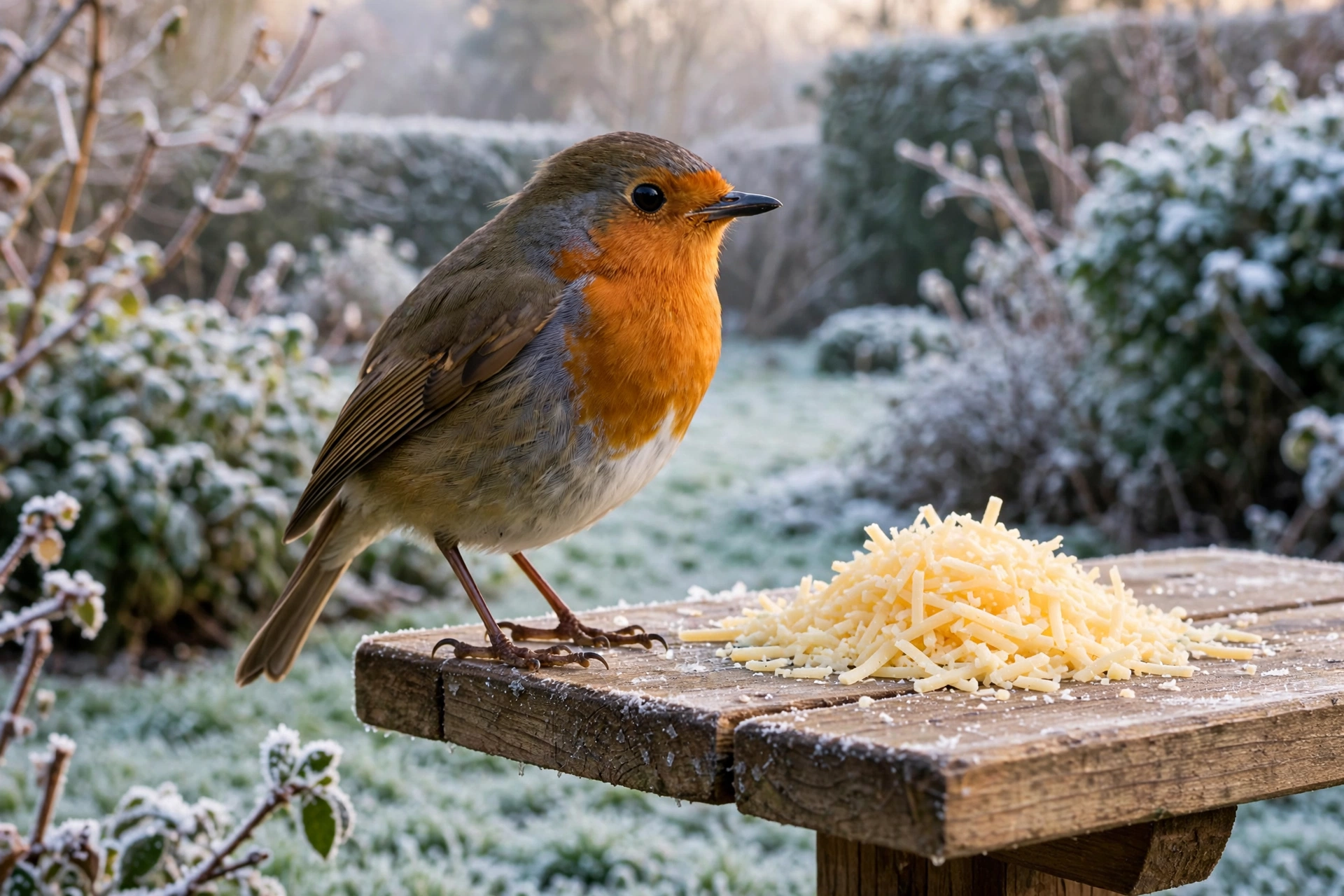
You are grating cheese for dinner, a few shreds fall on the patio, and a robin hops over to investigate. Should you shoo it away, or is a little cheese actually fine for birds? It is a question bird lovers ask every winter, and the honest answer is more nuanced than a simple yes or no.
Cheese is not a natural food for any bird, and birds digest dairy poorly because they produce very little lactase, the enzyme that breaks down milk sugar. A beakful of cheese will not poison a bird, but it is junk food at best: salty, fatty, and hard to digest. Some cheeses are genuinely risky, while a tiny amount of hard, mild cheese is considered low-risk. The RSPB even lists mild grated cheese among the kitchen scraps that garden birds welcome in winter.
In this guide we explain the science of birds and dairy, rank common cheeses from risky to low-risk, show how to offer cheese safely if you choose to, and share far better high-fat foods for cold weather.
The Short Answer
Technically yes, birds can eat cheese, and a small nibble of hard, mild cheese is unlikely to harm a healthy adult bird. But cheese is not good food for birds and should never be a regular part of their diet. Birds produce little or no lactase, so dairy can cause digestive trouble, and many cheeses are far too salty or carry moulds and additives that birds cannot handle.
If you want one rule: tiny amounts of hard, mild cheese as an occasional winter scrap are low-risk, while soft, blue, processed, or salty cheeses should be avoided entirely. Better still, offer foods made for birds, which we cover in detail below.
Why Dairy and Birds Are a Bad Match
Birds evolved without a single dairy product in their diets. No bird feeds its young on milk, so there was never any evolutionary pressure to keep producing lactase into adulthood. Most adult birds produce little or no lactase, the enzyme that digests lactose, the main sugar in milk.
Fresh milk is therefore the worst dairy product for birds, and wildlife organisations advise never offering it. Cheese sits in a grey area because the cheese-making process changes the equation. Fermentation and ageing convert most of the lactose into lactic acid, so hard, aged cheeses contain very little lactose. That is why a crumb of mature cheddar is tolerated far better than a saucer of milk would be.
Fat and salt are the other problems. Cheese is calorie-dense, which sounds helpful in winter, but it is also salty, and birds are small. A salt load that means nothing to a human can dehydrate a robin. Additives in processed cheese, from extra salt to flavourings and preservatives, make the picture worse. This is also why the Audubon Society of Rhode Island’s wildlife FAQs list dairy and cheese among the foods people should not put out for birds: the cautious default is simply to skip it.
What Happens If a Bird Eats Cheese?
For a healthy wild bird, a single small piece of hard cheese usually passes without incident. The bird gains a few empty calories and moves on. Problems arise with quantity, frequency, and the wrong type of cheese:
- Digestive upset: undigested dairy can cause loose droppings, something pet bird owners tend to notice quickly in the cage tray.
- Dehydration risk: salty cheeses pull water from the body, which is dangerous for small birds in freezing weather when liquid water is scarce.
- Nutritional displacement: cheese fills a bird with calories but few of the nutrients it needs, crowding out proper food from a small stomach.
- Mould exposure: blue and soft-ripened cheeses carry live mould cultures that can irritate a bird’s airways and crop.
None of this means a robin that steals one shred of cheddar is in danger. It means cheese is a poor choice to offer deliberately and often, and that the type of cheese matters enormously.

Cheeses to Avoid: The Risk Ranking
Not all cheese carries the same risk. Use this ranking when deciding what, if anything, goes on the bird table:
| Cheese type | Risk level | Why |
|---|---|---|
| Soft cheeses such as brie and camembert | High | Soft, high-moisture, mould-ripened rinds, and often salty |
| Blue cheeses such as stilton and gorgonzola | High | Live mould cultures, strong flavour, high salt |
| Processed cheese slices and spreads | High | Very salty, with additives and flavourings |
| Flavoured cheeses such as smoked, chilli, or garlic | High | Seasonings and smoke compounds that birds cannot process |
| Fresh soft cheese such as cream cheese and ricotta | Medium | Higher lactose, and soft textures can stick to beaks and feathers |
| Hard mild cheese such as mild cheddar and edam | Low | Very little lactose, but still salty and unnatural: tiny amounts only |
Cheese does not belong on the truly dangerous list. For the foods that genuinely are hazardous, see our guide to toxic foods for birds.
The One Narrow Exception: Hard, Mild Cheese in Tiny Amounts
This is where honesty requires nuance. The RSPB, the UK’s largest bird charity, lists mild grated cheese among the kitchen scraps that garden birds welcome in winter, noting that robins are particularly fond of it. The RSPB’s winter feeding advice comes with clear conditions: mild cheese only, offered in moderation as part of a varied diet, with soft or salty cheeses avoided and uneaten food removed promptly.
So the evidence-based position is this: a pinch of grated mild cheddar offered occasionally in cold weather is low-risk and genuinely eaten by species such as robins, wrens, and dunnocks. It is not a health food, it is not necessary, and it should never replace proper bird food. Think of it as the bird equivalent of a biscuit crumb: tolerated, not recommended.
Notice the limits built into that advice. “Occasionally” means not daily. “A pinch” means not a pile. And “mild” rules out most of the cheese drawer. If you cannot meet all three conditions, skip the cheese and choose something better.
Which Garden Birds Are Most Likely to Try Cheese?
Not every visitor to your garden will give cheese a second glance. Seed eaters such as finches and sparrows usually ignore it in favour of familiar food. The species most likely to investigate a cheese scrap are the insect eaters and omnivores that naturally sample a wide diet:
- Robins: the most enthusiastic cheese tasters. Robins probe for soft, high-energy food all winter and will readily take finely grated mild cheese.
- Wrens and dunnocks: small insect eaters that forage low to the ground, where a fallen shred is easy to find.
- Starlings: bold omnivores that will try almost anything, though their messy feeding style means scraps scatter everywhere.
- Blackbirds: may peck at soft scraps on the lawn, especially in hard frosts when worms are out of reach.
Knowing the audience helps you judge portions. If robins are your regulars, a teaspoon of grated cheddar is a meaningful treat. If your garden is mostly finches, the cheese will sit untouched, so save your effort for sunflower hearts instead.
How to Offer Cheese Safely, If You Choose To
If you decide an occasional scrap is acceptable, follow this sequence to keep the risk as low as possible:
- Choose hard and mild: a mild cheddar or edam. Nothing soft, blue, flavoured, or processed.
- Grate it finely: small shreds are easier for small birds to handle and reduce any choking risk.
- Offer a pinch, not a pile: a teaspoon-sized amount is plenty for a whole garden.
- Use a clean surface: a bird table or ground feeding tray, never mixed into seed feeders where it can go stale unnoticed.
- Remove leftovers: clear uneaten cheese within a few hours so it cannot spoil or attract rats.
- Watch and stop: if the birds ignore it, do not keep offering it. For a full cold-weather menu, see our complete guide on what to feed birds in winter.

Better High-Fat Alternatives for Cold Weather
Cheese calories come with baggage. These alternatives deliver winter energy without any of the dairy downsides, and they attract a wider range of species:
- Suet and fat balls: the gold standard winter food. Pure animal fat, often mixed with seeds, loved by tits, woodpeckers, nuthatches, and starlings. Audubon’s feeding tips recommend offering suet in cool weather only, since it can turn rancid in heat.
- Unsalted peanuts: high in fat and protein. Always buy unsalted, and offer them crushed or in a mesh feeder so whole nuts cannot choke young birds. If you want the full details, read our guide on whether birds can eat peanut butter.
- Sunflower hearts: calorie-rich with no husk waste, eaten by almost every garden bird from finches to blackbirds.
- Mealworms, live or dried: protein-packed and the closest thing to a natural winter insect, a favourite of robins.
- Soaked raisins and chopped fruit: quick energy, especially welcome for blackbirds and thrushes on frosty mornings.
A mix of these beats cheese on every measure: nutrition, safety, and the variety of birds they bring to your garden.
Can Pet Birds Eat Cheese?
Pet owners ask this about budgies, cockatiels, and parrots. The same biology applies: little lactase, small bodies, and high sensitivity to salt. A crumb of hard cheese offered once is unlikely to harm a healthy parrot, but there is no reason to make it a habit, and soft or flavoured cheeses should stay out of the cage entirely.
Pet birds deserve extra caution because they cannot choose alternatives the way wild birds can. A wild robin that dislikes cheese simply flies off; a caged budgie eats what it is given. If you want to share a treat, offer a piece of fruit, a vegetable, or a nut suited to the species instead. Never offer cheese to a sick bird or one with digestive problems, and keep portions to a crumb even for healthy birds.
What to Do If Your Bird Already Ate Cheese
If a pet bird grabbed a piece of cheese off your plate, do not panic. Work through these steps:
- Remove the source: take the cheese away so no more can be eaten.
- Identify the type: a crumb of cheddar is low concern; blue or processed cheese deserves closer watching.
- Offer fresh water: help the bird flush out the salt.
- Watch for 24 hours: loose droppings or lethargy after a large amount warrant a call to an avian vet.
- Do not offer dairy again: return the bird to its normal diet straight away.
No home remedy is needed for a small amount. The dose makes the poison, and a single crumb is a very small dose.
Frequently Asked Questions
Can birds eat cheese every day?
No. Even mild cheese is too salty and unnatural for daily feeding. Keep it to an occasional tiny scrap at most, or skip it entirely in favour of proper bird food.
Can baby birds eat cheese?
No. Nestlings need insects or food appropriate to their species, and their digestive systems are even less equipped for dairy than an adult’s. Never feed cheese to a baby bird. If you find one on the ground, keep pets away and contact a local wildlife rehabilitator for advice.
Do birds actually like the taste of cheese?
Some do. Robins, wrens, and dunnocks are known to take mild grated cheese, and starlings will try almost anything. Liking it does not make it good for them, which is why portion size and frequency matter far more than enthusiasm.
Is mouldy cheese dangerous for birds?
Yes. Mouldy food of any kind can carry toxins and spores that harm birds, so remove uneaten scraps promptly and never put out food that is past its best. This applies to all kitchen scraps, not just cheese.

Conclusion
So, can birds eat cheese? A tiny shred of hard, mild cheese will not hurt a healthy bird, and the RSPB counts mild grated cheese among the acceptable winter scraps. But cheese remains a poor food: hard to digest, salty, and nutritionally empty compared with what birds actually need. Soft, blue, processed, and flavoured cheeses should never be offered at all.
The kindest choice is to spend your effort on foods that genuinely help. Suet, unsalted peanuts, sunflower hearts, and mealworms will do far more for winter birds than any dairy product ever could. Offer cheese rarely or not at all, keep portions tiny, and always clear the leftovers. Your garden birds will be healthier for it, and the robins will forgive you.





