 Skip to content

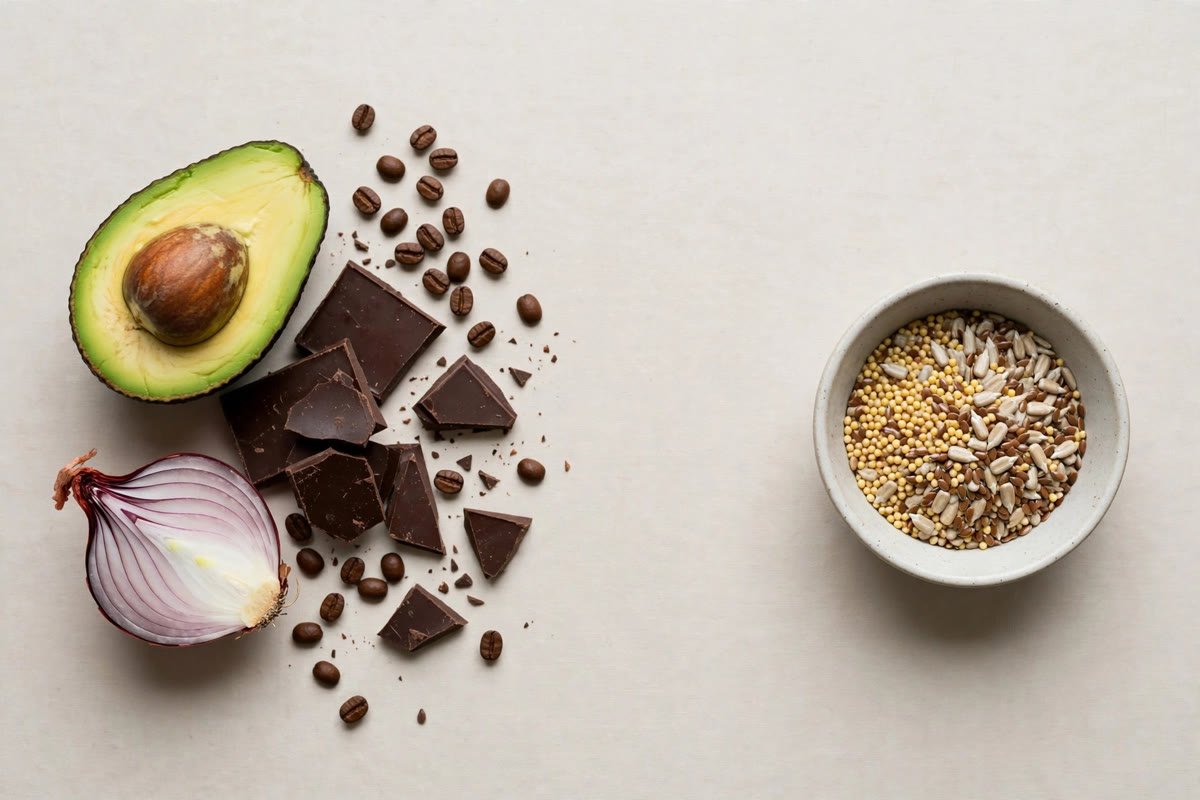
Knowing which foods are toxic to birds can be the difference between a healthy companion and a midnight emergency. Birds have small bodies and extremely fast metabolisms, so a nibble that seems harmless to you can overwhelm their system within hours. This guide lists 15 toxic foods for birds, explains exactly why each one is dangerous, and describes the warning signs to watch for.
You will also learn what to do if your bird eats something it should not, plus safe swaps you can offer instead. The list covers the well-known dangers like chocolate and avocado, along with sneaky ones hiding in kitchens and backyards, from xylitol sweetener to tomato leaves. Every claim below is grounded in veterinary sources, including Lafeber, VCA Animal Hospitals, and the Merck Veterinary Manual. Bookmark this page and keep it somewhere the whole household can see.

Why This List of Toxic Foods for Birds Matters
Most bird poisonings at home are accidents, not acts of carelessness. A well-meaning guest slips a parrot a piece of chocolate. A budgie lands on a guacamole bowl. A backyard feeder fills with old seed that has gone moldy in the rain. Birds explore the world with their beaks, and they cannot tell safe from dangerous.
Dose matters, and so does honesty about what “toxic” means. Some items on this list, like avocado and chocolate, can kill even in small amounts. Others, like dairy or fried food, are not poisons but will damage health over time. This guide marks that difference clearly, because treating every food as equally deadly makes the real emergencies harder to spot.
Food is only half the picture. Many common houseplants can poison birds too, so pair this guide with our rundown of toxic houseplants for birds for a fully bird-proof home. When in doubt about any food, skip it and ask an avian veterinarian. There are plenty of safe treats, which makes gambling on a questionable one never worth it.
The 15 Toxic Foods for Birds
Each entry below explains the mechanism, the symptoms, and how serious the risk is. Items are ordered roughly from most to least acutely dangerous.
1. Chocolate
Chocolate contains theobromine and caffeine, two stimulants in the methylxanthine family. Birds cannot break these compounds down efficiently, so they overstimulate the heart and nervous system. As a general rule, the darker and more bitter the chocolate, the more dangerous it is, which makes baking chocolate and cocoa powder the worst offenders.
Watch for hyperactivity, a racing heartbeat, tremors, and in severe cases seizures. Lafeber’s veterinary-reviewed guide to foods toxic to pet birds lists chocolate first and notes that a toxic dose can lead to death. There is no safe amount, so keep all chocolate, cocoa, and chocolate-flavored products away from birds entirely.
2. Avocado
Every part of the avocado plant contains persin, a fungicidal compound that acts as a cardiac toxin in birds. The fruit flesh, pit, leaves, and bark are all dangerous. Small birds such as canaries and budgies are considered the most susceptible, although clinical signs have been reported across many species.
Signs usually appear about 12 hours after ingestion and include respiratory distress, lethargy, and fluid around the heart. Death can follow within one to two days. The Veterinary Poisons Information Service describes avocado poisoning in birds as causing heart muscle damage and heart failure, with no antidote available. Treat avocado as one of the deadliest foods on this list.
3. Caffeine
Coffee, tea, energy drinks, soda, and some medications all deliver caffeine, the same stimulant family as chocolate’s theobromine. Caffeine drives up heart rate and blood pressure and can trigger dangerous heart rhythm problems in birds. Even a few sips of coffee can be a serious dose for a bird that weighs a few ounces.
Symptoms include hyperactivity, panting, a pounding heart, tremors, and seizures. Keep mugs covered and never let a bird sip from your cup. Like chocolate, caffeine has no safe serving size for birds, so the only safe policy is zero exposure.
4. Alcohol
Alcohol depresses the central nervous system, and birds feel the effects at tiny doses. Beer, wine, spirits, and even fermented fruit can cause incoordination, vomiting, dangerous drops in body temperature, and coma. A 2025 review of avian toxicoses in Frontiers in Veterinary Science lists ethanol among the toxic substances described for birds, with incoordination and neurological signs as the hallmark effects.
Because of their size and metabolism, birds can go from wobbly to unconscious fast. Never offer alcohol as a joke, and keep drinks out of beak reach at gatherings. This is a strict never-ever food.
5. Onion and Garlic
Onions, garlic, chives, and leeks contain sulfur compounds that damage red blood cells through oxidative injury. The result can be hemolytic anemia, where red blood cells break apart faster than the body can replace them. Concentrated forms such as garlic powder, onion powder, and soup mixes are more potent than the raw vegetables.
Lafeber reports fatal toxicity in geese fed large amounts of green onions and in a conure fed large amounts of garlic. VCA Animal Hospitals warns that onions and garlic can cause red blood cell destruction and kidney damage in birds. Watch for weakness, pale coloration, and labored breathing. A crumb of cooked onion in a sauce is unlikely to cause a crisis, but the risk is not worth taking.
6. Salt and Salty Snacks
Birds cannot handle concentrated sodium. Chips, pretzels, salted nuts, bacon, and processed snacks deliver far more salt than a small body can process. Excess salt can cause kidney problems and even brain lesions, along with severe dehydration and electrolyte imbalance.
Signs of salt poisoning include extreme thirst, weakness, and seizures. A single unsalted seed is fine, but anything marketed as a salty snack should stay out of the bird’s reach. This is a dose-driven danger: the saltier the food, the greater the risk.
7. Xylitol (Birch Sugar)
Xylitol is a sugar substitute found in sugar-free gum, candy, some peanut butters, baked goods, and toothpaste. Manufacturers have started labeling it as “birch sugar,” so check ingredient lists under both names. In many animals, xylitol triggers a surge of insulin that crashes blood sugar, and it has been linked to liver damage in dogs.
Research in birds is limited, which is exactly why caution is warranted. A South African veterinarian documented wild sugarbirds dying after drinking feeder nectar sweetened with concentrated xylitol, likely from a fatal blood sugar crash, as reported by IOL and African Birdlife. Keep all xylitol-containing products away from birds, and never sweeten homemade nectar with it.
8. Apple Seeds and Fruit Pits
Apple seeds and the pits of cherries, plums, apricots, and peaches contain amygdalin, a compound that releases cyanide when chewed. The fruit flesh itself is perfectly safe, which is why this one confuses people. The danger lies only in the seeds and pits.
Some qualification is needed here. A bird that swallows a single seed whole will likely pass it unharmed, because the toxin releases only when the seed is crushed. The real risk is for birds like parrots that crack seeds open and eat them in quantity. Always remove seeds and pits before offering fruit, and never let birds chew on pit fragments. Lafeber’s toxic foods guide specifically flags apple seeds and stone fruit pits as items to remove.
9. Mushrooms
Wild mushrooms are the concern here, since some species contain toxins that attack the liver and nervous system. VCA Animal Hospitals includes amanita mushrooms on its list of plants and fungi toxic to birds. Even experienced foragers misidentify mushrooms, so a bird should never get the chance to sample one.
Raw cultivated mushrooms from the grocery store are also widely listed as unsafe for birds, and they offer no nutritional benefit worth the gamble. Signs of mushroom poisoning include vomiting, lethargy, and liver damage. Skip mushrooms entirely, both wild and store-bought.
10. Uncooked Beans
Raw and undercooked beans, especially kidney beans, contain hemagglutinin, a lectin that is toxic when eaten uncooked. Thorough cooking destroys the compound completely, which makes this one of the few entries on the list with a simple fix. The danger applies to dried beans and beans that are merely soaked but not boiled.
Symptoms include severe digestive upset and nausea. Never feed dried beans, bean sprouts from raw beans, or partially cooked beans. Fully cooked, plain beans are a different story, and we cover those in the FAQ below.
11. Tomato Leaves and Stems
Tomatoes belong to the nightshade family, and the green parts of the plant, leaves, stems, and vines, contain toxic alkaloids. VCA lists the tomato plant’s green parts as harmful to birds. Backyard gardeners should keep birds from chewing on tomato plants, especially curious parrots with outdoor access.
The ripe red fruit flesh is generally considered safe in small amounts, but the acidity can irritate sensitive stomachs. When in doubt, skip tomatoes as a treat and choose a safer fruit from the swap table below.
12. Rhubarb Leaves
Rhubarb leaves contain oxalic acid and oxalates, which damage the kidneys and pull calcium out of the blood. VCA warns that rhubarb leaves have been associated with digestive upset, low blood calcium, and kidney damage, and that even small amounts can cause death.
The stalks contain far less oxalic acid, but there is no reason to test the boundary. Keep birds away from rhubarb plants in the garden and never offer the leaves as a green. This is a high-severity, low-tolerance danger.
13. Dairy Products
This entry needs honest framing: dairy is unhealthy for birds, not poisonous. Birds are naturally lactose intolerant, so milk, cheese, yogurt, and ice cream can cause digestive upset. Dairy products also tend to be high in fat and salt, which compounds the problem.
A tiny lick of cheese will not send a bird to the emergency room, but regular dairy treats lead to chronic digestive and weight issues. There are better protein treats available, so leave dairy off the menu entirely.
14. Fatty and Fried Foods
Like dairy, this is a chronic-health entry rather than an acute poison. Chips, fries, butter, bacon grease, and fried snacks drive obesity and fatty liver disease, one of the most common diet-related killers of pet birds. The Merck Veterinary Manual notes that diet-related disease is widespread in pet birds and lists foods owners should avoid.
The damage builds silently over months and years, which makes fatty table scraps more insidious than they look. A bird begging for fries is hard to resist, but the kindest answer is no.
15. Moldy or Spoiled Foods
Mold is a genuine toxin risk. Moldy peanuts, corn, and old seed can harbor aflatoxins, potent poisons produced by fungi that damage the liver and suppress the immune system. Damp, clumped, or foul-smelling seed should never be offered to any bird.
This one matters for backyard birders as much as pet owners. Seed left in a wet feeder can mold within days, and wild visitors cannot tell the difference. Store seed in a cool, dry, sealed container, discard anything damp, and scrub feeders regularly. Backyard regulars like mourning doves will thank you with return visits; see our guide to the best food for mourning doves for what to offer instead.

What To Do If Your Bird Eats Something Toxic
Speed matters. Birds process substances fast, so symptoms can escalate in minutes to hours. Follow these steps in order.
- Remove the source and secure the bird. Take the food away, move the bird to its cage or a quiet carrier, and keep other pets and children back.
- Do not try to make your bird vomit. Birds cannot vomit on command, and forcing it risks aspiration, which can be fatal on its own.
- Record what happened. Write down exactly what was eaten, how much, and when. Save the packaging or a sample of the food for the vet.
- Call an avian veterinarian immediately. If your regular vet is unavailable, contact an emergency animal hospital or a pet poison helpline. Describe the substance, the amount, the time, and your bird’s species and weight.
- Keep the bird warm, calm, and hydrated. Minimize handling, watch breathing and droppings, and follow the vet’s instructions exactly. Do not administer home remedies unless the vet tells you to.
Even if your bird looks fine, call anyway. With toxins like avocado and xylitol, serious signs can be delayed by hours, and early treatment gives the best odds.
Safe Swaps: What to Offer Instead
Saying no is easier when you have a yes ready. Every swap below replaces a risky food with something birds genuinely enjoy. If you share your home with a budgie, our complete budgie diet guide goes deeper on daily menus and safe treats.
| Instead of this | Offer this |
|---|---|
| Chocolate or candy | Blueberries, banana slices, or chopped seedless apple |
| Avocado or guacamole | Mashed ripe banana or cooked sweet potato |
| Coffee, tea, or soda | Fresh plain water, always available |
| Alcohol | Plain water; keep all drinks covered around birds |
| Onion or garlic scraps | Chopped bell pepper, carrot, or broccoli |
| Salty chips or pretzels | Unsalted sunflower seeds or plain air-popped popcorn |
| Sugar-free gum or candy | Keep away entirely; offer a small piece of fruit instead |
| Whole apples with seeds | Apple chunks with the seeds and core removed |
| Raw or dried beans | Thoroughly cooked plain beans as an occasional treat |
| Cheese or dairy | A tiny piece of hard-boiled egg |
| Fried snacks | Baked sweet potato cubes |
| Moldy peanuts or stale seed | Fresh unsalted nuts or seed from a sealed bag |

Frequently Asked Questions
Can birds eat bread?
Plain bread is not toxic to birds, but it is a poor food. It fills them up with starch while delivering almost no nutrition, and moldy bread is genuinely dangerous because of mycotoxins. If you offer bread at all, keep it to tiny amounts of fresh, plain bread as an occasional extra, never a staple. Our full guide to whether birds can eat bread breaks down the details by bread type.
Can birds eat cheese?
No. Birds are lactose intolerant, so cheese commonly causes digestive upset, and most cheese is also high in fat and salt. A crumb stolen off a plate is unlikely to cause an emergency, but cheese should never be an intentional treat. A small piece of hard-boiled egg is a far better protein snack.
Are peanuts safe for birds?
Fresh, unsalted, human-grade peanuts are safe for many birds and are a favorite of jays and woodpeckers at backyard feeders. The danger is mold: peanuts stored damp or past their prime can develop aflatoxins, the same toxins flagged in item 15 above. Buy peanuts from a reputable source, store them dry and sealed, and throw out any that smell musty or look discolored.
Are cooked beans safe for birds?
Yes, when they are thoroughly cooked and plain. Boiling destroys hemagglutinin, the toxic lectin in raw beans, so fully cooked kidney beans, black beans, and lentils can be an occasional healthy treat. Serve them without salt, oil, onion, or garlic. Never feed beans that are merely soaked, sprouted from raw beans, or undercooked.
Is it safe to share my dinner with my bird?
Generally no. Human meals are usually seasoned with salt, onion, garlic, butter, or sauces that are risky for birds, even when the main ingredient is safe. Instead of sharing your plate, set aside a small portion of plain bird-safe food before you season it: steamed vegetables, cooked sweet potato, or fruit. Your bird gets to join the meal, and you stay in control of what goes into the beak.
Conclusion
The 15 toxic foods for birds in this guide share one trait: every poisoning they cause is preventable. Keep chocolate, avocado, caffeine, alcohol, onion, garlic, salty snacks, and xylitol products out of reach. Remove seeds and pits from fruit, cook beans thoroughly, and keep birds away from tomato vines, rhubarb leaves, and wild mushrooms. Treat dairy and fried foods as unhealthy rather than poisonous, and never offer anything moldy or spoiled.
Print the list or save this page on your phone, and make sure everyone in the household knows the top offenders. A few seconds of prevention beats a frantic call to the vet every time. When something does go wrong, act fast: remove the food, note the details, skip the home remedies, and call an avian veterinarian right away. Your bird depends on you to be the expert in the room, and now you have the knowledge to do it well.





