 Skip to content

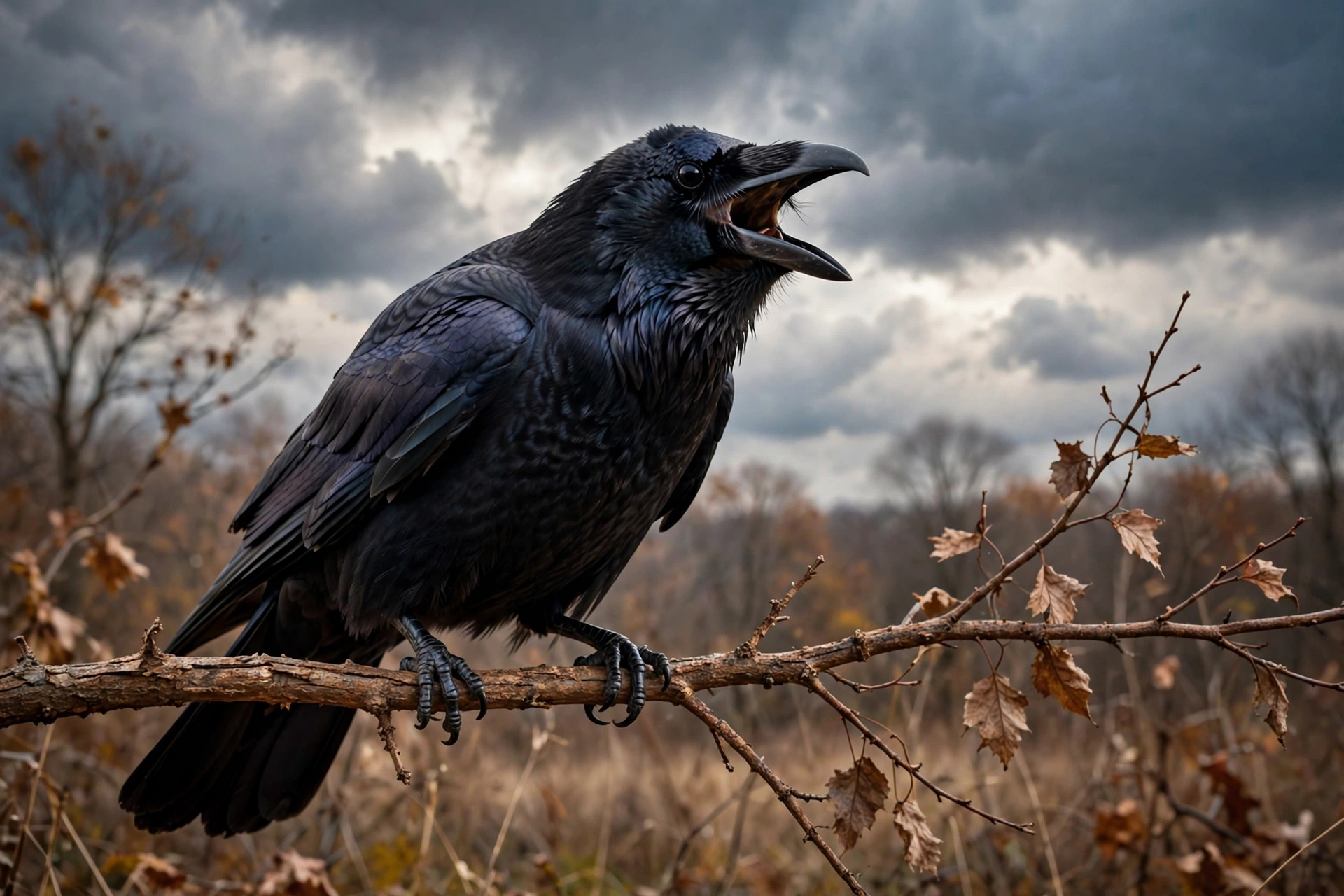
Few sounds are as familiar as the harsh “caw” of an American crow echoing across a neighborhood. It cuts through morning traffic, rings out over parking lots, and follows hikers along wooded trails. Most of us hear it every day, yet almost nobody stops to ask what the crow is actually saying.
As it turns out, a crow’s caw is not a single sound with a single meaning. Researchers who have spent decades studying these birds say that one caw can mean something completely different from the next, depending on context, energy, and rhythm. So why do crows caw? The honest answer is that they caw for many of the same reasons we talk: to warn, to argue, to flirt, to gossip, and sometimes just to check in with family.
In this guide, you will learn the seven main reasons crows caw, how to tell different call types apart by ear, why the cawing peaks at dawn and dusk, and whether that crow yelling outside your window has a personal grudge against you.
Why Do Crows Caw? The Short Answer
Crows caw to communicate. A single crow’s repertoire includes alarm calls, rally cries, territorial announcements, contact calls, food calls, courtship sounds, and targeted scolding, and each one is shaped by how it is delivered. Kevin McGowan of the Cornell Lab of Ornithology, who has studied crows for more than 25 years, explains that a caw’s meaning depends on how it is used, the energy behind it, the timbre, and the number and speed of repetitions.
The word “hey” can be a greeting, a warning, or a complaint depending on tone. Crow calls work the same way. The classic “caw-caw” that most people recognize functions much like a songbird’s song. It advertises presence and says, in effect, that the territory is taken. But speed it up, sharpen it, and aim it at a hawk, and the same basic sound becomes a battle cry.
Scientists have cataloged the variety carefully. The most common call, heard year-round, is the caw, typically given two to five times in a bout. It is the crow’s main long-distance signal, and research has identified multiple distinct caw types, from short and medium to harsh, plus specialized forms like the double-short caw used as a call to arms.
The bottom line: when you hear a crow cawing, it is almost always saying something specific. The sections below decode the seven most common messages.
7 Reasons Crows Caw
1. Sounding the alarm
The most urgent caw you will hear is the alarm call. When a crow spots a predator such as a hawk, an owl, a fox, or a cat, it lets out sharp, rapid, harsh caws that carry a clear message: danger is here. Nearby crows react instantly, and the alarm can pull in birds from surprising distances.
Alarm calls are not random noise. They are structured enough that other crows adjust their behavior on hearing them, freezing, taking cover, or flying in to investigate. If you hear a sudden burst of intense, fast cawing with no obvious social context, a predator is the most likely explanation.
2. Mobbing a predator
Mobbing is the alarm call taken to the next level. When crows discover a hawk perched in a tree or an owl roosting during the day, they gather around it and unleash a sustained barrage of harsh cawing, often while diving at the predator. The goal is harassment: make the area so unpleasant that the predator leaves.
Mobbing calls are louder and more chaotic than ordinary cawing, and they recruit: one crow’s cries can summon dozens of others within minutes.

3. Defending a territory
During breeding season, the classic “caw-caw” becomes a property deed. A crow perched on a favored branch repeats steady, evenly spaced caws to announce that this patch of ground is claimed. McGowan compares it directly to bird song: it tells neighbors and intruders alike that the bird is present and the territory is taken.
Territorial cawing often comes in exchanges. One bird calls, a neighbor answers, and the two trade bouts back and forth across a boundary line. Listen for the rhythm: calm, regular, confident. It is the sound of a bird that is not going anywhere.
4. Keeping in touch with family
Much of the cawing you hear on an ordinary day has no dramatic context at all. Birders who study crow behavior describe a common pattern: a crow gives a short burst of similar-sounding caws, pauses in silence, then gives another burst. This is a contact call, the crow equivalent of texting “I’m here, where are you?”
Contact calling helps family groups stay coordinated while spread out over foraging grounds. It signals safety and relaxed togetherness rather than any specific event. Field observers note that these easy, conversational caws make up a large share of all the crow vocalizations a person will ever hear, which is worth remembering the next time a crow seems to be cawing “at nothing.”
5. Announcing food
Crows are social foragers, and they vocalize around food. A crow that finds a rich patch, whether it is a spilled bag of grain, a fruiting tree, or a picnic leftovers situation, may call in a way that draws family members to the scene. The calls recruit rather than warn, and they reflect the crow’s deeply social approach to eating.
This is one reason what crows eat varies so much by season and neighborhood. A bird that can summon its relatives to a new food source can exploit opportunities faster than a solitary forager, and the dinner invitation travels by caw.
6. Courting a mate
Crows are socially monogamous and often pair for life, and their courtship includes sound. Alongside bowing displays with fanned wings and tails, courting crows use softer vocalizations, including gentle cooing and rattling notes that sound nothing like the harsh territorial caw. These intimate calls help cement the pair bond.
Mated pairs also duet in quieter tones when perched close together, preening and touching bills. If you hear low, musical crow sounds in spring from a pair sitting side by side, you are eavesdropping on a romance.
7. Scolding a human they recognize
Sometimes the cawing really is personal. Crows can recognize individual human faces and remember which people have threatened them, and they scold those specific people loudly, sometimes for years. A crow that caws aggressively every time you walk past may have decided, rightly or wrongly, that you are a problem.
This is one of the best-documented examples of animal memory, covered in detail below.
What Different Caw Sounds Mean
Once you know the reasons, you can start identifying call types by ear. Use this quick reference the next time you hear a crow holding forth.
| Call type | What it sounds like | What it likely means |
|---|---|---|
| Alarm caw | Sharp, rapid, harsh bursts | Predator spotted, take cover |
| Mobbing rally | Loud, chaotic, sustained screaming by many birds | Join me, harass this predator until it leaves |
| Territorial caw | Steady, evenly spaced, confident “caw-caw” | This area is mine, stay out |
| Contact call | Short bursts of similar caws with pauses between | Checking in, all is well, where are you |
| Food call | Excited, inviting caws near a food source | Come here, there is food |
| Courtship coo | Soft cooing, rattles, and bell-like notes | Pair bonding and mating |
| Scold | Harsh, directed cawing aimed at one person or animal | You are not welcome here |
Listen for speed, harshness, and company. Fast and harsh usually means urgency, slow and rhythmic means routine business, and twenty crows calling at once means an emergency.

Why Crows Caw So Much in the Morning and Evening
If crows seem loudest at dawn and dusk, that is because they are. American crows are daytime foragers that gather in communal roosts at night, sometimes in the thousands or tens of thousands, and the morning and evening hours are rush hour.
At dawn, family groups caw as they organize and stream out to foraging grounds. At dusk, returning birds call to locate family members and settle in. The result is a twice-daily chorus that sounds chaotic but is really a social roll call.
Fall is the peak season for this spectacle, as roosts swell with the year’s young birds. If you want the full story of these gatherings, read why crows gather in huge roosts, which explains the science of winter roosting in detail.

Do Crows Caw at Specific People? Facial Recognition and Grudges
Yes, and the science behind it is remarkable. In a famous series of experiments beginning in 2006, wildlife biologist John Marzluff and his team at the University of Washington wore a distinctive rubber mask while trapping and banding wild American crows on campus. Later, whenever anyone wore that same mask near the crows, the birds scolded them loudly. They ignored the same person wearing a different mask that had never been associated with capture.
The peer-reviewed paper, published in the journal Animal Behaviour in 2010, documented that the crows kept scolding the threatening face for at least 2.7 years after a single encounter. Later field observations suggested the memory could persist even longer, and strikingly, crows that had never been captured themselves joined in the scolding. The knowledge of the dangerous face had spread through the flock by social learning, passed from bird to bird like a neighborhood warning.
This is why a crow might caw furiously at you specifically while ignoring everyone else on the sidewalk. If you once chased it from your garden, disturbed its nest, or even just resembled someone who did, you may have earned a place on its list. The good news is that the reverse also appears to be true: crows can learn to recognize people who feed them or treat them kindly, and they may greet those people with softer, friendlier calls.
Their memory is one more sign of the crow’s extraordinary brain. For more on what these birds are capable of, see how smart crows really are.
Crow Dialects: Why Crows Sound Different by Region
Travel across the country and you may notice that crows do not all sound the same. Researchers have documented regional differences in crow calls, sometimes described as dialects, with variation in pitch, pacing, and texture from one area to another. Part of this is individuality: McGowan’s work has shown that crow voices carry enough individual information that crows can likely tell each other apart by voice alone, much as we recognize familiar human voices.
So if you move to a new region and the local crows sound slightly off to your ear, you are not imagining it. You are hearing a regional accent.
Crow Caw vs. Raven Croak: How to Tell Them Apart
Crows and ravens look similar at a glance, but their voices give them away instantly. American crows produce the classic strong, harsh caw. Common ravens produce a deeper, throatier croak, often described as a “gronk” or “kraa” sound. Once you have heard both, you will rarely confuse them again.
The Cornell Lab’s Bird Academy has a wonderful breakdown of the two species’ calls, with McGowan explaining the crow’s rattles, clicks, and bell-like notes alongside the raven’s deep croaking. You can explore it here: Caw vs. Croak: Inside the Calls of Crows and Ravens. Cornell also offers a side-by-side sound comparison in How to Tell Crows and Ravens Apart by Sight and Sound.
For a full visual identification guide, see Crow vs Raven: 7 Ways to Tell These Black Birds Apart.
Should You Worry When Crows Won’t Stop Cawing?
Usually, no. Relentless cawing is normal crow behavior, and most of the time it means one of three things: a predator is nearby, it is dawn or dusk near a roost, or the birds are simply socializing.
Two situations are worth a closer look. If crows caw intensely at your yard every day, they may have a nest nearby and see you, your dog, or your cat as a threat. And if a single crow screams at you and only you, revisit the section above: you may have made an enemy.
If you want to make peace, the research suggests a straightforward strategy. Stop doing whatever the crow dislikes, and consider offering food at a distance. Crows remember kindness too, and a reformed relationship can turn the scolding into something closer to a greeting.
A Quick Note on Crow Symbolism
Across cultures, crows carry heavy symbolic baggage, from omens of death to messengers of transformation. Those stories say more about us than about the birds. The science is more interesting: crows caw because they live in complex societies that run on communication, memory, and cooperation.
Frequently Asked Questions
Do crows caw at night?
Rarely. Crows are daytime birds that sleep in communal roosts at night, so nighttime is usually quiet. If you hear cawing after dark, something has disturbed the roost, such as a predator or a loud noise.
How many different sounds can a crow make?
Researchers describe a large and varied repertoire. Beyond the familiar caw, American crows produce rattles, clicks, coos, and bell-like notes, and scientists have identified multiple distinct caw types used for long-distance communication. Individual crows also have recognizable voices, adding another layer of variety.
Why is a crow cawing outside my window every morning?
The most likely reasons are routine: it is a territorial announcement, a contact call to family, or part of the dawn departure from a nearby roost. If it happens at the same time daily and seems aimed at you, the crow may also have learned to associate you with food, or, less happily, with a past disturbance. Watch what the bird does after you appear. Calm, rhythmic cawing is business as usual. Harsh, directed scolding is personal.
Can crows mimic human speech?
Captive crows have been known to imitate human words and other sounds, though they are far less skilled at it than parrots. In the wild, mimicry is uncommon. The wild crow’s genius lies in the sophistication of its own calls, which carry individual identity, emotional tone, and specific meaning.
Conclusion
So why do crows caw? Because they have a great deal to say. The harsh, familiar sound that most of us tune out is actually a flexible communication system covering alarms, mobbing rallies, territorial claims, family check-ins, dinner invitations, courtship, and the occasional long-held grudge against a specific human face.
The next time a crow starts up outside, listen for a few seconds. Note the speed, the harshness, and whether the bird is alone or backed by a chorus. You will be surprised how quickly the noise resolves into meaning. And if one bird seems to be yelling directly at you, consider what you might have done to earn it. With a memory measured in years, a crow does not scold without a reason. For a broader portrait of this remarkable bird, Audubon’s species profile is an excellent companion read: American Crow, Audubon Field Guide.




