 Skip to content

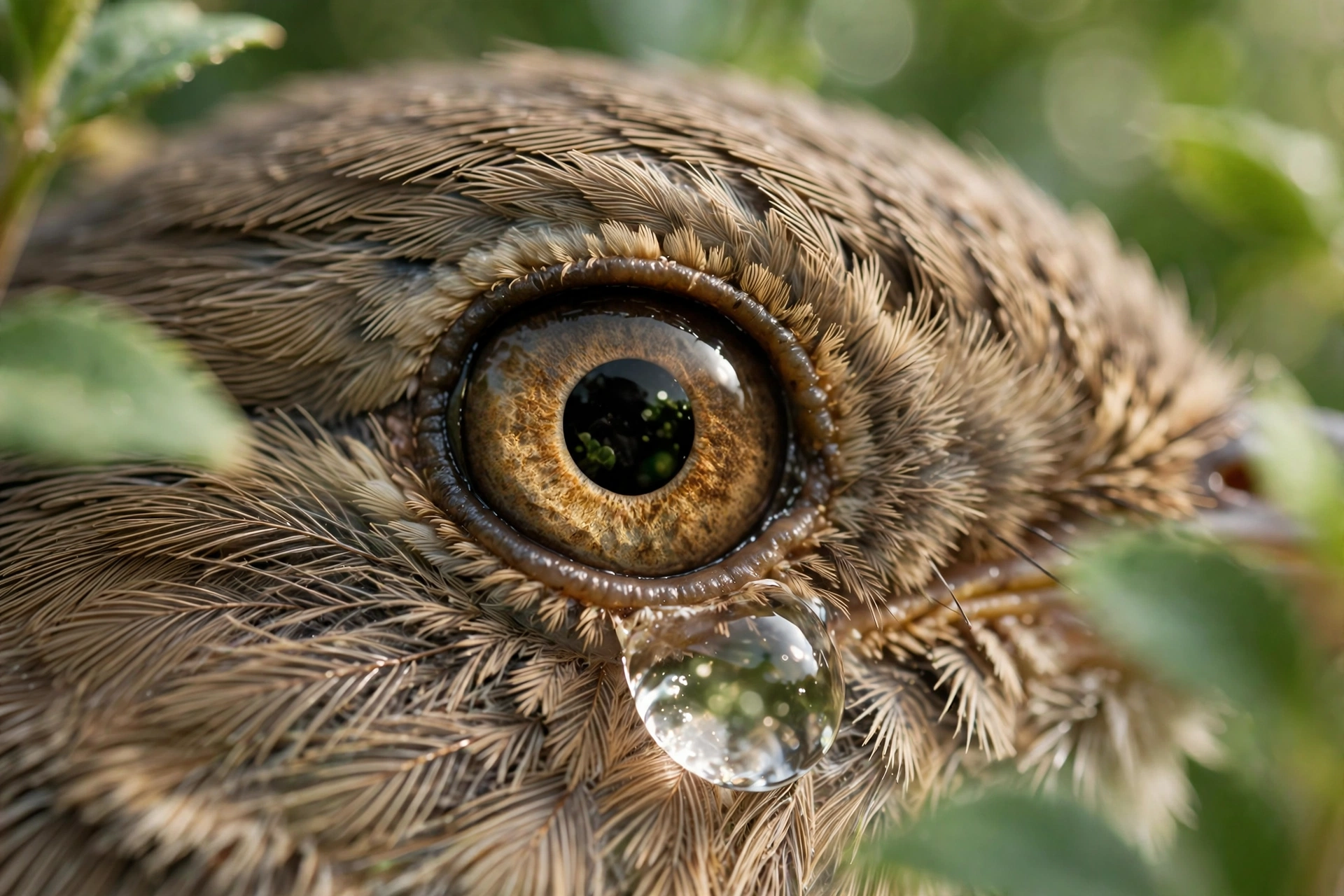
You have probably seen the photo: a small bird with a glistening drop at the corner of its eye, looking for all the world like it is weeping. It tugs at the heart. It also raises a question that bird lovers ask all the time: can birds cry the way we do, with real tears of sadness?
The short answer is no, but the full answer is more interesting. Birds absolutely produce tears. Their eyes water, they blink moisture across the cornea, and some seabirds drip fluid from their faces daily. What they do not do, as far as science can tell, is shed tears from sadness. This article breaks down the real anatomy, corrects the myth that birds lack tear ducts, explains the famous “crying” seabirds, and shows how birds actually express grief and distress.
Can Birds Cry? The Short Answer
Birds make tears, but they do not cry from emotion. Their tear glands respond to physical needs like lubrication, dust removal, and dryness. They do not respond to sadness, grief, or joy the way human tear glands do.
Researchers have found no evidence that any bird species produces tears triggered by feelings. That does not mean birds lack emotions. Their emotional lives show up elsewhere: in behavior, posture, and voice. A grieving goose will not weep, but it may stop eating and withdraw. A lonely parrot will not shed a tear, but it may scream for hours or pull out its feathers.
So when you see moisture on a bird’s face, something physical is happening, and the sections below explain what.
Do Birds Produce Tears? The Anatomy Says Yes
One of the most repeated claims on the internet is that birds have no tear ducts. That is false, and it is worth correcting firmly because the real anatomy is well documented by avian veterinarians.
Most birds have a complete tear production and drainage system. Here are its parts:
- Lacrimal glands: these small glands sit near the outer corner of the eye and release watery tear secretions. In birds they play a supporting role. Penguins and owls appear to lack a distinct lacrimal gland and rely on the structures below.
- Harderian gland: this is the main source of tears in birds. It sits behind the eyeball near the base of the third eyelid, and its duct opens into the pocket between the eyeball and that eyelid. It also releases an oily substance that coats the cornea and slows evaporation during flight.
- Nictitating membrane: a thin, nearly transparent third eyelid that sweeps horizontally across the eye like a windshield wiper. It spreads the tear film, clears debris, and protects the eye during flight. In diving birds it acts like built-in goggles underwater.
- Nasolacrimal duct: two tiny drainage points collect used tear fluid and channel it into a duct that empties into the nasal cavity. This is why a bird with watery eyes sometimes also shows a runny nostril on the same side.
One notable difference from mammals: birds have no Meibomian glands, the oil glands embedded in human eyelids. The Harderian gland takes over that waterproofing job instead.
What Bird Tears Are Made Of
Bird tears are not just salty water with a fancy delivery system. In 2020, researchers at the Federal University of Bahia in Brazil published a comparative study in the journal Frontiers in Veterinary Science that analyzed tear fluid from macaws, hawks, owls, and turquoise-fronted amazon parrots, alongside reptiles and human volunteers.
The findings were striking. Bird tears carry much the same electrolytes as human tears, including sodium and chloride, though at slightly higher concentrations. Dried tear crystals, however, looked structurally different, a difference the researchers linked to trace microelements. The team suggested the findings could improve eye treatments and shed light on tear evolution. You can read a summary of the study here.
Why Birds Cannot Cry Emotional Tears Like Humans
Human emotional crying is a specific biological trick. When we feel grief or joy, signals from the brain’s emotional centers activate the parasympathetic nervous system, which orders the lacrimal glands to flood the eyes. No bird is known to do anything comparable.
Birds produce two kinds of tears, and neither is emotional:
- Basal tears: a constant thin film that keeps the cornea moist, smooth, and nourished. The Harderian gland and nictitating membrane maintain this film around the clock.
- Reflex tears: a surge of fluid released when the eye is irritated by dust, wind, a scratch, or infection. This is the eye flushing out a problem, not expressing a feeling.
Scientists have found no neural pathway in birds that would link emotional centers of the brain to tear production. That is a careful statement: it reflects the current state of evidence, not a proven impossibility. But after decades of avian neuroscience, no researcher has documented a bird shedding tears in response to an emotional event. The detailed veterinary anatomy of the avian eye, including the roles of the lacrimal and Harderian glands, is described in this avian ophthalmology reference.
How Birds Actually Show Sadness, Grief, and Distress
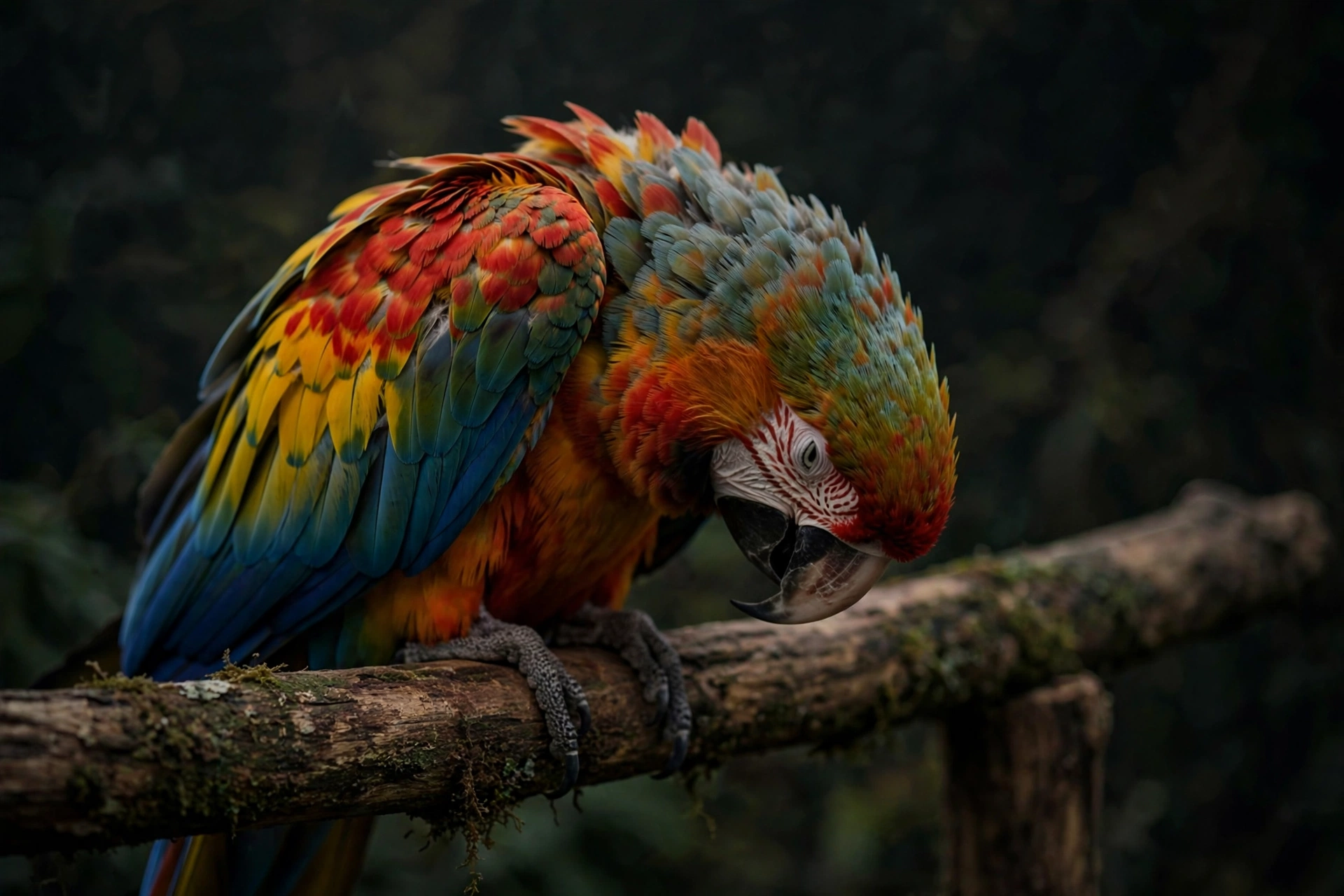
If birds cannot cry, how do you know when one is suffering? You watch what it does. Ornithologists have documented behavioral changes after loss that look much like grief, while cautioning against assuming bird feelings match human ones exactly.
Konrad Lorenz described greylag geese that lost a mate hanging their heads, losing interest in food, and growing indifferent to their surroundings. Observers have reported magpies gathering silently around a dead flock member, sometimes placing twigs beside the body. Crows famously assemble around their dead, though researcher Kaeli Swift’s work in Animal Behaviour adds nuance: the gatherings appear to serve as threat assessment, with crows learning about danger rather than holding a funeral.
Primatologist Barbara J. King, author of How Animals Grieve, argues that clear behavioral changes after a loss, such as withdrawal or appetite loss, deserve to be taken seriously as grief-like states. The honest position sits between two extremes: birds are not unfeeling machines, and they are not tiny humans in feathers.
In pet birds, distress usually looks like this:
- Vocal changes: sudden screaming, repetitive contact calls, or going unusually silent.
- Appetite shifts: refusing favorite foods or eating far less than normal.
- Feather destructive behavior: plucking, chewing, or barbering feathers, often on the chest and wings.
- Withdrawal: sitting fluffed on a perch, avoiding interaction, sleeping far more than usual.
- Aggression: biting or lunging in a bird that was previously gentle.
If your bird recognizes you and seems bonded to you, that bond is real. Birds that recognize individual human faces can genuinely grieve a lost companion. They simply grieve with behavior, not tears. Any combination of the signs above warrants a closer look at the bird’s environment and health, and our guide to signs your pet bird is sick can help you sort behavioral distress from medical illness.
Seabirds That “Cry”: Salt Glands Explained
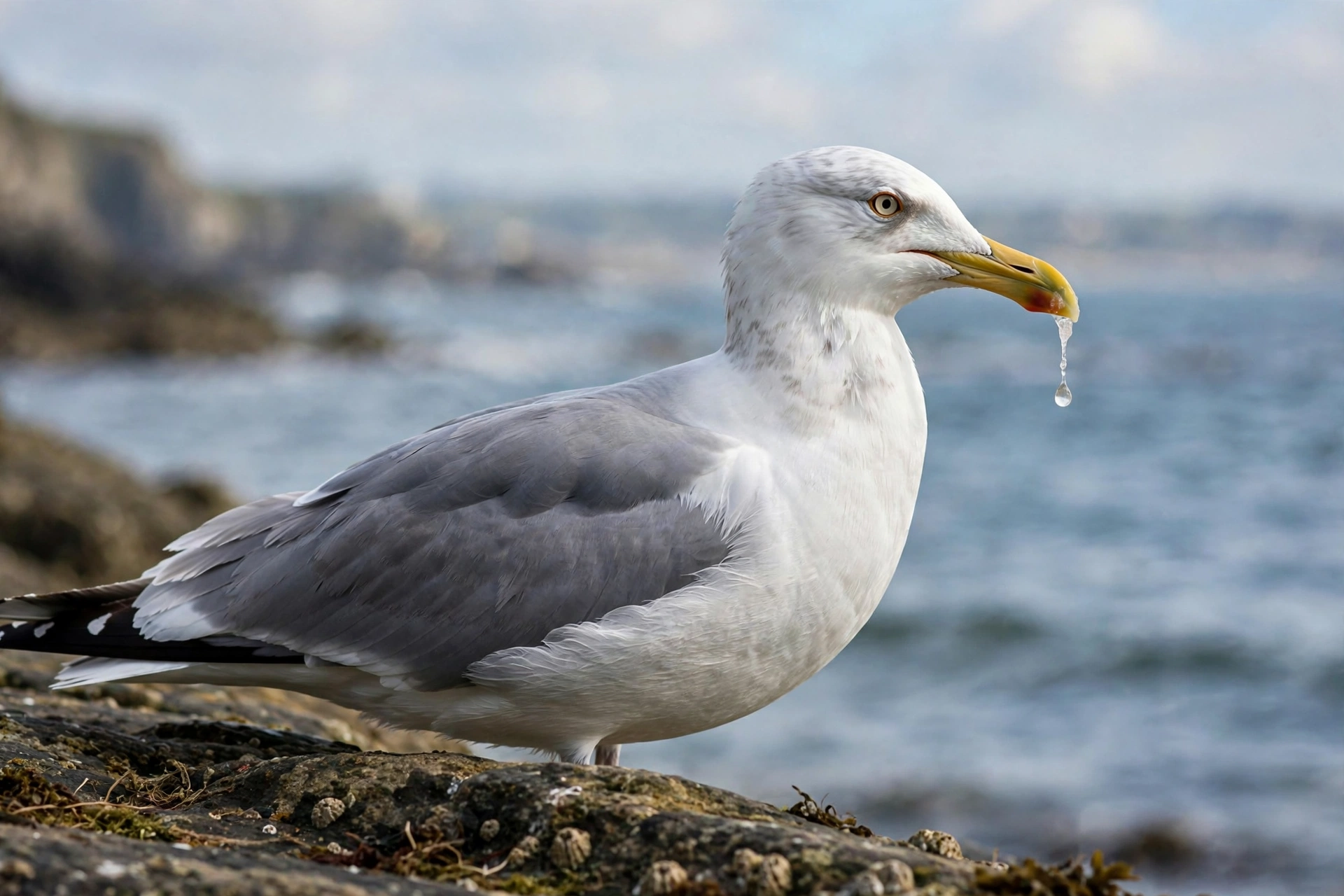
Now for the birds that really do drip from their faces. Watch a gull after a salty meal and you may see clear fluid running from its nostrils or dripping off its bill tip. It looks exactly like crying, but it is actually elegant plumbing.
Marine birds carry a pair of salt glands, also called supraorbital or lateral nasal glands, tucked into bony hollows just above the eyes. They pull excess sodium chloride from the bloodstream far more efficiently than the kidneys, then flush it out as concentrated brine. A duct carries the brine to the nasal cavity, and the bird expels it through the nostrils, often with a sharp head shake. In birds with closed nostrils, like cormorants, the fluid trickles from inside the mouth and drips off the bill tip.
Knut Schmidt-Nielsen and colleagues worked out the system in 1957 and 1958, solving how ocean birds survive without fresh water. The glands appear in all seabirds and many birds with salty diets, including gulls, ducks, and geese. In one classic experiment, a gull force-fed seawater equal to a tenth of its body weight cleared all the excess salt within three hours, a dose that would quickly kill a human.
Two details matter here. First, this fluid is not tear fluid and does not come from the eyes; it exits through the nose and bill. Second, the glands go dormant without a salt load, so a captive seabird on fresh water will not drip at all. Britannica’s overview of the nasal gland describes the mechanism in full.
Why Your Bird’s Eye Looks Wet: Common Causes
A wet-looking eye in a pet or backyard bird usually has a physical explanation. Tears are doing their job, or something is irritating the system. Common causes include:
- Dust and debris: a speck of seed husk triggers reflex tearing that flushes the eye clean, then clears on its own.
- Dry air and wind: heated indoor air or a breezy aviary increases evaporation, and the eye compensates with extra moisture.
- Conjunctivitis: inflammation of the tissue lining the eyelids causes redness, swelling, frequent blinking, and discharge.
- Sinusitis and respiratory infection: a bird’s sinuses sit close to the eye socket, so sinus trouble often shows as puffiness or discharge around the eye.
- Vitamin A deficiency: a seed-only diet can damage protective linings of the eyes and sinuses, making eye problems recurrent.
- Injury or foreign body: a scratch or trapped seed husk keeps the eye watering until it is resolved.
- Mycoplasmal conjunctivitis: this bacterial eye disease causes swollen, crusty eyes in wild finches. If you see sick finches at your feeders, clean the feeders and take them down for a week or more.
The key distinction is between clear, watery tearing that resolves quickly and anything thicker, colored, or persistent. Clear tearing after a dusty moment is normal. Anything else deserves attention.
Human Tears vs. Bird Tears at a Glance
| Feature | Human tears | Bird tears |
|---|---|---|
| Emotional crying | Yes, well documented | No scientific evidence |
| Main tear gland | Lacrimal gland | Harderian gland |
| Tear spreading | Blinking with two eyelids | Nictitating membrane sweeps the eye |
| Everyday purpose | Lubrication and protection | Lubrication and protection |
| Salt excretion | No | Yes, in seabirds via nasal salt glands |
| Composition | Water, electrolytes, proteins | Similar electrolytes, slightly higher sodium and chloride |
Why Parrots Make Crying Sounds: Vocalizations vs. Real Tears
Many parrot owners swear their bird “cries” when upset. What they hear is real sound, but it is not weeping. Parrots are among nature’s finest vocal learners. They listen to surrounding sounds, memorize them, and reproduce them with remarkable accuracy using the syrinx, the specialized vocal organ at the base of the windpipe.
In a human home, a parrot applies that talent to the sounds it hears most: speech, laughter, phone rings, and human crying. A parrot that produces a convincing sobbing sound learned it by copying, like everything else. It may use the sound to get attention, because the household reliably reacts, not because it feels the emotion the sound represents.
Distress vocalizations in parrots are genuine communication, though. A screaming parrot is telling you something: boredom, fear, loneliness, pain, or a disrupted routine. The sound is meaningful even with no
tears. If nighttime screaming is the issue, our guide on why birds scream at night and how to stop it covers the common triggers and fixes.

When Watery Eyes Mean a Vet Visit
Most brief eye watering is harmless. Certain signs mean the problem has moved beyond normal tearing and needs professional attention. Contact an avian veterinarian promptly if you notice:
- Thick, colored, or foul-smelling discharge: healthy tears are clear and watery; yellow, green, or cheesy discharge signals infection.
- Swelling around the eye: puffy eyelids or swelling that spreads toward the beak can indicate sinus disease or abscess.
- Eye held closed: a bird that keeps one eye shut is likely in pain.
- Both eyes plus other symptoms: watery eyes with sneezing, nasal discharge, lethargy, or appetite loss points to systemic illness such as respiratory infection.
- Cloudy or bluish eye: changes inside the eye itself can indicate corneal injury or deeper disease and should be treated as urgent.
- Symptoms lasting more than a day or two: persistent tearing that does not resolve deserves an exam rather than watchful waiting.
Do not use human eye drops on a bird unless an avian veterinarian specifically instructs you to. Keep the bird calm and warm, separate it from flock mates if infection is suspected, and get professional guidance quickly. Eye problems in birds can escalate fast, and early treatment makes a real difference.
Frequently Asked Questions
Do birds have tear ducts?
Yes. Most birds have lacrimal glands plus a nasolacrimal duct system that drains used fluid into the nasal cavity. The Harderian gland does most of the tear production work. The claim that birds lack tear ducts is a myth contradicted by veterinary anatomy.
Do birds cry when they are sad?
No scientific evidence shows birds shed tears from emotion. They feel distress and show it through behavior: vocal changes, appetite loss, withdrawal, feather plucking, and altered posture. Watch what a bird does, not its eyes.
Why is my parrot’s eye watery?
Brief clear watering is usually dust or dry air. Persistent watering, thick or colored discharge, swelling, or an eye held closed can indicate conjunctivitis, sinus infection, injury, or vitamin A deficiency. See an avian veterinarian if it lasts more than a day or two.
Do baby birds cry tears?
Hatchling birds produce tear fluid to protect their eyes once the eyes open, just as adults do. There is no evidence that nestlings produce tears in response to hunger or distress. A begging chick communicates with sound and gaping, not weeping.
Which birds look like they are crying?
Seabirds such as gulls, penguins, and petrels regularly drip clear fluid from their nostrils or bill tips. That fluid is concentrated salt brine from their supraorbital salt glands, not emotional tears. It is how they survive drinking seawater.
Conclusion
So, can birds cry? They produce real tears through lacrimal glands, a hardworking Harderian gland, and a sweeping third eyelid, and their tear chemistry looks remarkably like our own. But no evidence links their tears to emotion.
That fact makes birds more interesting, not less. It forces us to read them on their own terms: the goose that stops eating after losing a mate, the crow that gathers to assess a threat, the parrot that learns the sound of human sobbing to get our attention, the gull dripping salt from its bill after a seawater meal. Tears are our language of grief. Behavior is theirs. Learn to read it, and you will understand your birds far better than any tear could ever tell you.




