
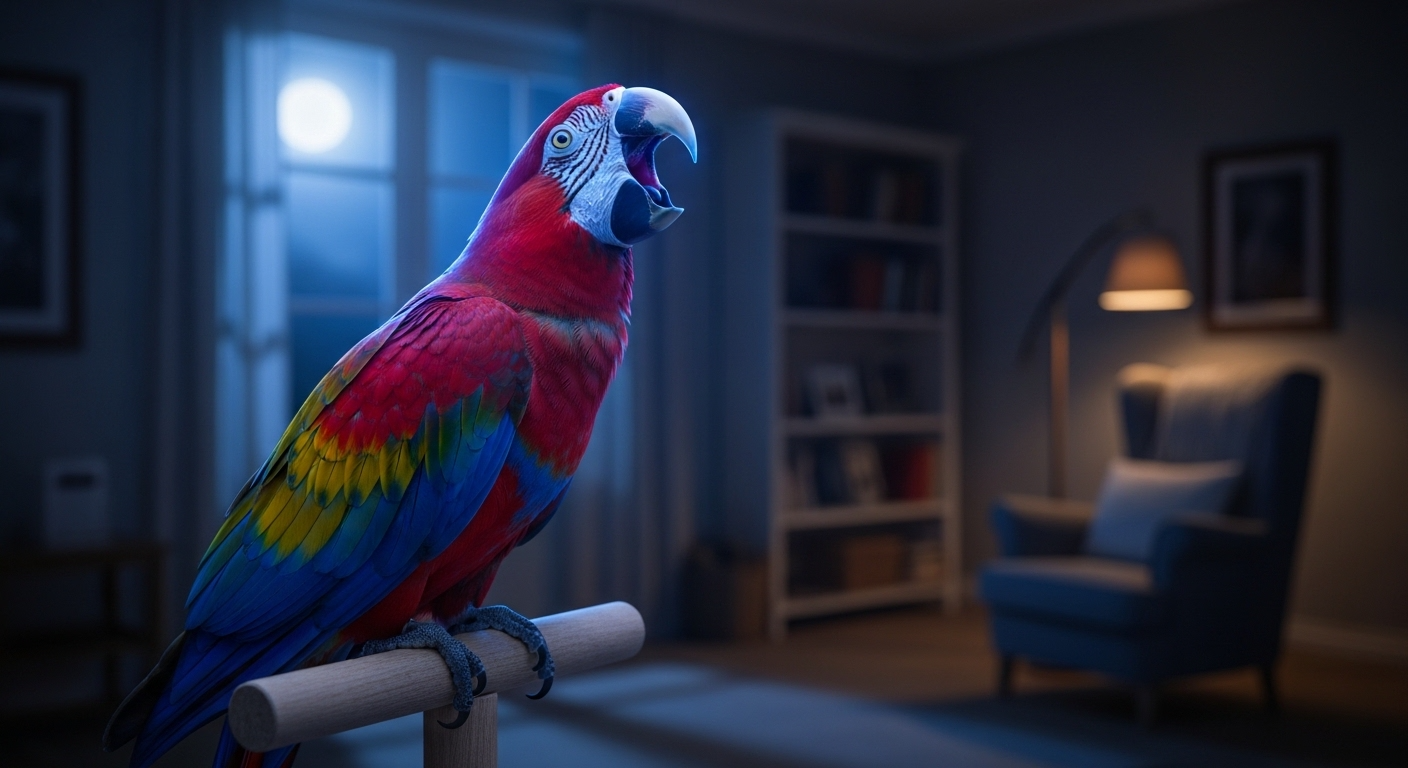
If you’ve ever been jolted awake by a piercing shriek coming from your bird’s cage, you’re not alone. The bird scream at night is one of the most common and most frustrating complaints among pet bird owners.
If it is your parrot, cockatiel, or another feathered companion, nighttime screaming can disrupt your sleep, rattle your nerves, and leave you wondering what on earth is going on.
The good news? There are clear reasons why birds scream at night, and effective, bird-friendly ways to stop it. Let’s dive in.
Why Does My Bird Scream at Night?
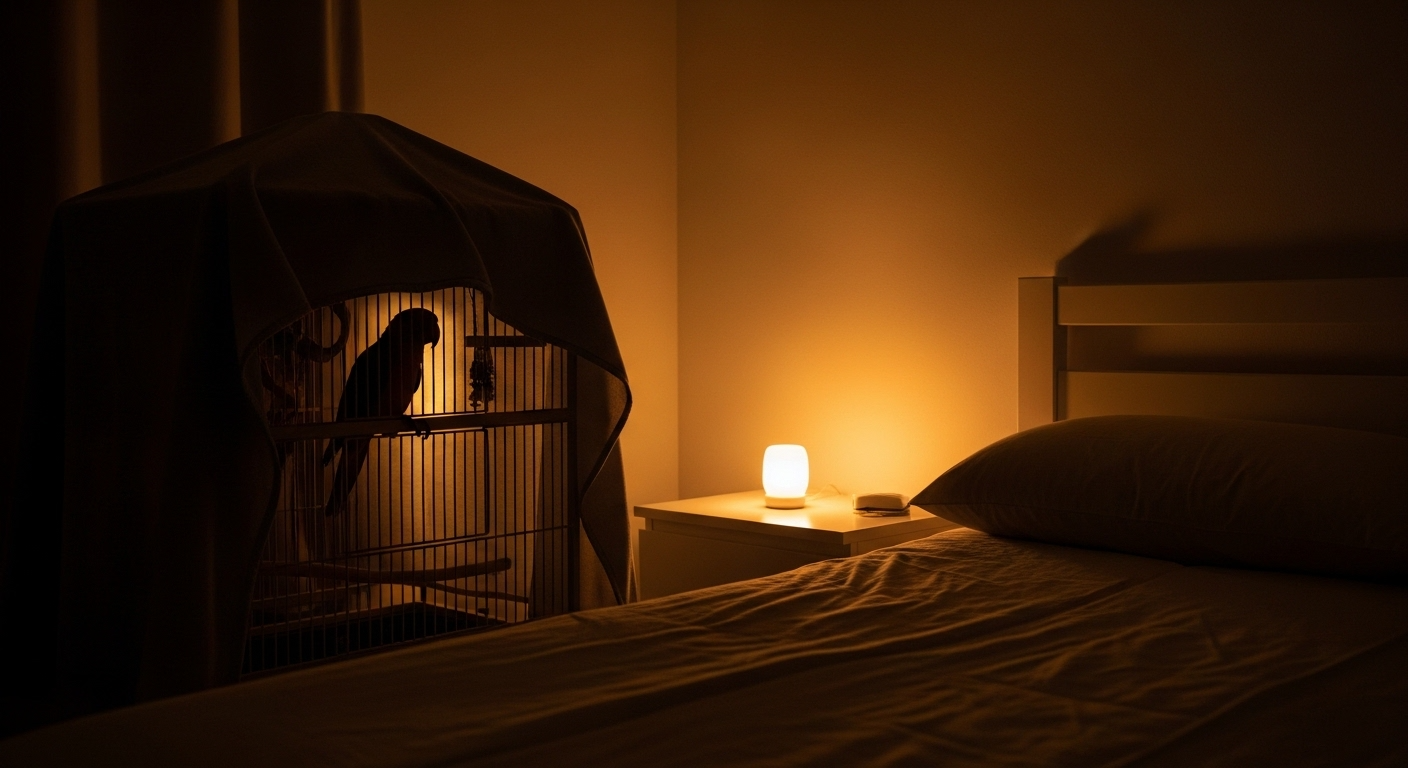
Before you can fix the problem, you need to understand the cause. Birds don’t scream without reason. Their vocalizations are always communicating something. Here are the most common culprits behind nighttime noise.
1. Instinctual Flock Calling
If you’ve ever asked why birds scream at night and wondered whether it’s just your bird being dramatic, here’s the truth: it might be pure instinct.
In the wild, birds are highly social creatures that rely on their flock for survival. At dawn and dusk, and sometimes in the dead of night, they engage in what’s known as a “contact call,” essentially shouting into the darkness to confirm that everyone in the flock is safe and accounted for.
Your pet bird sees you and your household as its flock. When the lights go out, and you disappear, that ancient instinct kicks in: Where is everyone? Is the flock still there?
This behavior is especially common among parrots such as African Greys, cockatoos, and conures. It explains why so many owners searching for the meaning of bird screams at night find that their birds seem to be screaming at nothing, because from the bird’s perspective, they’re just doing what birds do.
2. Fear and Night Frights
Another major reason birds scream at night is simple fear. Birds have excellent daytime vision, but their night vision is limited.
A sudden shadow moving across the wall, a car’s headlights sweeping through the curtains, or even a small animal rustling outside can be enough to send a bird into a panic.
These episodes, often called “night frights,” are particularly common in cockatiels and can be genuinely distressing for the bird.
You might hear what sounds like a bird scream at night, audio you’d rather never hear again: a shrill, desperate call that sounds almost like something out of a horror movie.
Some people have even searched for “bird scream at night mp3” or “scary bird sounds at night” after being startled by their own pet.
If your bird screams in short, frantic bursts and you find feathers or signs of flapping in the cage the next morning, night frights are likely the cause.
3. Environmental Triggers
Sometimes, the answer to why a bird screams at night is surprisingly practical. Birds are sensitive creatures, and small environmental issues can cause big reactions:
- Hunger or thirst: If feeding schedules are inconsistent, your bird might be calling out because it’s simply hungry.
- A soiled cage: Birds are naturally clean and can become distressed if their cage is dirty.
- Temperature changes: A sudden drop in temperature at night can cause discomfort.
- Noise or disruption: A television left on, traffic outside, or even a noisy neighbor can trigger territorial or fear-based screaming.
4. Boredom and Attention-Seeking
Birds that haven’t had enough mental stimulation or social interaction during the day are more likely to act out at night. If your bird has been alone for long hours without toys, foraging activities, or interaction.
It may have stored-up energy and frustration that spills over into the evening. Boredom is a surprisingly common answer to why my bird screams at night, and also one of the most preventable.
5. Separation Anxiety
Some birds, especially those that have formed a strong bond with one person, can develop genuine separation anxiety. When you leave the room or go to bed, they feel abandoned.
The screaming is an attempt to call you back. Unfortunately, if you rush to them every time they scream, you’re unintentionally teaching them that screaming works.
Night Frights vs. Contact Calls: Which Scream Are You Hearing?
Not every nighttime scream needs the same response. Before you change anything, figure out which of the three patterns matches your bird. The wrong fix for the right problem wastes weeks.
| What you hear | What it likely is | What to do |
|---|---|---|
| Sudden frantic thrashing, wings beating the cage bars, then silence | Night fright | Turn on a dim light, speak softly, do not grab the bird |
| Rhythmic calls with pauses, stops when you answer softly | Contact calling | Answer once with a calm phrase, then let the routine do the work |
| A new scream that sounds different, keeps going, or comes with daytime changes | Pain or illness | Call an avian vet, do not wait it out |
The first 60 seconds of a night fright
A bird mid-fright is running on pure panic. Your job is to be the calmest thing in the room.
- Turn on a dim light near the cage, not a bright overhead. The bird needs to see that nothing is attacking it.
- Speak in a low, steady voice. Use the same calm phrase you use at bedtime.
- Do not reach into the cage or grab the bird. A panicked bird bites and breaks feathers.
- Wait for the breathing to slow and the bird to climb back to its perch on its own.
- In the morning, check for broken blood feathers, lost tail feathers, and any swelling. Keep styptic powder near the cage for bleeding, and call an avian vet if bleeding does not stop quickly.
Cockatiels and Night Frights: Extra Care for the Most Prone Species
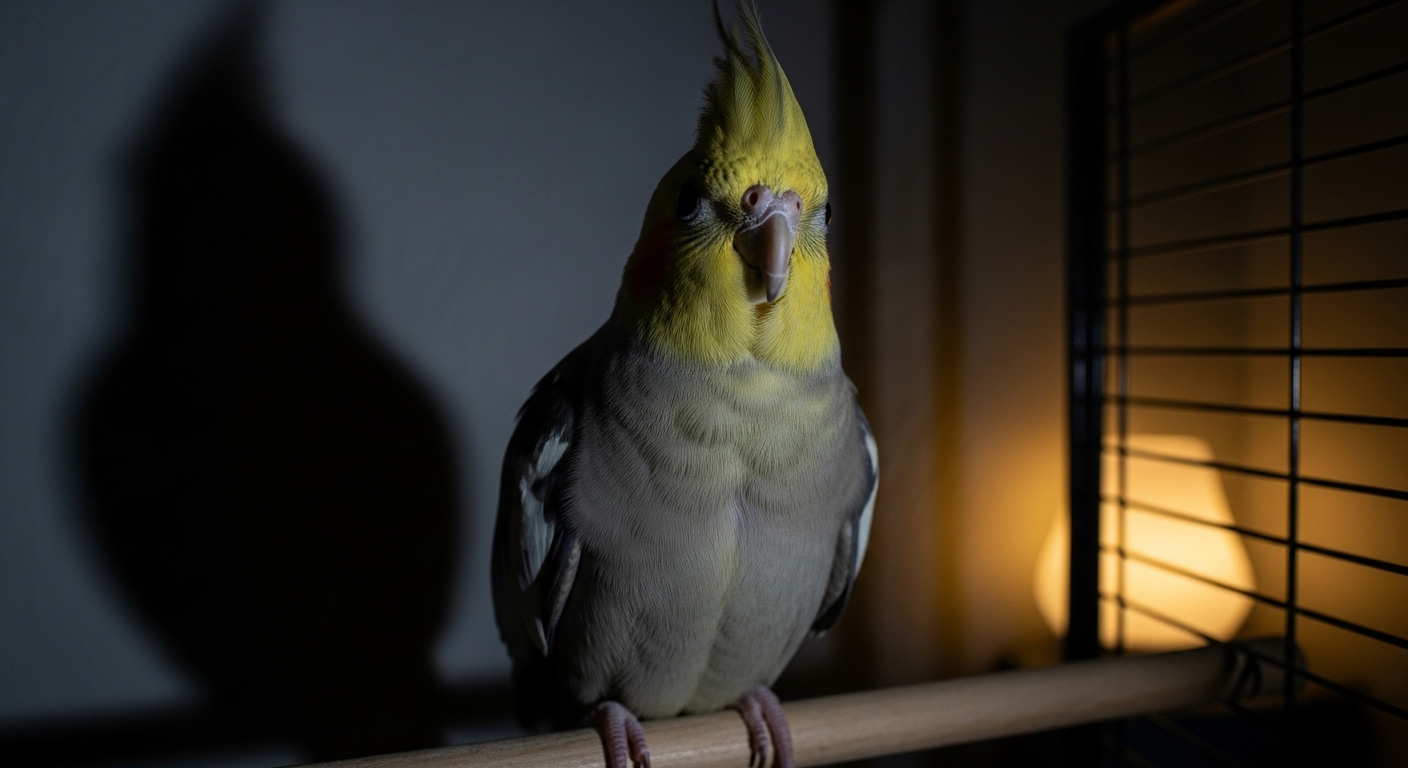
Cockatiels earn more night-fright stories than any other pet bird. In the wild they forage on the ground in Australian grasslands, where survival depended on exploding upward at the first hint of danger. That hair-trigger alarm is still wired into your living-room cockatiel, and it fires in total darkness at sounds you can barely hear.
If you share your home with a cockatiel, treat night lighting as non-negotiable. A small night light on the wall behind the cage, plus covering the top and three sides of the cage, gives the bird both security and just enough visibility to check that shadows are only shadows. Pet-care educators note that partial covering, which lets a little ambient light in, reduces the frequency of night frights for many birds: https://www.chewy.com/education/bird/cockatiel/cockatiel-night-frights
A few more cockatiel-specific tweaks that owners swear by:
- Sleep cage in a quiet room: a smaller cage used only for sleep, away from windows facing the street, removes the two biggest triggers, headlights and household traffic, in one move.
- Simplify the cage at night: remove swinging toys and leave only the favorite sleeping perch. Fewer obstacles means fewer injuries during a fright.
- Announce yourself: if you enter the room after dark, say the bird’s name softly before you turn on any light. Surprise is the trigger.
- Separate multi-bird sleep setups: one bird’s fright can set off the whole flock, so chronic cases do better in separate sleep cages.
What Type of Bird Screams at Night?

You might be wondering: what bird sounds like a scream at night? The answer depends on whether you’re asking about wild birds or pet birds.
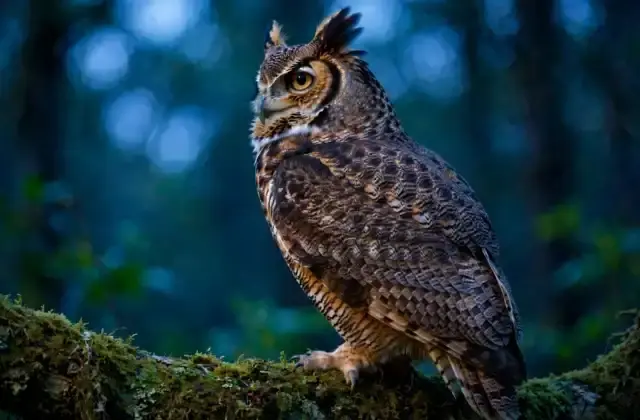
In the wild, several species are notorious nighttime screamers. Barn owls produce an eerie, rasping shriek that many people mistake for a human scream.
Foxes, while not birds, are often confused with screaming birds. Among actual birds, the curlew is particularly haunting, which is why so many people search for why do curlew birds scream at night.
Their long, wavering call echoes across moorlands and coastlines after dark and has inspired centuries of folklore.
In Australia, the bush stone-curlew is infamous for its wailing cry, making it one of the most recognized Australian birds that scream at night.
Other birds that scream at night in Australia include the powerful owl and the tawny frogmouth. In the UK, birds that scream at night UK residents most often report include the barn owl and the little owl.
In Florida, birds that scream at night in Florida often turn out to be limpkins, whose loud, wailing calls have startled many a sleepless resident. Some describe it as a night bird sounds like squeaky toy, a bizarre, repetitive cry that seems almost mechanical.
As for birds screaming in graveyard scenarios, this is often barn owls, which historically nested in old church towers and steeples, giving rise to countless ghost stories.
How to Stop Your Pet Bird Screaming at Night?
Now for the part you really came for. Here’s how to actually solve the problem.
1. Establish a Calm, Consistent Bedtime Routine
Birds thrive on routine. If bedtime happens at the same time every night, with the same sequence of events such as dimming the lights, playing soft music, and covering the cage, your bird will begin to associate those cues with sleep. Think of it as a bedtime story for your bird. Over time, the routine itself becomes calming.
Use a specific phrase or gentle sound to signal that it’s time to wind down. Many experienced bird owners swear by softly spoken words or a quiet, consistent lullaby-style approach.
2. Provide the Right Level of Darkness
Cover the cage at night to block out stimulating light and movement, but make sure there’s adequate airflow so your bird doesn’t overheat. Some birds, particularly those prone to night frights, actually do better with a small, dim nightlight rather than total darkness. It provides just enough visual reassurance without being stimulating.
3. Don’t Reward the Screaming
This is the hardest part for most bird owners, but it’s crucial: do not rush to your bird every time it screams. When you respond immediately to your bird’s screaming.
You are teaching that screaming is an effective way to get your attention. Instead, wait for a moment of quiet, even just a few seconds, before you check on them. Over time, your bird will learn that quiet behavior, not screaming, brings you to them.
4. Ensure Plenty of Daytime Enrichment
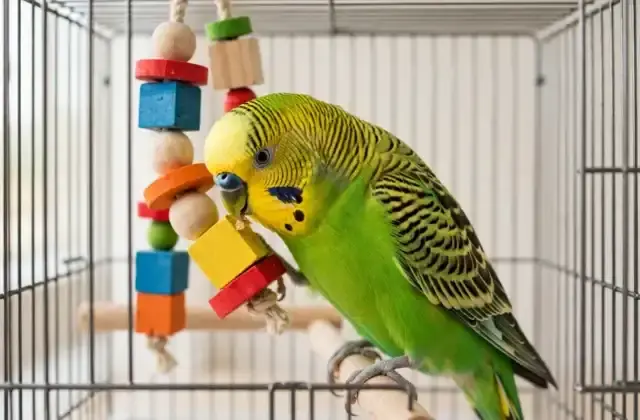
A tired bird is a quieter bird. Make sure your feathered friend has plenty of mentally stimulating activities during the day, foraging toys, puzzle feeders, a variety of textures and materials to explore, and regular out-of-cage time. The more enriched and engaged they are during daylight hours, the less pent-up energy they’ll have at night.
5. Keep the Environment Calm and Dark
Ensure the room where your bird sleeps is as quiet and dark as possible. Draw the curtains to prevent car headlights or streetlights from casting moving shadows. If the room is near a busy road or a noisy area of the house, consider using white noise at a low volume to mask sudden, startling sounds.
6. Rule Out Health Issues
If the nighttime screaming is new, sudden, or seems more distressed than usual, don’t ignore it. Birds are experts at hiding illness, and a change in behavior is often one of the first signs that something is wrong.
Consult an avian vet to rule out pain, illness, or hormonal changes, especially in species like African Greys, which are known for their emotional complexity.
7. Consider a Sleeping Cage
Some bird owners have found success with a dedicated sleeping cage, a smaller, quieter cage in a darker, calmer part of the home used only for sleep. This helps the bird associate that specific environment with rest and relaxation, separate from the stimulation of their main cage.
What Not to Do When Your Bird Screams at Night
Good intentions cause most of the damage here. Avoid these:
- Yelling back: your bird hears a flock member joining the alarm chorus, which confirms something is worth screaming about.
- Covering the cage as punishment: the cover must always mean safety and sleep, never a penalty. Mixing the signals ruins the bedtime routine.
- Rushing in every single time: instant rescue teaches the bird that screaming summons the flock. Wait for a few seconds of quiet, then check in calmly.
- Punishing or spraying water: punishment tells the bird that nights are scary, which is the opposite of the lesson you want.
- Ignoring a sudden change: a bird that never screamed at night and suddenly does is telling you something changed. Check for illness, new noises, or new pets before you assume it is behavioral.
Frequently Asked Questions
Why does my bird only scream at night and never during the day?
Daylight gives your bird full information: it can see you, the room, and the flock. Darkness takes that away, so instinct fills the gap with contact calls, and poor night vision turns small surprises into full frights. Fix the information gap with a night light and a consistent routine, and most night-only screaming fades.
Should I get a night light for my bird’s cage?
For most species, yes, especially cockatiels and other fright-prone birds. A dim light on the wall behind the cage is the sweet spot: enough visibility to prevent panic, not enough to disrupt sleep. Total darkness is the single most common setup behind repeat night frights.
My bird thrashed in its cage overnight and there are feathers everywhere. What should I check?
Check for broken blood feathers first, since these can bleed dangerously. Look for swelling, a drooping wing, or reluctance to perch. If bleeding does not stop within a few minutes with gentle pressure and styptic powder, call an avian vet the same morning. Then simplify the sleep setup so it cannot happen the same way twice.
How long does it take to break the nighttime screaming habit?
Attention-driven screaming usually improves within two to three weeks of consistent routine: same bedtime, same cues, no reward for screaming, calm check-ins for quiet. Night frights are managed rather than cured, so judge success by fewer and milder episodes, not zero.
Final Thoughts
The problem of a bird screaming at night is one that virtually every bird owner encounters at some point, but it’s far from unsolvable. Whether your bird is calling out from instinct, fear, boredom, or unmet needs, there is almost always a humane and effective solution.
With patience, consistency, and a little understanding of your bird’s inner world, you can help your feathered companion and yourself get a good night’s sleep.
And the next time you hear that spine-tingling shriek echoing through your home at 2 a.m., take a breath. Your bird isn’t trying to drive you mad. It’s just trying to make sure the flock is still there.