 Skip to content

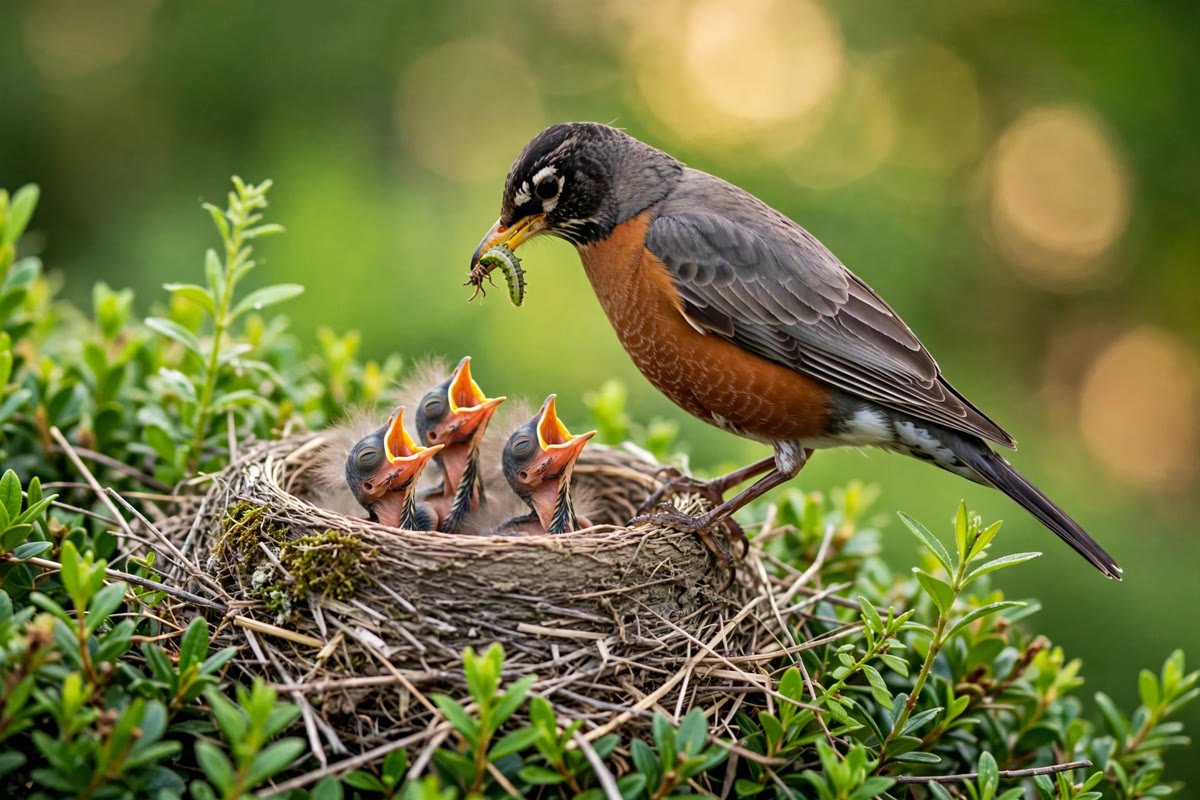
Do birds abandon their babies if you touch them? If you just picked up a baby bird and now feel a wave of guilt, here is the relief you need: for the vast majority of birds, a single touch does not trigger abandonment.
The fear comes from a misunderstanding of how birds work. Most songbirds have such a weak sense of smell that they cannot detect your scent on a chick, and they recognize their young by sight and sound, not by smell. Evolution also works in your favor. After weeks of building a nest and feeding chicks, parents do not throw that investment away over one touch. This article breaks down the myth with real science, explains the genuine exceptions, and walks you through exactly what to do when you find a baby bird, step by step.

Do Birds Abandon Their Babies If You Touch Them? The Short Answer: Almost Certainly Not
No. If you touched a baby bird, the parents will almost certainly still feed it. Wildlife agencies and ornithologists agree on this point with unusual unanimity. The Washington Department of Fish and Wildlife states it plainly: birds have a poor sense of smell, and it is not true that they will abandon their chicks if a person touches them.
That confidence rests on two facts. First, most birds cannot smell you. Their olfactory nerves are small and simple compared with those of mammals, and parent birds identify their chicks by appearance and sound. Second, abandonment makes no evolutionary sense. Frank B. Gill, former president of the American Ornithologists’ Union, told Scientific American that once the young are hatched and feeding, parent birds are “by and large pretty tenacious.” They have poured days or weeks into those chicks, and they do not give up that investment lightly.
So take a breath. The touch itself is not the emergency. What matters is what you do next, because while touch is harmless, the wrong kind of help can still hurt. The rest of this guide covers when handling becomes a real problem and how to help correctly.
Why the Myth Exists (And Why It Refuses to Die)
The myth probably started as a well-meaning warning. Adults told children that touching a baby bird would make the mother abandon it, not because it was true, but because it kept curious hands away from nests. As a deterrent, it worked. The trouble is that a warning built on a false premise eventually backfires.
Today this bird abandonment myth does real harm in the opposite direction. People find a fallen nestling, remember the warning, and freeze. They are afraid to do the one thing wildlife agencies recommend: put the chick back in the nest. The result is chicks sitting on the ground, growing cold and hungry, while the person who could have helped stands by worrying about a scent problem that does not exist.
The myth also survives because it sounds scientific. People assume birds experience the world the way mammals do, and mammals really do rely on smell to identify their young. Birds do not. Confusion with other wildlife adds to the mix: deer fawns and wild rabbit kits genuinely are sensitive to human disturbance, and wild rabbits are among the rare animals that sometimes abandon a heavily disturbed nest. Birds operate on different rules, and applying mammal logic to them leads to the wrong conclusion.
The Science: Most Songbirds Can Barely Smell You
The core of the myth is the idea that birds detect human scent. In reality, birds have relatively small and simple olfactory nerves, which sharply limit their sense of smell, as Scientific American’s fact-check explains. Parent birds do not recognize their young by smell at all. They find their chicks by watching and listening: the begging calls, the open beaks, the right bird in the right nest. If you want the full breakdown of avian noses, see our guide to whether birds can smell and which senses they actually rely on.
A few birds break the pattern, and they are worth knowing. Turkey vultures can detect methyl mercaptan, a gas produced by decaying matter. Starlings can sense insecticidal compounds in vegetation, which they use to keep their nests bug-free. Kiwis, tube-nosed seabirds like petrels, and a few duck species also have stronger-than-average olfaction. These are specialized adaptations for finding food or navigating at sea. No bird’s sense of smell is cued to human scent, so even the strongest-nosed species will not reject a chick because a person touched it.
In short, “your scent” is simply not information a parent bird processes. A robin feeding her nestlings has no idea you exist as a smell, and she would not care if she did. The warning your parents gave you was about behavior, not biology, and the biology has now had its say.
Parental Investment: Why Abandonment Makes No Evolutionary Sense
Evolution punishes parents who quit easily. Building a nest, laying eggs, incubating them, and feeding hungry chicks every 15 to 20 minutes from sunrise to night costs a bird a huge share of its yearly energy. Walking away from that investment because something touched a chick would be a catastrophic strategy, and natural selection does not favor it.
Biologist Thomas E. Martin of the University of Montana and the U.S. Geological Survey drew the real distinction in Scientific American: birds do not abandon their young in response to touch, but they can abandon a nest in response to sustained disturbance. The trigger is perceived danger, not contact. If a predator clearly discovers the nest, some species cut their losses. That is a risk calculation about safety, not a reaction to human smell.
Life history shapes that calculation. Long-lived birds like hawks are more risk-averse and more sensitive to disturbance than short-lived songbirds like robins. A robin that has already hatched chicks will typically tolerate a brief, one-time intervention and resume feeding within minutes. The parental drive, once switched on by begging calls and open beaks, does not switch off because a hand touched a feather.
When Touching Does Cause Real Problems
So can you touch a baby bird? Yes, when the situation calls for it, but the myth being false does not mean handling is always harmless. Touch causes trouble in four specific ways, and none of them involve the parents smelling you.
- Repeated disturbance can cause premature fledging: Young birds startled by frequent nest visits may scramble out before they can survive outside. One careful re-nesting is fine. Hovering over the nest all afternoon is not.
- Rough handling injures fragile bodies: Nestlings have thin bones, delicate skin, and almost no insulation. Squeezing too hard, dropping a chick, or carrying it in cold hands can injure or chill it. If you must pick one up, be gentle, move quickly, and wash your hands afterward.
- Your scent as a predator magnet is unproven: Some people worry that human scent leads predators to a nest. No solid evidence supports this as a common cause of nest failure in songbirds. Still, keeping visits brief and observing from a distance is simply good practice, because predators notice activity around a nest far more than they notice smell.
- Legal protections limit what you may do: In the United States, the Migratory Bird Treaty Act protects most native birds, their nests, and their eggs. Briefly returning a fallen nestling to its nest is exactly what wildlife agencies advise, so that kind of contact is the recommended path. Keeping a wild bird is a different matter and is not allowed without permits, as this Audubon guidance explains. Rehabilitation must be done by a permitted wildlife rehabilitator.
Notice the pattern. Every genuine risk comes from the handling itself or from lingering around the nest, never from the parents detecting your touch. The fix is always the same: act quickly, touch gently, and then leave.
What to Do Instead: A Step-by-Step Decision Guide
Forget the scent worry and follow this sequence. It mirrors what wildlife agencies recommend and gives the chick its best chance.
- Watch from a distance first: Before you touch anything, observe for 30 to 60 minutes from a spot where you will not disturb the parents. Adults often stay away while people are near, then return the moment you leave. What looks like abandonment is frequently just a parent waiting for you to go.
- Figure out whether it is a nestling or a fledgling: A nestling is naked or thinly downed, cannot hop or perch, and needs the nest. A fledgling is mostly feathered, can hop and grip with its feet, and belongs on the ground while it learns to fly. Most baby birds people find are fledglings, and fledglings do not need rescuing. National Geographic’s summary of the Cornell Lab’s advice puts it simply: leave the feathered fledglings alone, and put the unfeathered nestlings back. For the full timeline of the nesting stage, see how long baby birds stay in the nest.
- Put an uninjured nestling back: If you can find and reach the nest, gently return the chick. It helps to wear gloves, mainly for your own protection, since chicks can carry bacteria and parasites. If the nest is destroyed or unreachable, build a substitute from a small berry basket or plastic tub lined with paper towels, fasten it in a shady spot near the original site, and place the chick inside. The Washington Department of Fish and Wildlife confirms this works, with parents often shuttling between the original nest and the substitute to feed both.
- Leave fledglings alone: A fledgling on the ground is not abandoned. Its parents are nearby, answering its begging calls with regular food deliveries. Do not put it back in the nest, because it will hop right out again. The most useful thing you can do is keep cats, dogs, and curious children away so the parents can feed in peace. If cats roam your yard, learn how to keep cats away from bird feeders and nesting areas. For the complete walkthrough, see what to do if you find a baby bird.

- Confirm the parents returned: After re-nesting, watch from indoors or far away for an hour or two. Parent birds can be secretive, but if feeding resumes, you are done. If no adult visits the chick within about two hours, move to the next step.
- Call a licensed wildlife rehabilitator when needed: Contact a permitted rehabilitator right away if the parents are dead or absent, the bird is injured, a cat or dog attacked it, or it is shivering and weak. Keep the bird in a ventilated container lined with a soft cloth in a warm, dark, quiet place, and do not offer food or water. Birds have the best possible chance of survival with their parents, so reunite first and call for help second.

Frequently Asked Questions
Can I put a baby bird back in its nest?
Yes, and you should when the chick is a featherless nestling. Parents do not reject touched chicks. Put it back as quickly as possible, then leave the area so the adults feel safe returning. If the nest is destroyed, a substitute container fastened nearby works nearly as well.
Will the parents still feed it after I touched it?
Almost certainly. Parents recognize their chicks by sight and sound, and they do not identify them by smell. Wildlife agencies report that parents resume feeding touched and re-nested chicks routinely, sometimes within minutes. What delays feeding is your continued presence, so back away and watch from afar.
What should I do if a cat caught the baby bird?
Contact a wildlife rehabilitator immediately, even if the bird looks unharmed. Cat saliva carries bacteria that can cause fatal infections in birds within hours, and puncture wounds may hide under feathers. Keep the bird warm, dark, and quiet in a ventilated container while you arrange transport, and do not try to treat it yourself.
Is it illegal to touch a baby bird?
Briefly returning a fallen nestling to its nest is exactly what wildlife agencies recommend, so that kind of contact is the approved path. In the United States, the Migratory Bird Treaty Act protects most native birds, their nests, and eggs, which means keeping a wild bird as a pet or possessing native bird parts without permits is illegal. Rehabilitation must be done by a permitted wildlife rehabilitator. When in doubt, reunite and call an expert rather than keeping the bird.
Do mother birds miss their babies?
Birds do not experience longing the way people do, but they are strongly driven to care for their young. Parents respond to begging calls, search the area when a chick goes missing, and will feed a returned chick as if nothing happened. Their dedication is instinctive and powerful, which is exactly why a single touch does not break the bond.
Conclusion
Do birds abandon their babies if you touch them? The science is clear: almost certainly not. Most songbirds cannot smell your touch, parents identify their chicks by sight and sound, and evolution rewards parents that keep feeding, not ones that quit. The exceptions prove the rule. Real abandonment happens in response to sustained disturbance or genuine danger, never from one gentle touch.
That does not make handling harmless. Rough touch can injure a fragile chick, repeated visits can scare it out of the nest early, and some situations need a professional. So skip the guilt, but act smart: observe first, tell nestlings from fledglings, re-nest quickly, and call a licensed rehabilitator when the bird is hurt or truly alone. You did not ruin anything by touching the bird. Now you know how to finish the job right.





