 Skip to content

Watch a baby bird’s first flight and you will witness something both clumsy and wonderful: a creature built for the sky learning it midair, one wobbling glide at a time. Most first flights end in a bush, a lawn, or a startled flop onto the patio. And yet, within days, the same bird is steering through trees like it was born knowing how.
So how do baby birds learn to fly? The short answer is that flight is part instinct and part practice. Nestlings build flight muscles with wing exercises inside the nest, parents coax them out at the right moment, and then fledglings spend days to weeks on the ground turning falls into flights. Ornithologists call this whole process fledging, and it is one of the most remarkable training programs in nature.
In this guide you will learn what fledging actually is, how a chick’s wings develop, how parents coach the big moment, how long different species take, and what to do when you spot a fledgling hopping around your yard.
What Is Fledging, Exactly?
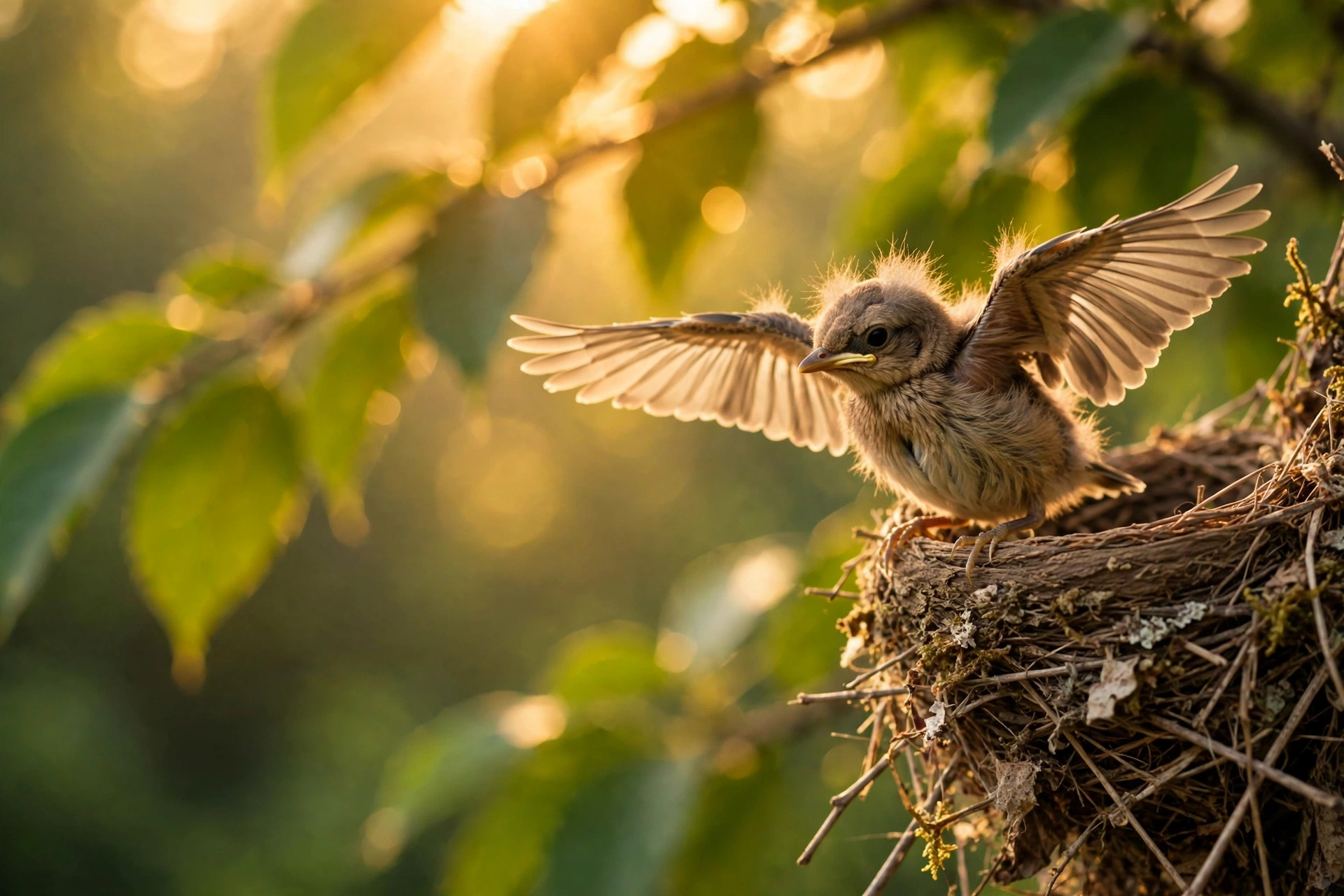
Fledging is the developmental stage when a young bird grows its flight feathers and learns to fly. The word also describes the moment the bird leaves the nest for the first time. A bird that has left the nest but still depends on its parents is called a fledgling.
One thing confuses almost everyone: a fledgling usually cannot fly well yet. Its feathers are grown, but its tail is short and its wing muscles are still catching up. According to a Cornell Lab of Ornithology guide, fledglings will “continuously hop out of the nest and try to fly… and fall… and try again… and fall,” spending several days on the ground before they can get back up into a tree. That clumsy phase is not a failure. It is the lesson itself.
Most importantly, fledglings are not abandoned. Parent birds keep feeding, guarding, and coaching their young through this vulnerable period. A baby bird on the ground is usually a student, not an orphan. For the full rescue decision chart, see our guide on what to do if you find a baby bird.
From Hatchling to Fledgling: The 3 Stages of Baby Birds
Before a bird can fly, it passes through three distinct stages. Knowing which stage a baby bird is in tells you exactly what it needs, and what you should do if you find one.
| Stage | Typical age | What it looks like | What it can do |
|---|---|---|---|
| Hatchling | 0 to 4 days | Naked or covered in wispy down, eyes closed | Almost nothing; cannot move, perch, or keep itself warm |
| Nestling | 3 to 13 days | Eyes open, feathers growing in tubelike sheaths | Gape for food, shuffle in the nest, begin wing exercises |
| Fledgling | 13 to 14 days and older | Fully feathered but scruffy, with a short tail | Hop, flutter, and glide; still fed by parents |
These ages come from Mass Audubon’s baby bird chart and describe typical songbirds; raptors, cavity nesters, and seabirds run on much longer schedules. Here is what happens inside each stage.
Stage 1: Hatchling
A hatchling is a brand-new baby, between zero and four days old. It may be completely naked or covered in sparse down, with its eyes sealed shut. It is helpless in every way and depends on its parents for warmth, food, and protection. A hatchling on the ground needs to be returned to its nest as quickly as possible.
Stage 2: Nestling
A nestling is usually three to thirteen days old. Its eyes are open and its feathers are emerging from waxy sheaths that look like tiny tubes. This is when flight training secretly begins. Nestlings stretch, grip the nest rim, and flap their half-grown wings in what birders affectionately call “wingercising.” If you want the full picture of this stage, read our guide on how long baby birds stay in the nest.
Stage 3: Fledgling
A fledgling is fully feathered and has left the nest, even though it cannot fly properly yet. Its tail feathers are noticeably short, and wisps of down may still poke through. Fledglings typically spend one to two weeks on the ground learning to fly, and some species take up to four weeks to master both flight and foraging. Parents feed them through it all.
How Wings Get Ready: Flight Muscles and Feathers
A bird does not wake up one morning able to fly. The wings are built, piece by piece, over days of quiet work inside the nest.
- Wing flapping practice: nestlings flap their wings while standing in the nest, gripping the rim with their feet. This repetitive flapping strengthens the pectoral muscles that power the downstroke of flight.
- Feather unfurling: flight feathers grow inside protective sheaths. As the bird preens and moves, the sheaths split and the feathers open, forming the stiff wing surface needed to catch air.
- Tail growth: tail feathers act like a rudder. Fledglings leave the nest with short tails, which is why their steering is so shaky at first; the tail keeps growing as they practice.
- Weight and balance: a chick’s body changes fast. Down gives way to contour feathers, muscles bulk up, and the bird shifts from a wobbly blob to a streamlined shape that can balance on air.
Timing matters enormously. If a nestling leaves the nest before its flight feathers are ready, a situation called premature fledging, it cannot generate lift and becomes easy prey. Healthy fledging happens only when wings, muscles, and feathers are all far enough along.
How Parents Coax Fledglings Out of the Nest
Parent birds do not simply push their babies out. They run a surprisingly clever encouragement campaign in the final days before fledging.
- Calling and singing: parents call from nearby branches, and the chicks answer. The back-and-forth draws the young toward the nest edge and then beyond it.
- Food motivation: parents may bring food, show it, and then fly a short distance away with it. Hungry chicks follow the food. Each short hop stretches their courage a little further.
- Demo flights: adults fly past the nest again and again, giving the chicks a live demonstration of what wings are for.
- One at a time: siblings rarely leave together. The boldest chick usually goes first, and its success encourages the rest to try.
Bluebird watchers have described parents landing at the nest box with food and then flying off with it still in their beaks, calling the chicks out. The technique works on bird brains the way a favorite snack works on a hesitant toddler.
The First Flight: What Really Happens
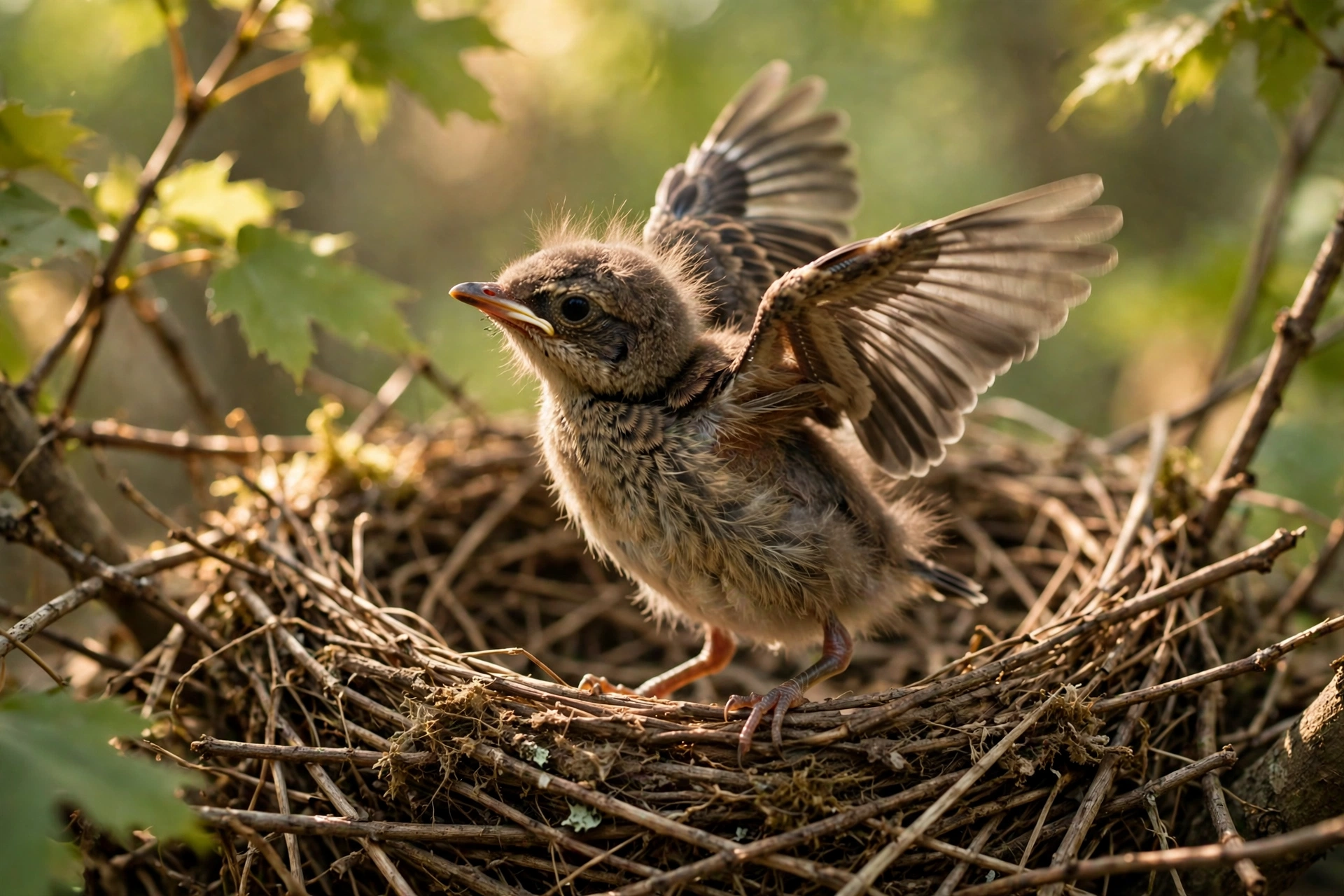
Forget graceful soaring. A first flight is a short, powered hop from the nest to the nearest branch, bush, or patch of ground. Here is the typical sequence, and it repeats for days.
- The leap: the fledgling launches from the nest edge, flapping hard. It generates just enough lift to move forward and down.
- The glide: wings spread, the bird glides a short distance. This is the first real taste of flight, and it is mostly gravity doing the work.
- The landing: landings are the hardest skill and the last to develop. Most first landings are clumsy crashes into foliage, which conveniently cushions the blow.
- The regroup: on the ground or a low branch, the fledgling rests, begs for food, and builds strength for the next attempt.
Some quick learners manage real flight within a day. Others need three days, a week, or more of hopping, fluttering, and short glides before they can gain altitude. Every attempt builds muscle memory. The Cornell Lab notes that this trial-and-error period is completely normal, and parents keep feeding the young through it.
How Long Does It Take? Fledging Timelines by Species
Small songbirds are the sprinters of the bird world, often leaving the nest in under three weeks. Larger birds take much longer. The Smithsonian’s National Zoo nest cycle guide gives these days-to-fledging figures for common North American species.
| Species | Days in nest before fledging | Ground learning period |
|---|---|---|
| Northern Cardinal | 7 to 13 days | 1 to 2 weeks |
| Song Sparrow | 8 to 12 days | 1 to 2 weeks |
| Gray Catbird | 8 to 12 days | 1 to 2 weeks |
| Northern Mockingbird | 10 to 15 days | 1 to 2 weeks |
| Carolina Wren | 10 to 16 days | 1 to 2 weeks |
| American Robin | About 13 days | 1 to 2 weeks |
| Black-capped Chickadee | 12 to 16 days | 1 to 2 weeks |
| House Wren | 15 to 18 days | 1 to 2 weeks |
| Carolina Chickadee | 16 to 19 days | 1 to 2 weeks |
Remember, “days in nest” is only the first chapter. After leaving the nest, most of these fledglings still spend one to two weeks on or near the ground while parents feed them and their flight skills sharpen. Raptors, owls, and seabirds can stay dependent for weeks or even months longer.
Altricial vs Precocial: Not All Baby Birds Learn the Same Way
Songbirds follow the classic fledging story, but not every bird does. Biologists divide baby birds into two broad groups, and the difference shapes how each learns to move through the world.
- Altricial birds: songbirds, raptors, parrots, and woodpeckers hatch naked, blind, and helpless. They need weeks of nest care, wing exercises in the nest, and then the full fledgling practice period on the ground. Everything in this article describes altricial birds.
- Precocial birds: ducks, geese, chickens, and quail hatch covered in down with open eyes. They can walk, swim, and follow their parents within hours. They skip the nestling stage almost entirely, though they still cannot fly until their flight feathers grow in weeks later.
There is also a middle ground. Gulls and terns are semi-precocial: they hatch with down and open eyes but stay near the nest, fed by parents, until they can fly. The fledging process looks different across species, but the underlying recipe is the same: grow the right feathers, build the right muscles, then practice.
Parental Care Continues Long After the Nest
Leaving the nest is not graduation. For most songbirds, it is more like the first day of a very hands-on internship, with parents as the instructors.
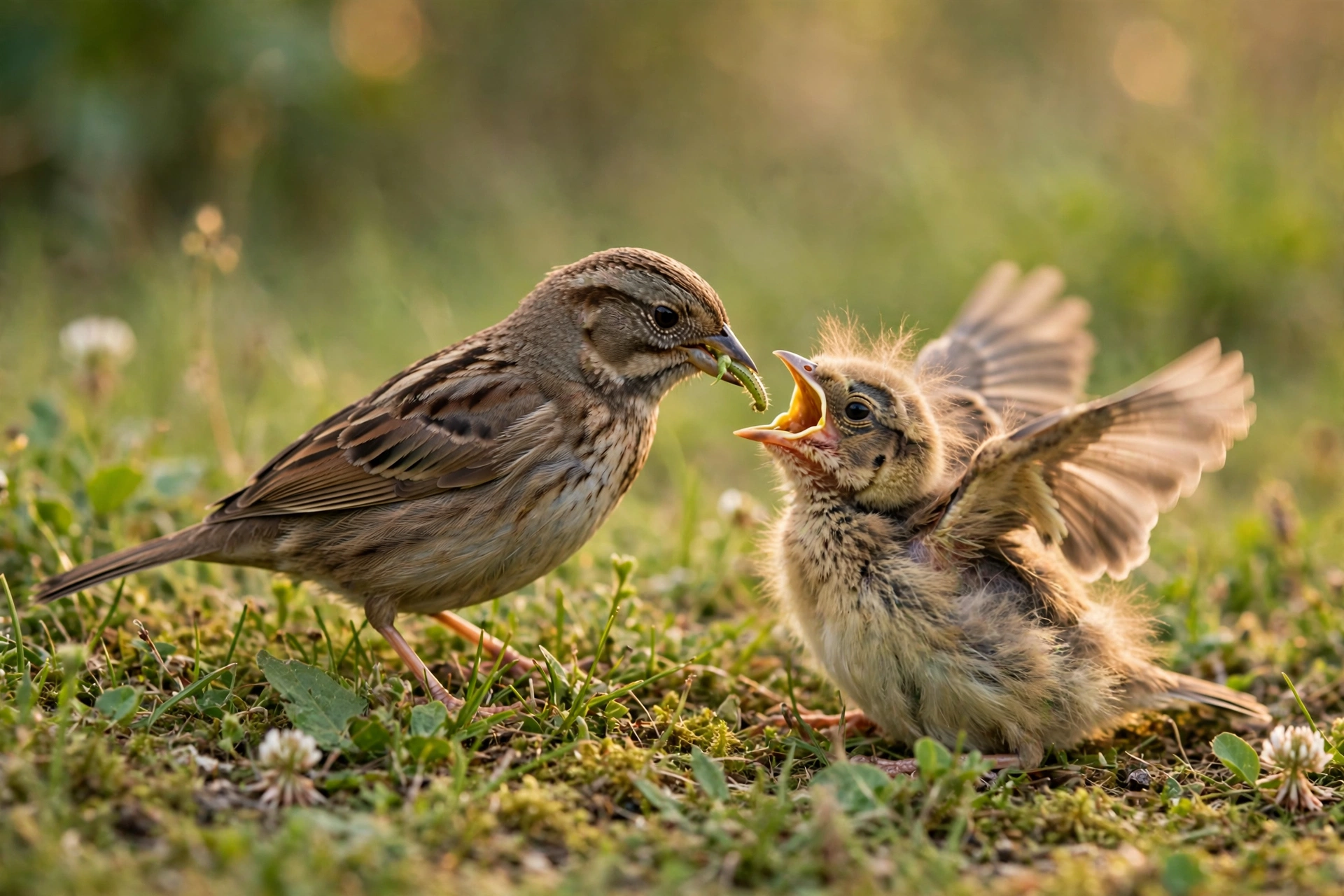
Parent birds feed fledglings on the ground for days to weeks, sometimes making hundreds of feeding trips a day. They also teach survival skills that have nothing to do with flying: which foods are safe, where to find them, what a predator looks like, and which alarm calls mean danger. If you have ever been dive-bombed by a furious robin while walking near a bush, you have met a parent in full bodyguard mode.
This is also why fledglings beg so loudly, fluttering their wings with mouths wide open. The begging tells parents exactly where the chick is and how hungry it is. If you want to know what all that begging is fueling, see our guide on what baby birds eat.
The Biggest Dangers Facing New Fledglings
The fledgling period is the most dangerous time in a bird’s life. A young bird that cannot yet fly well is exposed to threats it will easily escape as an adult.
- Cats: outdoor and free-roaming cats are the single biggest killer of fledglings. Even a well-fed cat hunts by instinct.
- Dogs: curious dogs can injure or kill a grounded fledgling in seconds.
- Windows: young birds have not learned to recognize glass. Collisions injure countless fledglings each year.
- Roads and lawn equipment: fledglings on driveways, sidewalks, and lawns are at risk from cars and mowers.
- Other predators: crows, jays, hawks, snakes, and raccoons all take fledglings.
You can help enormously by keeping cats indoors and dogs leashed during nesting season. Audubon’s guidance is clear: keep pets and children away from a fledgling while it practices its flight skills, and let the parents do their job.
What To Do If You Find a Fledgling
Found a fluffy baby bird hopping on the ground? Take a breath and check three things. If it is fully feathered with a short tail and can hop or flutter, it is a fledgling, and the best help is no help: leave it alone and keep pets away. If it is in immediate danger, like sitting in a road, gently move it to the top of a nearby shrub or bush.
Do not try to feed it, and do not take it home. Parent birds feed their young a precise diet and will find the chick by its calls. Touching the bird will not cause the parents to reject it; most birds have a poorly developed sense of smell. If the bird is visibly injured, bleeding, or was caught by a cat, contact a licensed wildlife rehabilitator. Our detailed step-by-step guide to finding a baby bird covers every scenario.
Frequently Asked Questions
How long does it take a baby bird to learn to fly?
Most songbirds leave the nest 10 to 19 days after hatching, then spend another one to two weeks on the ground building real flight skill. So from hatching to confident flight is typically three to five weeks. Larger birds like raptors and owls take much longer, sometimes several months.
Can baby birds fly right out of the nest?
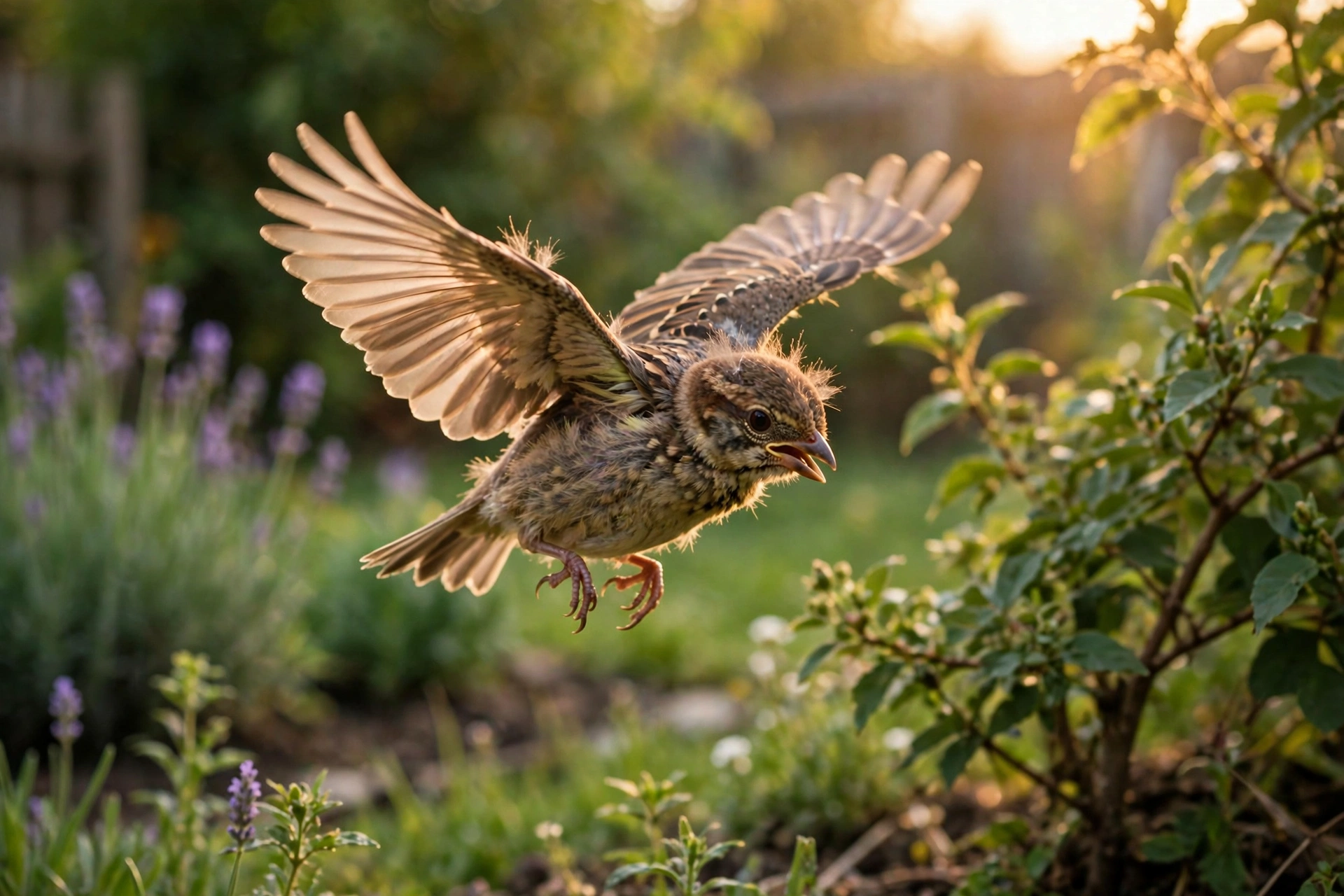
Almost never. Fledglings leave the nest with short tails and underdeveloped flight muscles, so their first attempts are short glides and fluttering hops that end on the ground or in low bushes. True powered flight, with controlled takeoffs and landings, develops over days to weeks of practice.
Do mother birds teach their babies to fly?
Parents do not give flying lessons the way humans teach, but they actively coach the process. They call chicks to the nest edge, withhold food to motivate them, fly short demonstration flights nearby, and keep feeding and guarding the fledglings while they practice. Both parents usually share this work.
Why is a baby bird hopping on the ground and not flying?
That is exactly what a healthy fledgling is supposed to do. It has left the nest on schedule and is in its ground practice phase, building wing strength and coordination. Its parents are almost certainly watching from nearby and feeding it. Leave it alone unless it is injured or in immediate danger.
How do baby birds practice flying before they leave the nest?
Nestlings do wing exercises in the nest: they stand, grip the nest rim with their feet, and flap their half-grown wings repeatedly. This “wingercising” builds the pectoral muscles that power flight, while preening and movement help flight feathers unfurl from their sheaths.
Do fledglings return to the nest at night?
Generally, no. Once a songbird fledgling leaves the nest, it does not go back. At night it roosts on a low branch or in dense shrubs near the ground, often close to its siblings, while parents keep watch. This is another reason not to “return” a fledgling to a nest.
What is the difference between a nestling and a fledgling?
A nestling still lives in the nest: it may have few feathers, cannot hop or flutter far, and belongs back in the nest if found on the ground. A fledgling is fully feathered with a short tail, has left the nest voluntarily, can hop and flutter, and should be left alone while its parents care for it.
The Takeaway
Baby birds learn to fly through a beautifully staged process: wing exercises in the nest build the muscles, growing feathers provide the wings, parents coax the first leap, and days of glorious trial and error turn falls into flight. The next time you see a scruffy fledgling flopping around your yard, you will know you are watching flight school in session. Give it space, keep the cat inside, and let nature’s most impressive lesson run its course.




