 Skip to content

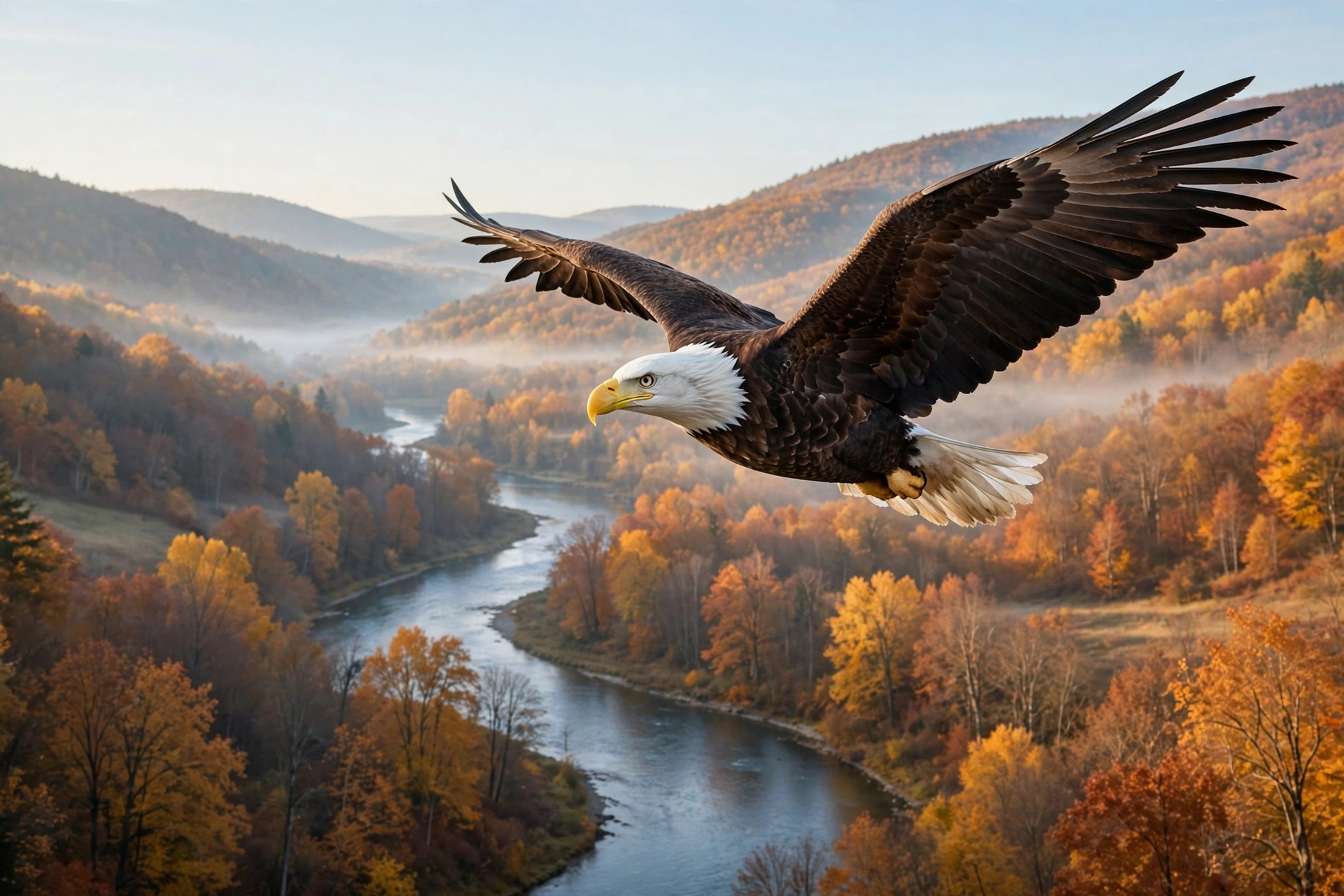
Each autumn, thousands of bald eagles abandon the frozen north and ride the great rivers south. They do not flee the cold itself. They follow open water and food, and when salmon runs peak and dams keep rivers flowing, the birds pile up in staggering numbers. Some sites host a few hundred birds. Others host tens of thousands. This season is the best time of the year to watch them.
Right now, eagles are on the move along the major river corridors of North America. The Fraser Valley congregation in British Columbia is building through October toward its November peak. Salmon-feeding flocks are forming on the Skagit in Washington and the Chilkat in Alaska. By December and January, the action shifts to the Mississippi and the Klamath Basin. This guide explains bald eagle migration timing, the reason the birds gather, and the six best places to see them this season, plus practical tips for planning a successful trip.
Why Bald Eagles Move in Autumn
A common myth says bald eagles migrate because they cannot stand the cold. Eagles handle winter weather well. Their dense, oily plumage insulates them against snow and ice, and they are comfortable perching through bitter frost. What they cannot handle is losing access to food.
Northern lakes and slow rivers freeze solid each autumn. When ice seals the surface, eagles can no longer reach the fish that form the core of their diet. Rather than starve on a frozen lake, they head south and east to places where water stays open. That is why ice, not temperature, is the real engine of bald eagle migration.
Salmon seals the deal. In autumn, Pacific salmon run upstream to spawn and die, and their spent carcasses line riverbanks by the thousand. For a migrating eagle, a salmon river is an all-you-can-eat buffet. This explains why the great congregations form where salmon spawn late: the Fraser, the Harrison, the Skagit, the Chilkat, and the rivers of the Pacific Northwest. Eagles are expert scavengers, and they time their movements to arrive as the banquet opens.
Some eagles never leave home. Resident birds in the Chesapeake Bay, the Pacific Northwest coast, and Florida stay put all winter, defending territories and nesting early. But interior and northern breeders, from Alaska and the boreal forest of Canada, are true migrants. They stream south through October and November, riding thermals and updrafts by day, until open water and food tell them to stop. If you want to understand the navigational skills behind these journeys, read our guide to how birds navigate migration.
When to Watch: Bald Eagle Migration Timing
Bald eagle migration timing shifts with latitude, weather, and food. There is no single week when every eagle moves. Instead, the season unfolds in waves, and the best viewing window depends on where you stand.
- Mid-October: northern birds begin arriving at the earliest congregation sites. The Fraser Valley congregation starts building, and Alaska’s Chilkat Valley sees its first crowds. This is the shoulder season, exciting but unpredictable.
- November: peak month for the Pacific Northwest and Alaska. The Harrison and Fraser rivers hit their stride, and Haines, Alaska reaches peak numbers in the second week of the month. Lake Coeur d’Alene begins its kokanee-driven build-up.
- December to January: the season’s core. The Skagit River peaks, Klamath Basin numbers climb toward their February high, and Mississippi River eagles settle in below the dams as northern waters freeze hard.
- February: the tail end and, at some sites, the climax. Klamath Basin hits its mid-February peak, and Lock and Dam 14 still holds strong numbers before birds drift north again.
Because October is such a busy migration month across North America, it pairs well with other autumn spectacles. Our guide to birds that migrate in October covers the waterfowl and cranes moving at the same time.
A note on counting
Eagle numbers vary wildly from day to day. A cold snap can send hundreds of birds into a river valley overnight, while a mild spell can scatter them. Treat published counts as snapshots, not guarantees. Always check local refuge or festival reports before you travel.
The Great Congregation Sites This Season
Six destinations stand above the rest for sheer numbers and reliability. Each has its own peak, its own food source, and its own character.
Harrison River and the Fraser Valley, British Columbia
This is the heavyweight champion. Each fall, between 35,000 and 50,000 bald eagles pass through the lower Fraser River region, according to the Hancock Wildlife Foundation, making it one of the largest gatherings of the species on Earth. The birds arrive from mid-October onward, feeding on spawning salmon along the Harrison River and its tributaries, and the congregation builds through November and into December and January.
The Chehalis Flats near Harrison Mills is the epicentre. On a good November morning, thousands of eagles carpet the gravel bars and crowd the surrounding cottonwoods. The best vantage points include the beach at Kilby, the Nicomen Slough at Deroche, and the riverside trail at the Sandpiper Golf Course, which hosts an eagle observatory. A November eagle festival has long been a tradition here, celebrating the spectacle with guided viewing.
This is the site to choose if you want the biggest numbers on the planet. Go in November for the peak, and arrive early in the day when the flats fill with feeding birds.
Skagit River, Washington
Between the small towns of Rockport and Marblemount, the upper Skagit River holds one of the largest wintering bald eagle concentrations in the lower 48 states. Hundreds of eagles gather along this 10-mile stretch, drawn by late-spawning chum salmon. Lonely Planet notes that counts can top 600 birds in strong years.
The season runs from November into early March, with December and January the prime months. The Skagit River Bald Eagle Interpretive Center in Rockport anchors the viewing experience, with staff who track the latest hotspots and lead guided walks. The Marblemount boat launch, the fish hatchery, and Rasar State Park all offer reliable viewing. An annual eagle festival based in Concrete runs through January with weekend programmes.
Morning visits work best here. Eagles leave their riverside roosts after sunrise and begin feeding on the gravel bars, and the interpretive centre staff can point you to where the fish, and therefore the birds, are that day.

Klamath Basin, Oregon and California
The Klamath Basin hosts the largest wintering bald eagle population in the lower 48 states, typically holding 500 to 700 birds, with federal surveys placing peak populations between 500 and 1,000. Eagles arrive in November and the numbers climb toward a mid-February peak, when visitors can expect to see dozens of birds at a time.
Unlike the salmon rivers, the Klamath draw is waterfowl. Hundreds of thousands of ducks, geese, and swans winter in the basin’s marshes, and eagles hunt and scavenge them through the season. Lower Klamath and Tule Lake National Wildlife Refuges are the key sites, and Bear Valley National Wildlife Refuge shelters a major communal roost. The Klamath Winter Wings Festival each February celebrates the peak.
Dress warmly and bring a scope. Eagles perch in old-growth trees across the refuges, sometimes dozens to a tree, and the auto tour routes let you watch from the warmth of your car.
Lock and Dam 14, LeClaire, Iowa
On the Upper Mississippi River, Lock and Dam 14 near LeClaire, Iowa is a winter photography legend. As the Great Lakes region freezes from mid-December onward, eagles move south and gather below the dam, where turbulent, unfrozen water keeps fish accessible. The birds feed heavily on gizzard shad stunned by the dam’s current.
January and February are the core months, and the site offers something rare: close, easy viewing. A large public parking lot, restrooms, and a long boardwalk let photographers set up tripods within good range of perched and fishing eagles. A designated eagle sanctuary next to the parking lot gives the birds an undisturbed resting area. Patient watchers can get frame-filling shots with modest lenses.
This is the best choice for Midwest birders and anyone who wants close views without a wilderness trek. Visit on cold, clear days when the river is frozen everywhere except below the dam.
Lake Coeur d’Alene, Idaho
Each winter, from November through February, a migrating population of bald eagles visits Lake Coeur d’Alene to feast on spawning kokanee salmon, the landlocked form of sockeye. Counts of more than 200 eagles are common around Wolf Lodge Bay, and the Bureau of Land Management has monitored the birds here since 1974.
The prime viewing areas are Higgins Point, the Mineral Ridge boat ramp, and the Mineral Ridge trailhead, all on the lake’s eastern shore. The BLM runs an interpretive eagle watching programme during the peak weeks of the season, with volunteers stationed at the best overlooks. The setting is spectacular: eagles perched in ponderosa pines above a glittering winter lake.
The viewing season is long, which makes this a forgiving destination. If November is quiet, December and January usually deliver.
Chesapeake Bay, Maryland and Virginia
The Chesapeake Bay region holds one of the East Coast’s great bald eagle concentrations, swelling in late fall as northern migrants join a large resident population. The bay’s tidal rivers, marshes, and open water support thousands of birds through the winter, and eagles are a daily sight along the shoreline.
Unlike the western congregation sites, Chesapeake viewing is spread across many small locations rather than one hotspot. Wildlife refuges, state parks, and river overlooks around the bay all produce birds. Late fall through winter is the best window, when migrants arrive and resident birds concentrate around open water and fish.
This is the most accessible option for East Coast birders. You do not need a festival or a remote refuge. A quiet morning at a riverside park can produce a dozen eagles.
An Alaskan bonus: Haines and the Chilkat Valley
If you want the far-north origin of the whole migration, visit Haines, Alaska. The Alaska Chilkat Bald Eagle Preserve protects 48,000 acres of river bottom where upwelling groundwater keeps the Chilkat River unfrozen late into the year. About 500 eagles live here year-round, and in early November migrating birds push counts toward 3,000, one of the great wildlife spectacles on the continent.
The peak usually falls in the second week of November, and the best viewing spot is the signed pullout on the Haines Highway at Mile 21. The American Bald Eagle Foundation hosts an annual festival around the congregation. As Smithsonian Magazine reported on this gathering, photographers line the riverbed with tripods as the birds launch from riverside trees to snatch late-running chum and coho salmon.
Best Bald Eagle Viewing Sites at a Glance
| Site | Location | Peak months | Main attraction |
|---|---|---|---|
| Harrison River / Fraser Valley | British Columbia | November | 35,000-50,000 eagles on salmon runs |
| Skagit River | Washington | December to January | Hundreds of eagles on late chum salmon |
| Klamath Basin | Oregon / California | January to February | 500-1,000 eagles hunting waterfowl |
| Lock and Dam 14 | Iowa (Upper Mississippi) | January to February | Close views of fishing eagles below the dam |
| Lake Coeur d’Alene | Idaho | November to February | 200+ eagles on spawning kokanee |
| Chesapeake Bay | Maryland / Virginia | Late fall to winter | Thousands of resident and migrant eagles |
How to Plan an Eagle Viewing Trip
A little planning turns a cold morning into an unforgettable one. Follow these steps in order.
- Pick your window: match your trip to the peak months in the table above, not to a single advertised date. Eagle numbers follow food and weather, so build in flexibility.
- Check local reports: before you drive, look for the latest counts from the refuge, interpretive centre, or festival society. A week-old report beats a year-old guidebook.
- Arrive early: eagles leave their roosts after sunrise and feed through the mid-morning. Late morning to midday is the most active window at most sites.
- Dress for standing still: you will be stationary for hours in winter wind. Layer up, bring hand warmers, and wear waterproof boots for muddy riverbanks.
- Bring optics: binoculars are essential and a spotting scope transforms the experience. At sites like Lock and Dam 14, even a modest camera lens works.
- Stay flexible: if one pullout is quiet, move to the next. Eagles shift with the fish, and the birds you miss at dawn may appear by ten.

Viewing Tips and Eagle Ethics
Big congregations are a privilege, not a right. Eagles burn precious winter energy every time they flush from a perch, so responsible behaviour keeps the spectacle going for everyone.
- Keep your distance: never approach eagles on foot. Use binoculars and scopes to close the gap optically, and stay inside your vehicle where refuges advise it.
- Respect closures: sanctuaries, roost areas, and signed closed zones exist for the birds. The eagle sanctuary beside Lock and Dam 14 is a resting area, not a photo studio.
- Stay quiet: loud voices, slamming doors, and drones all disturb feeding and roosting birds. Drones are prohibited in most refuges and parks.
- Watch the light: mid-morning offers the best combination of active birds and good light. Overcast days can be excellent, since eagles feed regardless of sunshine.
- Learn the bird: adult bald eagles are unmistakable, with white heads and tails and dark brown bodies, but immature birds are mottled brown and easily confused with other raptors. Our bald eagle vs golden eagle identification guide will sharpen your eye before you go.

Frequently Asked Questions
When do bald eagles migrate south in the fall?
Northern bald eagles begin moving in October as lakes freeze, with the main push in November. The exact timing depends on weather: an early cold snap sends birds south sooner, while a mild autumn delays them. At the great congregation sites, the show typically runs from mid-October into February, with each site’s peak listed in the table above.
Do all bald eagles migrate?
No. Bald eagle migration is partial. Birds that breed in Alaska, northern Canada, and the interior migrate to open water each winter. Birds in the Chesapeake Bay, the Pacific Northwest coast, Florida, and other ice-free regions are largely resident and stay on their territories year-round.
How far do migrating bald eagles travel?
It varies enormously. Some birds move only a few hundred kilometres from a frozen lake to an open river. Others travel from Alaska and northern Canada to the lower 48 states, journeys of well over a thousand kilometres. Federal research has documented Klamath Basin wintering birds arriving from as far away as northeastern Alaska and northwestern Canada.
Why do bald eagles gather in such huge numbers?
Food concentration. A late salmon run, a dam tailwater full of stunned fish, or a marsh packed with waterfowl offers more food in one place than anywhere else nearby. Eagles are social at food sources, and thousands of birds may tolerate each other where a rich, temporary feast makes sharing worthwhile.
What is the best time of day to see migrating eagles?
Mid-morning is usually best. Eagles spend the night in communal roosts and leave after sunrise to feed, so the hours from about 9am to noon are the most active at most sites. Early morning can also be superb at roost sites, when hundreds of birds lift off at once.
How close can you safely get to a bald eagle?
Closer than you think with optics, but never close on foot. Wildlife agencies advise staying as far away as possible, using binoculars and spotting scopes, and remaining in your vehicle when birds are near roads. Flushing an eagle costs it energy it needs to survive the winter, so the ethical view is always the distant one.
Conclusion
Bald eagle fall migration is one of North America’s great seasonal events, and this season is the moment to see it. The mechanism is beautifully simple: ice closes the northern lakes, salmon open the southern rivers, and the eagles follow the food. From the tens of thousands on the Fraser Valley flats to the close-up fishing action at Lock and Dam 14, each site offers a different version of the same drama.
Pick one site, time your visit to its peak months, and arrive in the mid-morning with warm clothes and good optics. Respect the birds’ space and you will be rewarded with a spectacle that few wildlife experiences can match. The eagles are moving now. This is the season. Go and watch them.





