 Skip to content

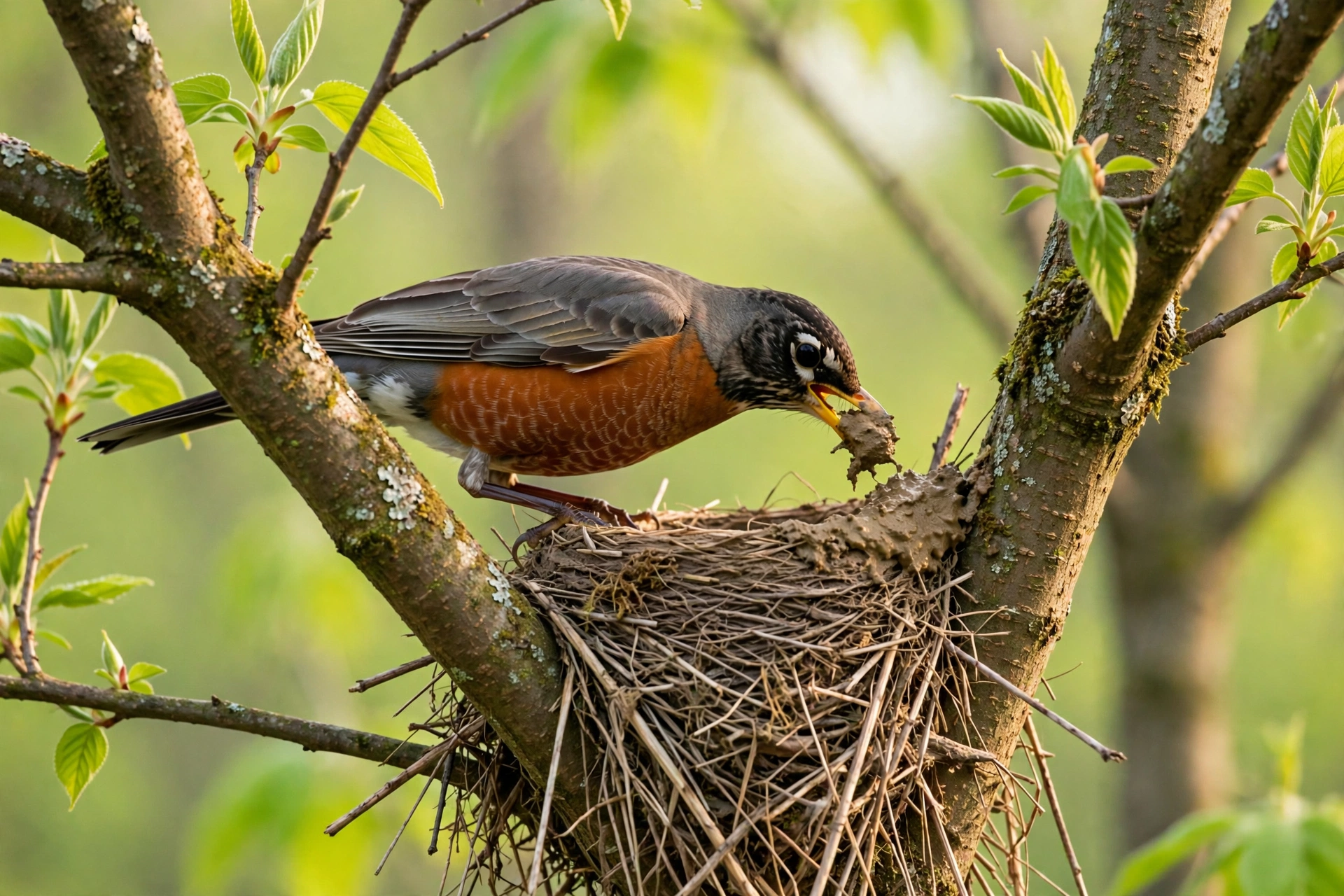
Watch a bird gather twigs and you are watching an engineer at work. Birds build nests without hands, tools, or blueprints, yet their structures survive storms, hide from predators, and cradle fragile eggs for weeks.
Across roughly 10,000 bird species, nests range from a simple scrape in gravel to woven pouches that hang from branches like ornaments. In this guide, you will learn exactly how do birds build nests: the materials they collect, the six most common nest types with species examples.
And the full construction process from site selection to the soft lining. You will also learn how long different species take, which parent does the building, and how you can help nesting birds in your own backyard. Whether you have spotted a robin tugging mud into shape or wondered about the sock-like nests dangling near your porch, the answers are below.
Why Birds Build Nests
A nest is a nursery, not a home. Most birds only use their nests during the breeding season, then abandon them once the chicks fledge. The structure serves three jobs: it holds the eggs together so they do not roll away, it insulates them so the parent’s body heat stays where it belongs, and it hides the whole family from predators.
Not every bird builds a nest. Brown-headed cowbirds lay their eggs in other birds’ nests and let strangers raise their young. Common murres lay a single egg directly on a bare cliff ledge, and the egg’s pointed shape keeps it from rolling off. Emperor penguins balance their egg on their feet and cover it with a fold of skin. But for most species, a well-built nest is the difference between chicks that survive and eggs that fail.
How Birds Choose a Nest Site
Before a single twig is carried, birds spend days scouting locations. Site selection matters more than most people realize, because a poorly placed nest fails no matter how well it is built. Here is what birds look for:
- Food nearby: Parents make hundreds of feeding trips per day once chicks hatch, so the site must sit within easy reach of insects, seeds, or other food.
- Predator protection: Thorny shrubs, high branches, islands, and cliff faces all reduce access for cats, raccoons, snakes, and crows.
- Shelter from weather: An overhanging branch or eave shields eggs from driving rain and harsh midday sun.
- Concealment: Many songbirds tuck nests into dense foliage so the structure disappears from a predator’s line of sight.
- Past success: Birds that raised chicks successfully in a spot often return to the same territory the next year.
- Species-specific needs: Cavity nesters need a hole or box of the right size, swallows need a mud source and an overhang, and shorebirds need open gravel where a scrape blends in.
Timing matters too. Most temperate songbirds start building in spring, when insects and nesting materials are abundant. Learn more about when birds lay their eggs and how the nesting season unfolds.
Nest Building Materials: What Birds Actually Use
Birds are resourceful builders. A single nest can contain dozens of different materials, each chosen for a specific job. Here are the most common ones:
- Twigs and sticks: The structural framework of most cup and platform nests.
- Grasses and stems: Flexible weaving material that forms the walls of cup nests and the pouches of orioles.
- Mud and clay: Nature’s mortar. Robins plaster mud between twigs, and swallows build entire nests from mud pellets.
- Moss and lichen: Camouflage on the outside and moisture control on the inside. Hummingbirds cover their tiny nests with lichen flakes so the nest looks like a bump on a branch.
- Feathers and plant down: The insulation layer. Feathers trap air and keep eggs warm on cold nights.
- Spider silk: Stretchy and strong, silk binds hummingbird nests together and lets the cup expand as chicks grow.
- Animal hair and fur: Soft lining collected from fences, carcasses, or even living animals. Titmice famously pluck fur from sleeping mammals.
- Bark strips, pine needles, and leaves: Common filler and lining for woodland species.
- Human-made scraps: String, paper, plastic, and cigarette butts show up in urban nests. Researchers found that some city birds line nests with cigarette butts, and the nicotine may help repel nest mites.
6 Common Nest Types, With Species Examples
Ornithologists recognize many nest architectures, but most backyard birds use one of six designs. This quick overview shows how varied bird construction can be:
| Nest Type | Description | Classic Examples |
|---|---|---|
| Cup nest | Woven bowl of grasses, twigs, and mud | American robin, northern cardinal, red-winged blackbird |
| Cavity nest | Enclosed chamber inside a tree or box | Woodpeckers, bluebirds, chickadees, owls |
| Woven/hanging nest | Intricately woven pouch suspended from a branch | Weaverbirds, Baltimore oriole, oropendolas |
| Mud nest | Cup or gourd built from mud pellets | Barn swallow, cliff swallow, house martin |
| Platform nest | Large flat pile of sticks | Osprey, heron, bald eagle |
| Scrape nest | Shallow depression in ground or gravel | Killdeer, plovers, terns, ostriches |
Cup Nests
The cup nest is the classic image of a bird’s nest: a tidy bowl cradling blue eggs. American robins are the masters of this style. The female builds the foundation from coarse grasses and twigs, then reinforces it with mud, and finally lines the inside with fine dry grass. Cardinals and blackbirds build similar cups, though without the mud plastering.

Cavity Nests
Cavity nesters skip the weaving entirely and move into enclosed spaces. Woodpeckers excavate their own holes in dead or soft wood, chiseling with their beaks and tossing out chips.
Bluebirds, chickadees, wrens, and small owls cannot dig their own holes, so they rely on old woodpecker cavities or nest boxes.
Because the entrance is small and the chamber is hidden, cavity nests offer excellent protection, which is why nest boxes work so well. If you put up a box, match the correct hole size for each species, since the wrong diameter invites predators or competitors.
Woven and Hanging Nests
No bird weaves like a weaverbird. The male baya weaver knots long grass blades into a hanging retort-shaped chamber, tying each strip with his beak in a process that looks like basketry.
Females inspect the finished nests and reject flimsy ones, so a male may build and rebuild several nests before winning a mate.
Baltimore orioles weave a similar hanging pouch from plant fibers, suspending it from the tip of a droopingbranch where predators struggle to reach it.

Mud Nests
Barn swallows are masons. A pair collects wet mud in their beaks, pellet by pellet, and plasters it into a cup stuck to a vertical wall under an eave or bridge.
A single nest can require hundreds of mud-gathering trips, and the birds often mix in grass stems for reinforcement, like rebar in concrete. Cliff swallows take it further, building gourd-shaped mud chambers with narrow entrance tunnels in dense colonies.

Platform Nests
Ospreys, herons, and eagles build big. A bald eagle’s platform nest can span 2 meters across and weigh more than a ton, and the pair adds fresh sticks every year, so some nests grow for decades. These giants sit atop tall trees, cliffs, or even cell towers, where the parents’ size deters most predators.
Scrape Nests
At the minimalist end, killdeer and plovers simply press their bodies into gravel or sand to form a shallow bowl, then line it with a few pebbles or shell fragments. The speckled eggs blend perfectly with the stones. It looks lazy, but the camouflage is so effective that the eggs are nearly invisible to passing predators.
How Birds Build a Nest: Step by Step
Construction techniques vary by species, but a typical songbird building a cup nest follows the same sequence. Here is the process from the first twig to the finished nursery:
- Claim a territory and scout sites. The male usually arrives first, sings to defend a territory, and the pair inspects several potential spots together before choosing one.
- Anchor the foundation. The bird wedges the first sturdy twigs into a branch fork or crevice. These anchor pieces must hold, because everything else rests on them.
- Build up the walls. Trip by trip, the bird carries grasses, stems, and twigs, pushing each piece into place with its beak and tucking loose ends under existing strands.
- Shape the cup with the body. The bird sits in the half-built nest and presses its breast against the walls, turning in circles to mold a smooth, round interior. This body-shaping is why cup nests fit their builders so perfectly.
- Bind and reinforce. Species like robins smear mud between the woven strands to lock everything together. Others use spider silk or saliva as glue.
- Add the soft lining. Fine grasses, feathers, hair, or plant down go in last, creating a cushioned layer between the eggs and the rougher outer shell.
- Test, adjust, and lay. The bird settles into the finished nest, wiggles to check the fit, and makes final tweaks. Within days, often within a week of starting construction, the first egg appears.
Who Builds the Nest: Males, Females, or Both?
Nest-building duties split differently across species, and the division often reveals something about each bird’s mating system:
| Species | Who Builds | Details |
|---|---|---|
| American robin | Mostly the female | The female does the building while the male guards the territory and occasionally brings materials. |
| Weaverbird | The male | Males weave display nests; females choose a mate based on nest quality. |
| Ruby-throated hummingbird | The female alone | Males take no part in nesting at all. |
| House wren | The male | Males build several starter nests and the female picks her favorite to finish. |
| Bald eagle and osprey | Both parents | The pair builds together and adds to the same nest year after year. |
| Barn swallow | Both parents | Male and female share the mud-carrying work equally. |
How Long Does It Take Birds to Build a Nest?
Speed depends on size, materials, and how many trips the design demands. Small cup nests go up fast, while mud and platform nests take much longer:
- American robin: 2 to 6 days for a complete cup nest.
- Ruby-throated hummingbird: About a week for a walnut-sized cup of silk, lichen, and plant down.
- Barn swallow: 1 to 2 weeks, with hundreds of individual mud-carrying flights.
- Weaverbird: A few days per nest, but males often rebuild repeatedly after females reject their work.
- Bald eagle: Several weeks for a new nest, though most pairs simply renovate and expand last year’s structure.
Weather can stretch these timelines. Cold snaps and heavy rain pause construction, and birds sometimes abandon a half-built nest if the site proves unsafe, starting over elsewhere.
How to Help Nesting Birds in Your Yard
You can make your yard a nest-building paradise with a few simple steps:
- Leave natural materials out. Skip the fall cleanup in a corner of the yard. Fallen twigs, dry grasses, and pine needles are prime building supplies. You can also stuff pet hair or natural yarn scraps into a suet cage for birds to pull out.
- Put up nest boxes. Cavity nesters face a shortage of natural holes, so a well-placed box genuinely helps bluebirds, chickadees, and wrens raise their young.
- Offer a mud puddle. During dry spells, a shallow dish of damp soil gives swallows and robins the mud they need.
- Delay pruning. Avoid trimming hedges and trees during the peak nesting season so you do not disturb hidden nests.
- Keep cats indoors. Outdoor cats are one of the leading causes of nest failure in suburban areas.
- Do not move active nests. In the United States, the Migratory Bird Treaty Act protects active nests of native species, so observe from a distance and let the parents work.
Curious what happens after the building is done? Read about whether birds reuse their nests from one season to the next.
Frequently Asked Questions
Do all birds build nests?
No. While most birds build some kind of nest, brood parasites like brown-headed cowbirds lay their eggs in other birds’ nests, and species like common murres and emperor penguins raise their young with no constructed nest at all.
How long does it take a bird to build a nest?
It depends on the species and design. A robin finishes a cup nest in 2 to 6 days, a hummingbird takes about a week, and barn swallows may spend 1 to 2 weeks hauling hundreds of mud pellets. Large platform nesters like eagles work for several weeks.
Do birds reuse their nests?
Some do and some do not. Eagles, ospreys, and swallows often return to the same nest and add to it each year, while most small songbirds build a fresh nest for every brood to avoid parasites that accumulate in old material.
What holds a bird nest together?
It depends on the design. Cup nests rely on tight weaving plus mud, spider silk, or saliva as binder. Mud nests are essentially adobe, hardened by drying. Woven nests hold through intricate knotting, and platform nests stay together through sheer interlocking weight.
Can I help birds build nests without disturbing them?
Yes. Leave out natural materials like twigs, dry grass, and pet hair, keep a muddy puddle available in dry weather, and put up nest boxes for cavity nesters. Once a nest is active, watch from a distance and never touch the eggs or chicks.
Conclusion
Bird nest building is a remarkable blend of instinct, engineering, and hard labor. From the robin plastering mud into a cup, to the weaverbird knotting grass into a hanging cradle, to the swallow ferrying hundreds of mud pellets to a barn eave, each species follows a construction plan refined over millions of years.
The process always runs through the same stages: choosing a safe site, anchoring a foundation, weaving or stacking the walls, shaping the interior with the body, and finishing with a soft lining.
Knowing how birds build nests changes how you see your own backyard. That pile of twigs in the hedge is not clutter; it is a nursery under construction. Leave the materials out, keep your distance from active nests, and you will give the next generation of birds the safe start they need.
For deeper research, explore the Cornell Lab’s NestWatch program, browse species accounts at All About Birds, or read conservation reporting from Audubon.





