 Skip to content

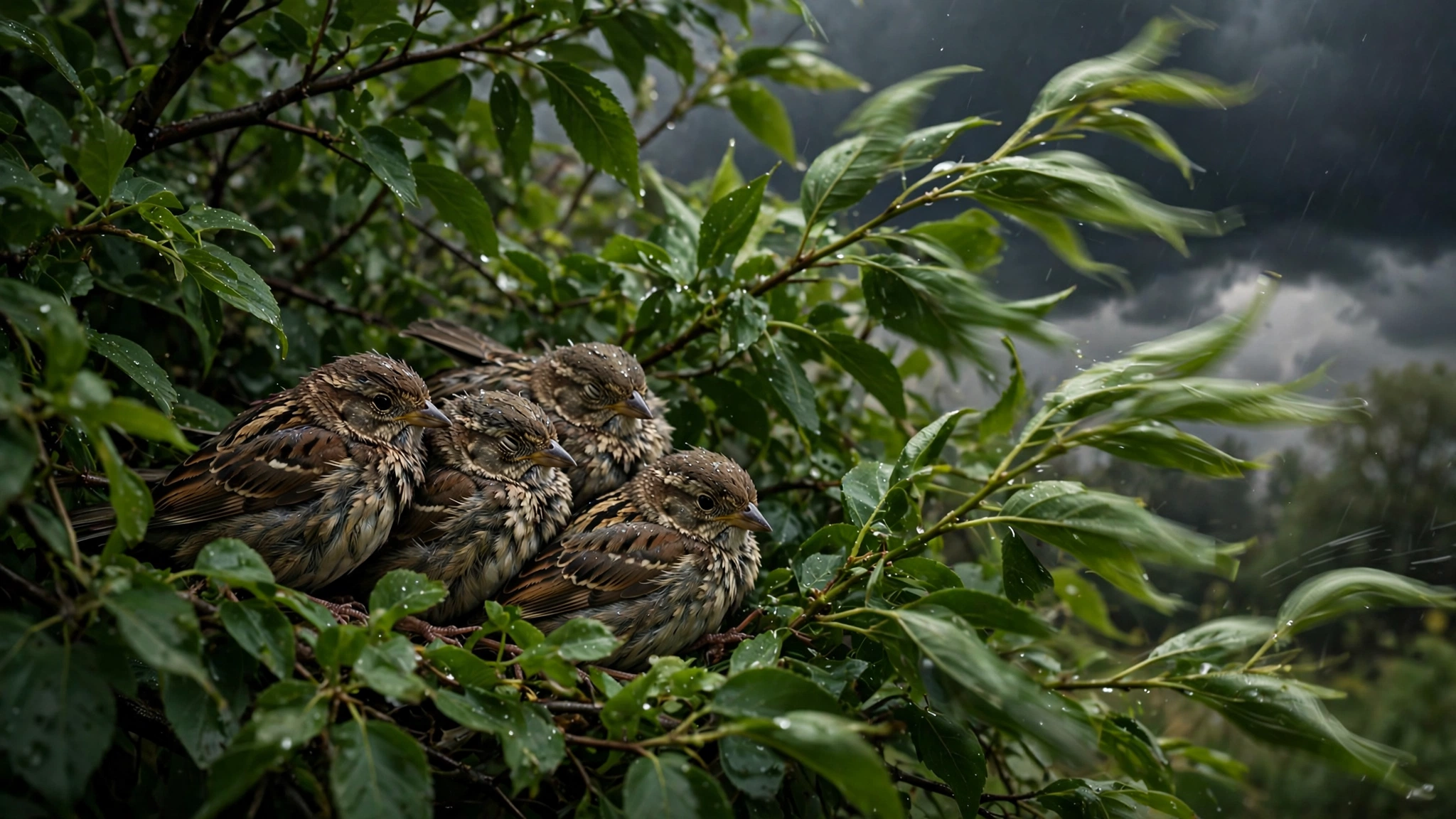
When a hurricane spins toward the coast, people board up windows, stock supplies, and head inland. Yet birds have no evacuation route, no weather app, and no sturdy roof over their heads. So how do birds survive hurricanes that snap trees in half and flood entire coastlines? The answer is a remarkable mix of early warning senses, clever hiding, and flying skill that scientists are still working to fully understand.
Birds begin reacting days before landfall. Falling air pressure, shifting winds, and deep rumbling sounds tell them trouble is on the way, and different species answer that warning in very different ways. Songbirds tuck themselves into the thickest cover they can find, while some seabirds climb high and circle the storm itself.
In this guide, we break down the science of how birds weather these powerful storms, what happens in the days after one passes, and the simple actions you can take to help birds recover.
In short: Birds survive hurricanes by sensing falling barometric pressure and storm infrasound days in advance. Most small birds leave early or shelter deep in dense vegetation, cavities, or on the leeward side of trees. Some seabirds fly around the storm or glide inside its calm eye. Afterward, survivors rest, refuel, and wait for habitat to recover.
Can Birds Sense a Hurricane Coming?
Yes, and they sense it earlier than most people expect. The key signal is barometric pressure, which is the weight of the air pressing down on everything below it. As a hurricane approaches, that pressure falls steadily, and birds appear to detect the drop well before the first rain bands arrive.
Birds may also hear the storm coming. Hurricanes produce infrasound, which is sound at frequencies too low for human ears to detect. Researchers at the Cornell Lab of Ornithology tracked golden-winged warblers that evacuated their Tennessee breeding grounds one to two days before a deadly outbreak of tornadoes in 2014, apparently after picking up the storms’ infrasound from far away.
Where Do Birds Go During a Hurricane?
The answer depends on the bird. There is no single storm bunker for the bird world, and each group has its own playbook.
Small songbirds hunker down
Sparrows, wrens, cardinals, and other small land birds usually stay put and hide. They wedge themselves deep into dense shrubs, thickets, and evergreen foliage where layers of leaves break the wind. Many press themselves against tree trunks on the side away from the wind or tuck into cavities and tangled vines. This hiding strategy is closely related to how birds handle ordinary bad weather, which we cover in our guide on where birds go when it rains.
Seabirds and shorebirds head for open water or high sky
Birds that live on the ocean often do the opposite of hiding. Gulls, terns, and pelicans may fly out ahead of the storm or climb above the worst turbulence. Storm petrels and shearwaters are built for rough air and can ride powerful winds for hours, using the storm’s energy the way a surfer uses a wave. Shorebirds feeding on beaches and mudflats must move inland to higher ground or risk being caught by storm surge.
Raptors and larger birds ride it out
Hawks, owls, and herons generally shelter like songbirds do, but their size lets them use sturdier cover. Owls retreat into deep tree cavities, dense conifers, or barns. Herons and egrets crouch low in reeds and mangroves, keeping their bodies close to the ground where the wind is weakest.

How Do Birds Survive Hurricanes? 7 Storm Strategies That Work
Scientists and wildlife rehabilitators have pieced together the main tactics birds use when a hurricane hits. No single bird uses all of them, but together these strategies explain how so many birds come through the worst weather on Earth.
- Evacuating early: Many birds simply leave before the storm arrives, flying tens or even hundreds of miles to calmer areas and returning once the danger passes.
- Sheltering in dense vegetation: Thick shrubs, tangled vines, and evergreen canopies act like natural windbreaks, cutting wind speed dramatically just a few feet inside the foliage.
- Using cavities and crevices: Tree holes, rock cracks, nest boxes, and building eaves give birds a solid roof and walls against driving rain and debris.
- Facing into the wind: Birds point their beaks into the wind so air flows smoothly over their feathers instead of lifting them, much like an airplane holding its heading.
- Hugging the leeward side: The leeward side is the side of a tree, hill, or building sheltered from the wind. Birds cluster there to escape the full force of gusts.
- Riding the storm’s edge: Strong fliers such as frigatebirds circle at the storm’s outer edges, staying in manageable winds and avoiding the deadly core.
- Fasting and waiting: Birds can slow their activity and live off stored fat for a day or two, sitting tight until the storm passes rather than risking flight.
Why Do Seabirds Sometimes Fly Into the Storm?
It sounds like the worst possible decision, but some seabirds deliberately fly toward a hurricane. The trick is that they are not flying into the worst of it. They aim for the eye of the storm, the calm circular center where winds drop and the sky can briefly clear.
Inside the eye, exhausted birds can rest on the wing in relatively still air, circling slowly while the violent eyewall spins around them. As Audubon has reported, birds trapped in the eye may be carried along with the storm for hundreds of miles, which is why pelagic species sometimes turn up far inland after landfall.
Frigatebirds take a different approach. These masters of soaring flight climb high and circle the storm’s outer bands for days. They avoid the core entirely and use the storm’s powerful updrafts to stay aloft with barely a wingbeat.
Not every seabird makes the right call. Young or weak birds can be driven ashore by the hundreds in events birders call wrecks, which are mass strandings of seabirds after severe storms. Reporting unusual sightings after a storm helps scientists track storm impacts.
What Happens to Birds After a Hurricane?
The storm passing does not end the danger. The days after a hurricane bring a second wave of challenges.

Displacement and vagrant sightings
Hurricanes scatter birds across the map. Powerful winds can carry seabirds, shorebirds, and even land birds far outside their normal ranges. A vagrant is a bird found far outside its usual range, and the days after a major hurricane are prime time for vagrant sightings.
Destroyed habitat and missing food
High winds strip leaves, snap branches, and flatten the dense cover birds depend on. Storm surge floods nests, drowns low-lying burrows, and pushes saltwater into freshwater marshes. According to reporting from Audubon, coastal bird populations can take seasons to rebound after a direct hit, especially where nesting islands are washed away.
Stress, injury, and exhaustion
Even birds that shelter successfully emerge stressed and depleted. Flying in high winds burns enormous energy, and birds that rode out the storm on empty stomachs may be dangerously thin. Chicks and fledglings are the most vulnerable: nests blown from trees leave young birds exposed on the ground.
How You Can Help Birds After a Hurricane
Once a storm passes and it is safe to go outside, small actions in your yard and neighborhood can make a real difference for recovering birds.

- Leave fallen branches and leaf litter alone: That storm debris looks messy, but it is instant habitat. Fallen limbs provide perches and hiding spots, and leaf litter shelters the insects birds need to refuel.
- Keep cats indoors: Exhausted, displaced birds are easy targets. Keeping cats inside for a week or two after a storm removes one of the biggest threats at the moment birds are weakest.
- Put out fresh water: Storm surge and flooding can contaminate natural water sources with salt and debris. A shallow dish of fresh water, cleaned daily, gives birds a safe place to drink and bathe.
- Report injured birds to a licensed rehabilitator: If you find a bird with a drooping wing, visible wound, or one that cannot stand, contact a local wildlife rehabilitator rather than trying to treat it yourself.
- Do not “rescue” healthy fledglings: Young birds on the ground after a storm are often fine. Our guide on what to do if you find a baby bird walks through exactly when to intervene and when to walk away.
Storm Survival Strategies by Bird Group
Every group of birds faces the same storm with different tools. This table sums up who does what when a hurricane approaches.
| Bird group | Main strategy | Why it works |
|---|---|---|
| Small songbirds | Shelter deep in dense vegetation or cavities | Layers of leaves and branches cut wind speed and block debris |
| Seabirds (petrels, shearwaters) | Fly around the storm or rest in the eye | Built for rough air; can ride winds for hours without landing |
| Frigatebirds | Circle high above the storm’s outer bands | Enormous wingspan lets them soar on updrafts with little effort |
| Shorebirds | Move inland to sheltered fields and bays | Escapes storm surge flooding their feeding grounds |
| Raptors and owls | Retreat to sturdy cavities and dense conifers | Size and strength let them use heavier cover |
| Herons and egrets | Crouch low in reeds and mangroves | Staying near the ground avoids the strongest gusts |
| Waterfowl | Gather on the sheltered side of lakes and ponds | Water bodies are calmer on the leeward shore |
FAQs About How Do Birds Survive Hurricanes
Can birds fly in a hurricane?
Most birds cannot fly safely in hurricane-force winds and do not try. Small birds shelter in place, while strong fliers like frigatebirds and petrels may ride the storm’s edges or circle inside the calm eye.
How do birds survive hurricanes when winds reach 100 mph?
They avoid the worst winds entirely. Sheltering birds tuck into spots where vegetation, terrain, or structures cut wind speed to a fraction of the open-air gusts.
Do birds migrate early to avoid hurricanes?
Some do. Falling barometric pressure can trigger early departure in migratory species, and flocks have been observed leaving breeding grounds a day or two before major storms.
Where do backyard birds go during a hurricane?
They hide in the densest cover available: thick shrubs, evergreens, tangled vines, and the leeward side of tree trunks. Avoid pruning dense bushes during hurricane season so birds keep their natural shelter.
What should I do if I find an injured bird after a storm?
Place it gently in a ventilated box lined with a soft cloth, keep it warm, dark, and quiet, and contact a licensed wildlife rehabilitator as soon as possible. Do not give it food or water unless the rehabilitator instructs you to.
Can I put out food for birds after a hurricane?
Yes, and it helps. Storms destroy the insects, seeds, and fruits birds normally eat, so offering black-oil sunflower seed, suet, and mealworms gives survivors quick energy. Keep feeders clean to prevent disease, and provide fresh water alongside the food.
Why do rare birds show up after hurricanes?
Hurricane winds can carry birds hundreds of miles from their normal range, creating vagrant sightings that excite birders. Seabirds may appear at inland lakes, and Caribbean species can turn up along the Gulf and Atlantic coasts.





