 Skip to content

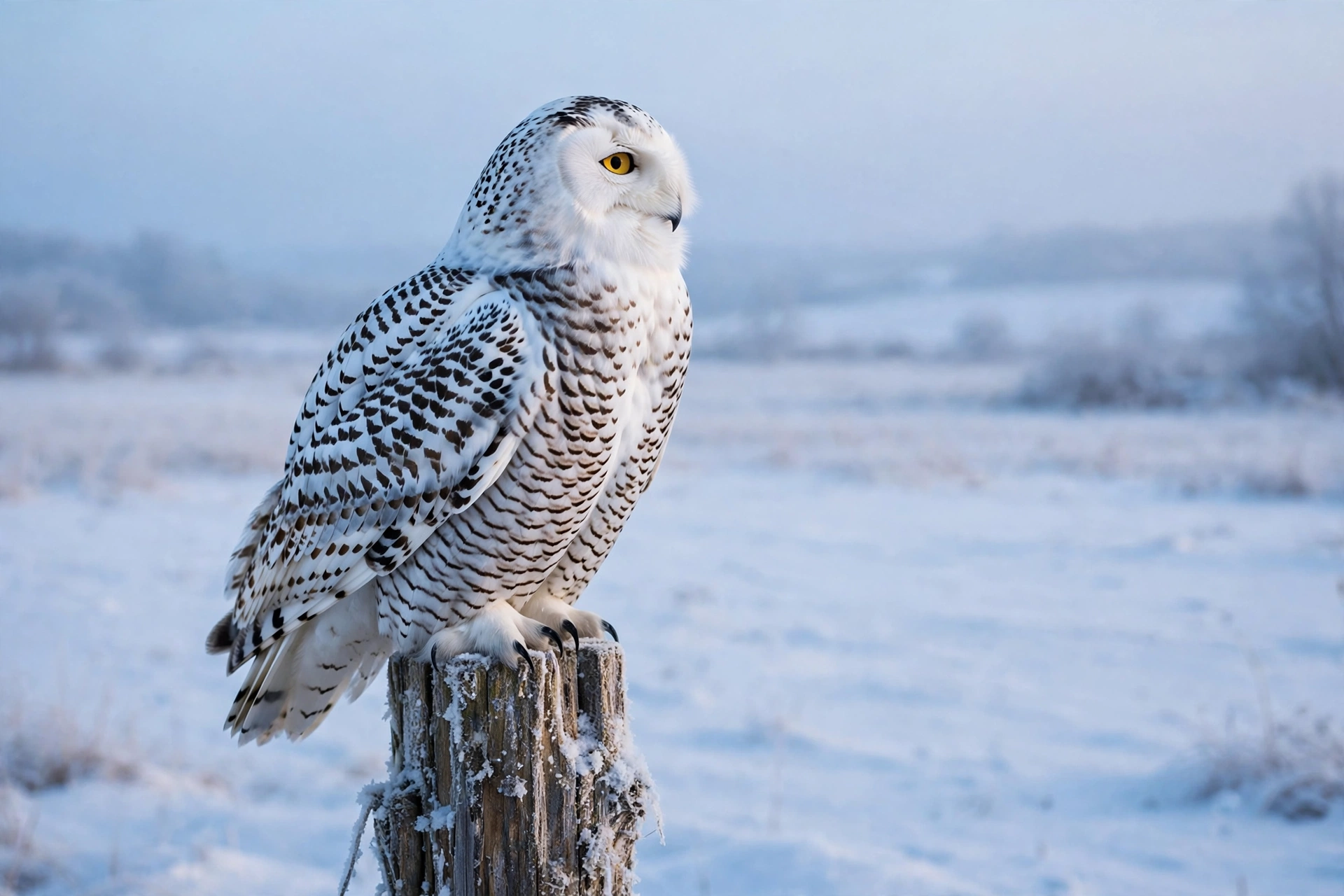
If you have ever spotted an owl on a crisp January morning and asked yourself, do owls migrate the way geese and warblers do, you are asking a question with a wonderfully uneven answer. Most owls are devoted homebodies that defend the same territory all year long, yet a few species make dramatic winter movements that can flood southern regions with birds.
Birders get especially excited about winter owling because the cold season concentrates birds and behavior in ways summer never does. Bare branches make roosting owls easier to spot, and irruption years can bring Arctic visitors to fields hundreds of miles south of their normal range. This guide explains the full story behind owl migration, so you know exactly what to expect and where to look.
In short: Most owls do not migrate and stay on their home territories year-round, but a few species are famous exceptions. Snowy owls irrupt south when lemming numbers crash, short-eared owls drift south from northern breeding grounds, and tiny northern saw-whet owls migrate at night every fall. So the answer to do owls migrate is mostly no, with a few spectacular exceptions worth knowing.
Do Owls Migrate, or Do They Stay Put All Year?
For the majority of owl species, the honest answer is that they stay put. A territory, meaning the area an owl defends for hunting and nesting, is valuable real estate, and abandoning it means losing a reliable food supply and a known mate. Great horned owls, barred owls, eastern screech-owls and great gray owls all hold territories through the harshest months, hunting rodents beneath the snow with hearing so precise it borders on supernatural.
These resident owls have a full toolkit for winter survival. Dense, layered plumage traps body heat, feathered feet act like built-in snow boots, and a slowed metabolism lets them coast through lean spells between hunts. Staying also carries a breeding advantage: owls are among the earliest nesters, and great horned owls may be sitting on eggs by late January.
Why Most Owls Never Migrate
Migration is expensive, dangerous and energetically costly, so birds only evolve the habit when the payoff is clear. For most owls, the math simply does not work. Their prey, mainly mice, voles and other small mammals, remains available under the snow all winter, and their specialized hunting lets them reach it when other predators cannot.
An owl’s facial disk, the round arrangement of feathers that funnels sound to its ears, gives it directional hearing accurate enough to strike prey hidden beneath a foot of snow. When you can eat in January, there is no reason to fly south.
There is also the simple fact that owls are built for the cold. Thick down, relatively low surface area and the ability to fluff their feathers into an insulating shell keep them warm through nights that send songbirds into torpor. If you want to meet the whole cast of resident species, our guide to owl types, facts, habitat, diet and behavior is a great starting point.
Do Snowy Owls Migrate South?
This is the question behind most winter owl excitement, and the answer is both yes and no. Snowy owls do not migrate on a fixed annual schedule the way warblers do. Instead, they are irruptive, meaning large numbers move south in some winters and almost none in others, depending entirely on food.
The engine of this cycle is the lemming, a small Arctic rodent whose population booms and crashes every three to five years. In a boom year, snowy owls raise huge broods on the tundra. When the lemming population then crashes, the tundra cannot support the swollen owl population, and waves of hungry owls push south into Canada and the northern United States.
These irruption winters are legendary among birders. Airports, coastal dunes, farm fields and even city rooftops can host snowy owls that normally live hundreds of miles north of the Arctic Circle. The Cornell Lab of Ornithology and Audubon both track these movements closely, and major irruptions have been documented roughly every few years, including notable events in the winters of 2013 to 2014 and 2017 to 2018. You can read more about the species on the Cornell Lab’s snowy owl species page and Audubon’s snowy owl field guide.
What Is an Owl Irruption, and What Causes It?
An irruption is an irregular, large-scale movement of birds out of their normal range, driven by food rather than the calendar. It differs from true migration because it is unpredictable and often one-directional in a given year. Think of it as a hunger-driven exodus rather than a scheduled commute.
The classic trigger is a prey population crash, as with snowy owls and lemmings. A second trigger is a prey boom further south that pulls birds in, or a bumper crop of northern rodents that produces an oversized generation of young owls that must disperse.
- Unpredictable timing: they follow prey cycles, not the calendar, so no one can forecast them far in advance.
- Young birds lead: most irrupting owls are juveniles from a big breeding season, pushed out by competition.
- Stress is high: irrupting owls are often hungry and exhausted, which is why ethical viewing matters so much.
- They end naturally: when prey recovers, the survivors return north to breed.

Do Owls Migrate at Night?
Some do, and the most remarkable is a bird the size of a robin. The northern saw-whet owl, one of North America’s smallest owls, undertakes a genuine annual migration, traveling south each fall under cover of darkness. Banding stations across the continent catch and release thousands of these tiny travelers every autumn.
Saw-whets migrate alone, at night, flying low through forests and stopping to hunt along the way. Their small size makes them vulnerable to larger owls, so darkness is both their travel window and their camouflage. Spring brings them back north to their breeding forests, completing one of the least-seen migrations in the bird world.
The northern saw-whet owl: a true night migrant
What makes the saw-whet special is that its migration is regular and directional, unlike the chaotic irruptions of snowy owls. Juveniles tend to travel farther than adults, and in some years, big breeding seasons produce mini-irruptions on top of the normal migration.
Other owls that move after dark
Saw-whets are not entirely alone. Boreal owls show irruptive movements in some winters, and long-eared owls form communal winter roosts after dispersing from breeding areas. Even largely resident species like great horned owls see young birds wander widely in their first fall, a process called dispersal, the one-way movement of juveniles away from their birthplace.
Which Owls Move South in Winter?
Beyond snowy owls and saw-whets, a few more species deserve a place on every winter birder’s list. The short-eared owl is the most visible of the group, a lanky, moth-like hunter of open country that vacates its northernmost breeding grounds each fall and winters across much of the United States.
Short-eared owls are unusual because they hunt in daylight, especially at dawn and dusk, quartering low over marshes and grasslands with deep, floppy wingbeats. Winter can concentrate them at prime hunting grounds, where a dozen or more may hunt the same field.
Northern hawk owls and great gray owls also irrupt southward in some winters, though they rarely travel as far as snowy owls. Boreal owls follow similar boom-and-bust rodent cycles in the far north.

Where Do Owls Go in Winter?
Resident owls simply stay where they are, often shifting to the most sheltered corners of their territories. Dense evergreen stands become favorite daytime roosts, offering concealment and a windbreak, while nearby open hunting grounds provide the food. A barred owl that hooted behind your house in July is very likely the same bird dozing in a hemlock in January.
Irruptive and migratory owls head for whatever habitat matches their hunting style. Snowy owls seek wide-open spaces that echo the tundra: airports, coastal beaches, dunes and flat farmland. Short-eared owls want marshes, prairies and grasslands with healthy vole populations. Saw-whets drop into dense thickets and conifer groves where they can hide by day and hunt by night.
When and Where to Look for Winter Owls
Timing and habitat choice make the difference between a blank outing and a memorable one. Winter owling rewards patience, warm clothing and a plan built around how owls actually behave in the cold months.
Best habitats to check
Start with edges, the places where two habitats meet. A pine grove beside a meadow, a marsh bordering farmland, or a cemetery with old evergreens can all hold roosting owls. For snowy owls specifically, scan fence posts, telephone poles, hay bales and rooftops in open country. If you want owls closer to home, see our tips on how to attract owls to your yard.
Best times of day
Dawn and dusk are prime time. Many owls become active in the last hour of daylight, and short-eared owls often start hunting well before sunset. Night listening walks can be magical too: winter is peak hooting season for great horned and barred owls. Our article on why owls hoot at night explains what all that calling means.
Reading the signs
Learn to spot pellets, the regurgitated bundles of fur and bone that owls cough up after digesting prey. Fresh pellets beneath a roost tree mean an owl is using it right now. Whitewash, the chalky droppings splashed on branches below a roost, is another giveaway.

How to Watch Winter Owls Ethically
Winter is the hardest season of an owl’s year, and irrupting birds are often running on empty. Ethical viewing is not optional; it is the price of admission. A stressed owl that is flushed repeatedly burns calories it cannot spare, and in deep winter that can be fatal.
- Keep your distance: if the owl notices you, you are too close. Back away until it resumes resting or hunting.
- Never use bait: luring owls with live mice trains them to approach roads and people, and it is illegal in many areas.
- Skip the flash: avoid flash photography, especially at night, since it can temporarily blind a hunting owl.
- Stay quiet: keep voices low, silence your phone, and never play recorded calls to lure an owl in winter.
- Protect roosts: do not share exact locations of sensitive roosts publicly.
- Limit your time: enjoy the sighting, then move on so the bird can rest undisturbed.
Winter Owl Status at a Glance
| Owl species | Winter status | What drives its movements | Where to look in winter |
|---|---|---|---|
| Great horned owl | Year-round resident | Holds territory; breeds as early as January | Woodlots, river valleys, suburban greenbelts |
| Barred owl | Year-round resident | Stays on territory in mature forest | Damp woods, hemlock groves, parklands |
| Eastern screech-owl | Year-round resident | Uses tree cavities through winter | Backyards, orchards, neighborhood trees |
| Snowy owl | Irruptive visitor | Lemming population crashes on the tundra | Airports, beaches, dunes, open farmland |
| Short-eared owl | Partial migrant | Moves south from northern breeding grounds | Marshes, grasslands, prairie fields at dusk |
| Northern saw-whet owl | True night migrant | Regular fall migration south | Dense thickets, conifer groves near banding stations |
| Great gray owl | Mostly resident, sometimes irruptive | Vole shortages push some birds south | Boreal forest edges, northern meadows |
| Long-eared owl | Dispersive, communal roosts | Leaves breeding areas; roosts in groups | Dense conifer stands, sometimes in numbers |
Frequently Asked Questions
Do owls migrate south for the winter?
Most owls do not migrate south at all and remain on their territories through winter. The main exceptions are snowy owls, which irrupt south in lemming-crash years, short-eared owls, which vacate northern breeding areas, and northern saw-whet owls, which migrate south every fall.
Where do owls go in winter?
Resident owls stay put, shifting to sheltered roosts like dense evergreens while hunting nearby open ground. Irruptive snowy owls head for open habitats that mimic the tundra, such as beaches, airports and farmland.
Do snowy owls migrate every year?
No, snowy owls do not follow a fixed yearly migration. Their southward movements are irruptions tied to lemming population cycles on the Arctic tundra, happening roughly every three to five years.
Why do snowy owls come south some winters?
They follow food, not weather. In lemming boom years, snowy owls raise unusually large broods, and when lemming numbers crash the following season, the tundra cannot feed the extra owls. Hungry birds, mostly juveniles, then push south searching for prey.
Do owls migrate at night?
Northern saw-whet owls famously do, traveling south each fall alone and under cover of darkness. Most other owls are either non-migratory or move irregularly during the day.
Can I see owls in winter near my home?
Very likely yes. Great horned, barred and screech-owls live year-round across much of North America, and winter’s bare branches actually make them easier to find. Listen for hooting on calm January nights and check dense evergreens for roosting birds by day.
Is it okay to feed owls in winter?
No, baiting owls with live or dead prey is discouraged by birding ethics guidelines and is illegal in some areas. It habituates owls to people and roadsides, putting them at risk from traffic and disturbance.
What should I do if I find a snowy owl?
Enjoy it from far away, keep your visit short, and resist the urge to share its exact location online. Snowy owls in irruption years are often stressed and hungry, so give them plenty of space and never approach for a closer photo.





