 Skip to content

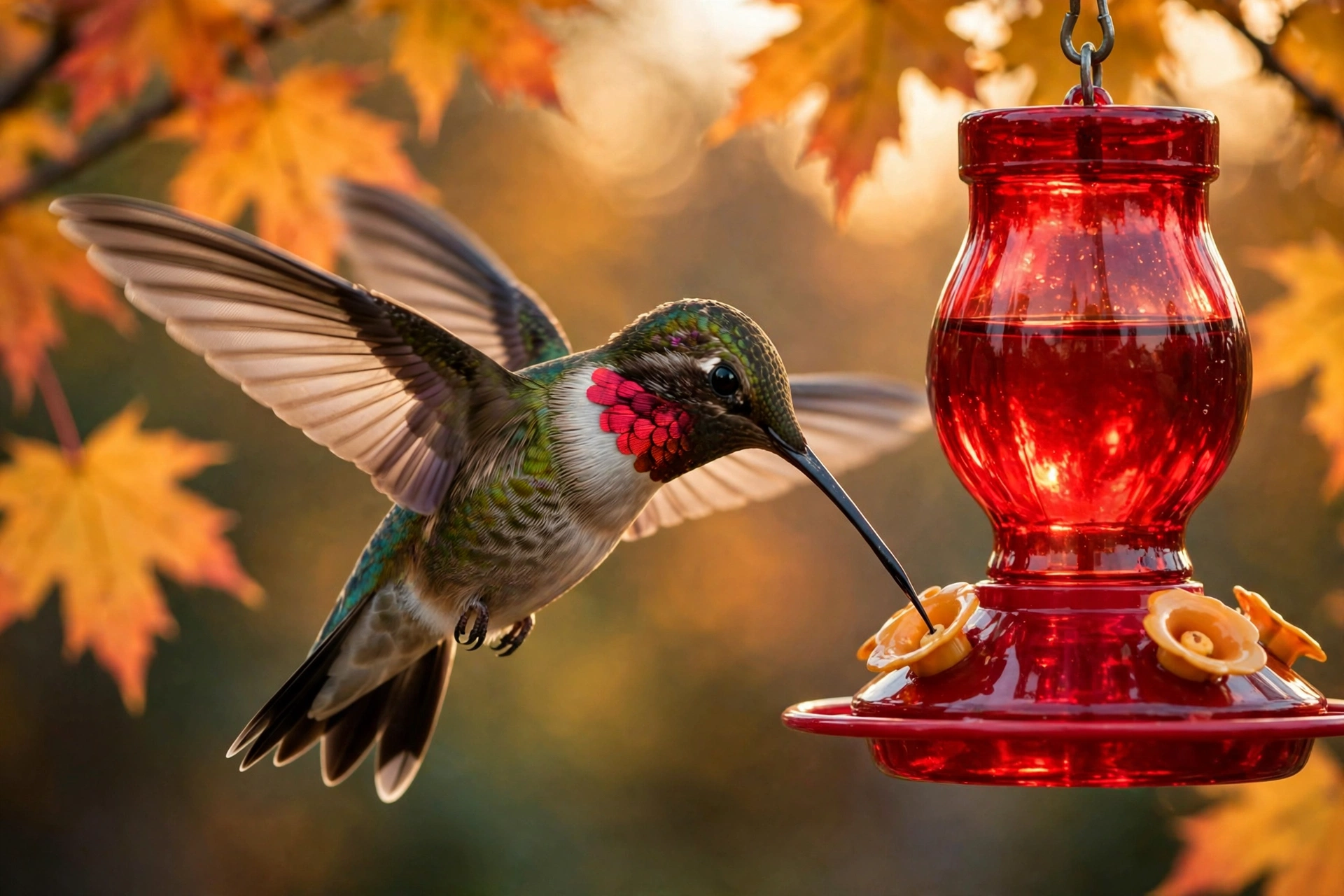
It is early October 2026, and your hummingbird feeder has gone quiet. All summer the air around it buzzed with tiny wings, males flashing ruby throats, females slipping in for quick sips. Now the nectar sits untouched for days, and a strange stillness hangs over the yard. If you are staring at that empty feeder and asking where they all went, you are not alone. Millions of backyard birders ask the same question every autumn.
The short answer is that most of your hummingbirds are headed thousands of miles south, to the dry forests and flower-filled groves of Mexico and Central America. Getting there demands one of the boldest journeys in the bird world, including a nonstop flight across the open Gulf of Mexico. This guide traces that journey step by step: where the birds spend winter, how they cross the Gulf, why some species never leave, and how you can help the last stragglers on their way.
The Short Answer: South to Mexico and Central America
Every ruby-throated hummingbird that nested in your yard this summer is a long-distance traveler. From spring through early fall these birds breed across the eastern United States and southeastern Canada, as far north as southern Ontario. When autumn arrives, nearly all of them leave North America behind.
Their winter destination is the tropical belt of southern Mexico and Central America. Birds fan out across a broad range that runs from the Yucatan Peninsula south through Guatemala, Belize, Honduras, Nicaragua, and Costa Rica, reaching as far as northern Panama. They do not push into South America. This middle slice of the tropics holds everything they need: year-round flowers, abundant insects, and no freezing nights.
This is not a casual relocation. A bird that hatched in Pennsylvania this June will cross an ocean gulf, trade maple woods for citrus groves, and spend the cold months in a completely different world. By March or April it will reverse the trip and return north. If you want the full calendar of departure and return dates, see our guide on when hummingbirds migrate each year.
The Gulf Crossing: 500 Miles of Open Water, Nonstop
The most astonishing leg of the journey is the Gulf of Mexico crossing. Instead of detouring around the coastline, many ruby-throats launch from the Gulf Coast of the United States and fly straight across open water to the Yucatan Peninsula. There is no place to land, no flower to refuel at, and no help if the wind turns against them.
The numbers behind this flight are almost hard to believe. The crossing stretches up to 500 miles and takes 18 to 22 hours of continuous flight, usually begun at dusk so the bird travels through the cooler night air. To survive it, a hummingbird nearly doubles its weight, climbing from about 3.25 grams to more than 6 grams in the weeks before departure. When it finally lands in Mexico it may weigh only 2.5 grams, having burned nearly its entire fuel reserve over the waves.
Not every bird takes the water route. Researchers have found that fewer ruby-throats cross the Gulf in fall than in spring, with most autumn migrants instead following the Texas coastline into Mexico. One likely reason is hurricane season: a storm over open water leaves a three-gram bird no margin for error. Which route a bird chooses seems to depend on its fat reserves and the wind on departure day. A few even rest briefly on offshore oil rigs and fishing boats, though most complete the crossing without a single stop.
- Distance: up to 500 miles over open water, with no rest stops.
- Flight time: 18 to 22 hours of continuous flying.
- Departure: usually at dusk, riding the cooler night air.
- Pre-flight weight: from about 3.25 grams to more than 6 grams.
- Arrival weight: as little as 2.5 grams on landing in Mexico.

Where Exactly They Spend the Winter
The Winter Range, Country by Country
Ruby-throated hummingbirds settle across a generous stretch of the tropics. The core winter range runs from southern Mexico, including the Yucatan Peninsula, southward through the Central American isthmus to northern Panama. Individual birds scatter across this range wherever the habitat suits them, and banding evidence suggests many return to the same wintering spot year after year.
This wide range matters because it spreads the population across millions of acres. A hurricane in one district cannot wipe out the whole species, since birds in other parts of the range remain untouched. It also explains why researchers describe ruby-throats as habitat generalists in winter: the key is not one specific forest but the right combination of flowers and insects.
Winter Habitat: Dry Forests, Citrus Groves, and Scrub
According to the Cornell Lab of Ornithology, ruby-throats spend winter in dry forests, citrus groves, hedgerows, and scrub. These habitats offer the two things a hummingbird cannot live without: nectar-rich flowers and clouds of tiny insects. Citrus groves in particular provide both, since flowering orange and lime trees attract the insects hummingbirds hunt for protein.
Winter life looks surprisingly familiar. Birds defend feeding territories around productive flower patches, chase rivals away with the same dogfights you watched at your summer feeder, and spend their days moving between blossoms. The setting is tropical, but the attitude is identical. If you want the full breakdown of their menu, read our guide on what hummingbirds eat.
Not Every Bird Leaves: The Ones That Stay Behind
Here is a twist. A small number of ruby-throats skip the long journey and winter along the US Gulf Coast instead, with another small population recorded in the Outer Banks of North Carolina. These are often birds that hatched from very late nests and never had time to build enough fat, or older birds that may not survive another trans-Gulf flight.
Their odds depend entirely on the winter. In mild years they survive on backyard feeders and winter insects. In hard freezes many perish. These stragglers remind us that migration is a strategy rather than a law, and individual birds make different bets every autumn.

What About Other Hummingbird Species?
So far we have talked about the ruby-throated hummingbird, the only species that breeds east of the Mississippi. But North America hosts more than a dozen hummingbird species, and their winter plans vary dramatically. Some migrate farther than any bird their size has a right to. Others never leave home at all.
| Species | Winter strategy | Winter range |
|---|---|---|
| Ruby-throated | Migrates south | Southern Mexico to northern Panama |
| Rufous | Migrates south | Southern Mexico, after flying from Alaska |
| Anna’s | Mostly resident | Pacific Coast, year-round |
| Black-chinned | Migrates south | Western and southern Mexico |
| Broad-tailed | Migrates south | Mexico and Guatemala |
Rufous Hummingbirds: The Marathon Fliers of the West
If the ruby-throat’s Gulf crossing impresses you, meet the rufous hummingbird. These copper-colored scrappers breed as far north as Alaska, then fly all the way to southern Mexico for the winter. It is one of the longest migrations of any hummingbird on Earth, a staggering round trip for a bird that weighs about as much as two pennies.
Like ruby-throats, rufous hummingbirds bulk up before departing and follow flower blooms southward. Their route runs overland through the Rocky Mountains and down Mexico’s Pacific slope, a different solution to the same problem of finding food all winter long.
Anna’s Hummingbirds: The Ones That Stay Put
Anna’s hummingbirds break every rule. These glittering rose-crowned birds live along the Pacific Coast year-round, from British Columbia to Baja California, and most individuals never migrate at all. They may wander up and down slopes following seasonal flowers, but they do not make a true migration.
Their secret is torpor. On cold winter nights an Anna’s hummingbird can lower its body temperature and slow its metabolism to a crawl, burning a fraction of its daytime energy. At dawn it warms back up and resumes feeding. Add winter-blooming garden flowers and backyard feeders, and an Anna’s hummingbird can ride out months that would starve a ruby-throat.
Western Strays Wintering in the East
Birders in the Southeast have noticed something curious in recent decades: growing numbers of rufous and other western hummingbirds spending the winter from Texas to South Carolina instead of migrating to Mexico. These vagrants often overwinter at backyard feeders, and their numbers appear to be rising.
Scientists are still studying why. Milder winters and the growing number of year-round feeders likely play a role. If you live in the Southeast and spot a hummingbird in January, take a close look: it might be a lost western traveler rather than a ruby-throat.

How They Know When to Leave and How They Navigate
What tells a hummingbird that autumn has arrived? Surprisingly, it is not the cold and not the emptying flowers. The trigger is the shortening length of daylight. As autumn days shrink, hormonal changes sweep through the bird’s body and flip it into migration mode. This is why your feeder cannot delay their departure. The signal comes from the sky, not the sugar water.
Once the urge strikes, the bird enters hyperphagia, a period of frantic feeding that can add as much as 10 percent of its body weight in fat per day. For a hatch-year bird with no memory of any previous migration, instinct provides the entire flight plan: fatten up, fly south for a certain number of days, then look for good habitat. No parent teaches the route. The first trip runs entirely on inherited instructions.
Navigation remains one of the great partial mysteries. Banding studies show that individual birds follow a set route year after year, often arriving at the same feeder on nearly the same day, which proves they carry a remarkably precise internal map. Like other migratory birds, hummingbirds appear to read the sun’s position and familiar landmarks, and researchers believe they can also sense Earth’s magnetic field. The exact blend of these cues in hummingbirds is still being worked out, which makes their precision even more impressive.
Do Hummingbirds Return to the Same Yard Every Year?
Yes, and the evidence is beautiful. Banding studies, in which licensed researchers fit birds with tiny numbered leg bands, have repeatedly recaptured the same individuals at the same feeders in later years. Some birds return to the very yard where they hatched, and some arrive within days of their previous year’s date.
This site fidelity is one reason to keep your feeding station consistent. A bird that refueled at your feeder last September remembers the location. Keep the nectar fresh and the feeder clean, and you are maintaining a landmark on a tiny traveler’s ancient route.
One caution: by mid-September nearly all the ruby-throats at eastern feeders are migrants passing through from farther north, not your summer residents. Your local birds left weeks ago. The ones you see now are strangers borrowing your buffet on their way to the Gulf.
How to Help Late Migrants Passing Through
It is early October and the bulk of the migration has passed, but stragglers are still moving through. What you do in your yard right now can genuinely help these late travelers, and it starts with keeping your feeder up. The old advice to take feeders down so birds “have to leave” is a myth. Migration is driven by day length, and a full feeder only gives migrants extra fuel for the hardest part of the trip.
Follow this simple routine through the end of the season:
- Keep feeders up for at least two weeks after your last sighting. Late migrants from farther north may still be passing through.
- Change the nectar every two to three days, even in cool weather. Fermented sugar water harms birds.
- Use the standard recipe: one part white sugar to four parts water. Never add red dye, honey, or brown sugar.
- Leave some natural habitat standing. Seed heads, leaf litter, and uncut stems harbor the tiny insects hummingbirds need for protein.
- Plant late-blooming natives such as salvia and trumpet vine, so migrants find real flowers alongside your feeder.
- Take feeders down only when freezing weather arrives or flowers and insects are gone.
If a hummingbird is still visiting in late October or November, do not panic. It may be a healthy late migrant fueling up, or a western stray settling in for winter. Keep the feeder fresh and enjoy the rare show. Hummingbirds are not the only travelers on the move, either. Read our guide on where birds go in winter for the bigger picture of avian migration.
Frequently Asked Questions
Do hummingbirds migrate south for the winter?
Yes. The ruby-throated hummingbird, the species most Americans know, migrates from its eastern North American breeding grounds to southern Mexico and Central America each autumn. Several other species, like the rufous and black-chinned hummingbirds, make similar southward journeys in the West.
Anna’s hummingbirds are the major exception. They live along the Pacific Coast year-round and mostly skip migration entirely.
Where do ruby-throated hummingbirds go in winter?
Ruby-throated hummingbirds winter across southern Mexico and Central America, from the Yucatan Peninsula south to northern Panama. They settle in dry forests, citrus groves, hedgerows, and scrub, where flowers and insects stay abundant through the cold months.
Banding studies indicate that most individuals return to the same general wintering area year after year.
How far do hummingbirds fly when they migrate?
It depends on the bird’s starting point, but the famous Gulf of Mexico crossing alone stretches up to 500 miles and takes 18 to 22 hours of nonstop flight. A ruby-throat breeding in Canada may travel well over 2,000 miles one way between its summer and winter homes.
The rufous hummingbird travels even farther, flying from Alaska to southern Mexico each year in one of the longest migrations of any hummingbird.
Will leaving my hummingbird feeder up keep the birds from migrating?
No. This is one of the most persistent myths in backyard birding. Migration is triggered by shortening daylight, not by food supply, so a full feeder cannot convince a hummingbird to stay. Researchers recommend keeping feeders up until freezing weather arrives, because late migrants depend on them for fuel.
Taking your feeder down early only removes a food source. The birds leave on schedule regardless.
Do hummingbirds migrate at night?
Much of the journey happens after dark. Ruby-throats typically begin the Gulf crossing at dusk, flying through the night in cooler, calmer air. Traveling at night may also help them avoid daytime predators and the risk of overheating.
During the day they rest and refuel at flowers and feeders along the route, then resume flying when evening falls.
Why did my hummingbirds disappear in October?
They are doing exactly what they are supposed to do. By early October most ruby-throated hummingbirds have left the United States, with the last migrants hurrying toward the Gulf Coast. Adult males usually depart first, in late summer, followed by females and this year’s young.
If your feeder went quiet suddenly, your summer birds likely left weeks ago and the last visitors were migrants passing through. Keep the feeder up for two more weeks. A late traveler may still stop by.
Conclusion
So where do hummingbirds go in winter? They trade your backyard for the dry forests and citrus groves of Mexico and Central America, crossing up to 500 miles of open Gulf water on wings attached to a body that weighs less than a nickel. It is a journey timed by daylight, fueled by fat, and guided by an internal map that scientists are still working to fully understand.
If your feeder stands empty this October, take it as good news: your birds are on their way to exactly where they belong. Keep the nectar fresh for two more weeks for the stragglers, clean the feeder when the season ends, and hang it back up in spring. The same birds, or their children, will find their way home. And when that first ruby throat flashes in April, you will know the whole remarkable story behind its arrival.





